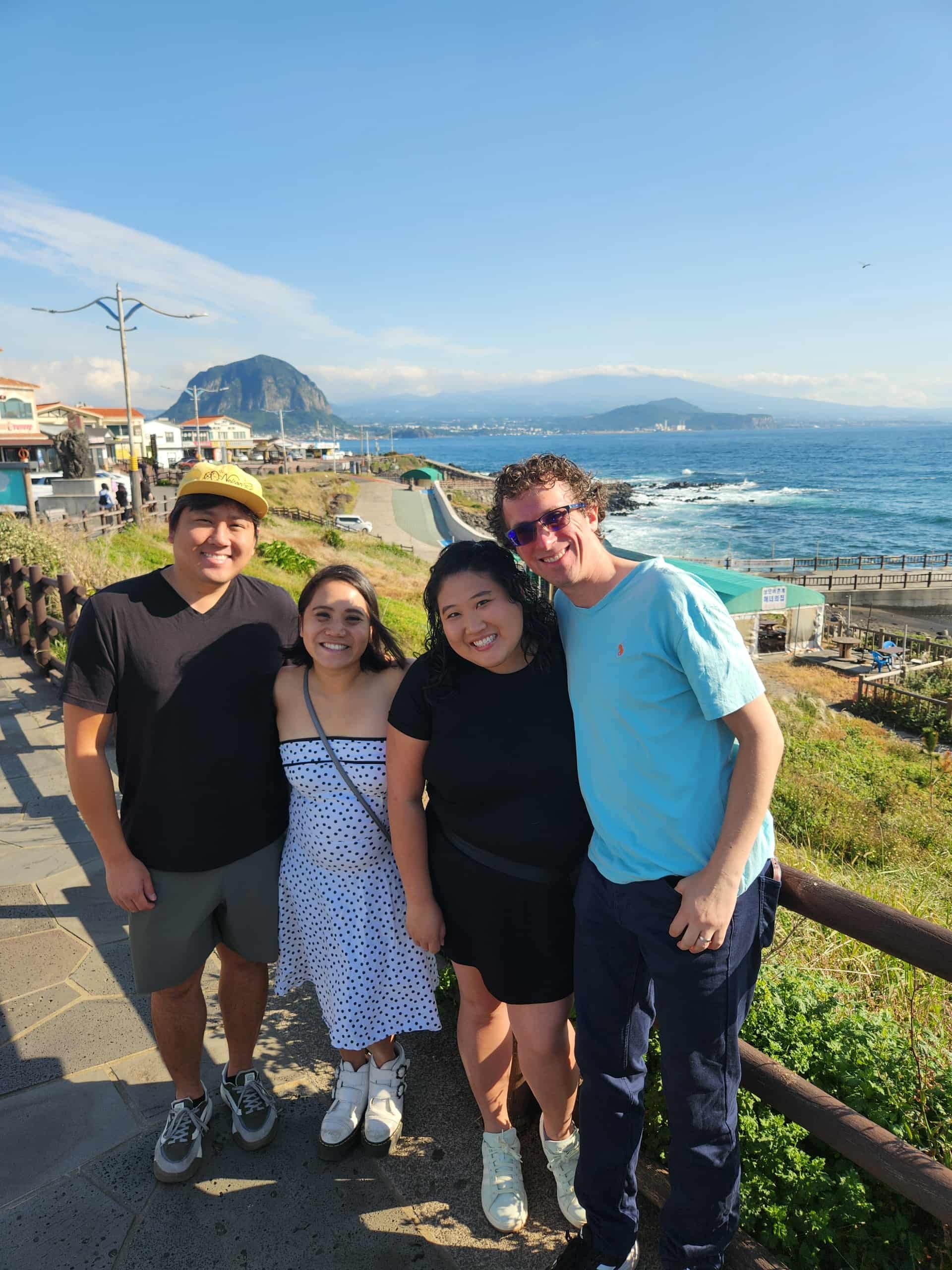
Bryce and I have been planning a trip to Japan and Korea for over 2 years with Kyle and Danielle and after our couple days in Japan, it was here!
Keep on reading for our day-by-day adventures!
Day 0: Tuesday October 14, 2025 Travel Day
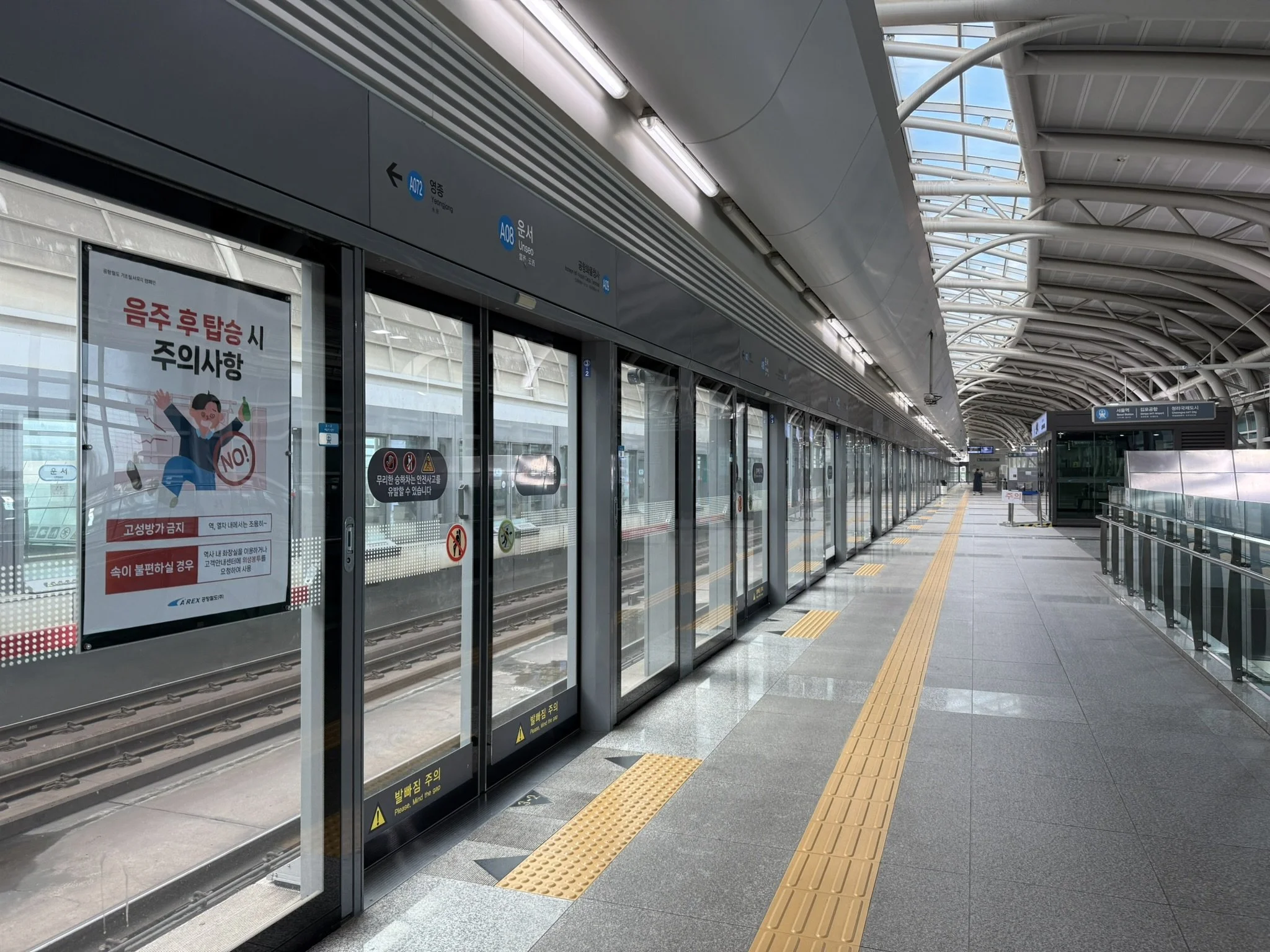
We finally arrived in Seoul after a 2 hour flight from Japan. Public transit is amazing in Korea, and the Naver app worked great once we arrived (we struggled with it while in the US still). The stations are safe, clean, and everyone queues quietly in line. We passed through customs and immigration and then checked into our hotel (near the airport) before passing out for the night.
Day 1: Wednesday October 15, 2025 Happy Birthday (Pictures and Musical)
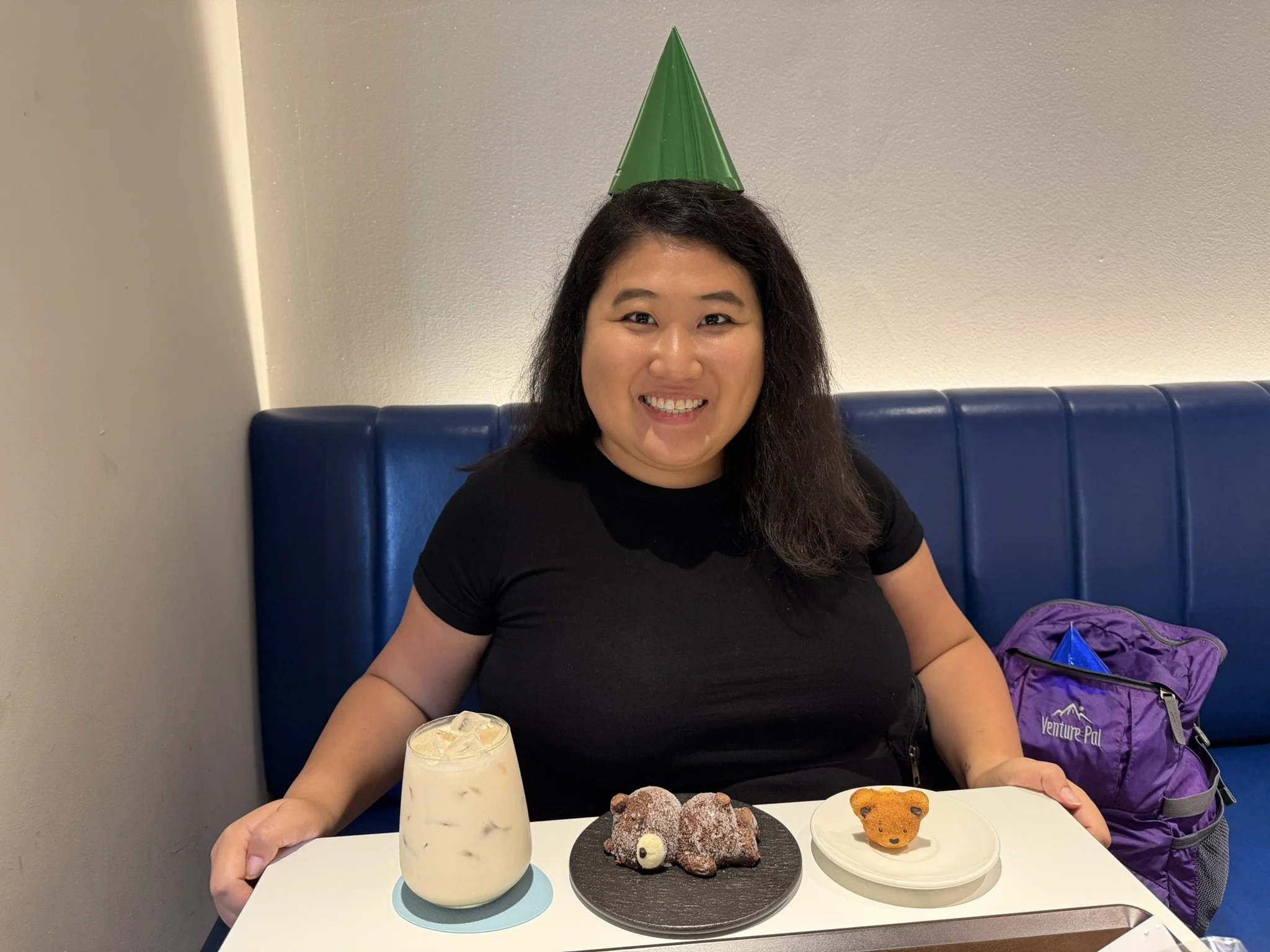
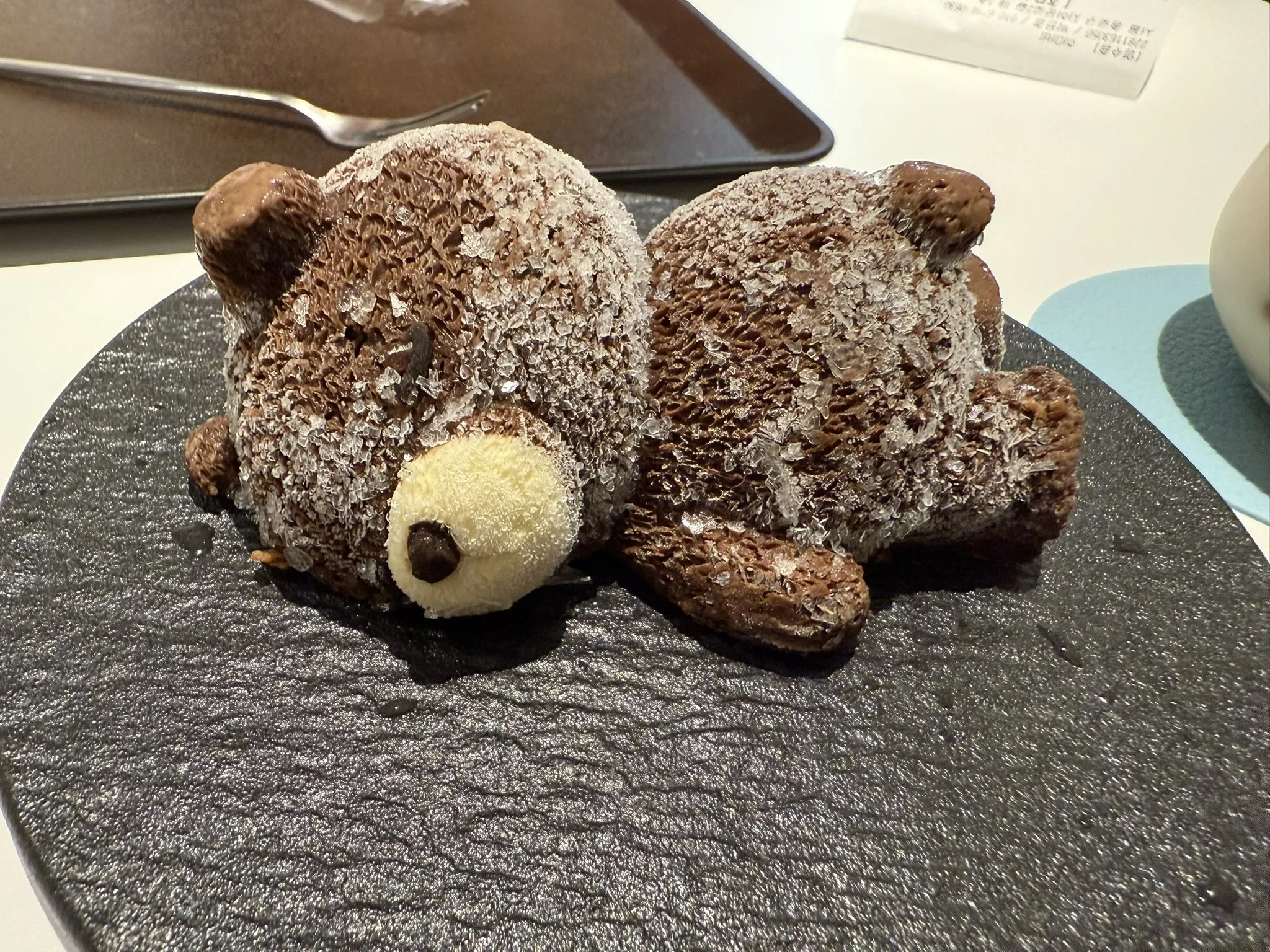
We started my birthday off by heading towards Gyeongbokgung Palace. I had booked a photographer for the day and we had our hanbok fitting appointment at 11:00am. We arrived in the area about an hour before and we found a really cute cafe. We both tried the Misutgaru Latte, which is a nutty Korean grain latte made from roasted multigrain powder (misagaru) and milk. It was earthy and smooth and sweet. We also ordered some bears to eat! The chocolate bear was (almost) too cute to eat but it was actually an ice cream cake. It was the perfect way to start my birthday.
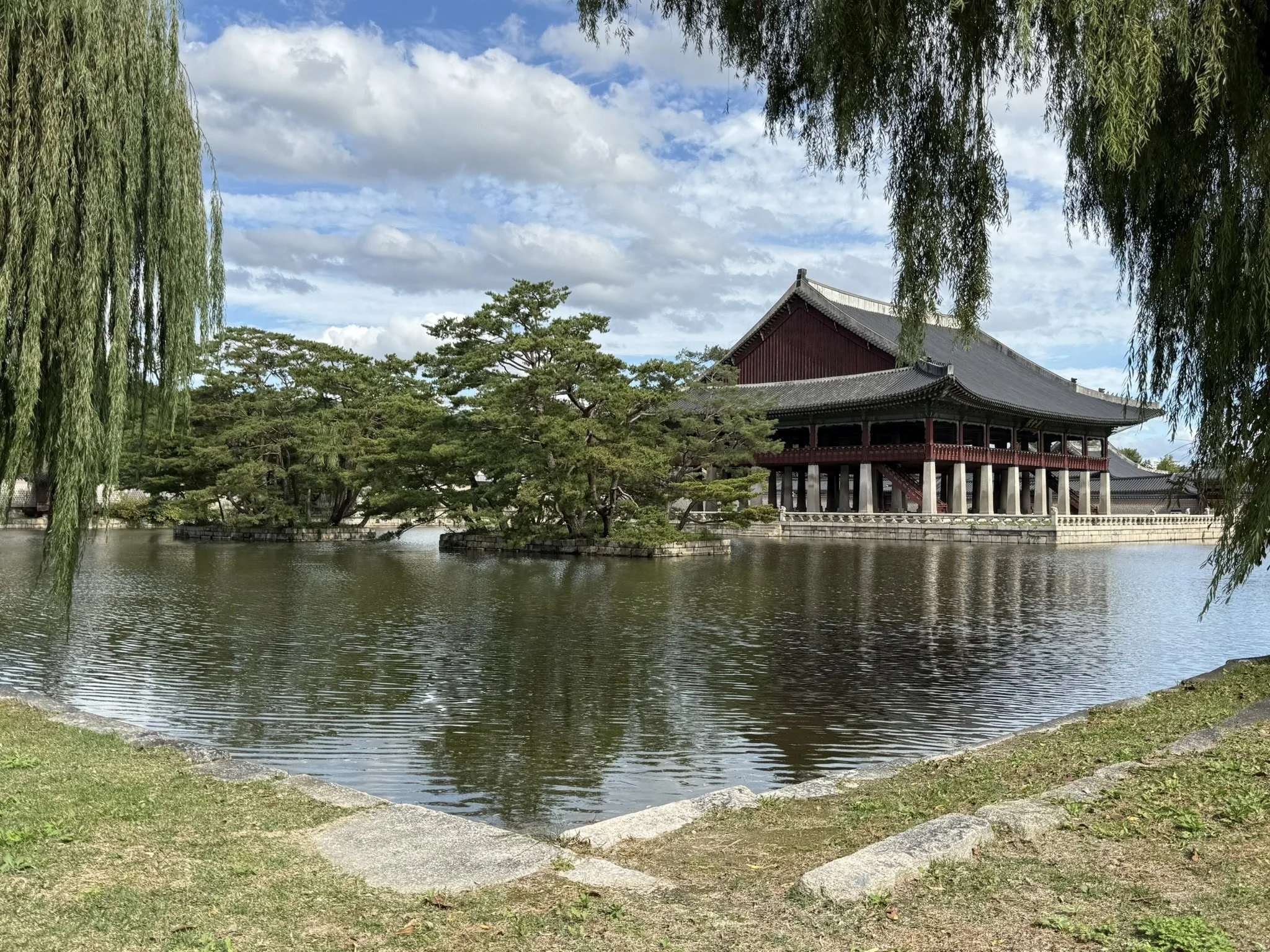
We dressed up in Hanboks and took pictures around Gyeongbokgung Palace, the former royal palace in Seoul. It was established in 1395 and is one of the first landmarks established in Seoul. When Japan colonized Korea in 1910, almost all of the 500 structures were demolished, altered, sold, or shipped elsewhere. The Palace finally saw restorations in the 1980s and the rest of the restorations are planned to continue through 2045. My favorite spot in the Palace is the Gyeonghoeru, an elevated building hall built on an island surrounded by a pond.

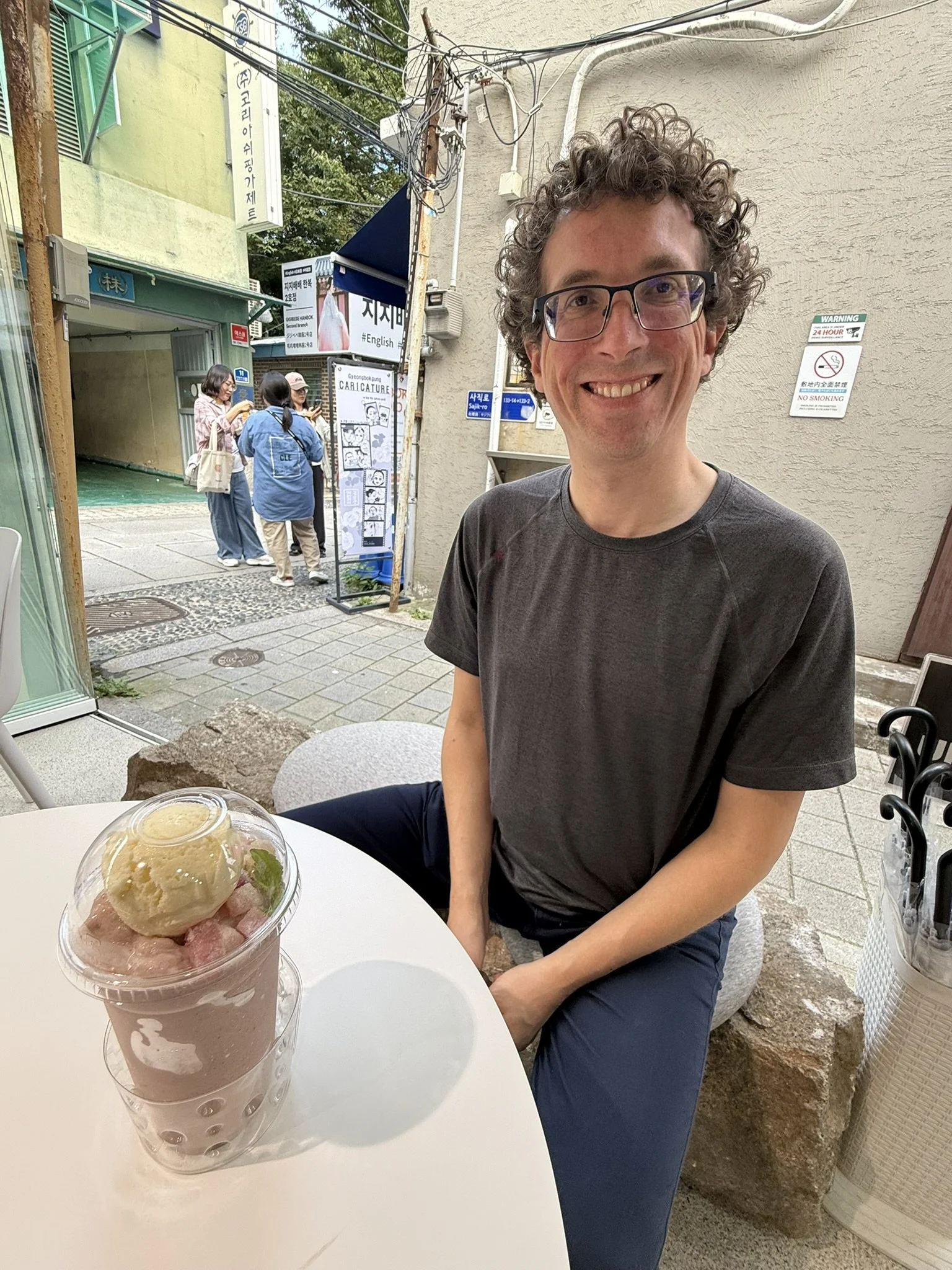
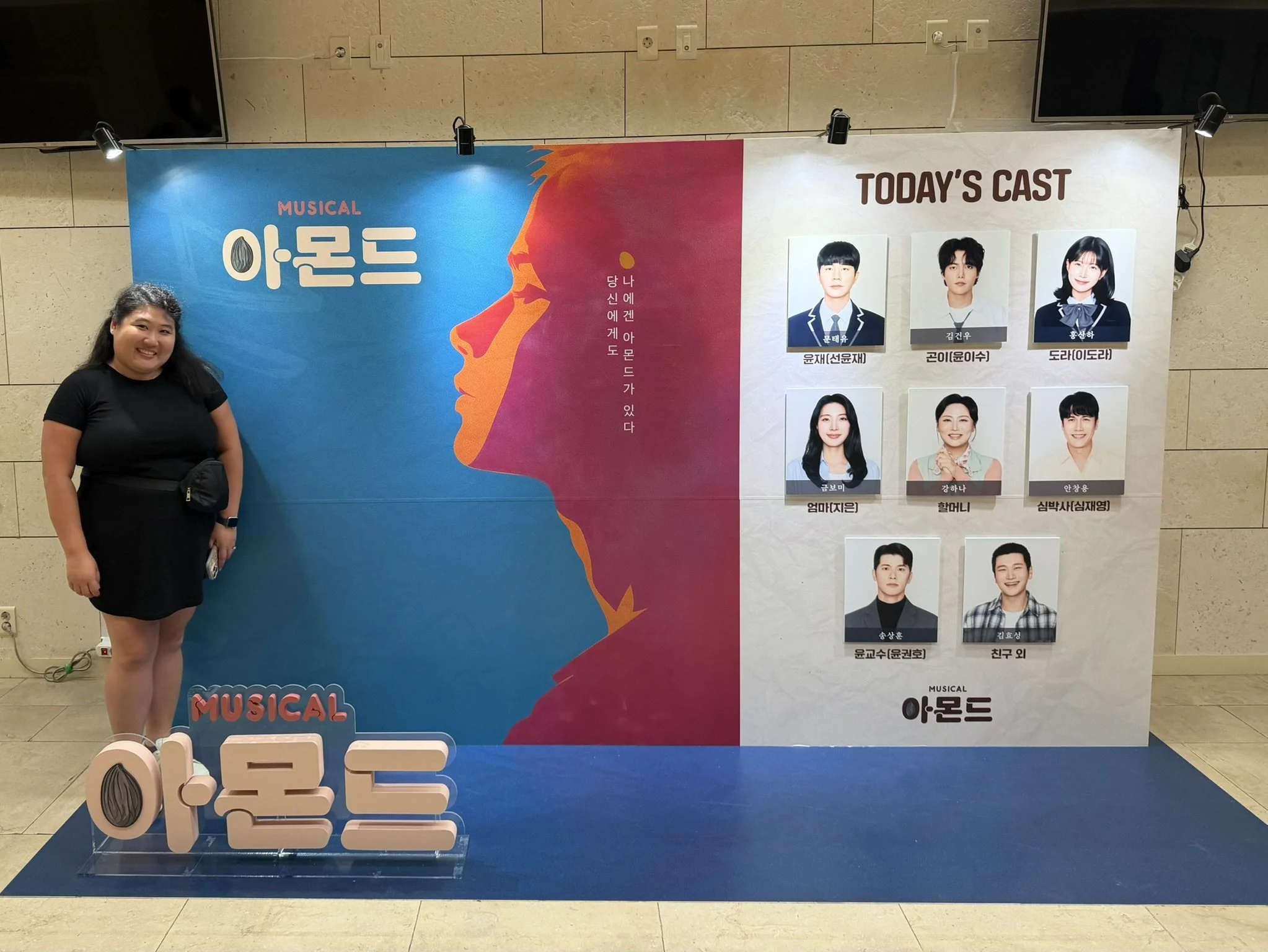
After our photoshoot, we ate at an amazing Korean BBQ restaurant called Kukbingwan. We ordered steak and it came with this delicious dipping sauce with a raw (or soft boiled) egg. I wasn’t sure about eating it with the egg in it, but it was so good, I wanted to drink the sauce. After lunch, I ordered a Sumughwa Latte, which was a black colored latte made with condensed milk. Bryce ordered the Gyeongbokgun Smoothie, a peach vanilla flavored smoothie. After lunch, we checked into our hotel and rested for a few hours before our evening show. We saw Almond, the musical. It is based on the book Almond by Sohn Won-pyung. It’s the story of a Yunjae, a boy with Alexithymia (a condition where he can’t feel emotions). After his life is shattered due to a random act of violence, he learns to live life on his own and befriends a troubled teen named Gon. Since I love musicals, I thought this would be a great way to spend my birthday. After the show, we stopped at a convenience store for a quick late night snack. I got to try the Korean “Ragu Pasta” so I still got to eat spaghetti on my birthday.
Day 2: Thursday October 16, 2025 Around Seoul (Changgyeonggung, Bukchon Hanok Village, Folk Museum)
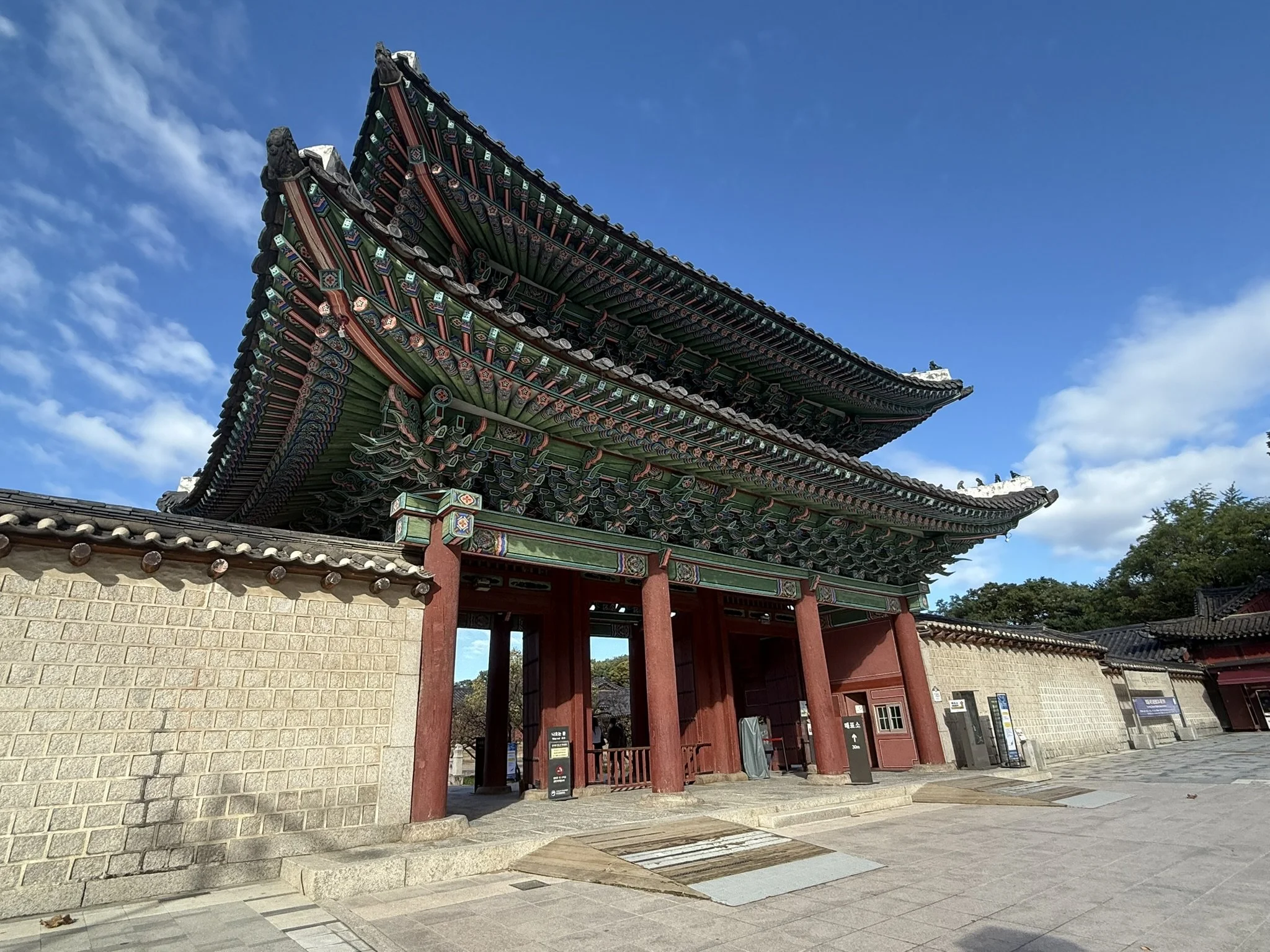
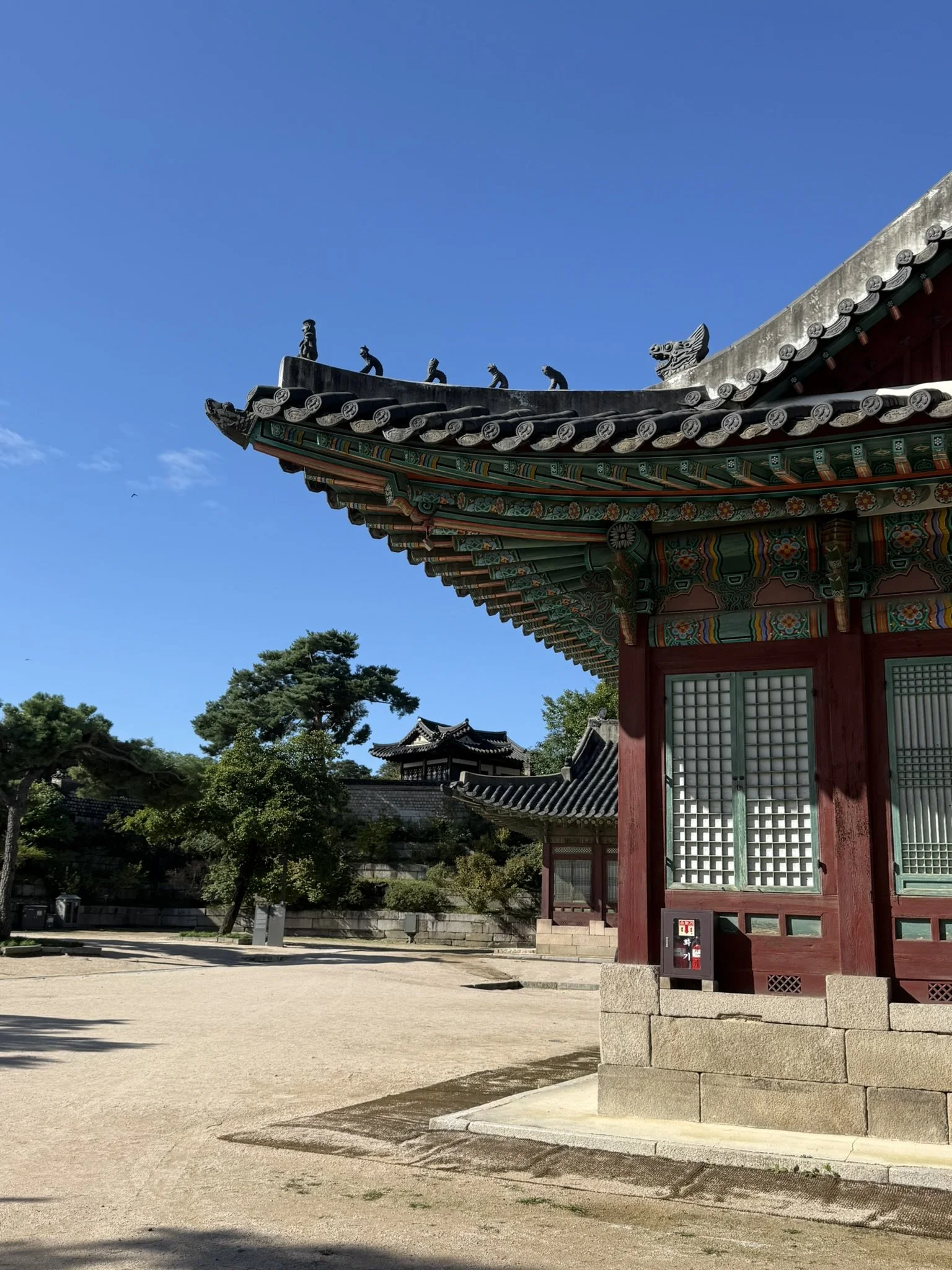
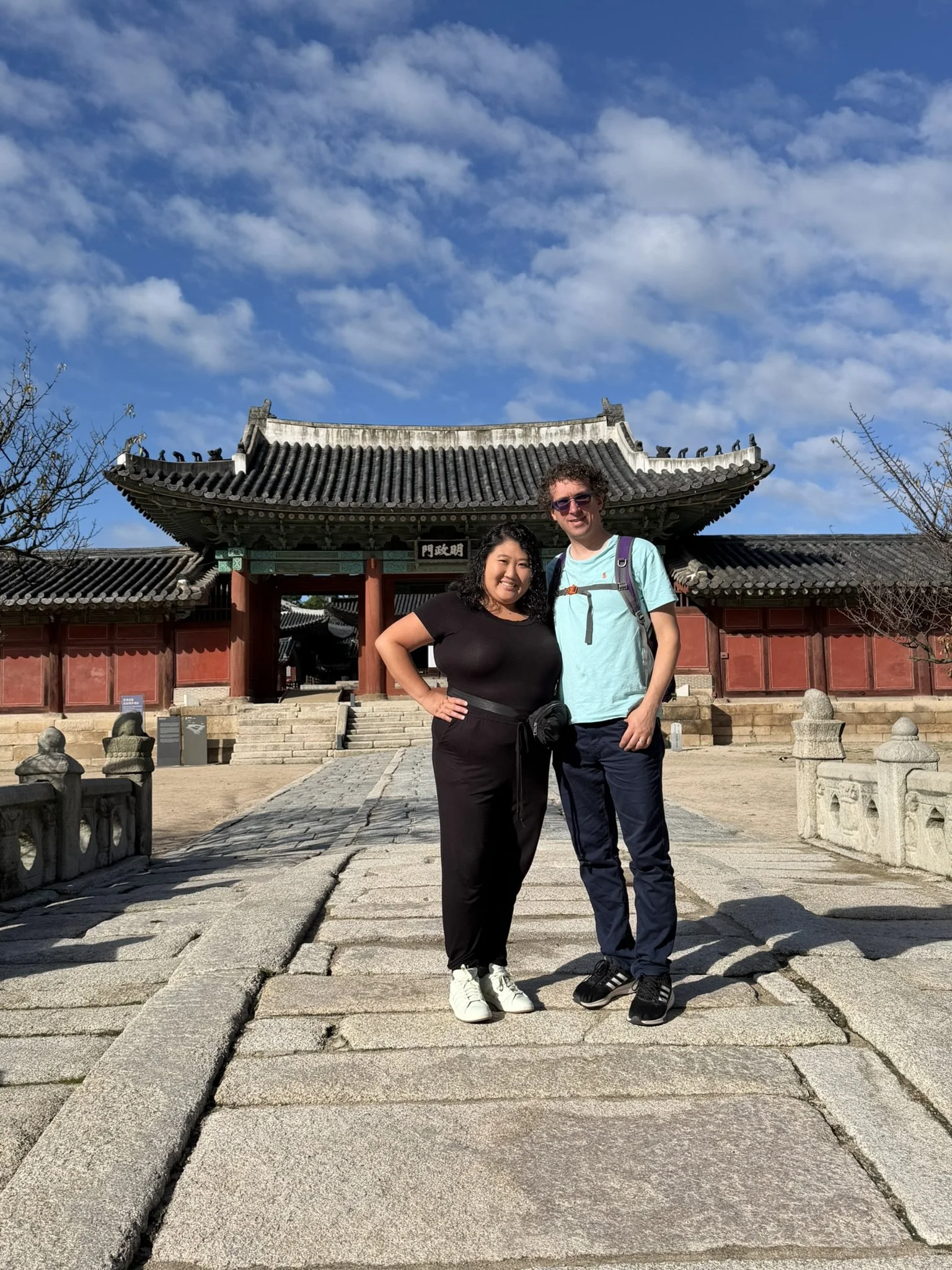
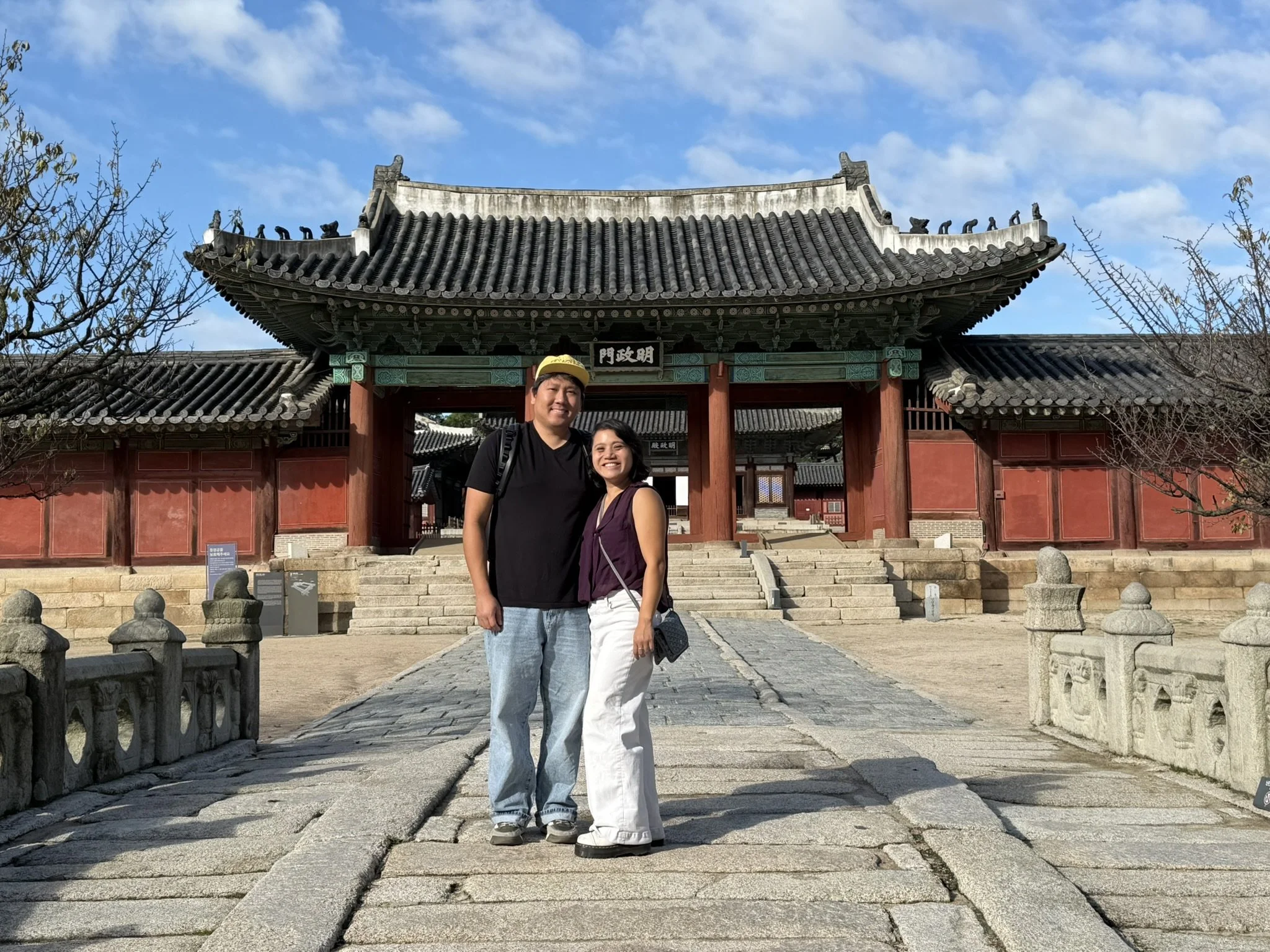
Kyle and Danielle arrived in Seoul late the night before, but at least we were all staying in the same hotel. We met up and walked over to Changgyeonggung Palace (less than a 10 minute walk from our hotel). This Palace was built in 1483-1484 by King Seongjong and was used as living quarters of the royal family. The Palace was burned down during the Japanese invasion in 1592. It was rebuilt by 1616 but was destroyed in a fire in 1930. Korea rebuilt the Palace in 1934 but the Palace was again destroyed by the Japanese in the early 20th century. During the Japanese colonial period in 1911, the Japanese destroyed the Palace and renamed it a Park. During this time, the Palace was further damaged. In 1983, the name Changgyeonggung Palace was restored and the Palace is still undergoing restoration work today.
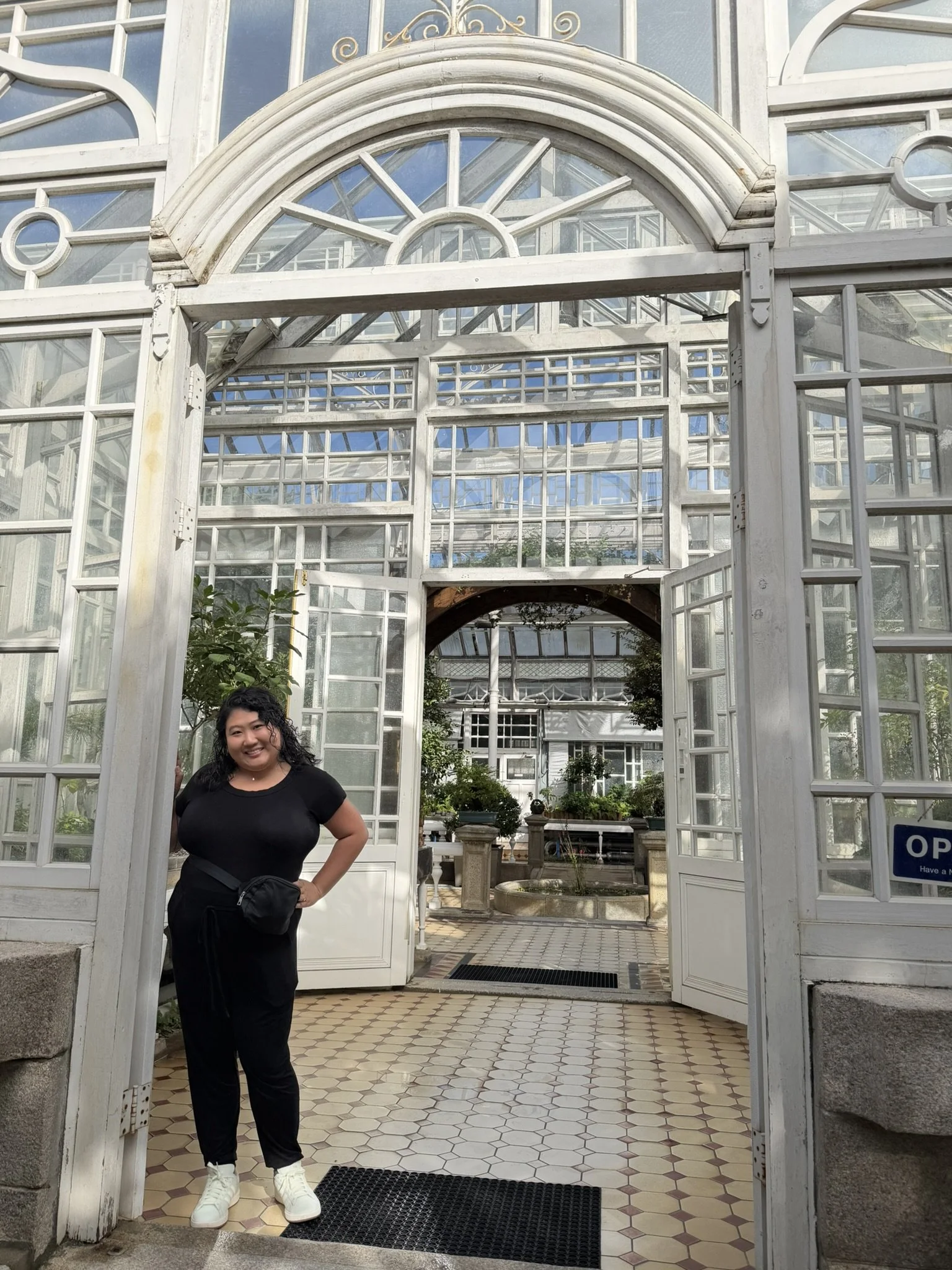
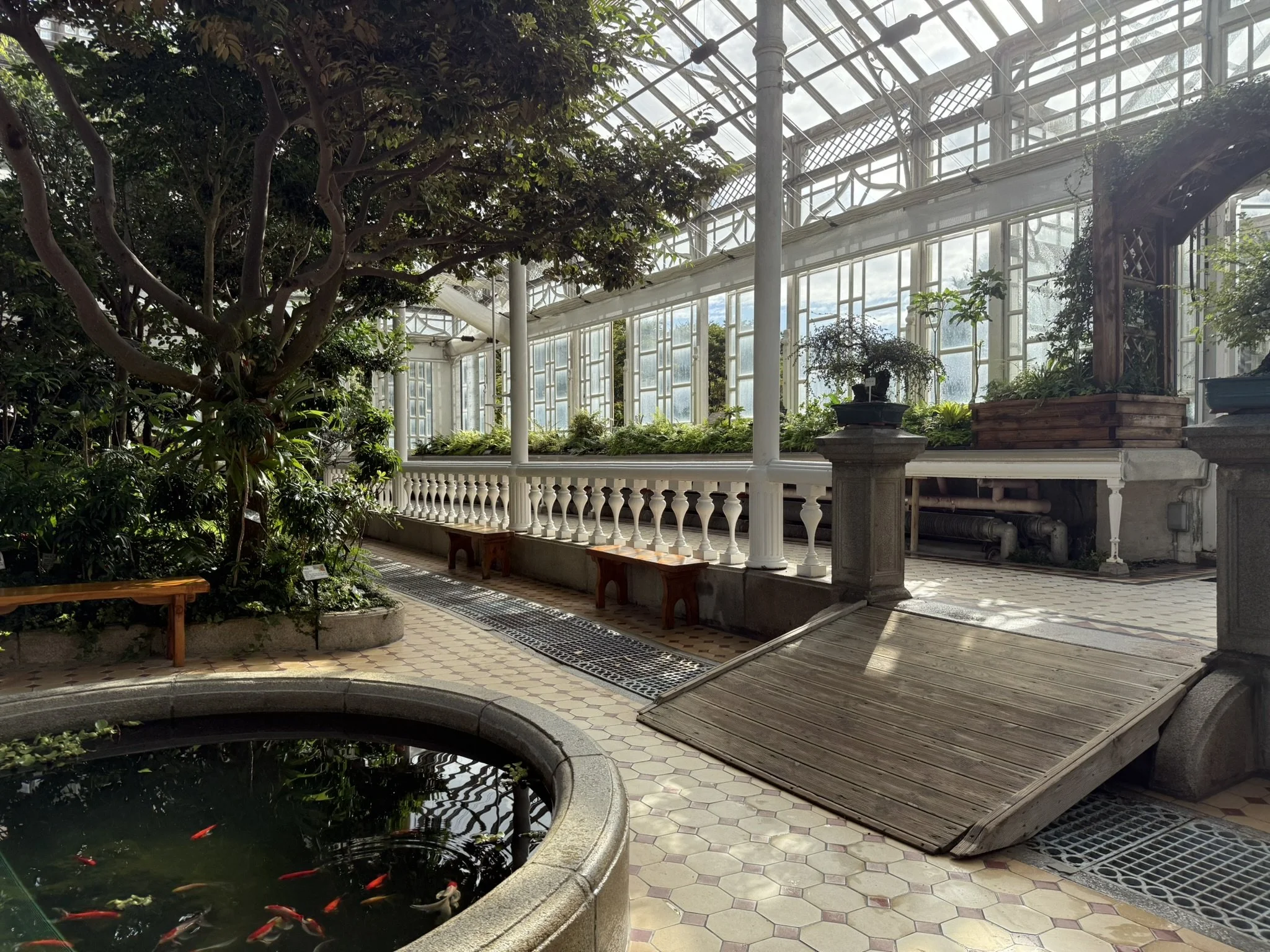
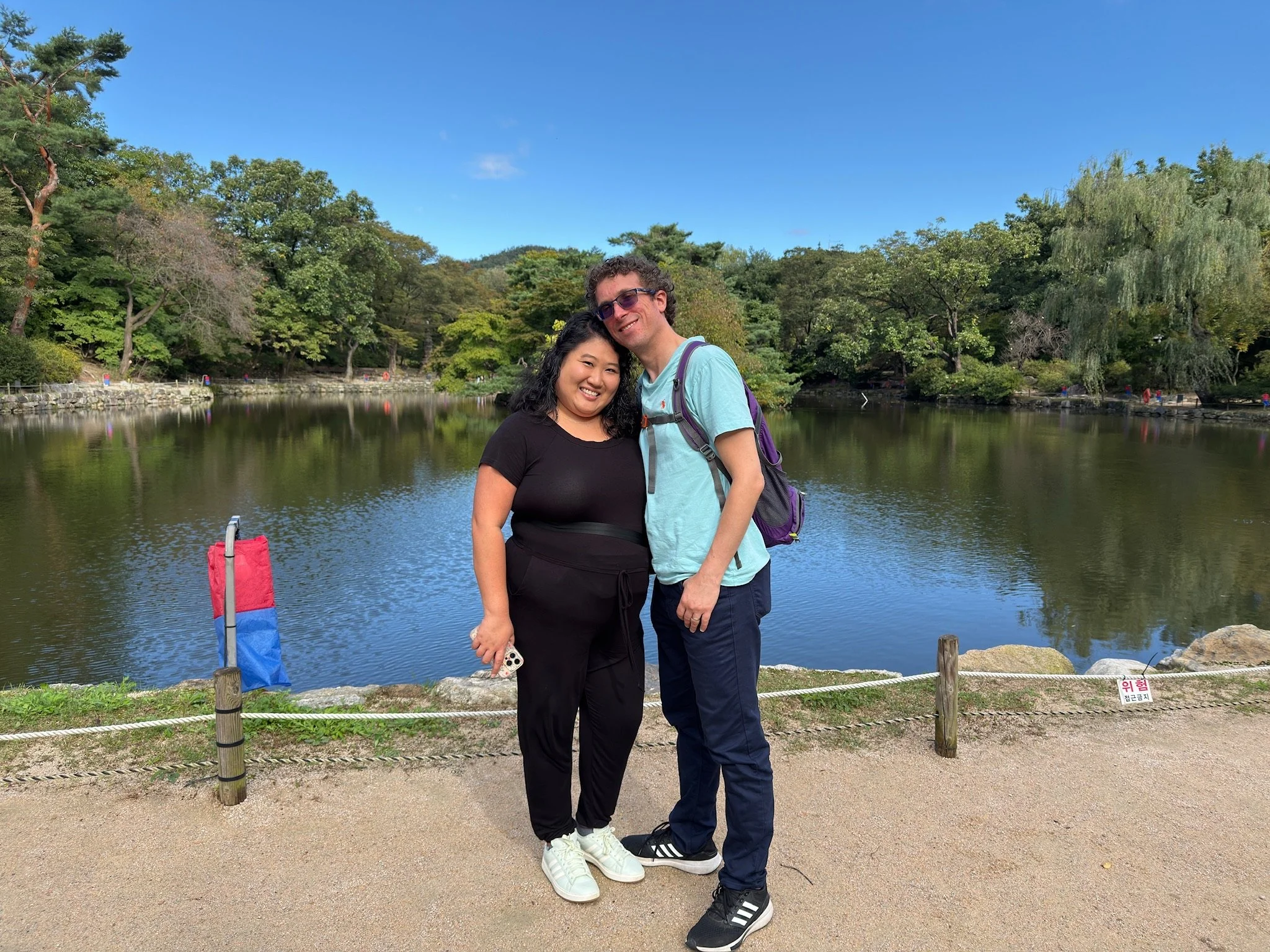
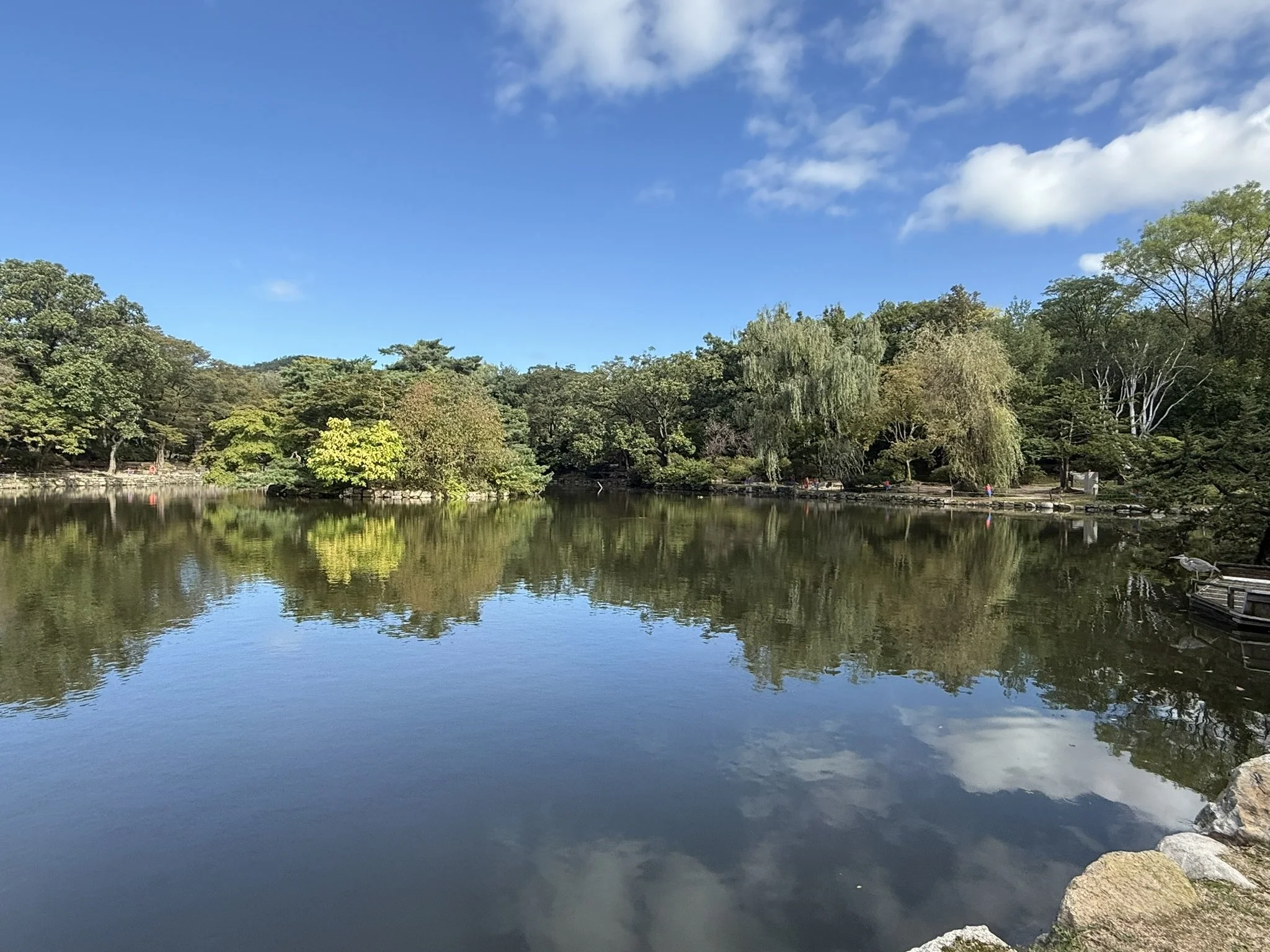
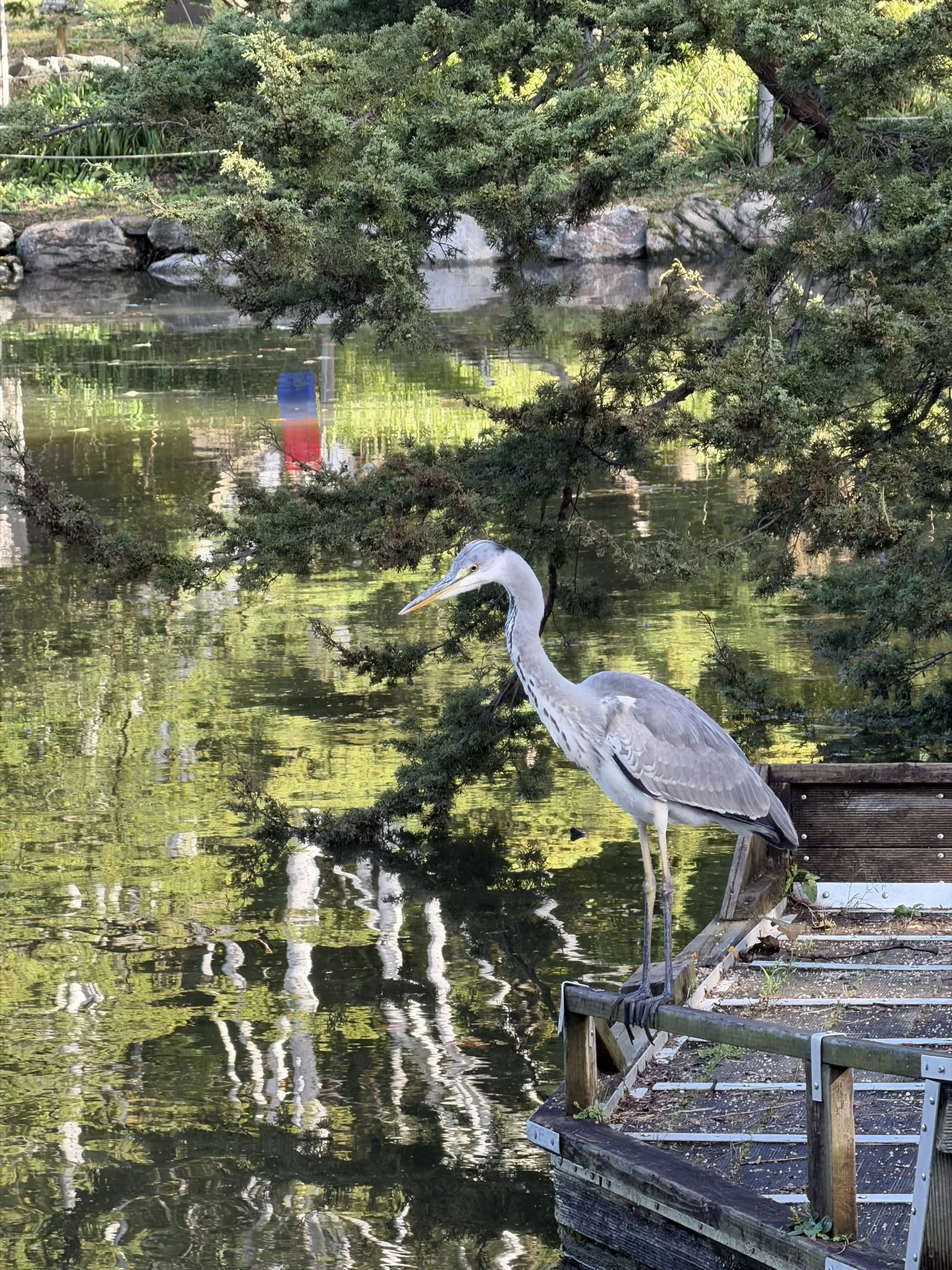
One part of Changgyeonggung Palace is Daeonsil, or the Grand Greenhouse. It was originally built in 1909 and restored in 2004. It was initially part of an enclosed botanical garden built when Japan occupied Korea. Japan added a botanical garden and zoo to its “Park”, the converted Palace grounds. It was designed by a Japanese man and built by a French company. When Korea was restoring Changgyeonggung Palace, they kept this greenhouse as it was the first building in Korea to combine steel, timber, and glass, becoming Korea’s first Western-style greenhouse. We walked around the water features and even saw a gray heron.
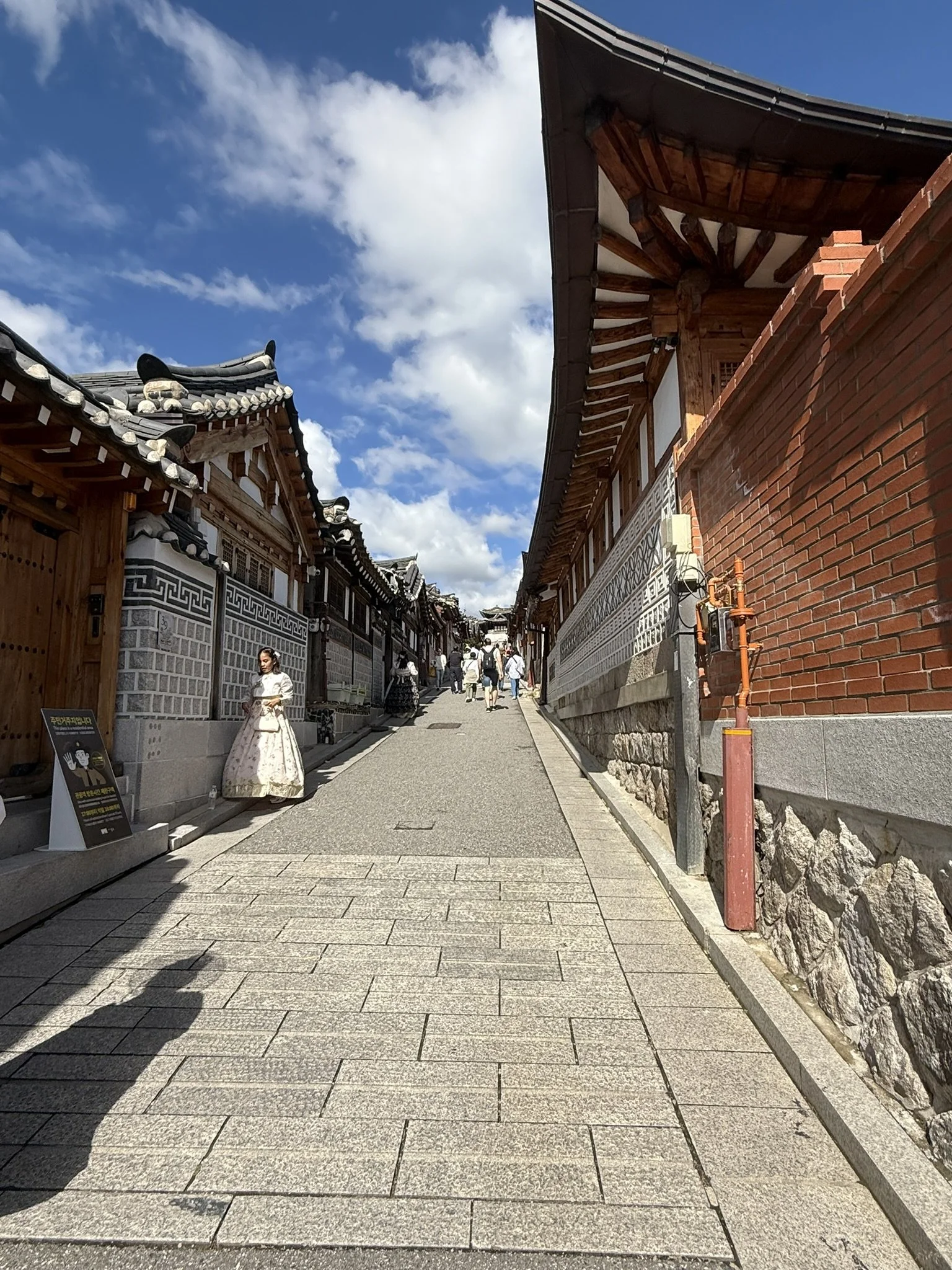
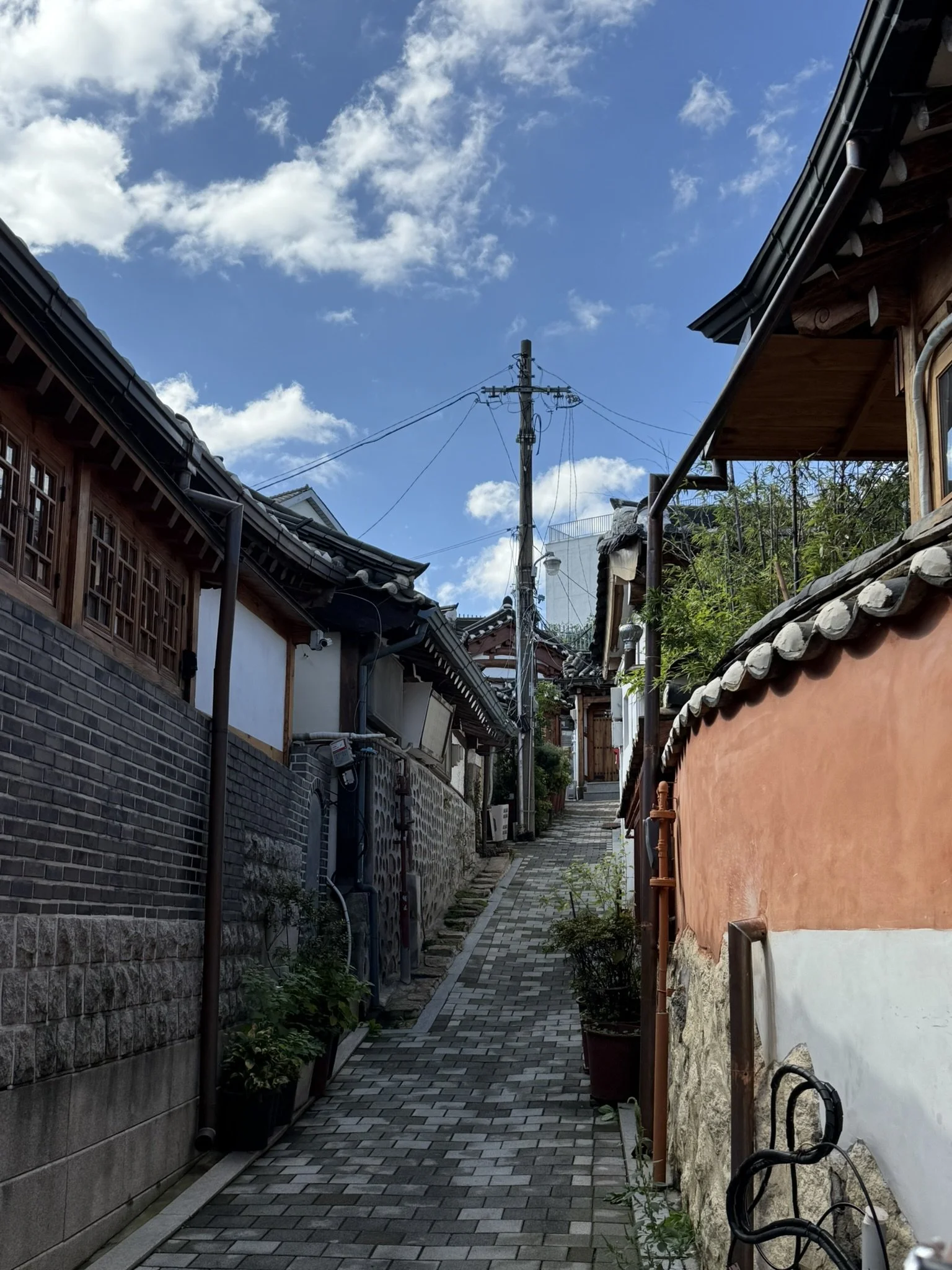
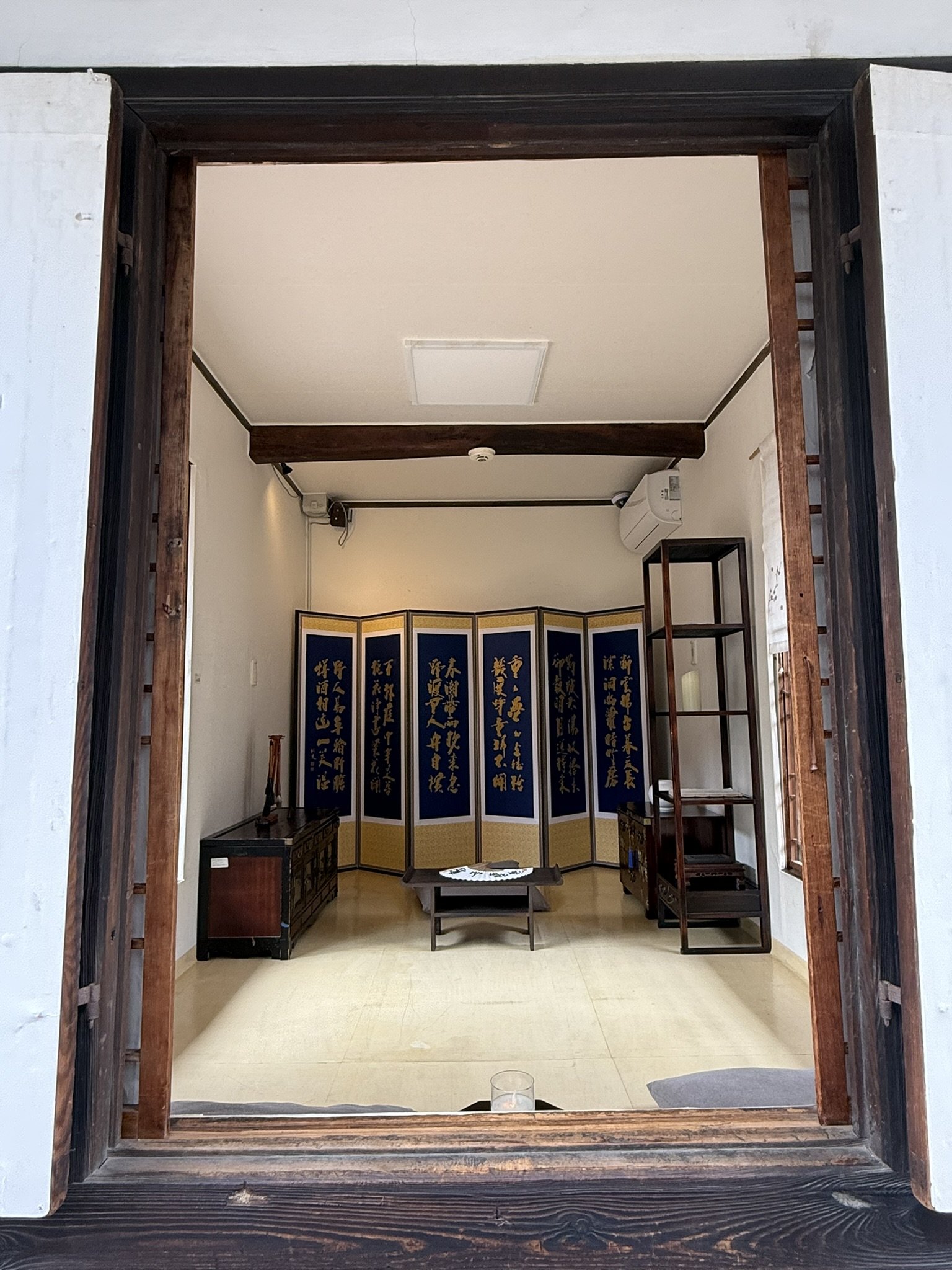
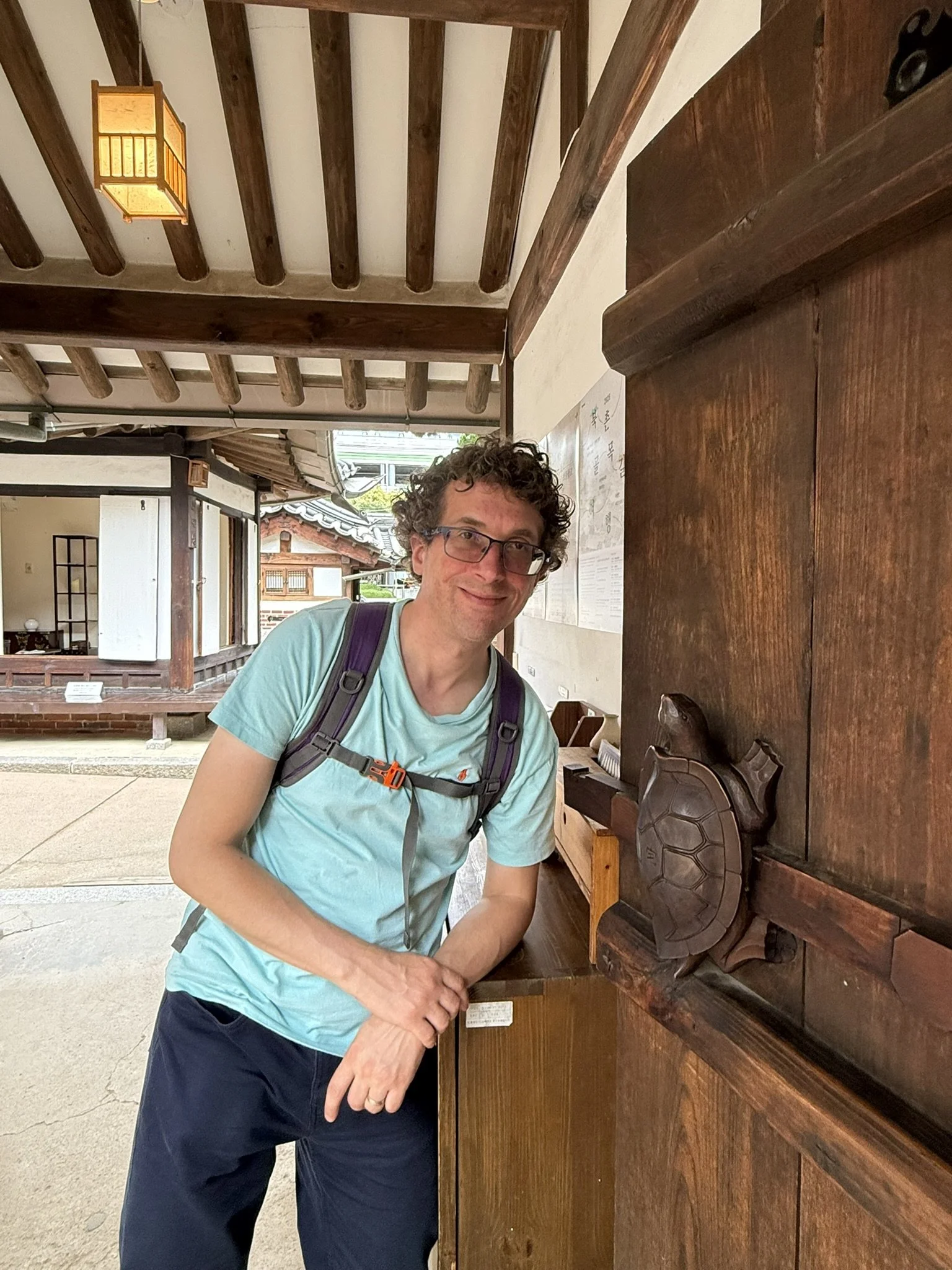
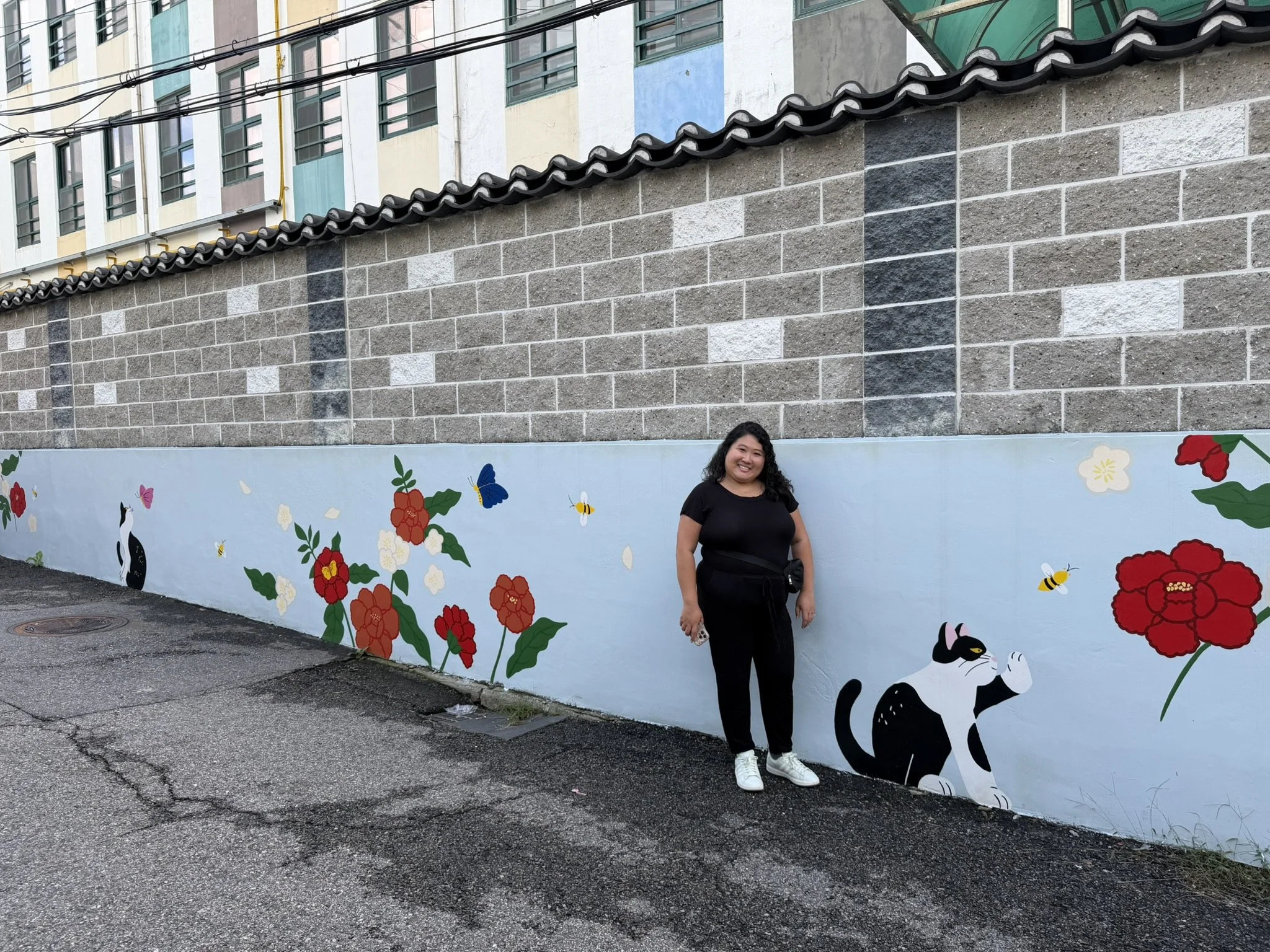
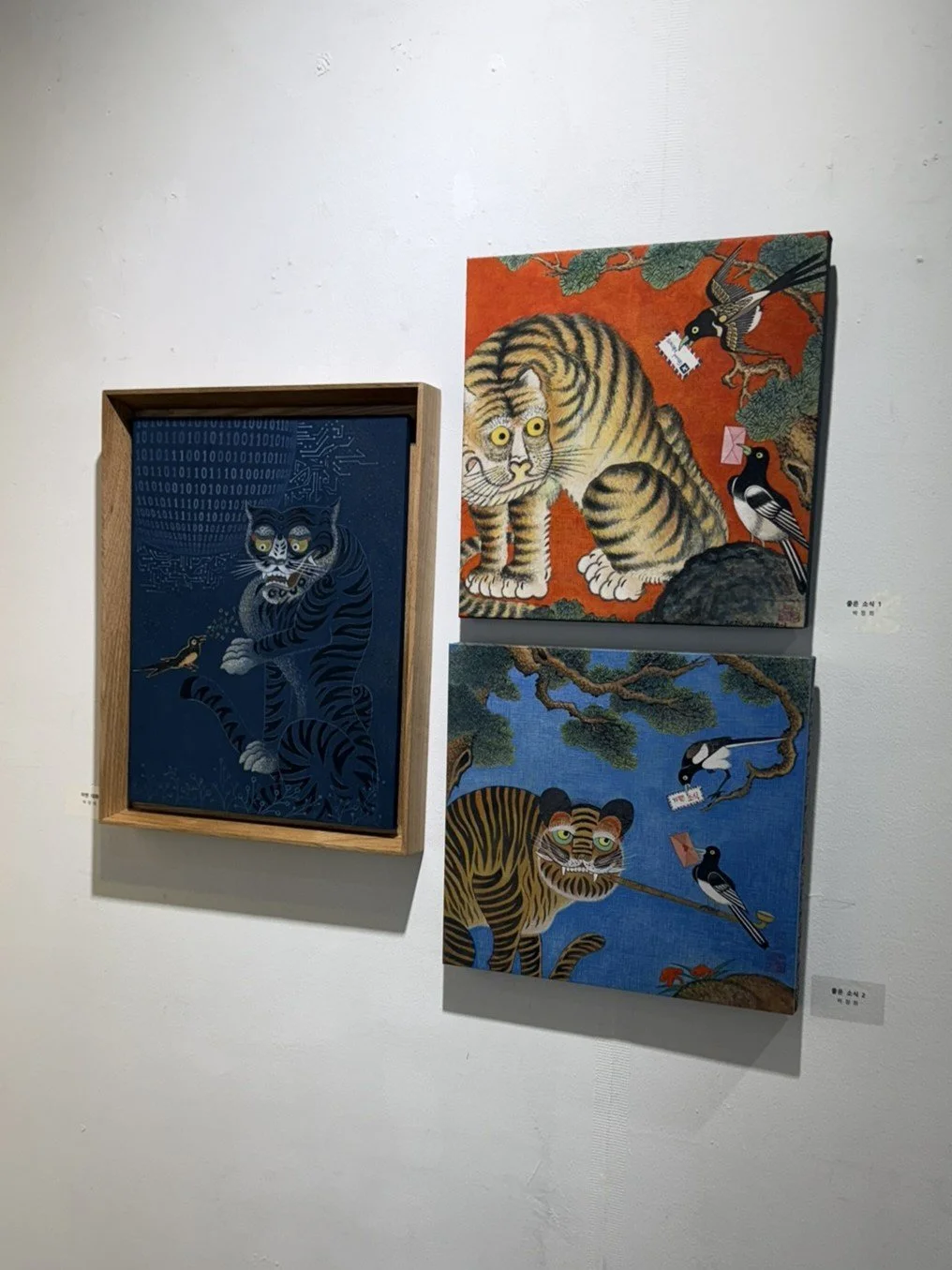
Kyle and Danielle were supposed to meet us at the Bukchon Hanok Village, but they took a long time, so Bryce and I explored the area without them. This is a residential neighborhood with traditional Korean houses called Hanok. Hanoks were first built during the 14th Century during the Joseon dynasty, but became popular after the Korean War as they were cheap and suitable housing for displaced people. However, during this period, many Hanok were demolished and only a few clusters of Hanok remain in Korea. This particular Hanok Village was an upscale residential area for wealthy aristocrats and court employees. There wasn’t much to see as it was a residential area. It is currently a popular neighborhood for traditional artisans, artists, painters, and architects. There were few shops, but many were expensive shops as it is home to art shops, boutiques, and cute cafes. We did pop in to see some Minhwa at the Gahoe Minhwa Museum across the street.

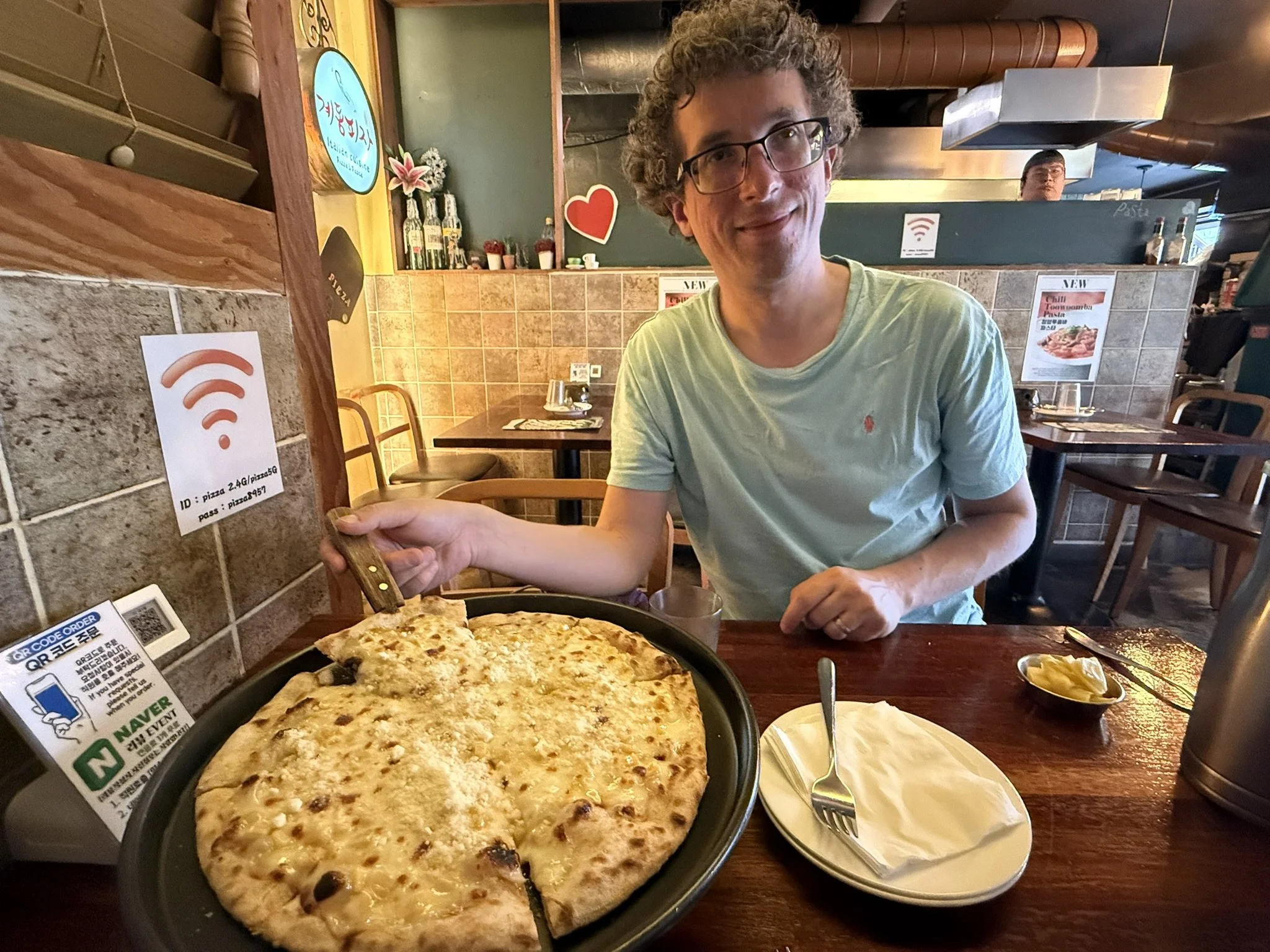
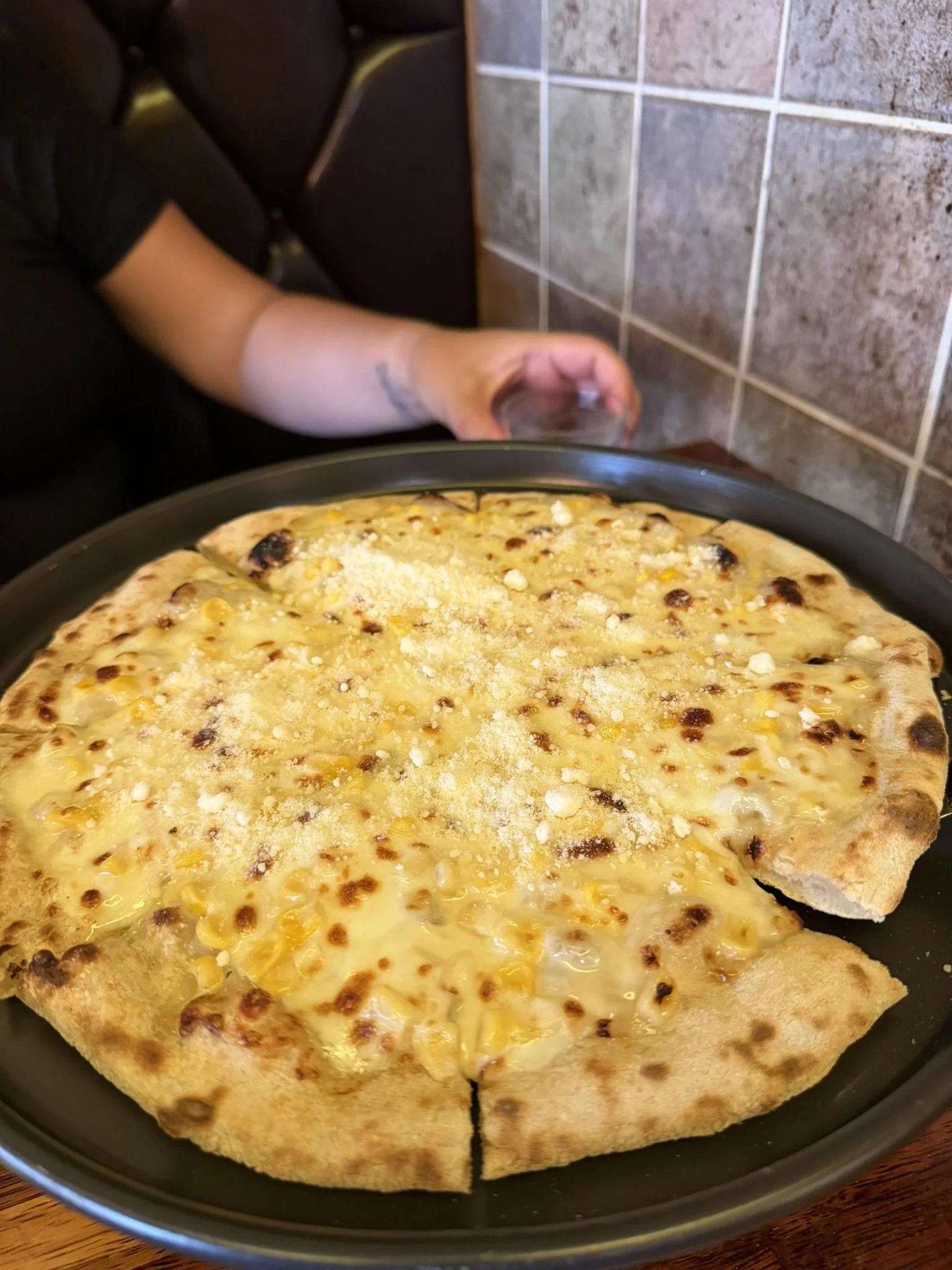
After our walk, we decided to order a pizza. We ate at Gyedong Pizza and ordered the corn pizza. It was a sweet mayo sauce pizza with corn, mozzarella, and parmesan. It was actually really good. It was sweet and savory and delicious.
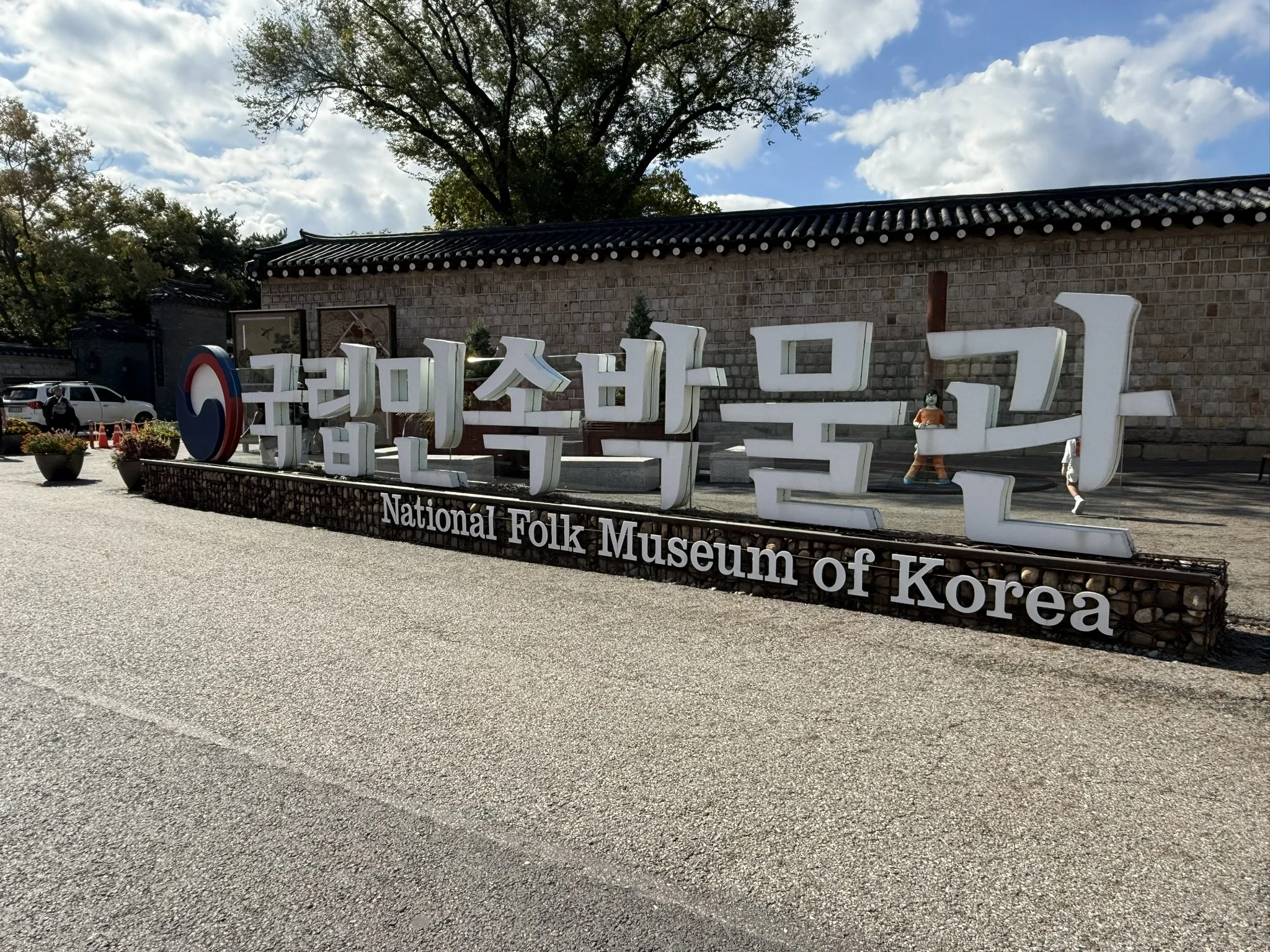
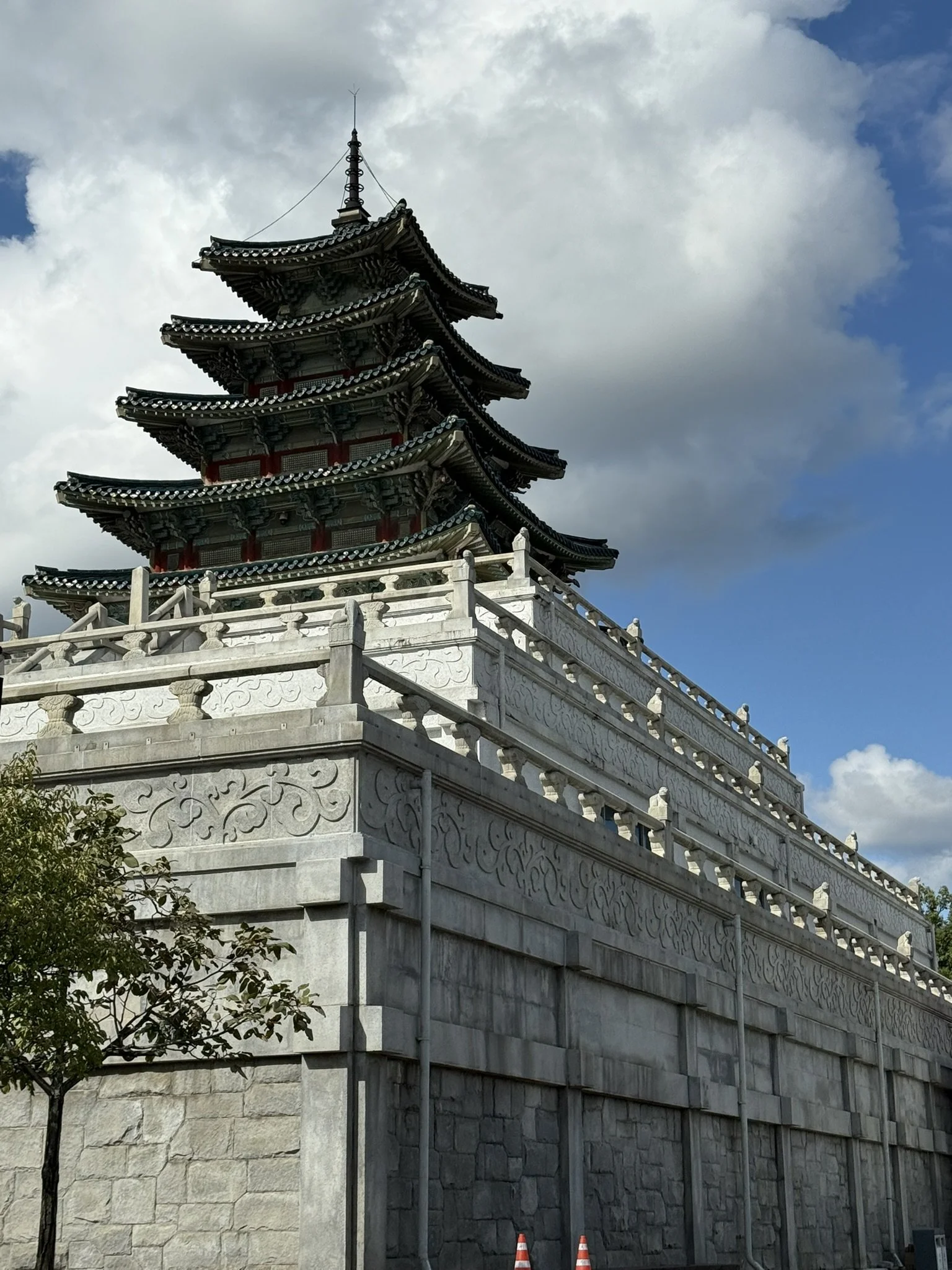
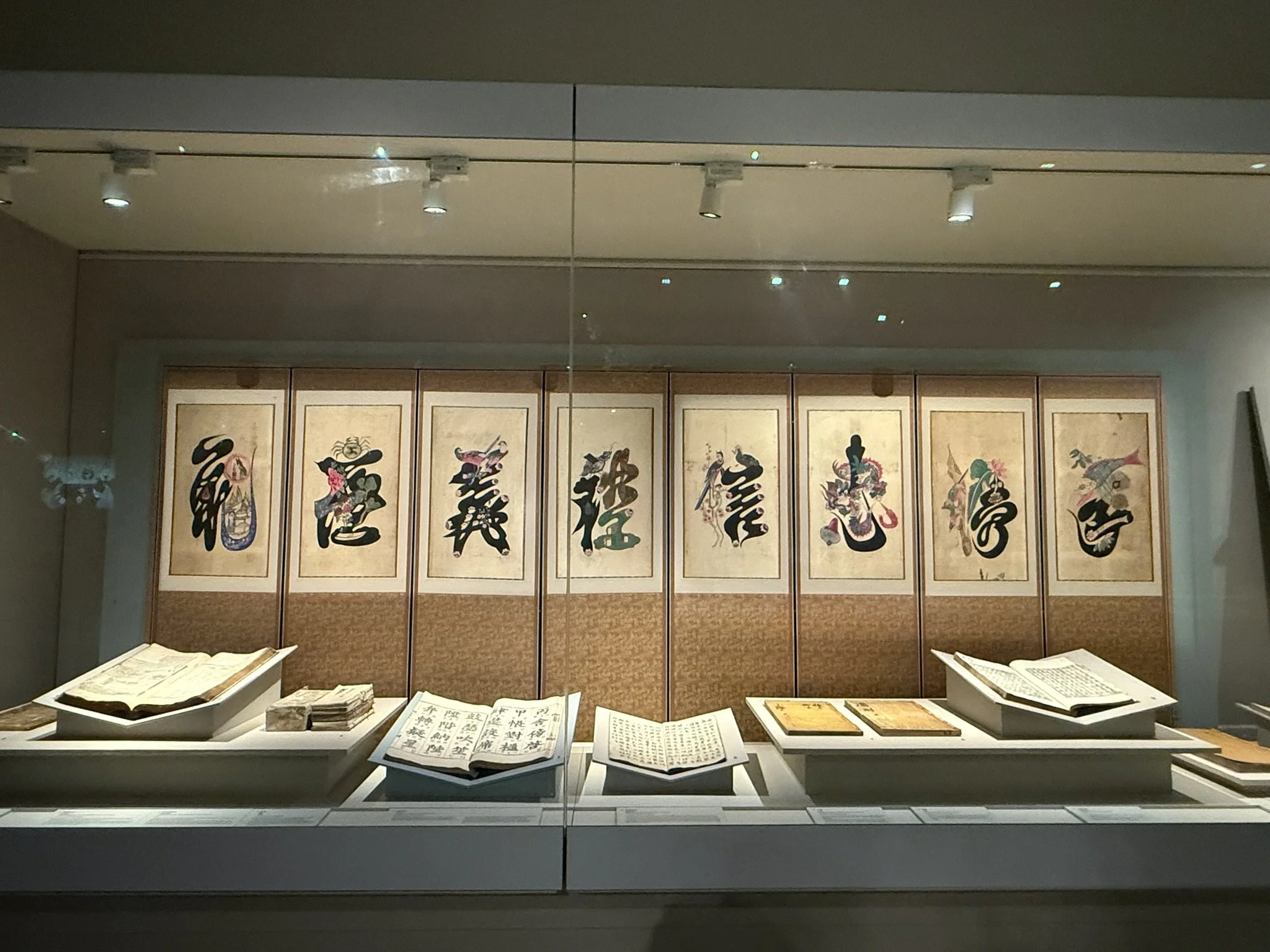
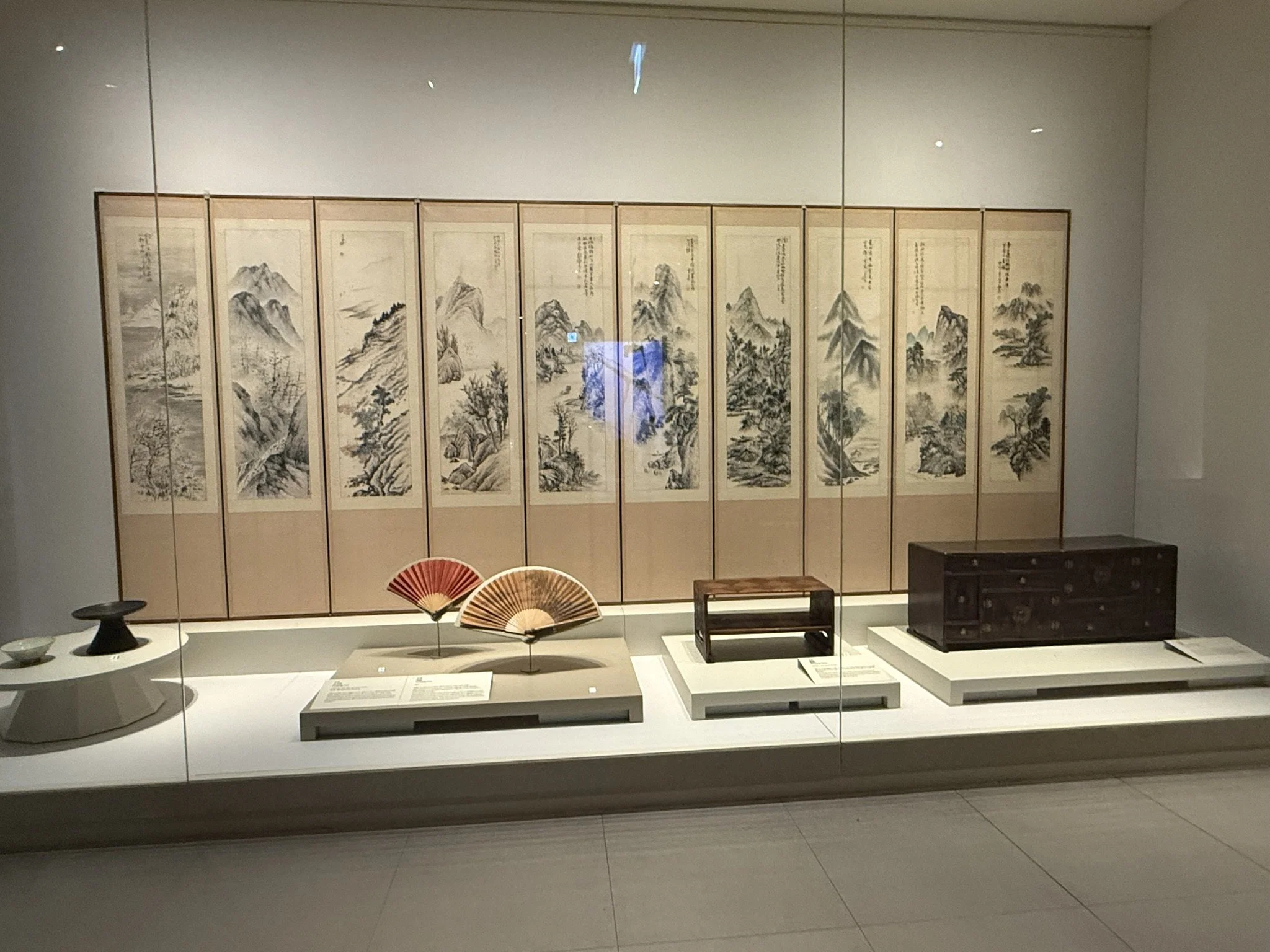
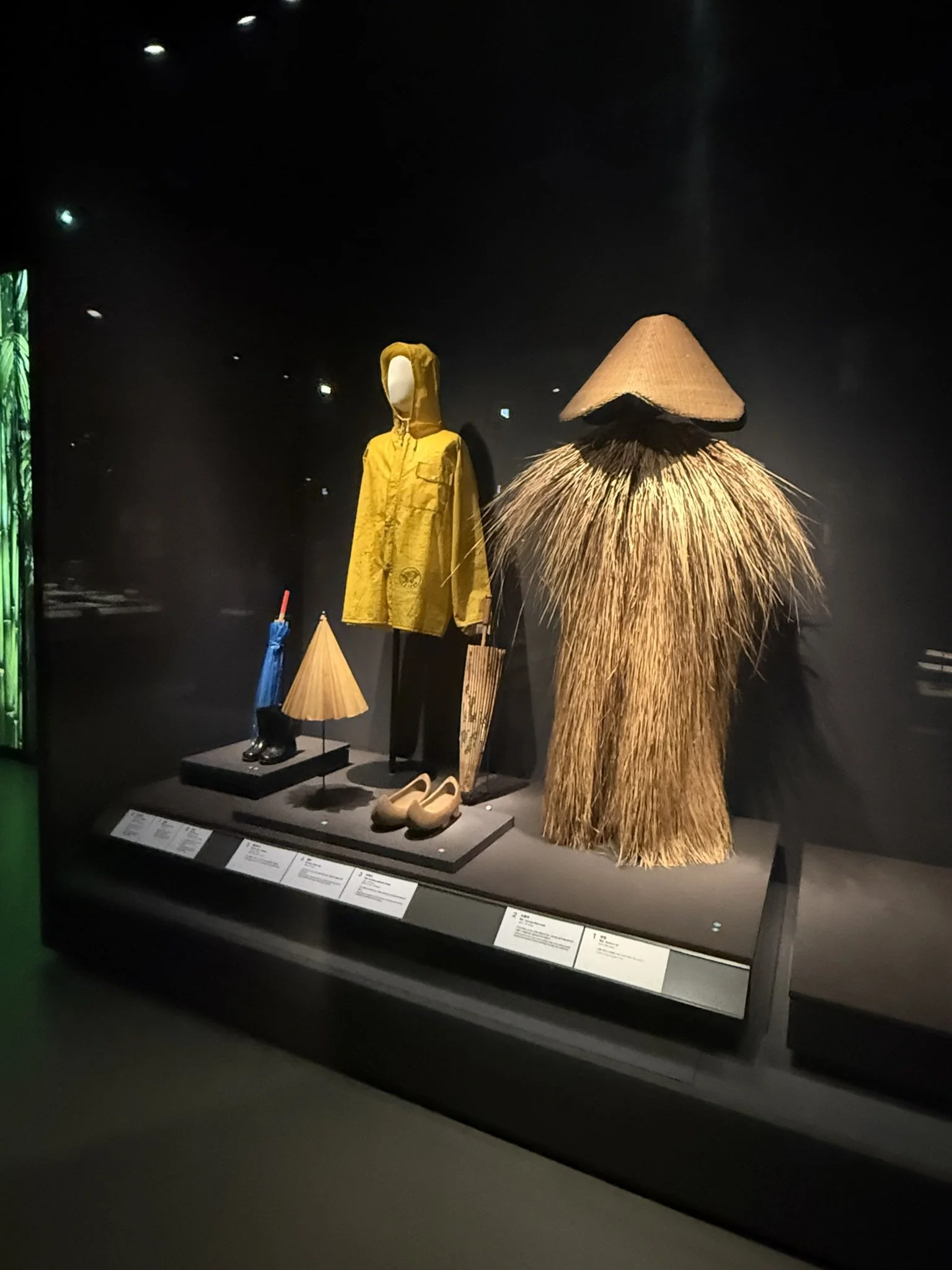
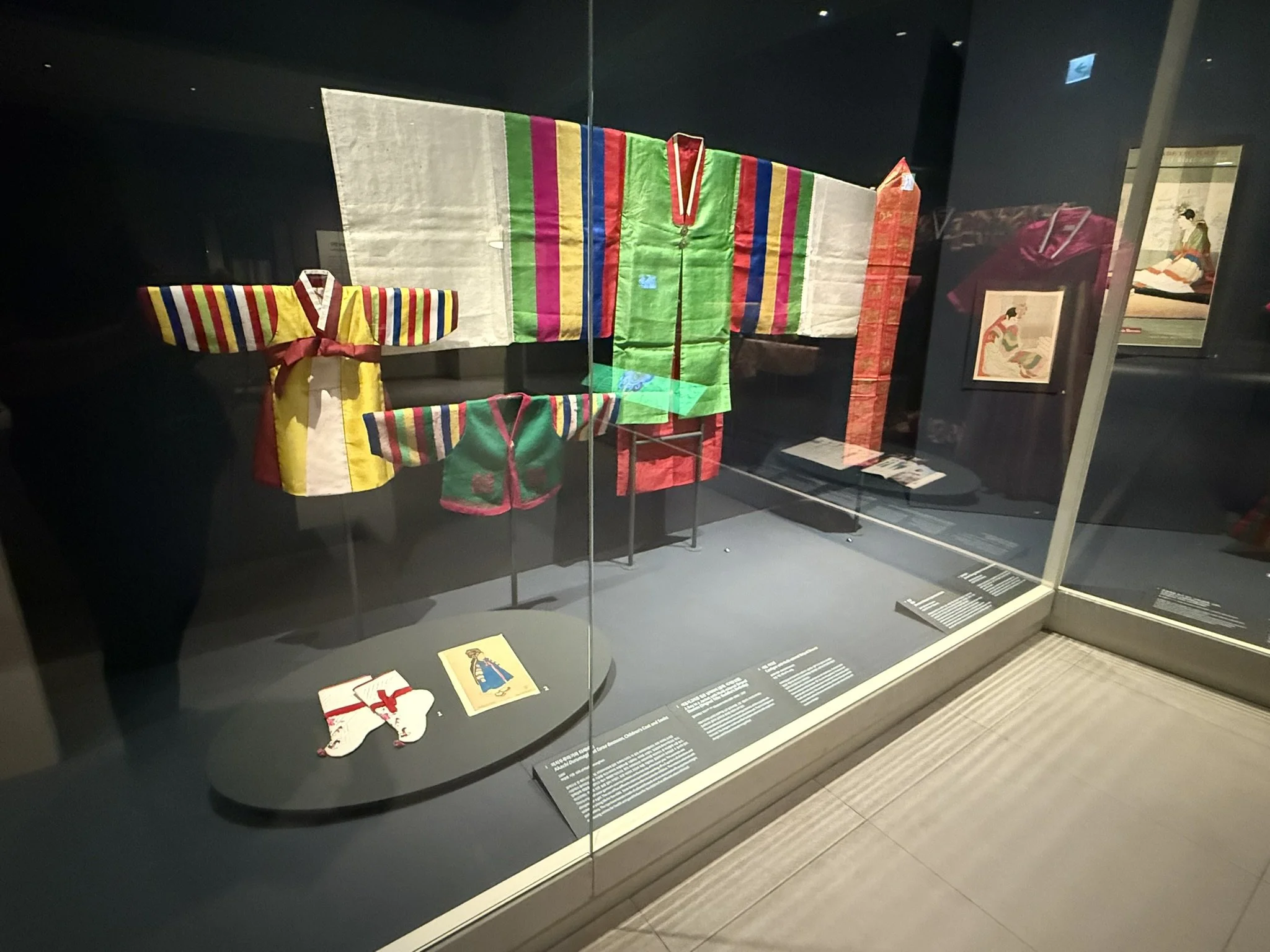
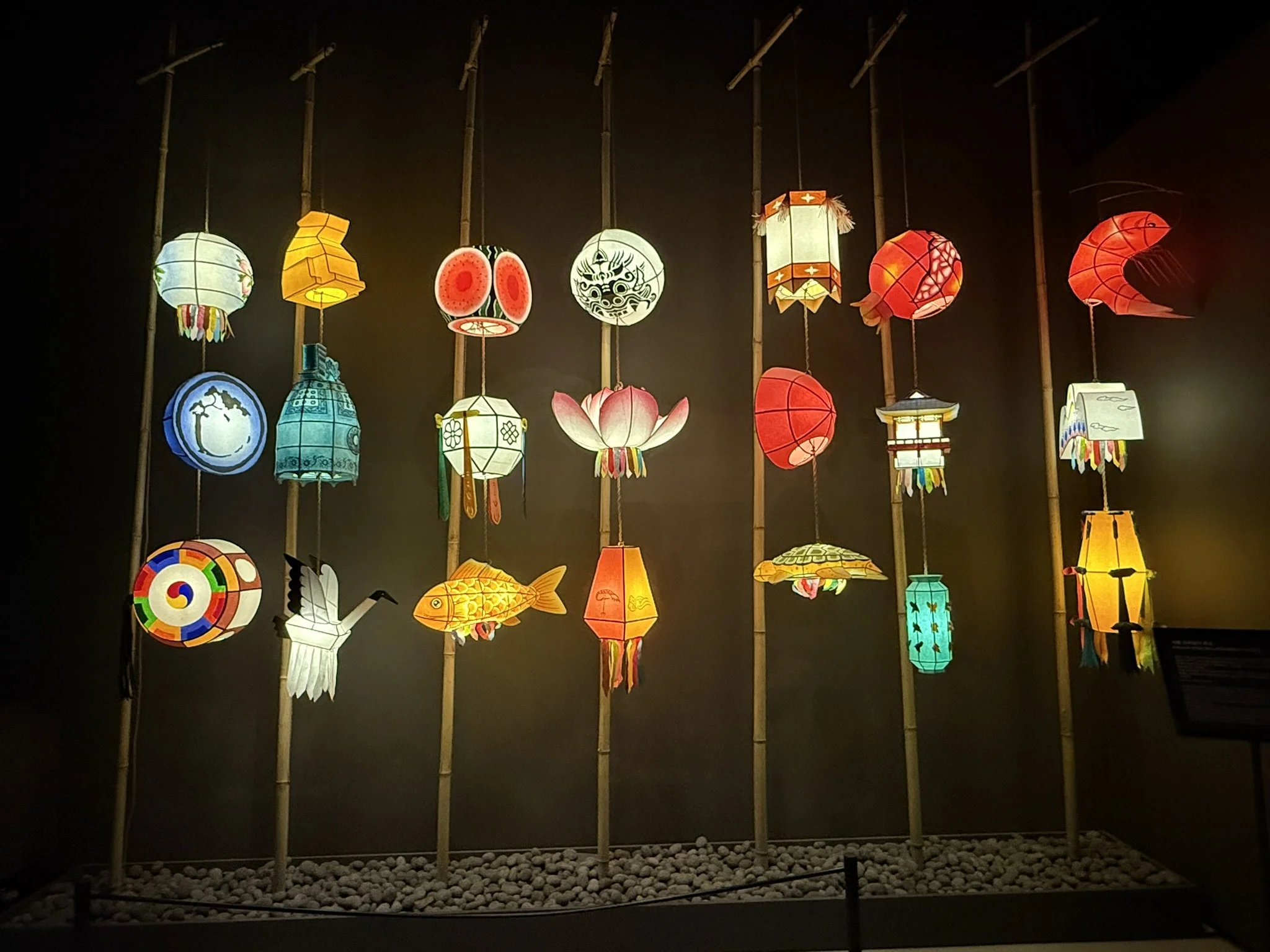

After lunch, the four of us reconvened. We walked over to the National Folk Museum of Korea. This was an amazing museum and probably one of my favorite things I went to on this trip. Using over 98,000 artifacts and replicas of historical objects to illustrate the history of the traditional life of Koreans. There were three main halls: Korean Traditional Daily Life (the stages of life a Korean experiences during their lifetime), A Year in Korea (depicting seasonal changes throughout Korea) and K-Culture (how Korea has entered the global scene).
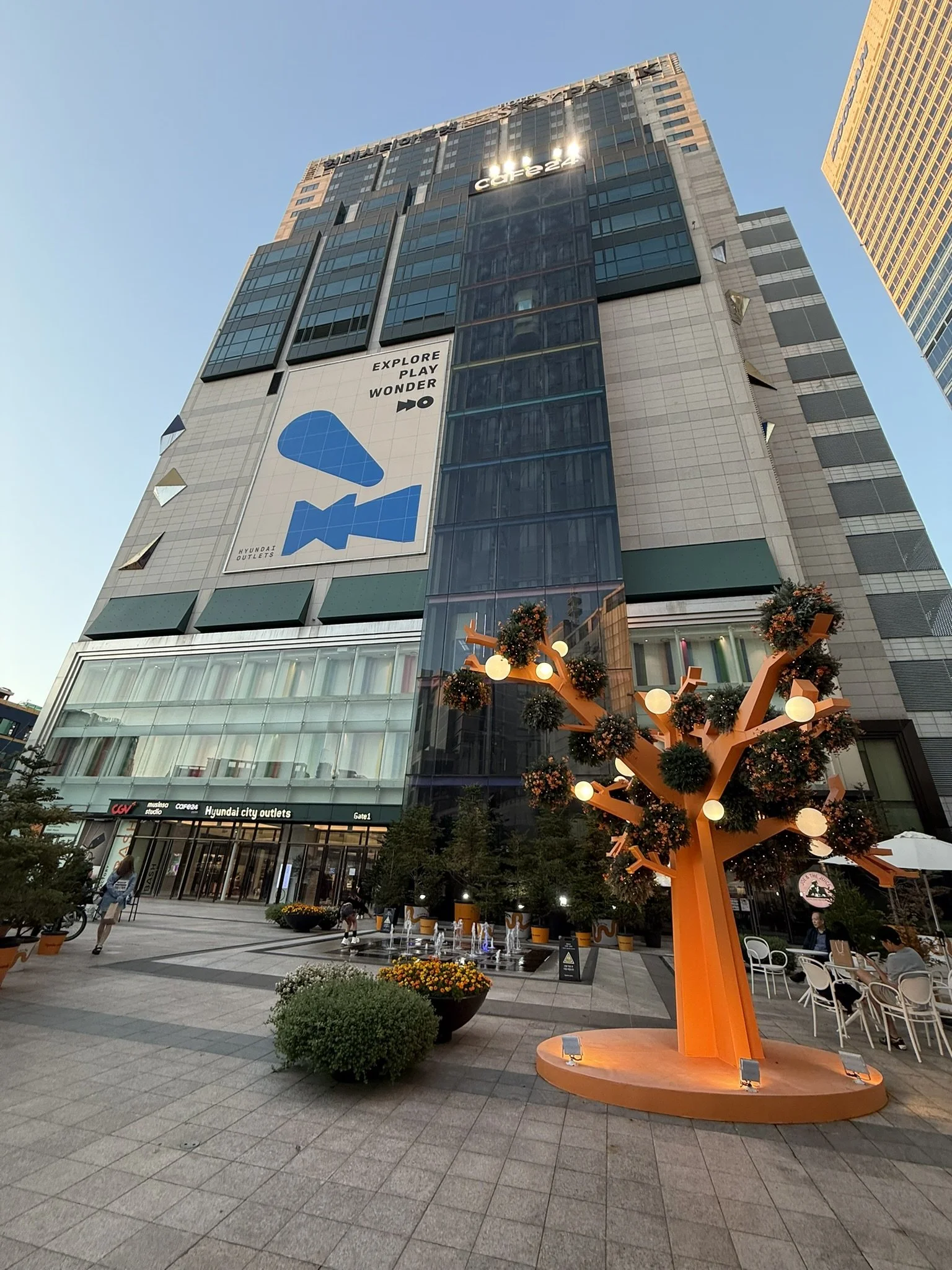
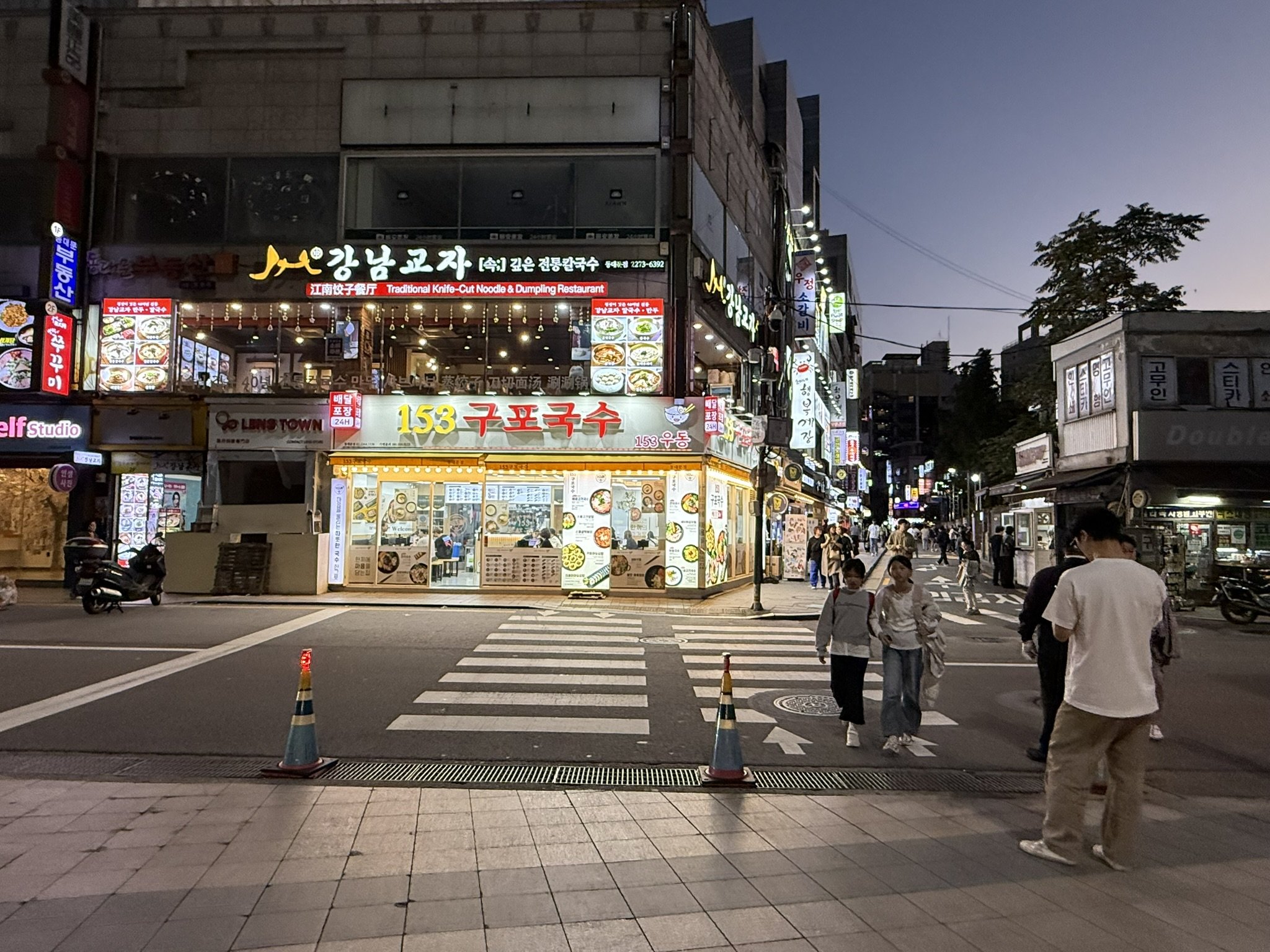

After the museum, Kyle and Danielle wanted to walk around some more. Bryce and I went shopping because October weather is apparently too hot for me and I needed a pair of shorts. We found one pair! Everyone had already switched all of their summer clothes out for fall and winter (think heavy coats). After shopping, we found bibimbap for dinner. I forgot I was in Korea and decided to order spicy. I did NOT need to order spicy. I only need to order spicy when I’m in America because Koreans know how to make regular bibimbap spicy. It was good, but Bryce had to keep refilling my tiny water glass because my mouth was on fire.
Day 3: Friday October 17, 2025 Tour Bus (Seoraksan National Park, Nami Island, Garden of Morning Calm)
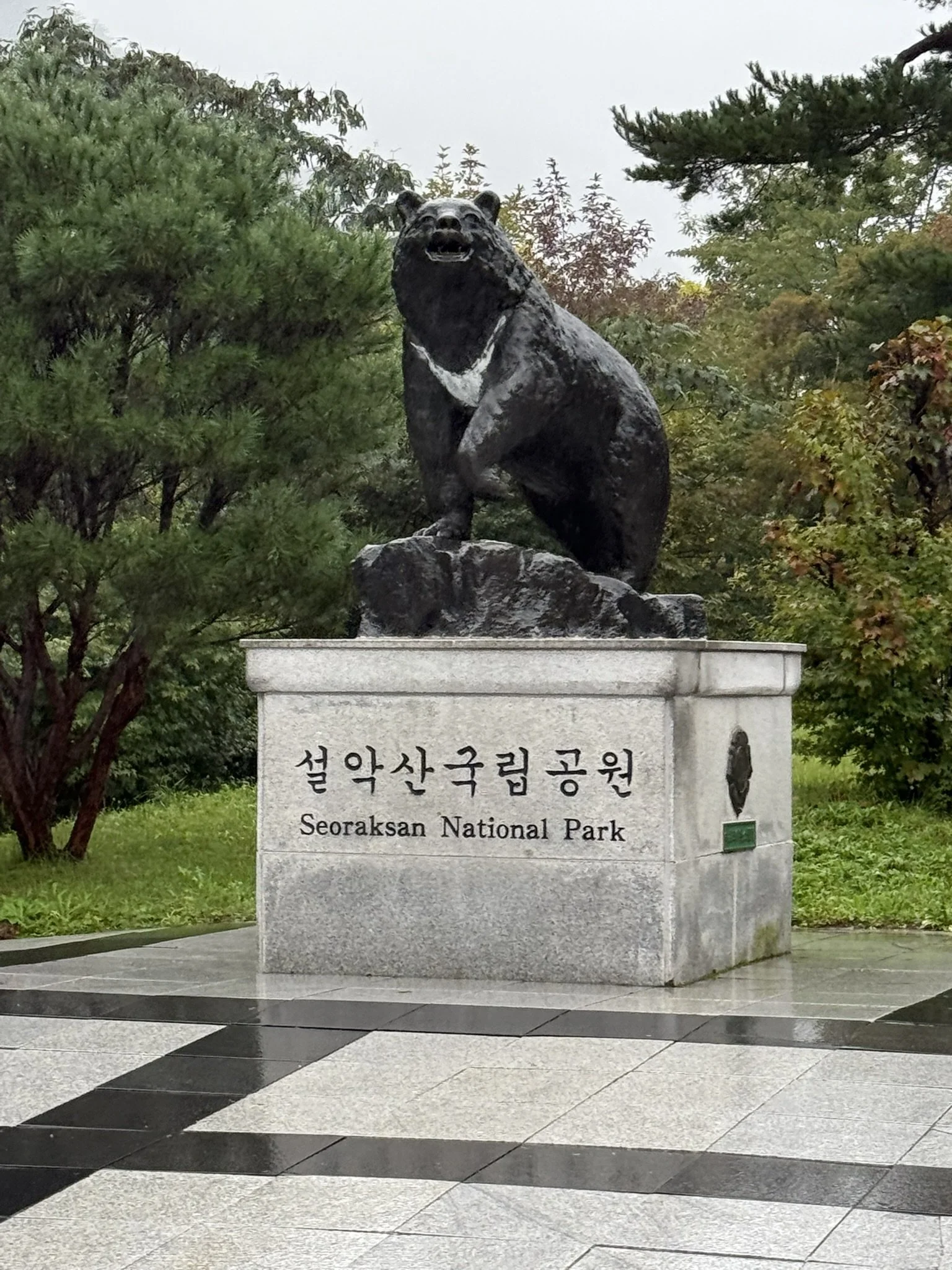
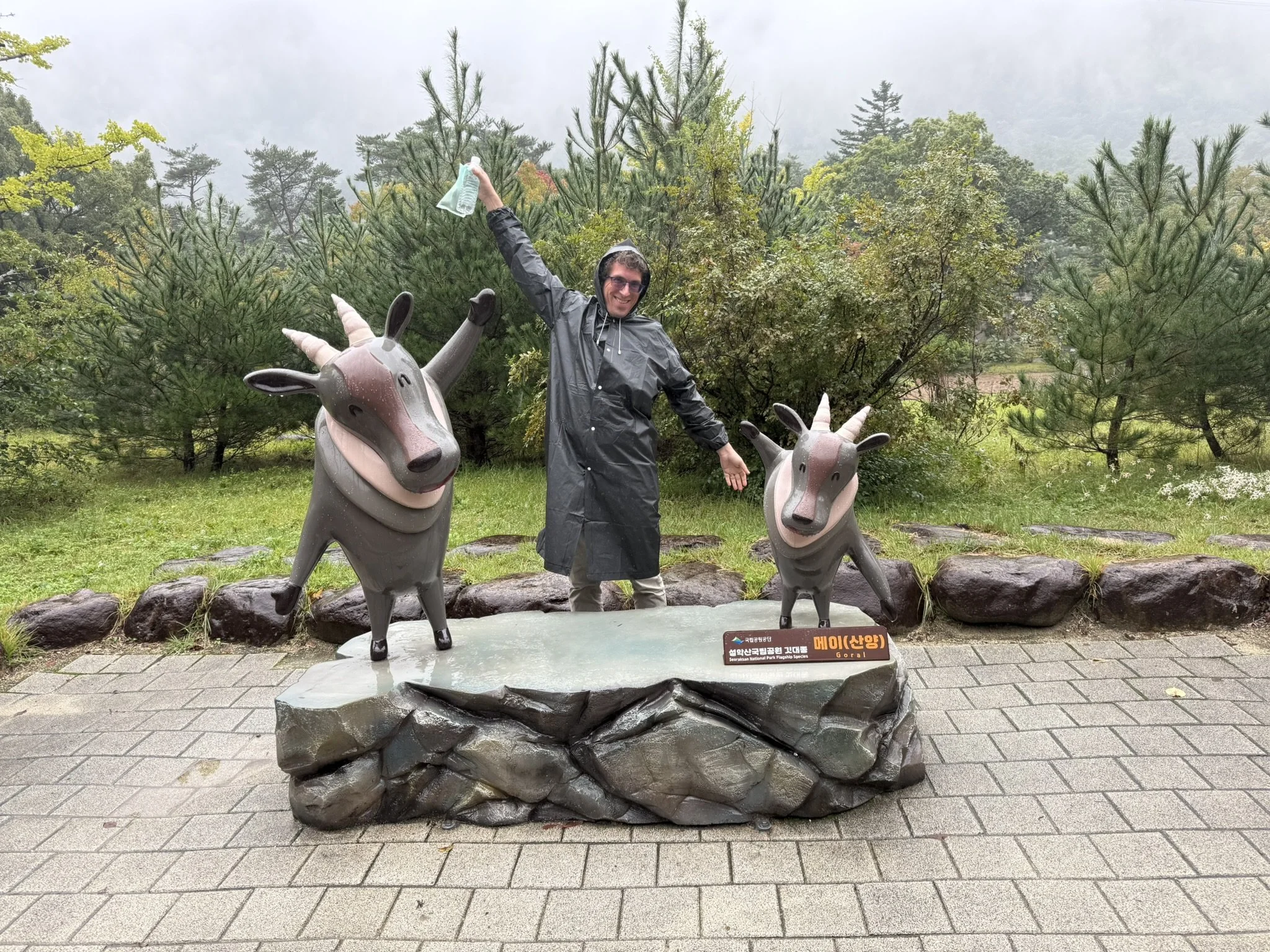
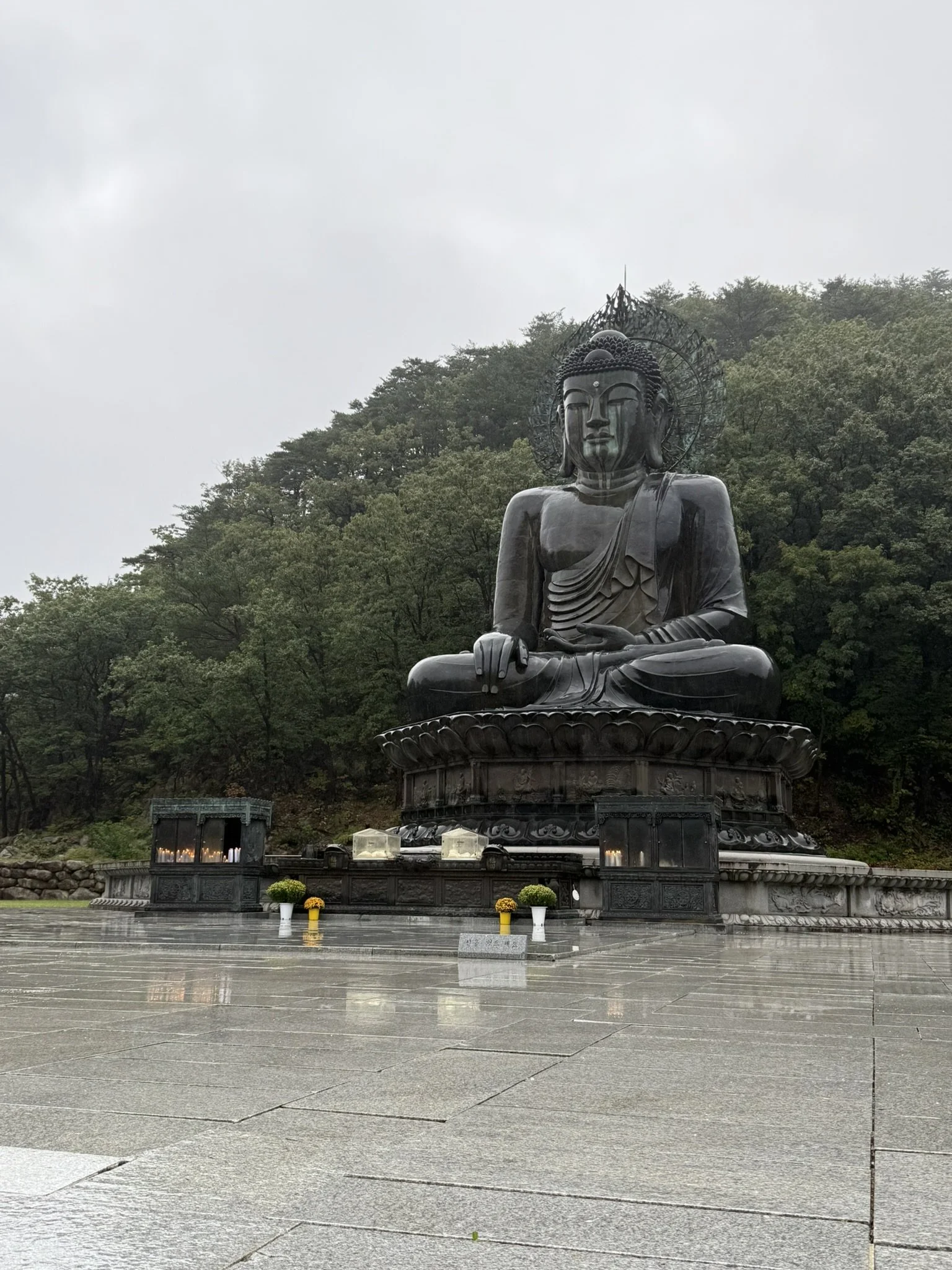
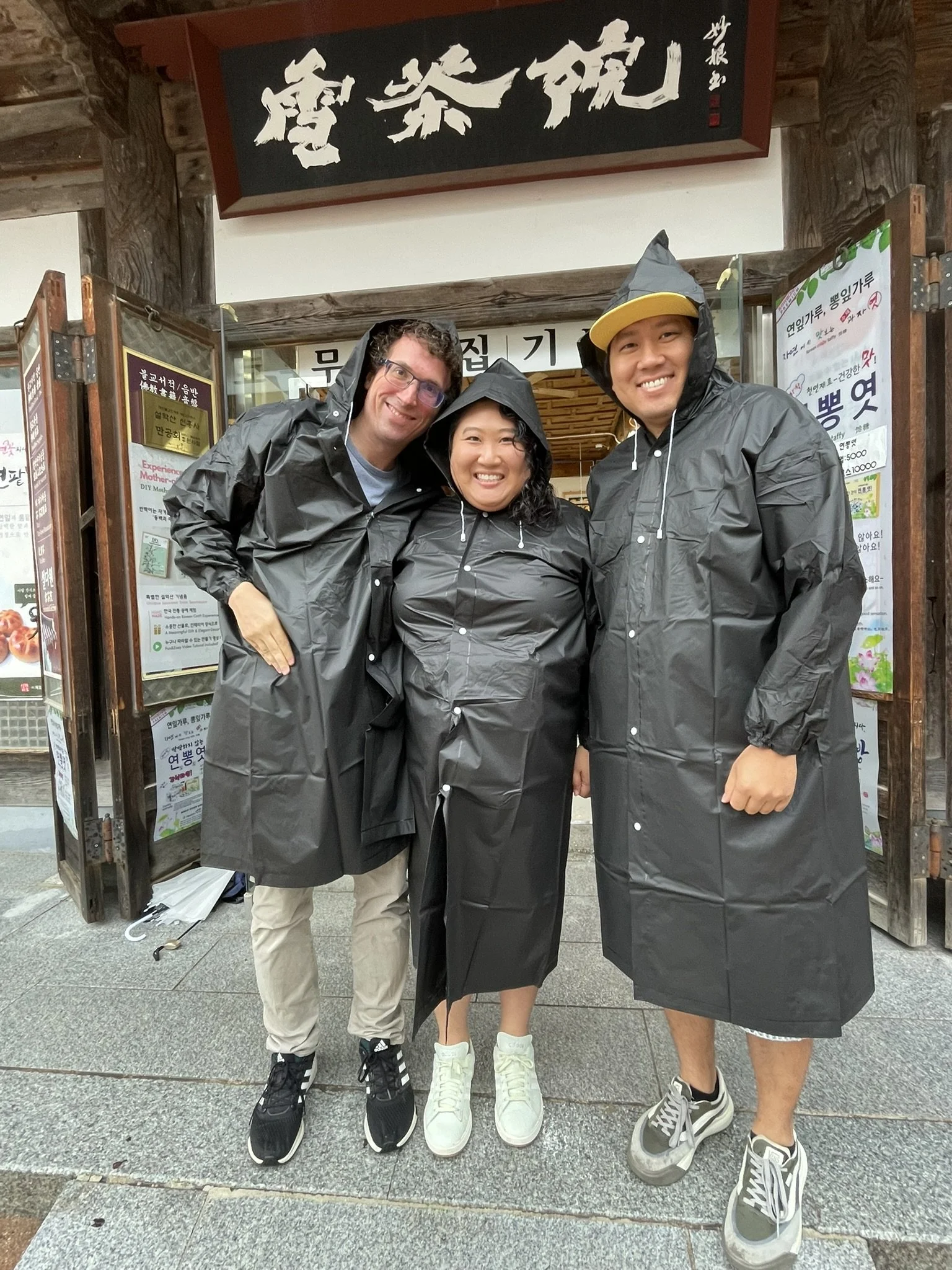
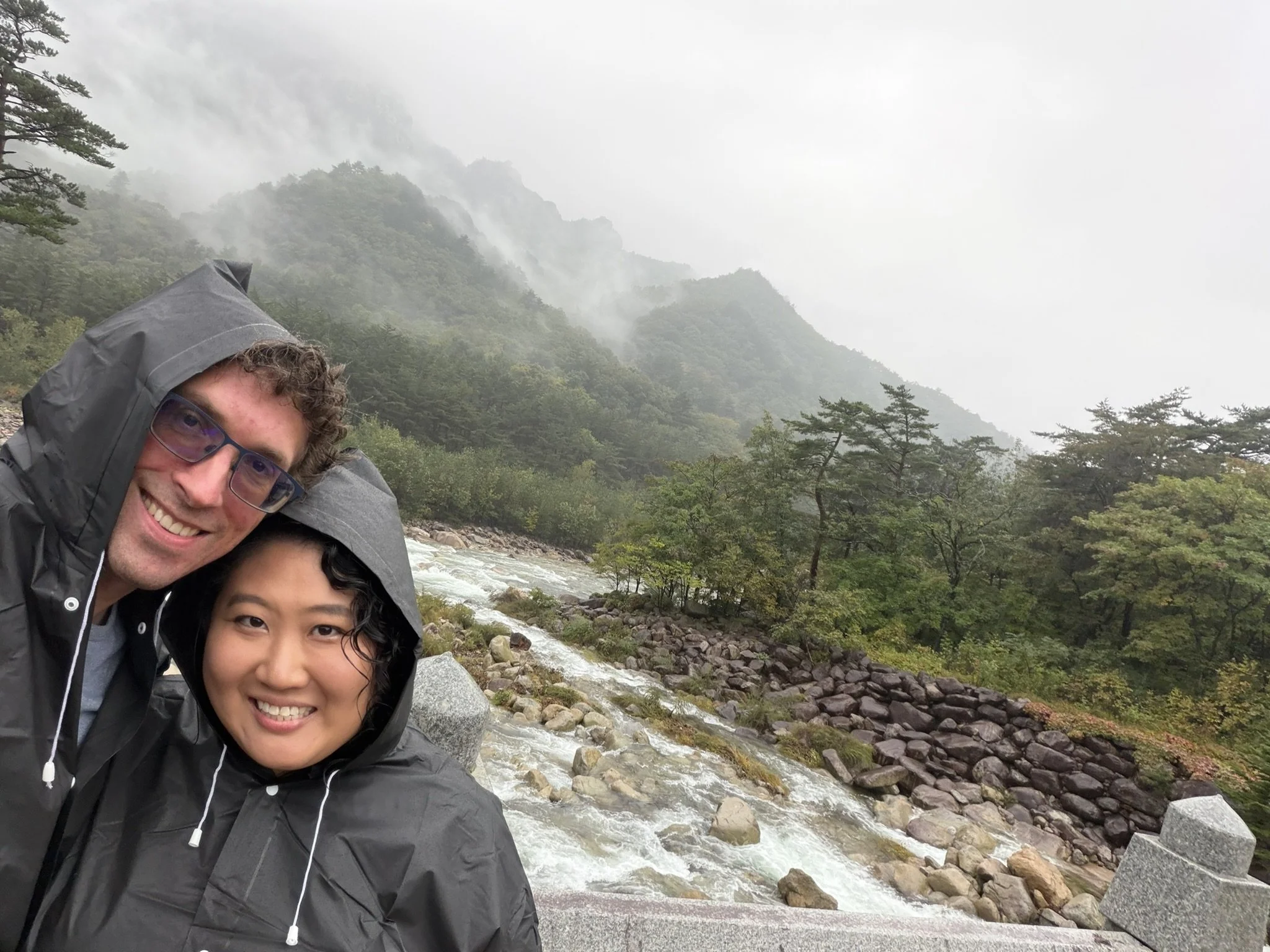
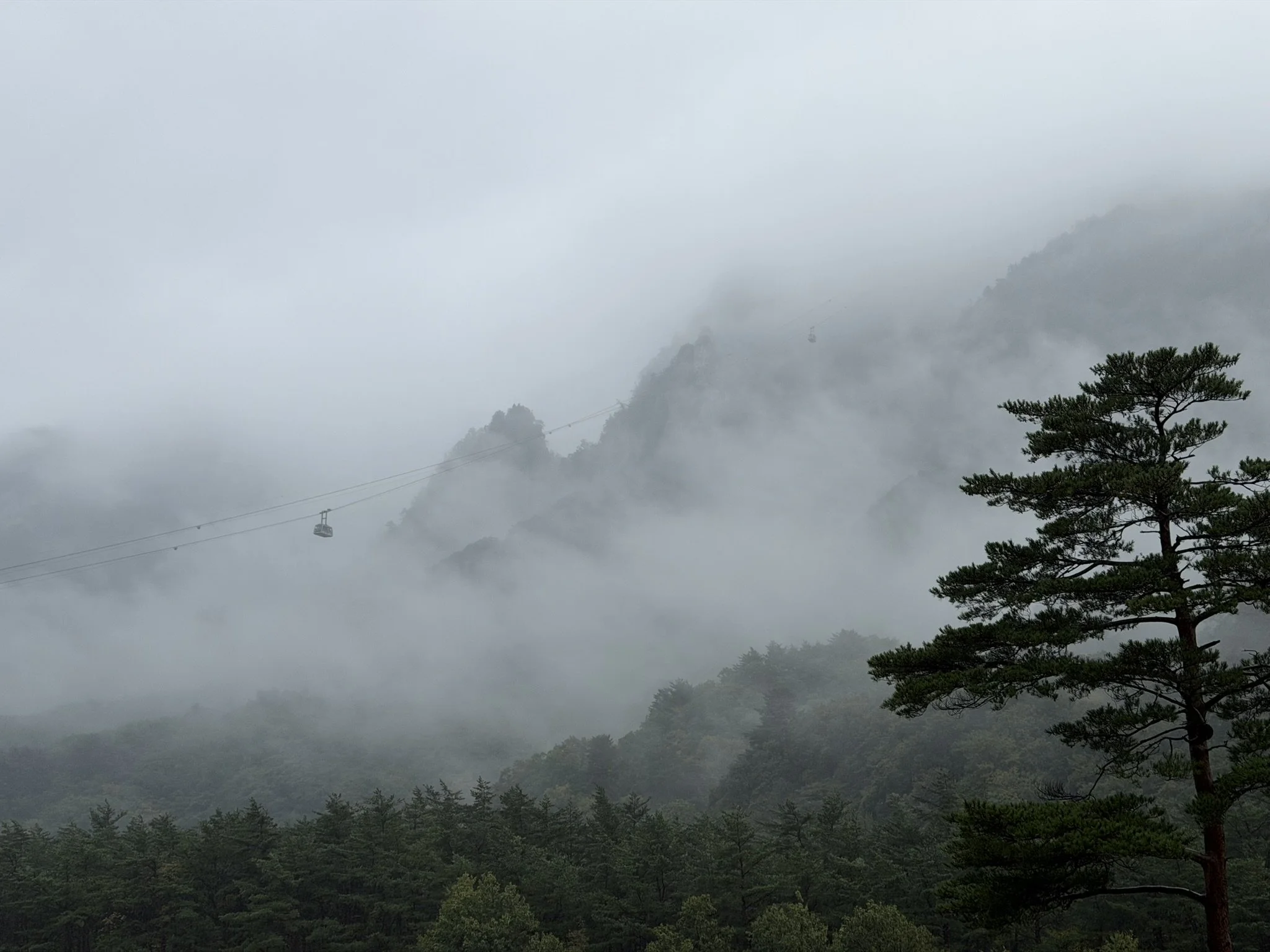
Bryce and I were awake at 4:00am and on the bus by 5:00am. We were at the train station around 5:40am, allowing us to grab some road snacks for our 14 hour long bus tour. We left around 6:00am with our tour guide Patrick. Our first stop was about 2.5 hours east of Seoul to Seoraksan National Park. The tallest Mountain in the Taebaek mountain range in the Gangwon Province is Mount Sorak (or Seoraksan), reaching 5603 feet. Once we were in the mountains, it was rainy. Thankfully, a coffee/souvenir shop sold rain ponchos. We all bought a poncho and did a short hike. We were first met with a Bronze Buddha of Sinheungsa (Buddhist Temple) near the main entrance. This Buddha is 48 feet tall and sits on a 15 foot pedestal. There was even a large amount of incense burning nearby. I was interested in the Seoraksan Cable Car, but it was so foggy that we wouldn’t have been able to see anything!
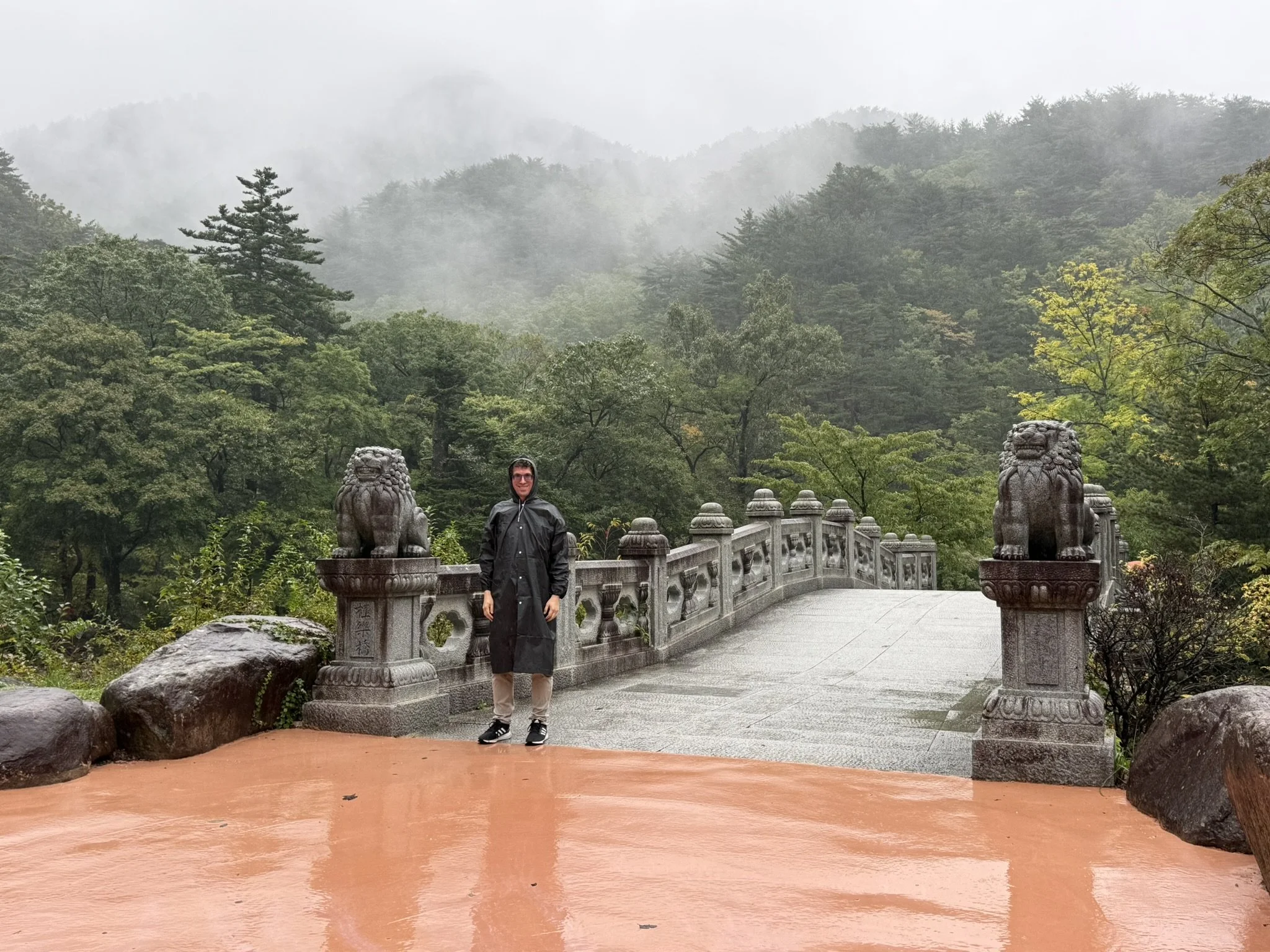
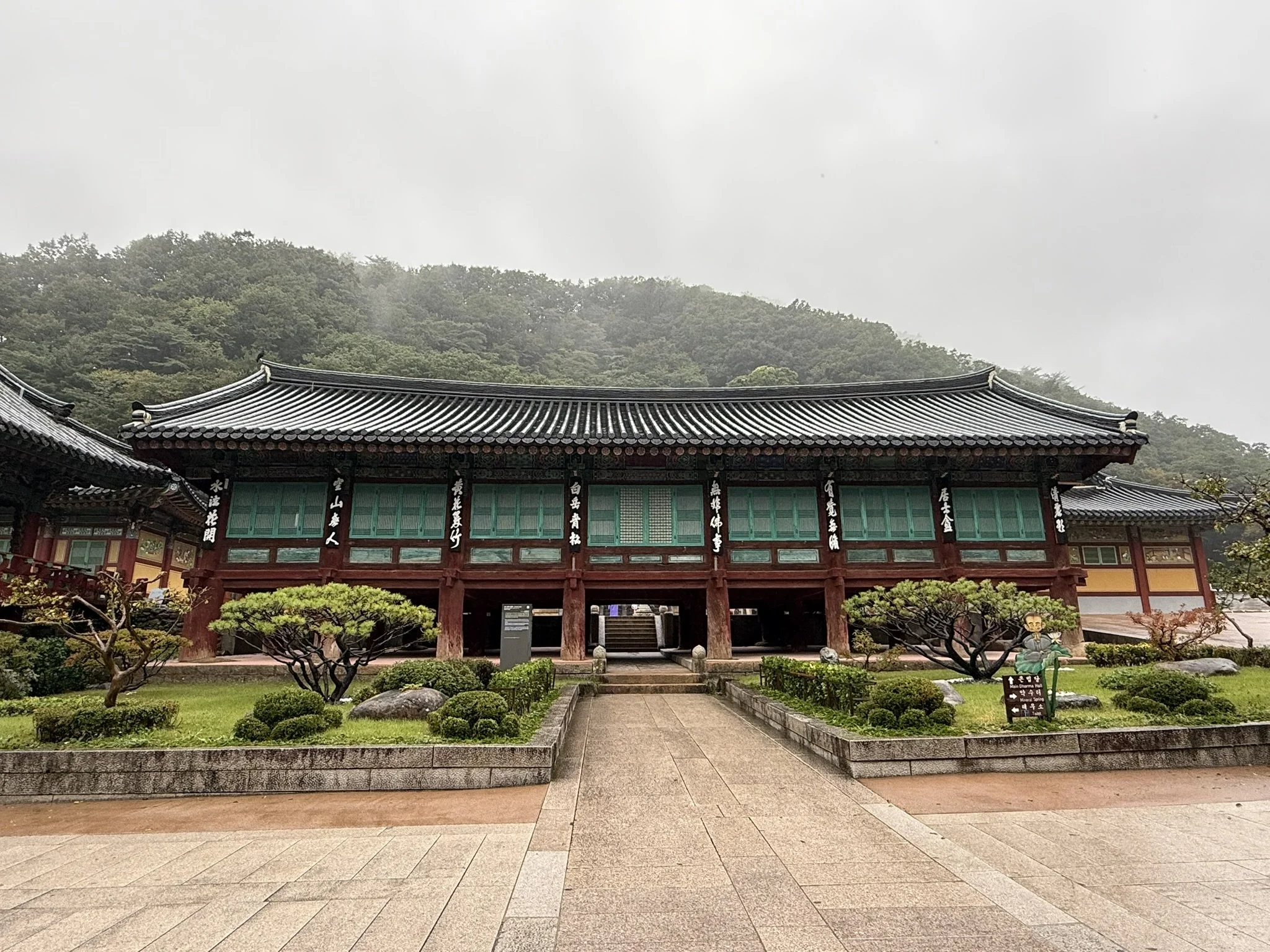
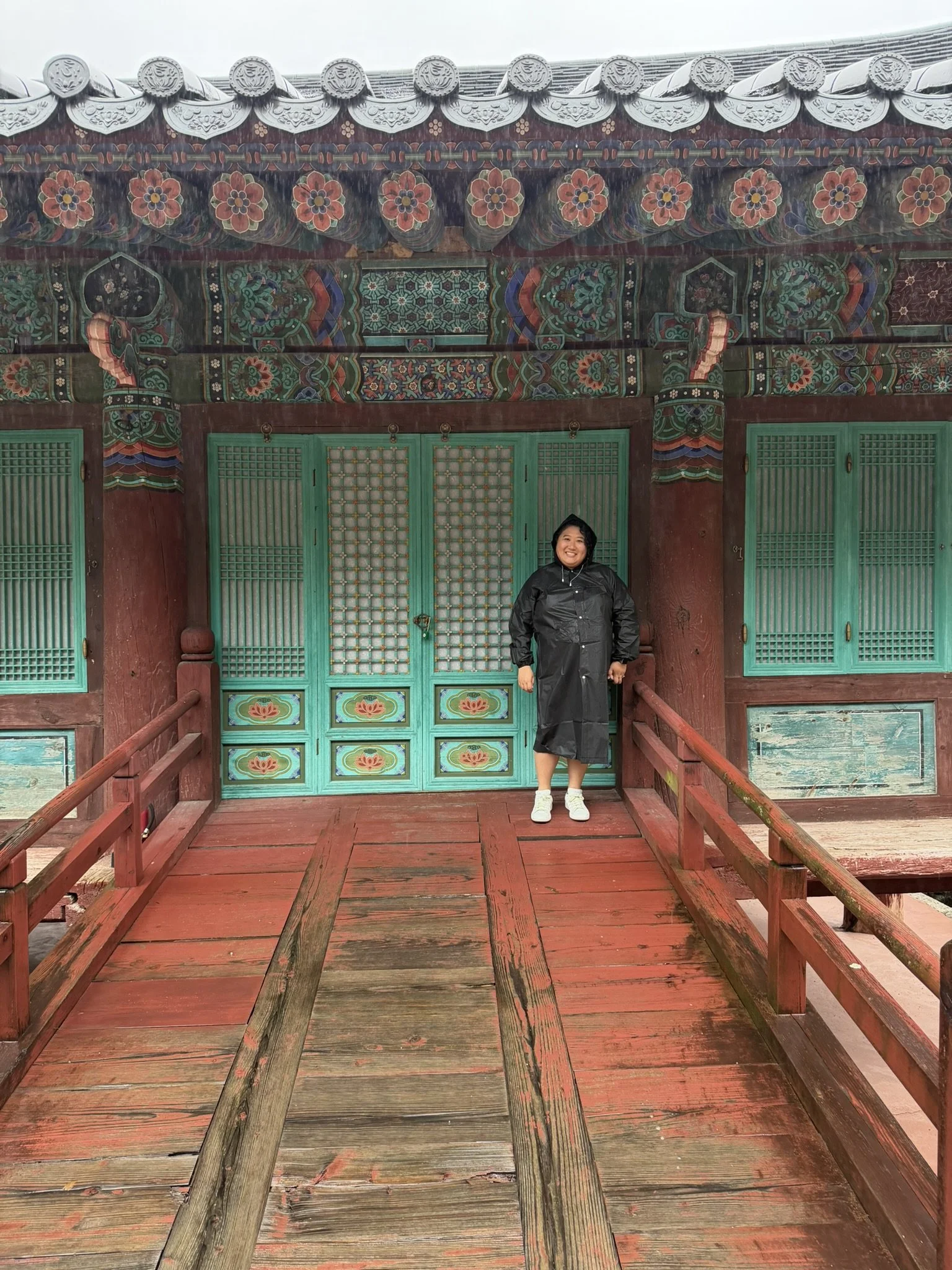
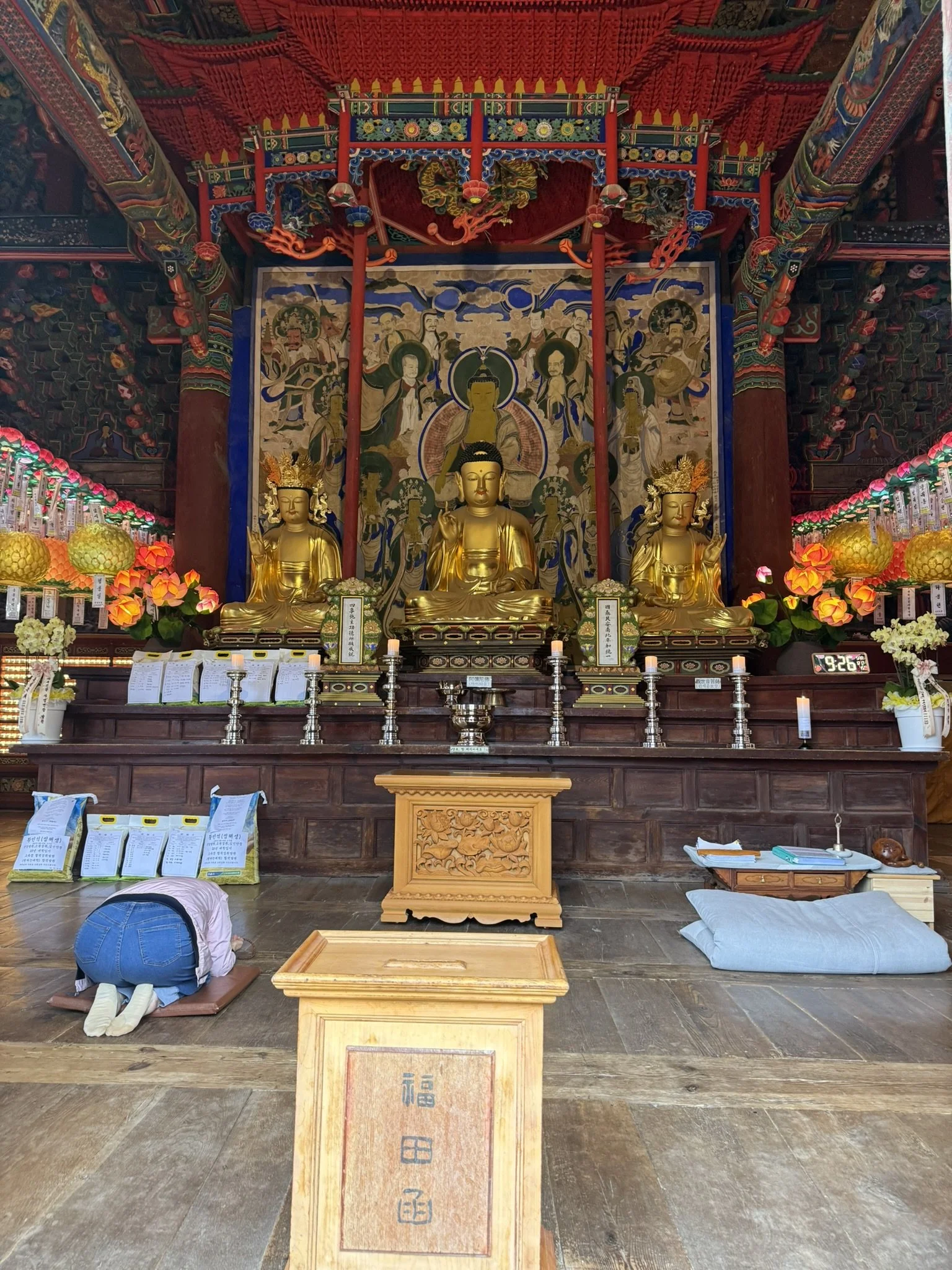
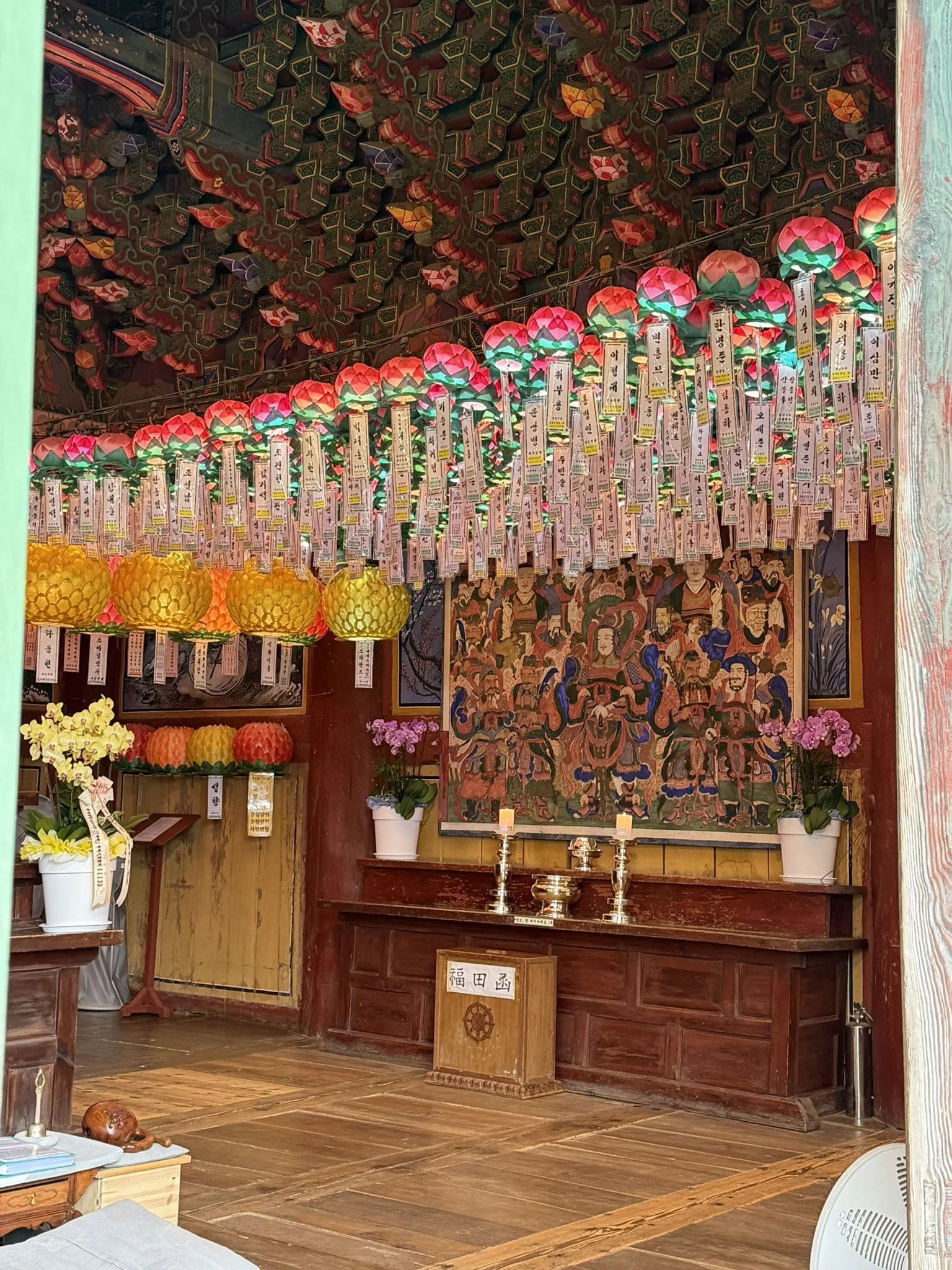
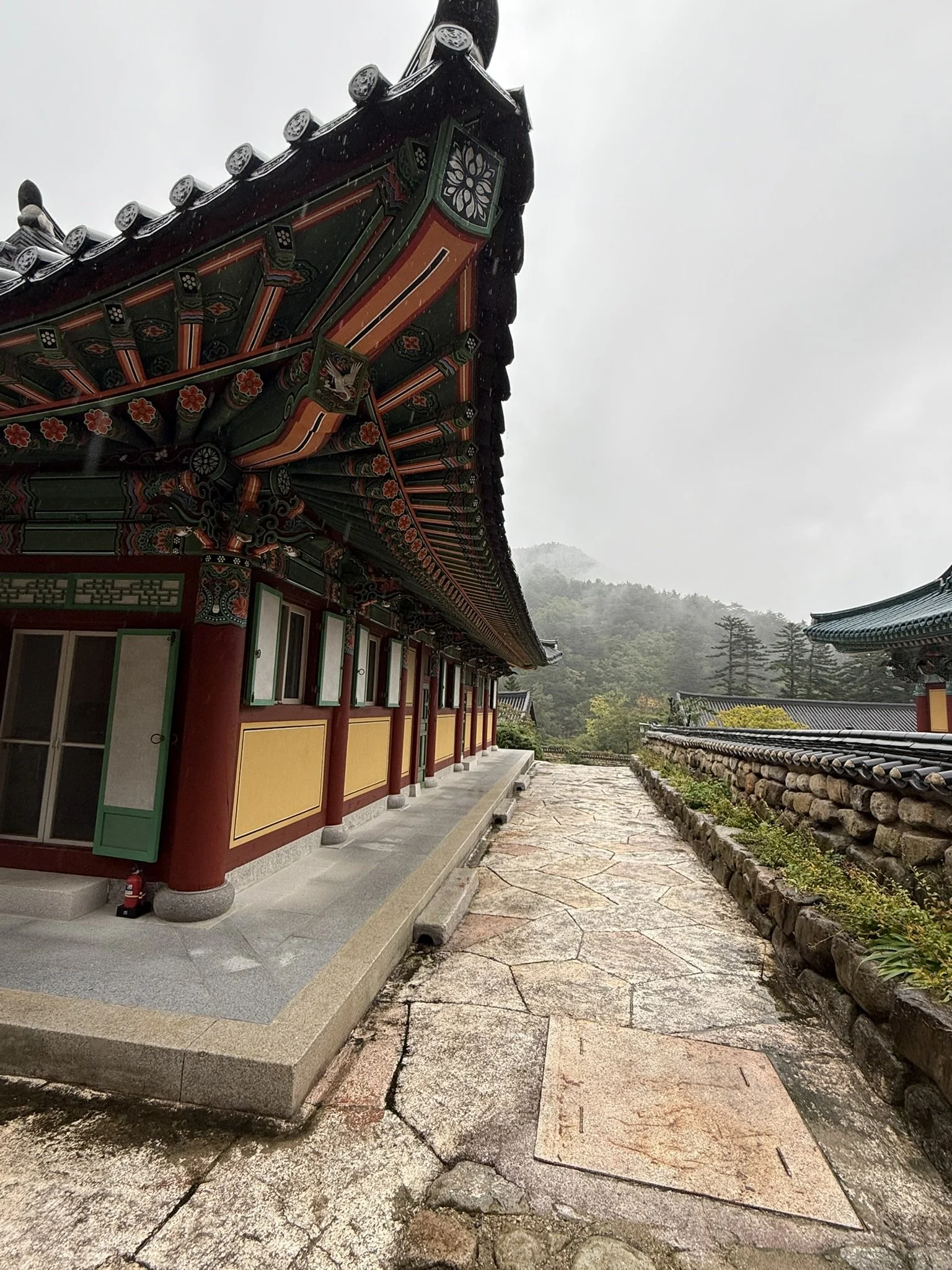
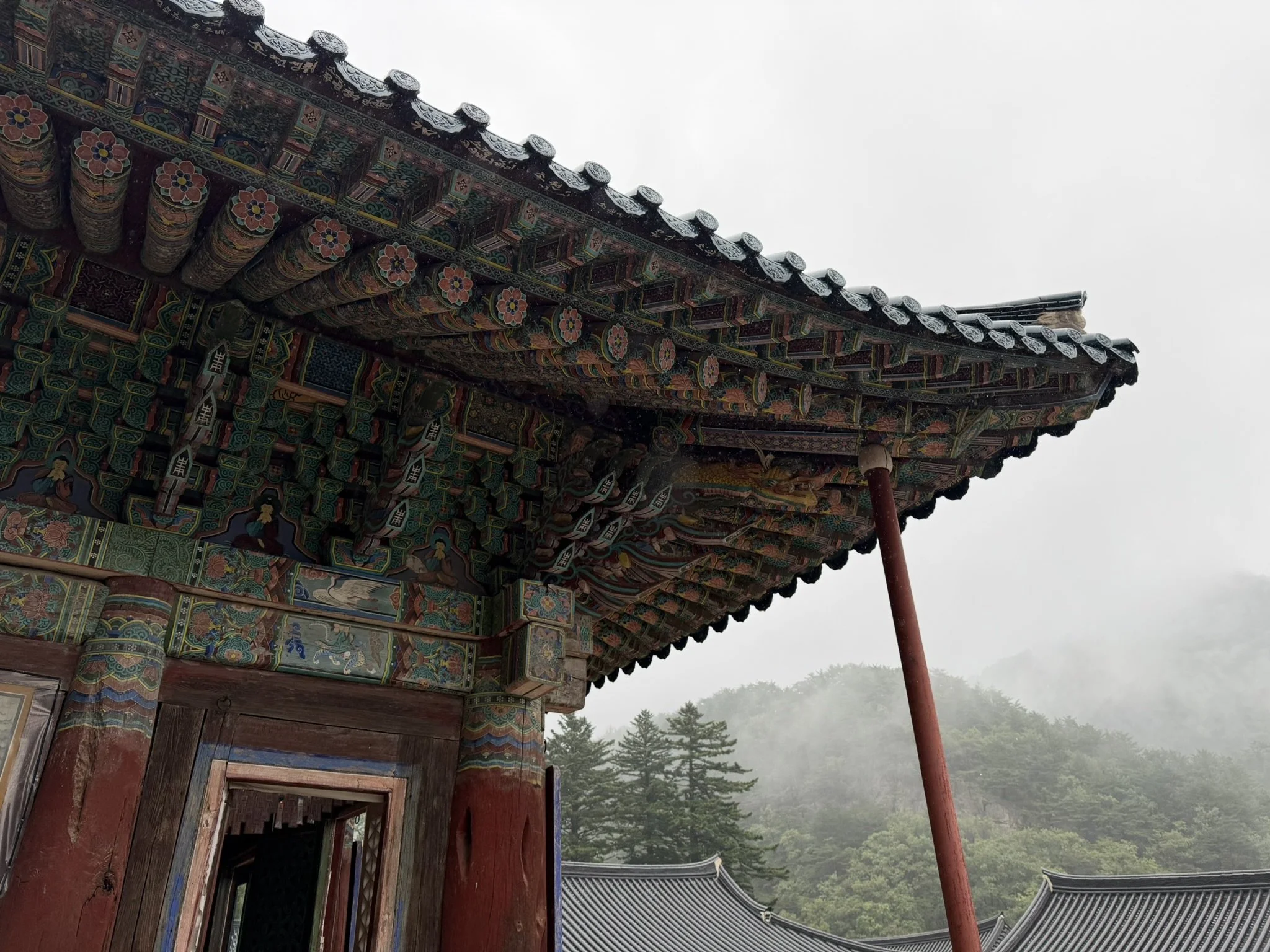
After walking some of the path and turning around, we went to explore Sinheungsa (Buddhist Temple). This is the head temple of the Jogye Order of Korean Buddhism and is located on the slopes of the mountain. This temple is believed to be the oldest Zen (Seon) temple in the world, built in 653 by Jajang (however, burnt down in 699, rebuilt and burnt down again in 710, rebuilt and burnt down in 1645 and rebuilt for the final time in 1648).
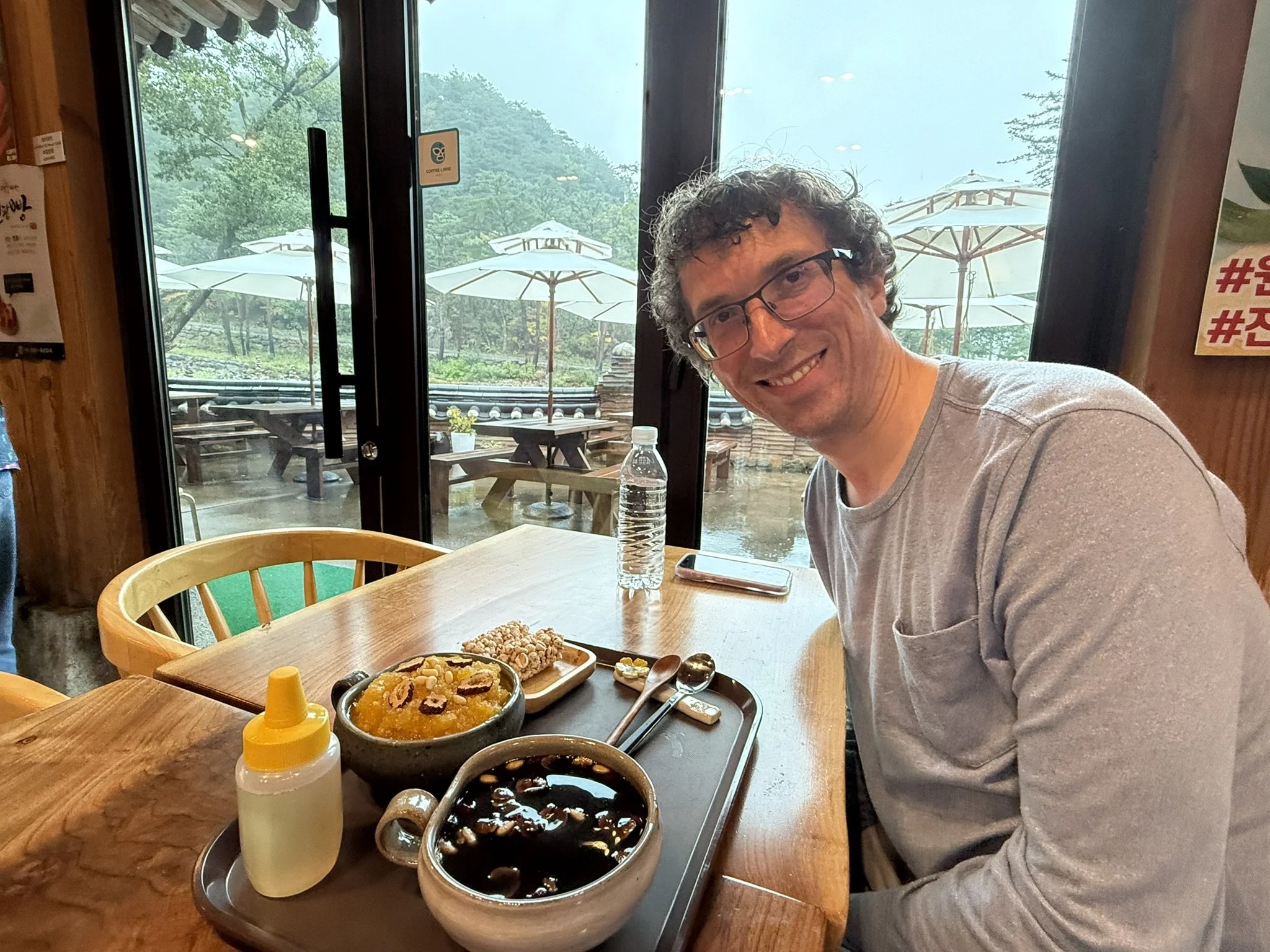
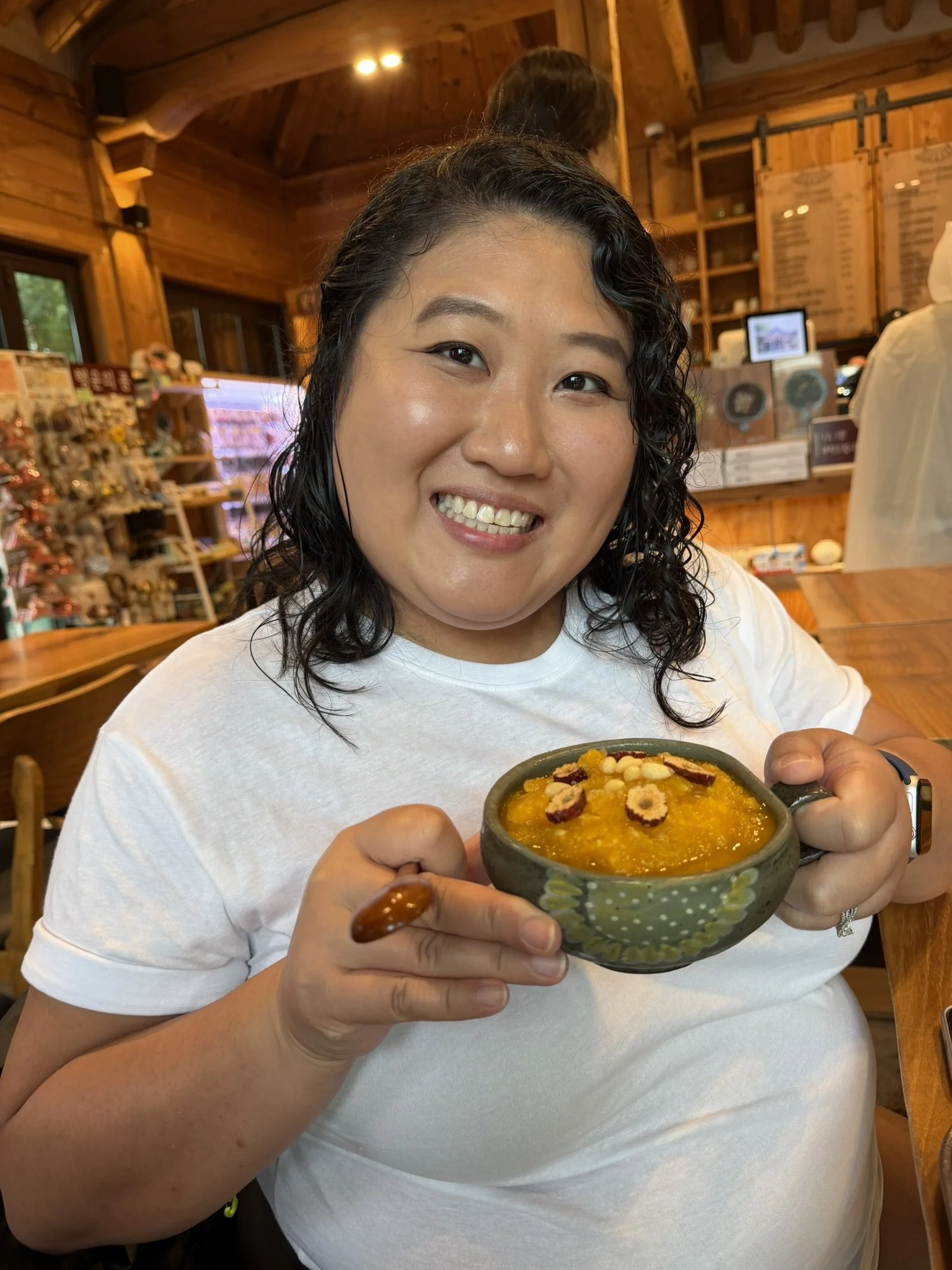
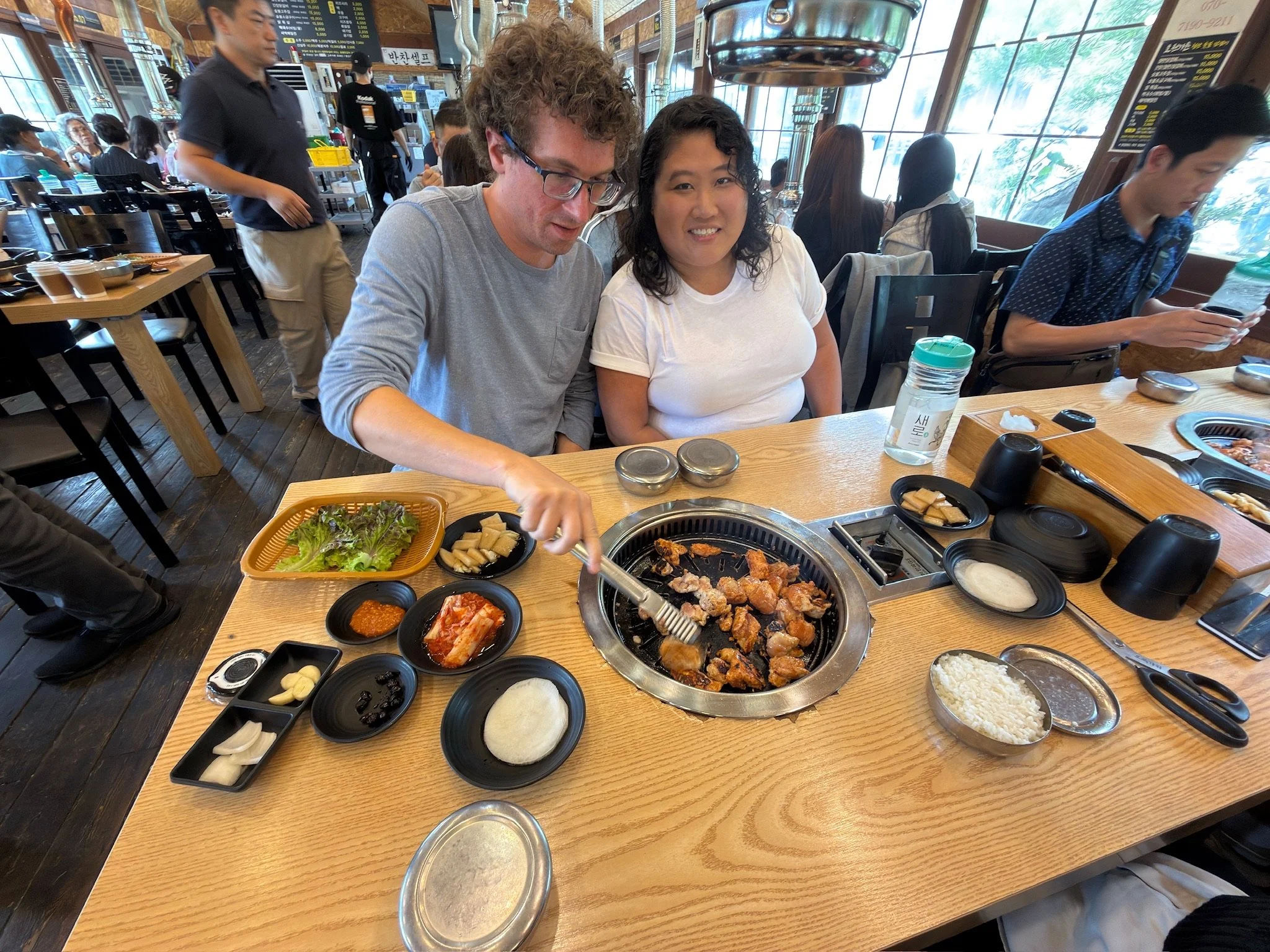
After the hike, we stopped in at a cafe. Bryce ordered the Sipjeondaebo-tang tea, also known as the “Ten Perfectly Balanced Tea” made from a blend of ten specific herbs and other ingredients as well. It is believed to help those feeling unwell and is popular for regaining energy or warmth. It tastes a bit like medicine and includes the common ingredients of angelica root, cnidium officinale, astragalus root, licorice root, ginseng, poria cocos, rehmannia glutinosa, paeoniae radix, cinnamon, jujube, atractylodes lancea, and arrowroot. I on the other hand ordered the Pumpkin sikhye, a traditional Korean sweet rice drink made by adding sweet pumpkin to a fermented malt and rice beverage. It basically tasted like a pumpkin slushie! We stopped at a chicken BBQ restaurant for lunch. Apparently the area has a lot of chickens raised in the area, so there are many restaurants that serve chicken for lunch. It was good, but so many of our fellow tour members seemed so confused about sharing a grill and eating lunch together.
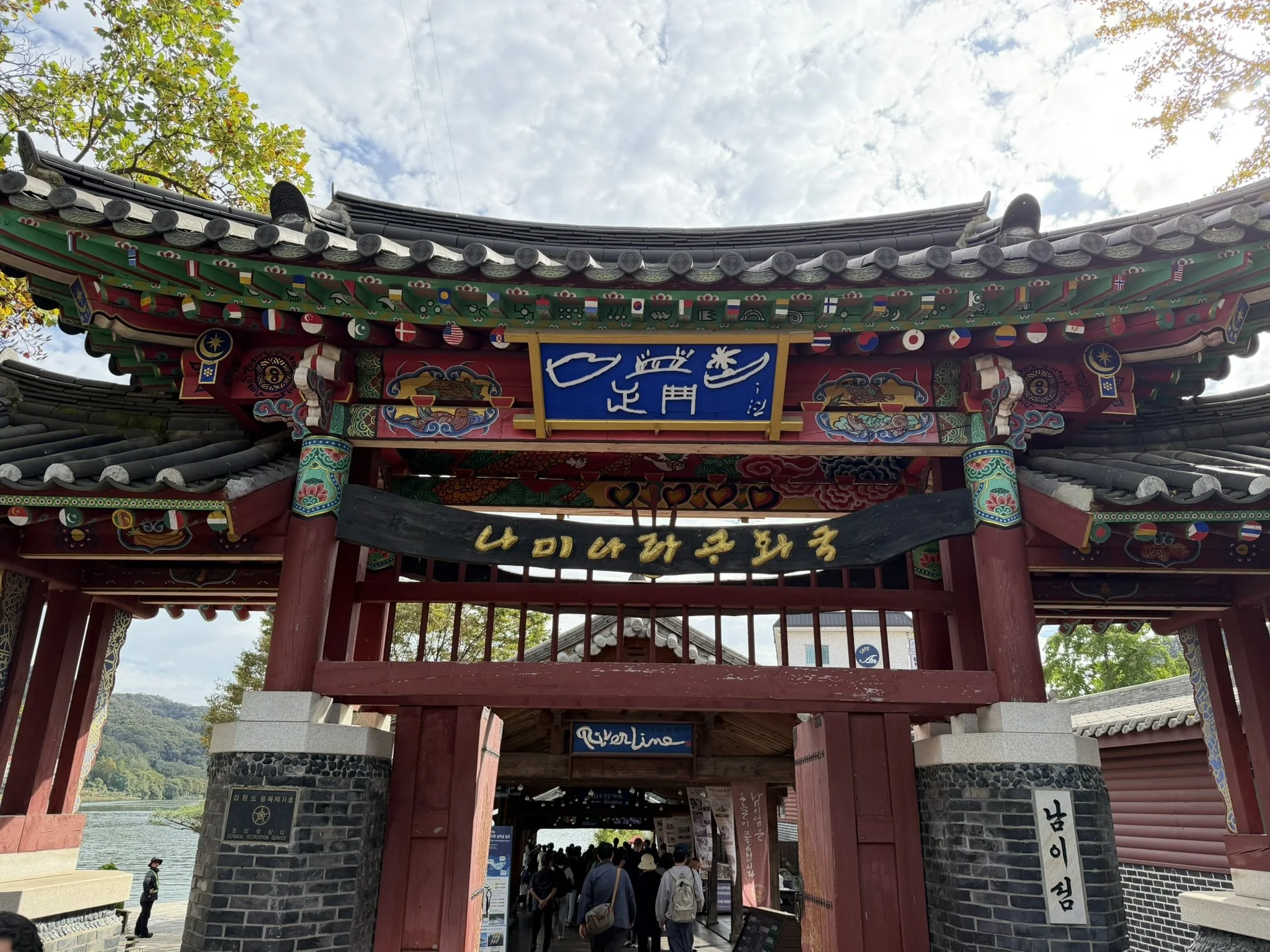
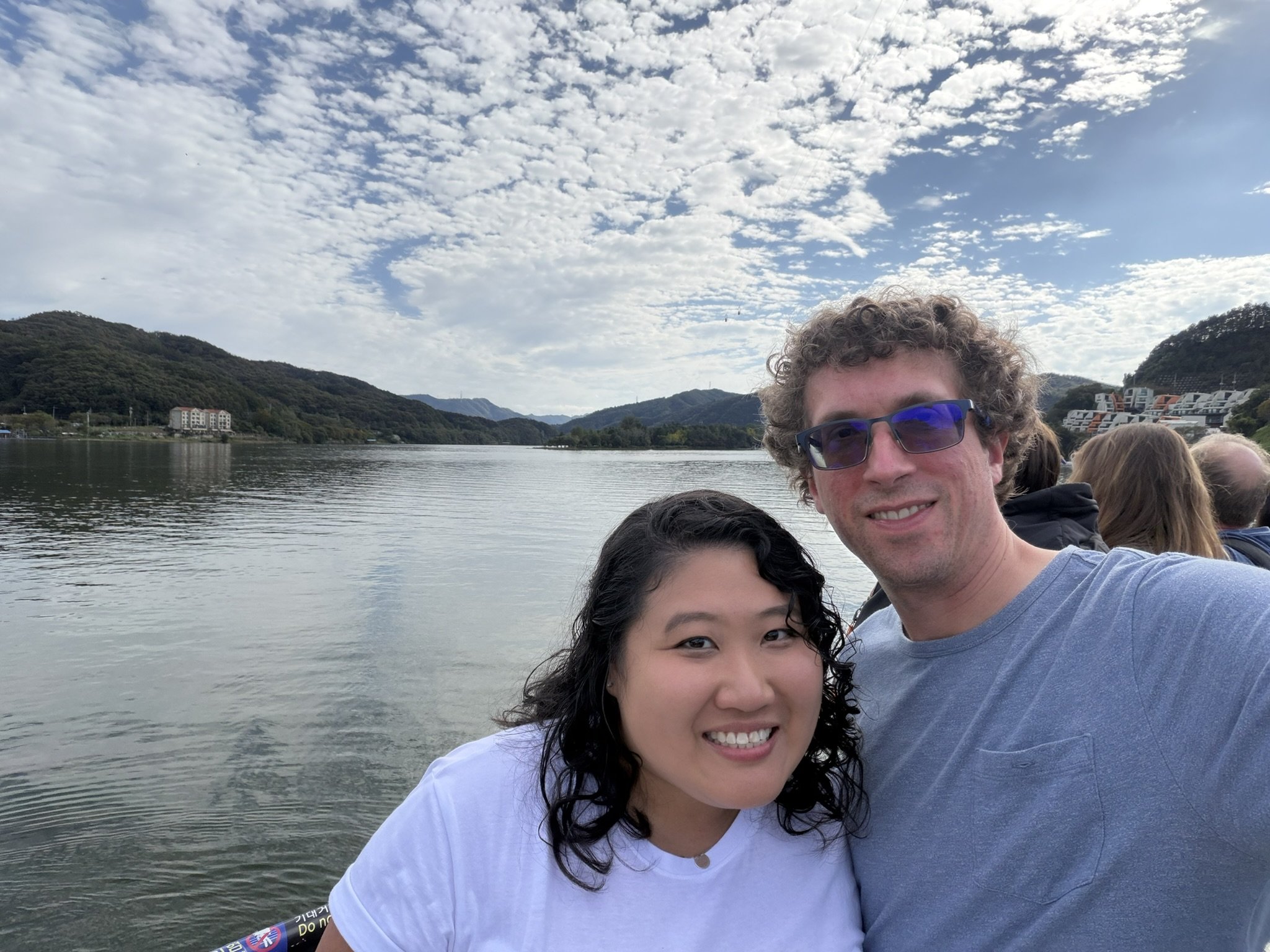
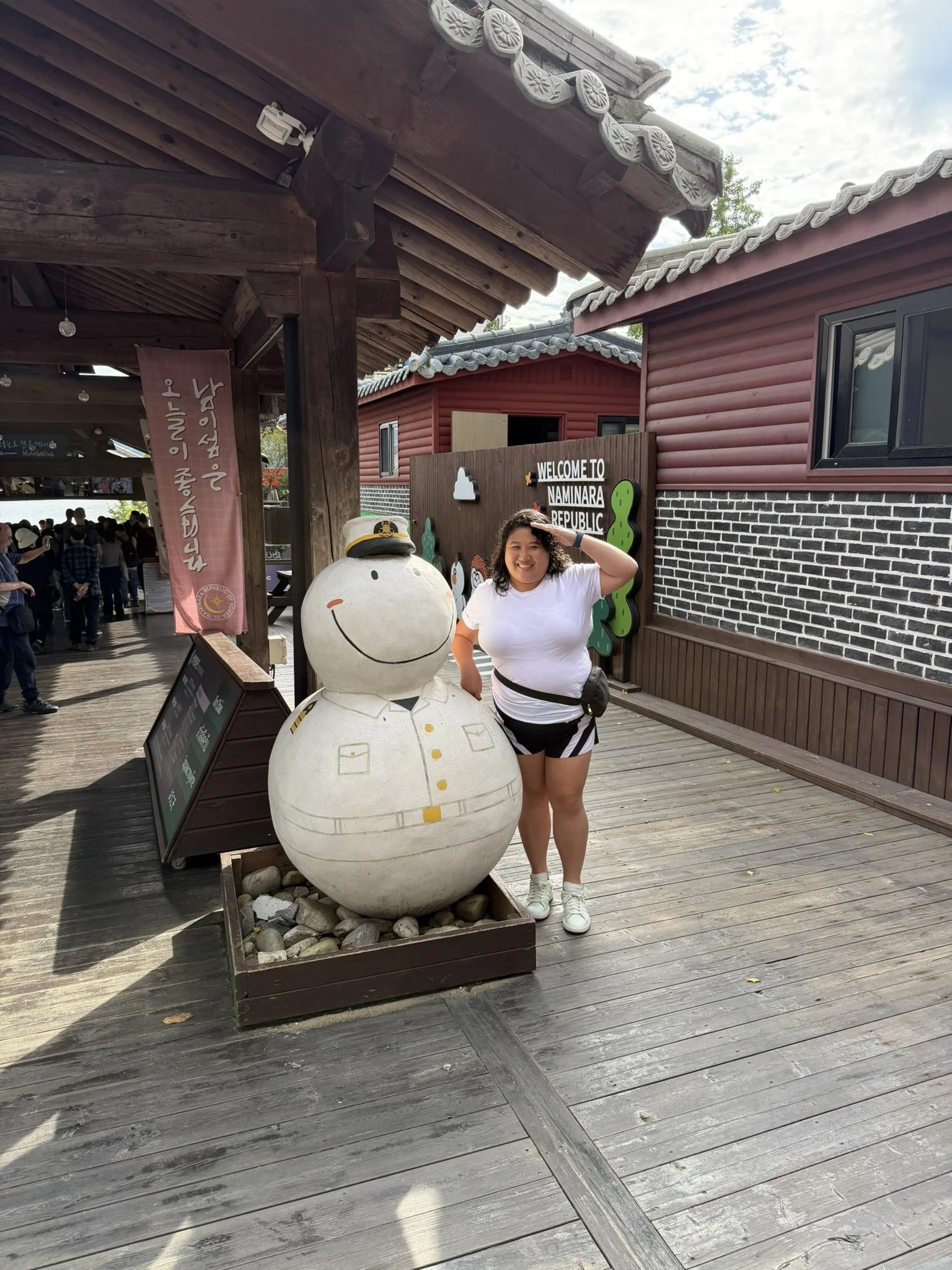

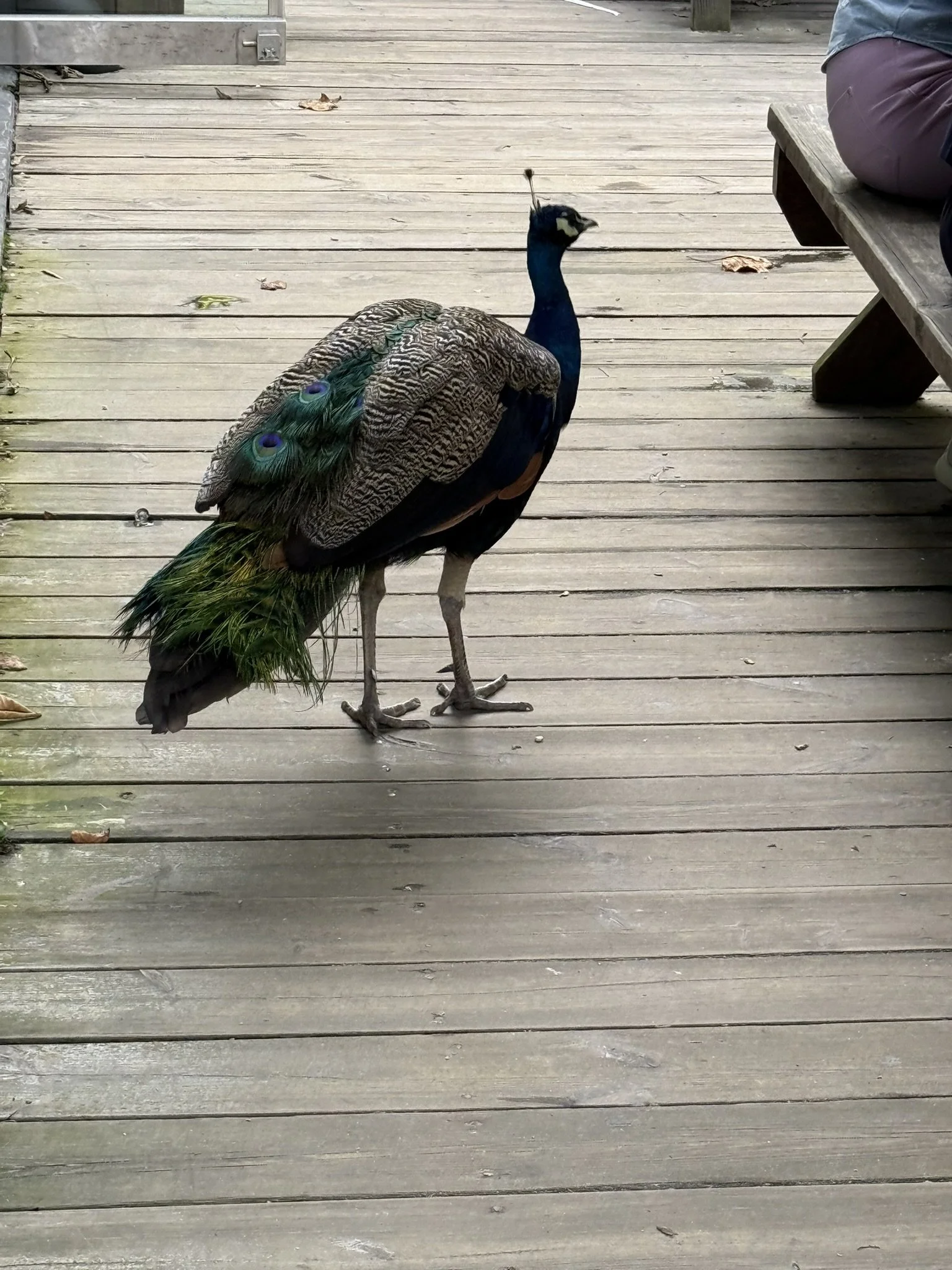

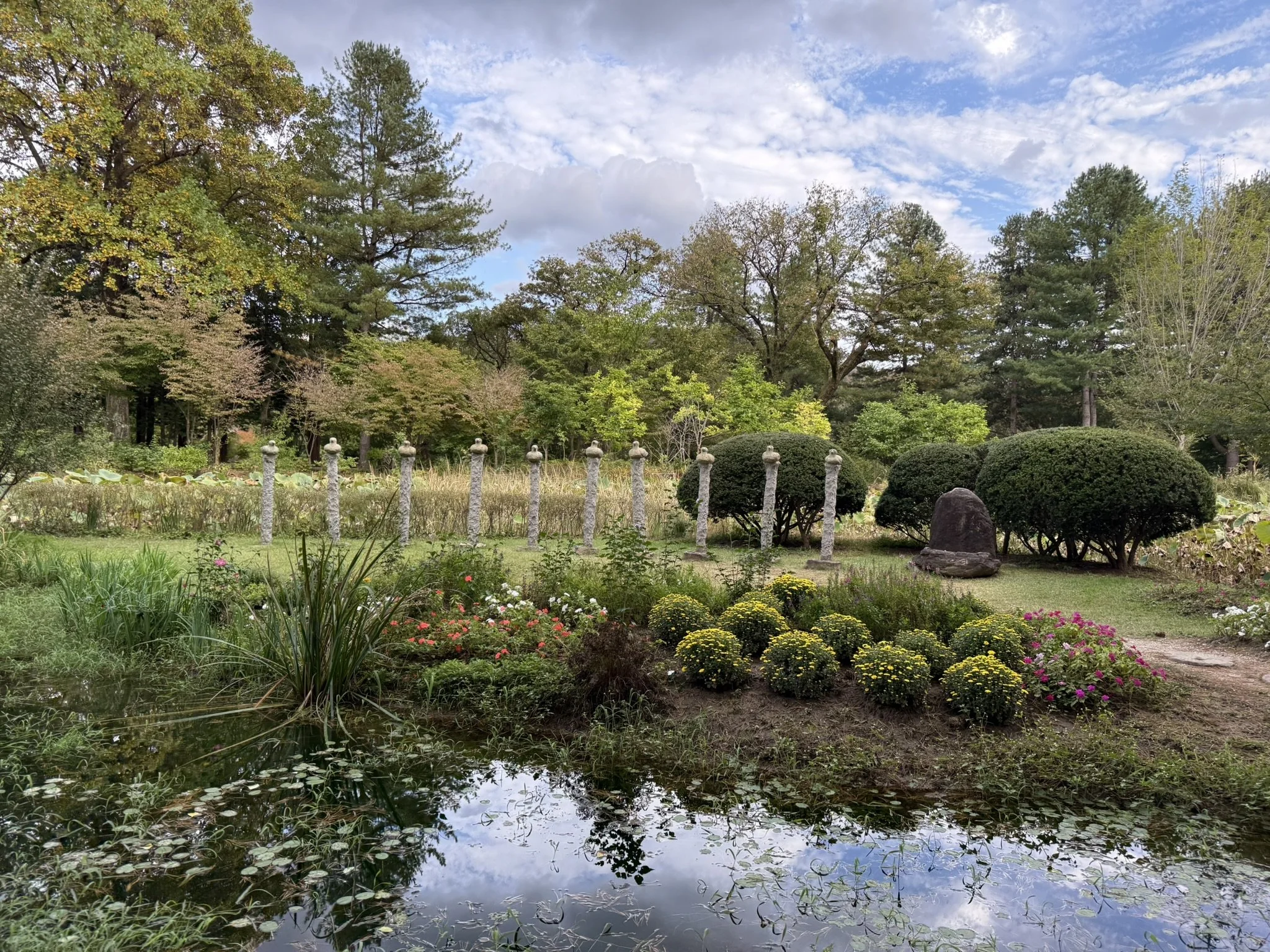
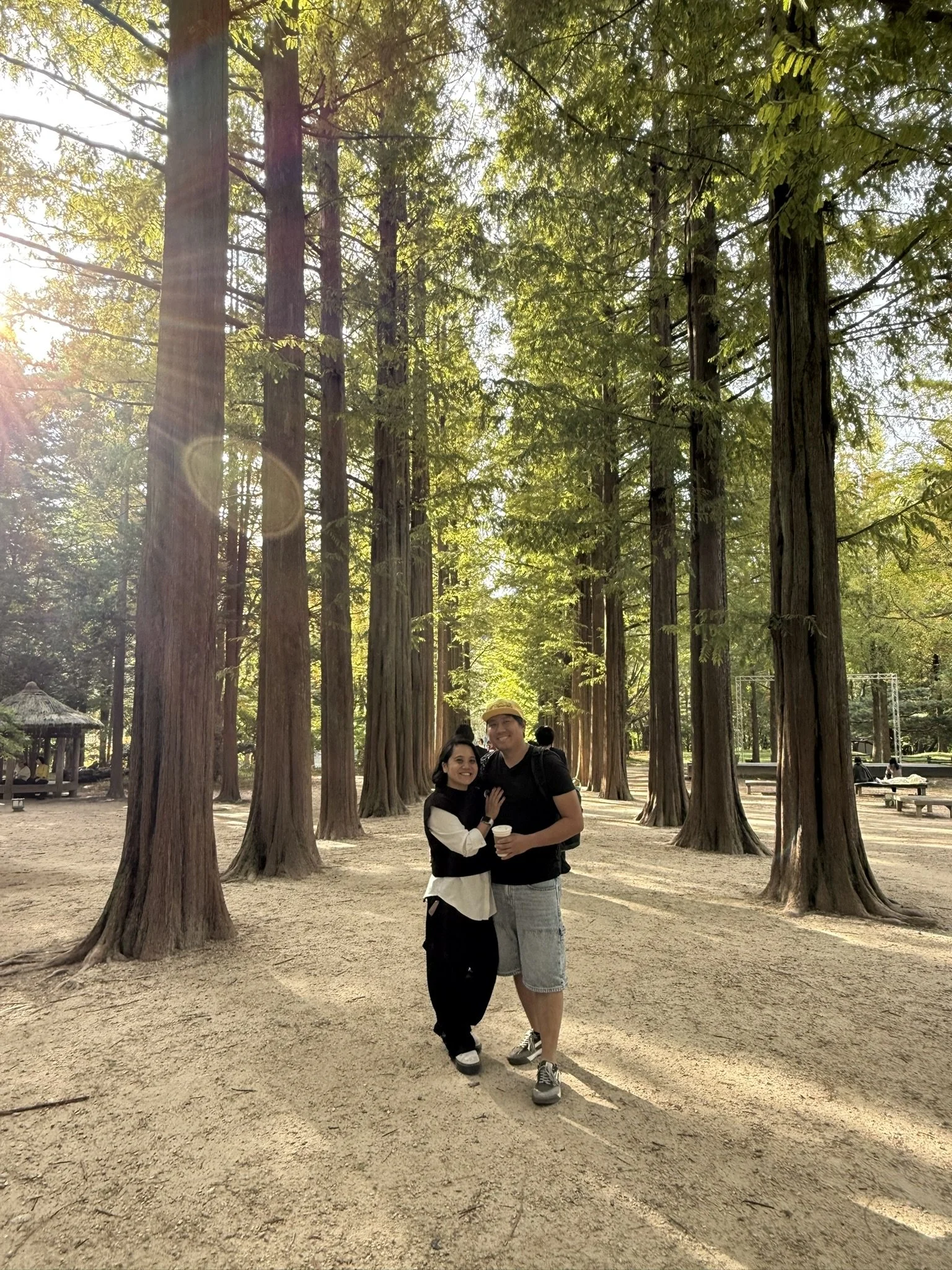
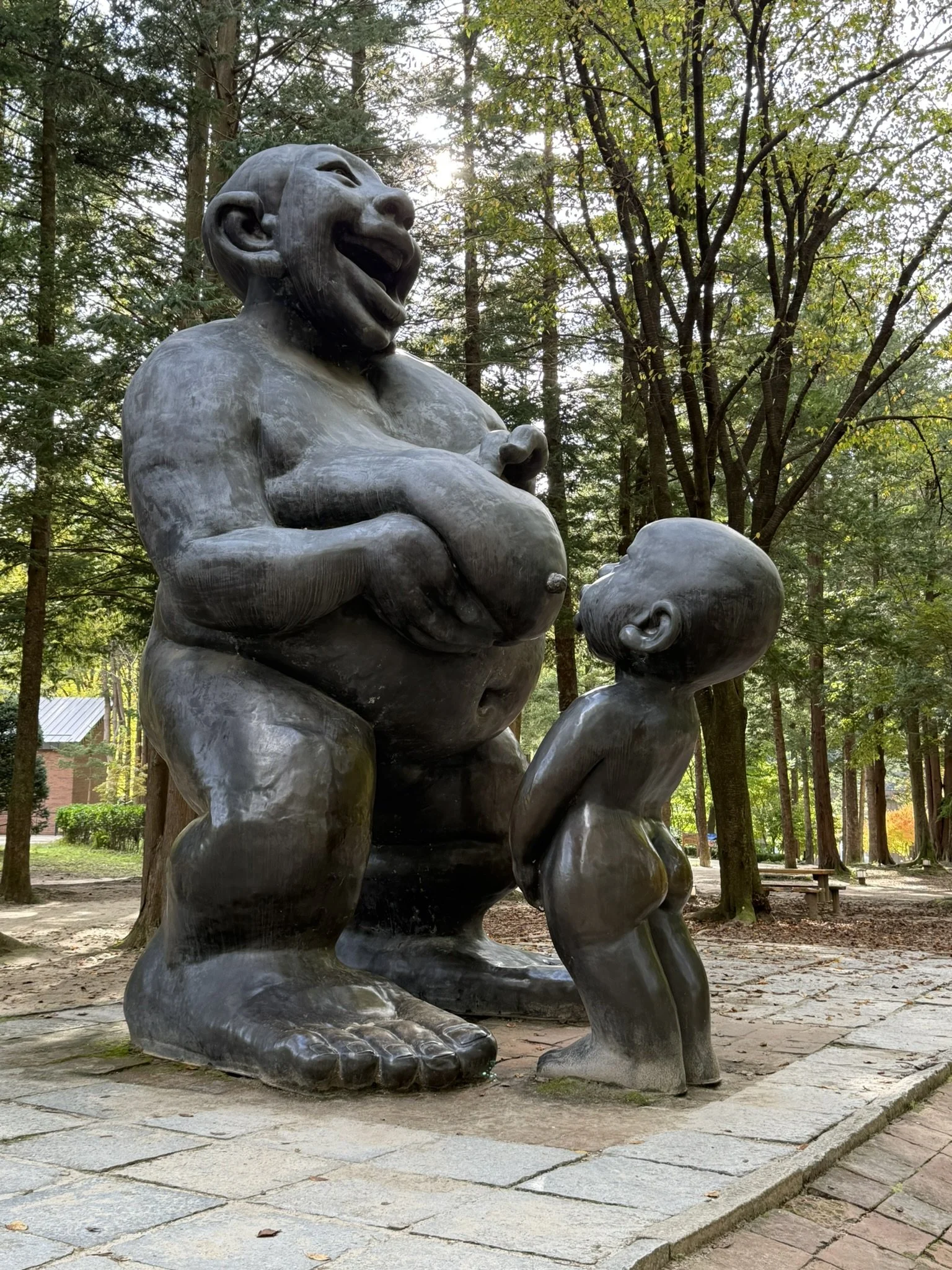

After lunch, we drove another 10 minutes to reach Nami Island. This is a privately owned island now, but it was named after General Nami (Nam-Yi) who was abandoned on the island because others were jealous of him. He apparently died alone on the island. In 2002, it was the home set for the K-drama Winter Sonata. When we arrived, we had the option of taking the zip line across the river but there was a huge wait and we didn’t want to sacrifice time on the island. Many people call the island “Fairy Tale Village and Song Village,” and it definitely felt like that. We stopped in at the Song Museum, a museum featuring a collection of instruments from around the world. They had a lot of cute photo ops and we even saw a peacock and an ostrich (although the ostrich was behind a gate, thankfully!)
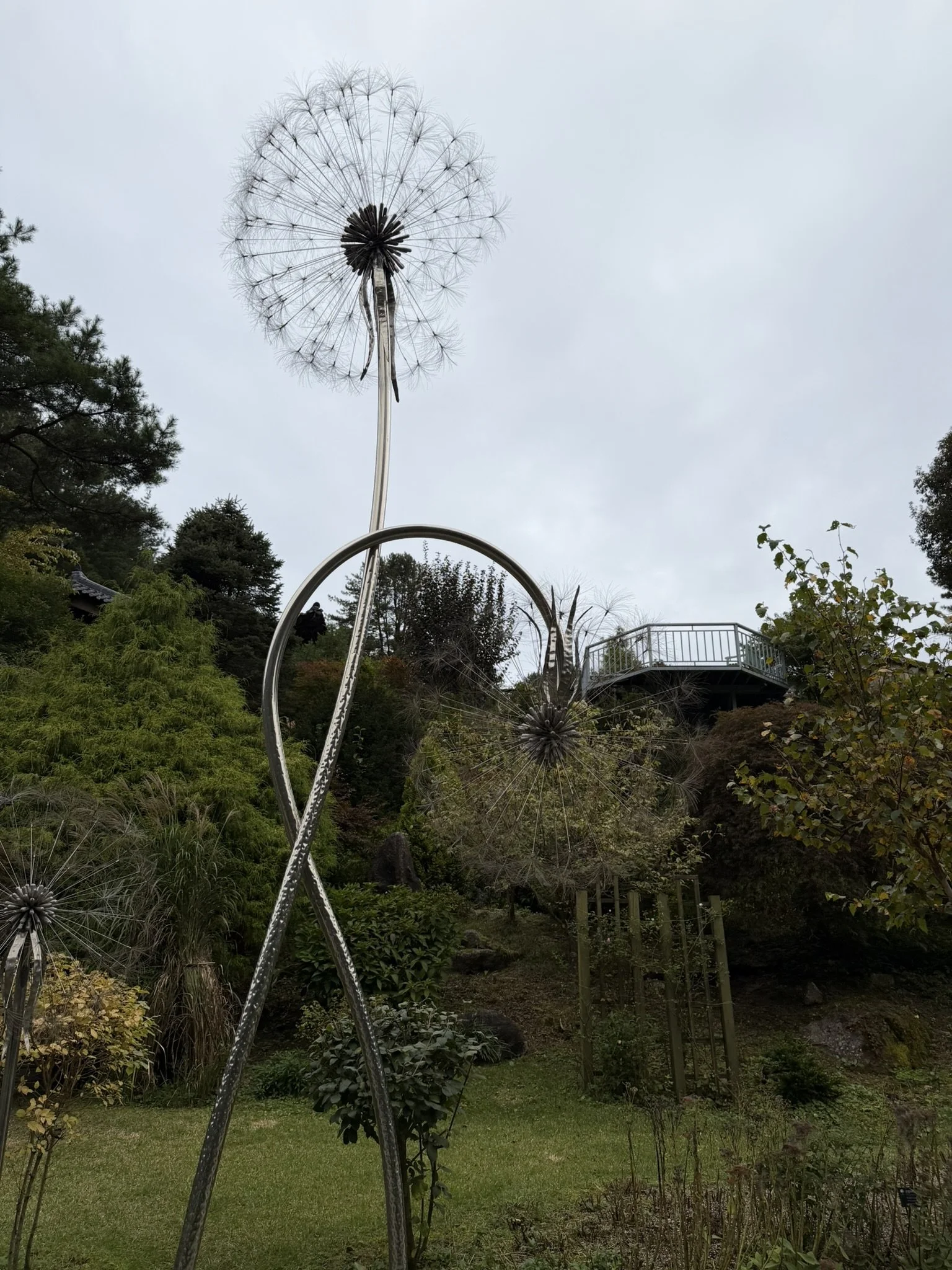
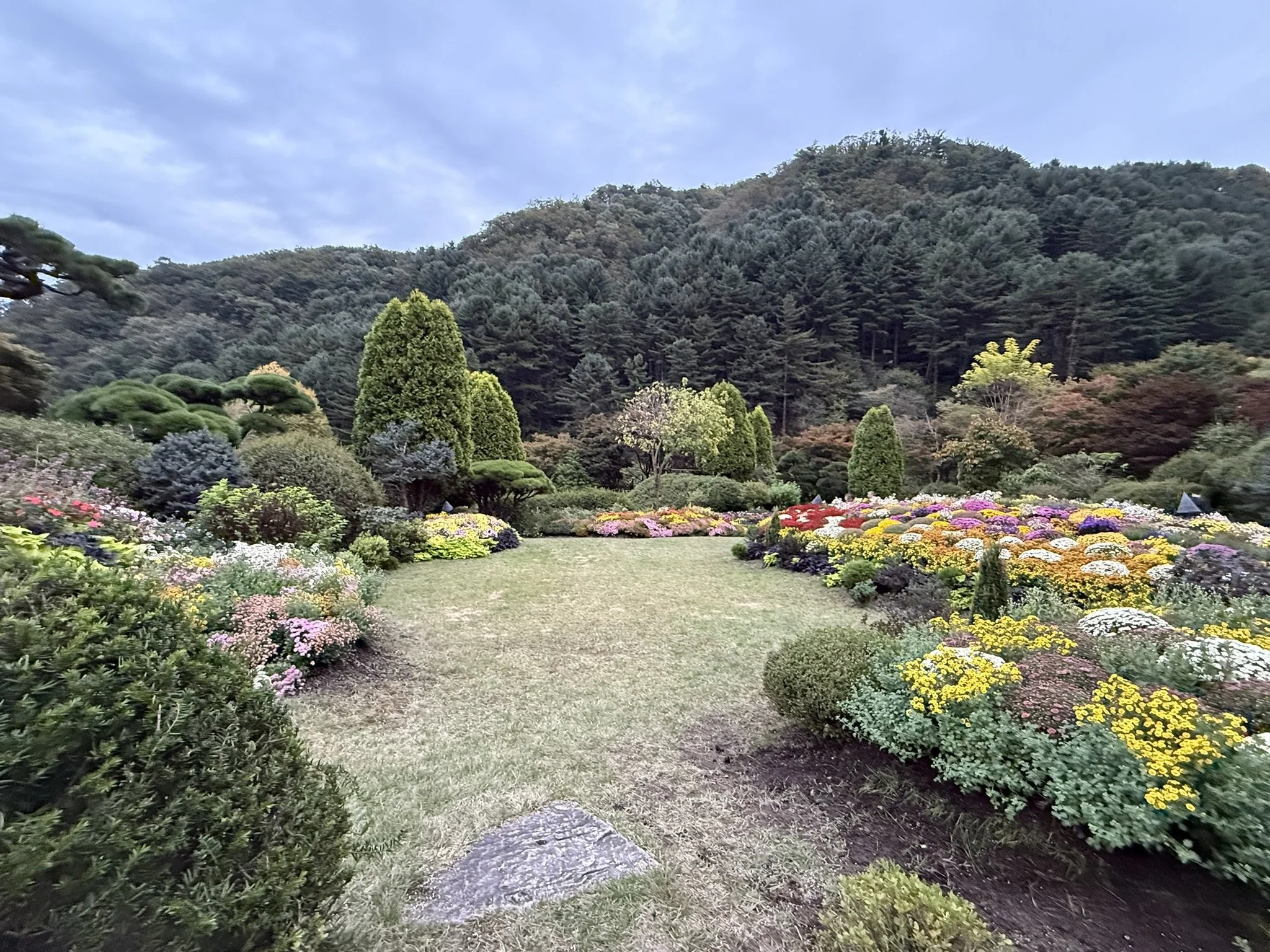
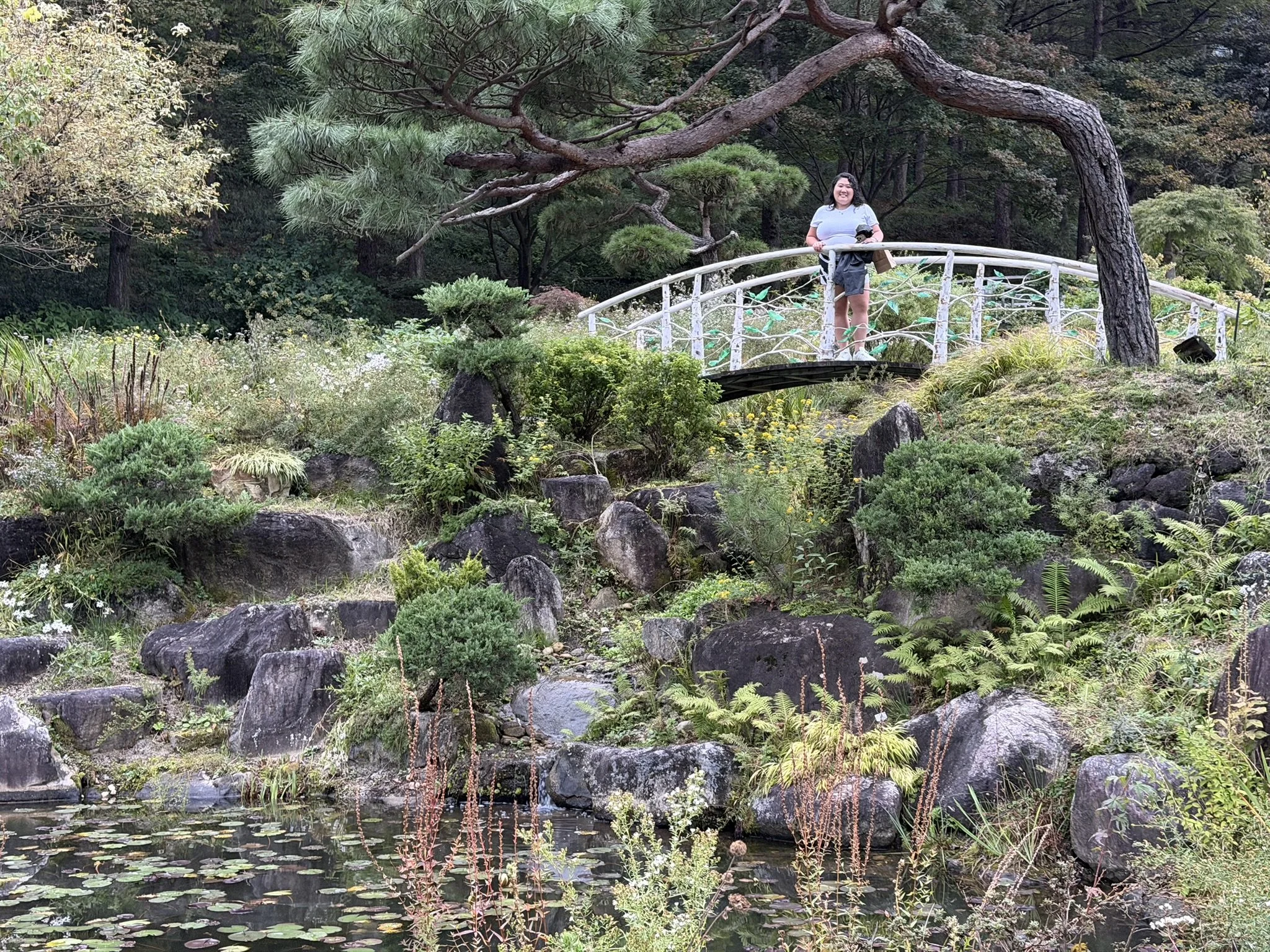
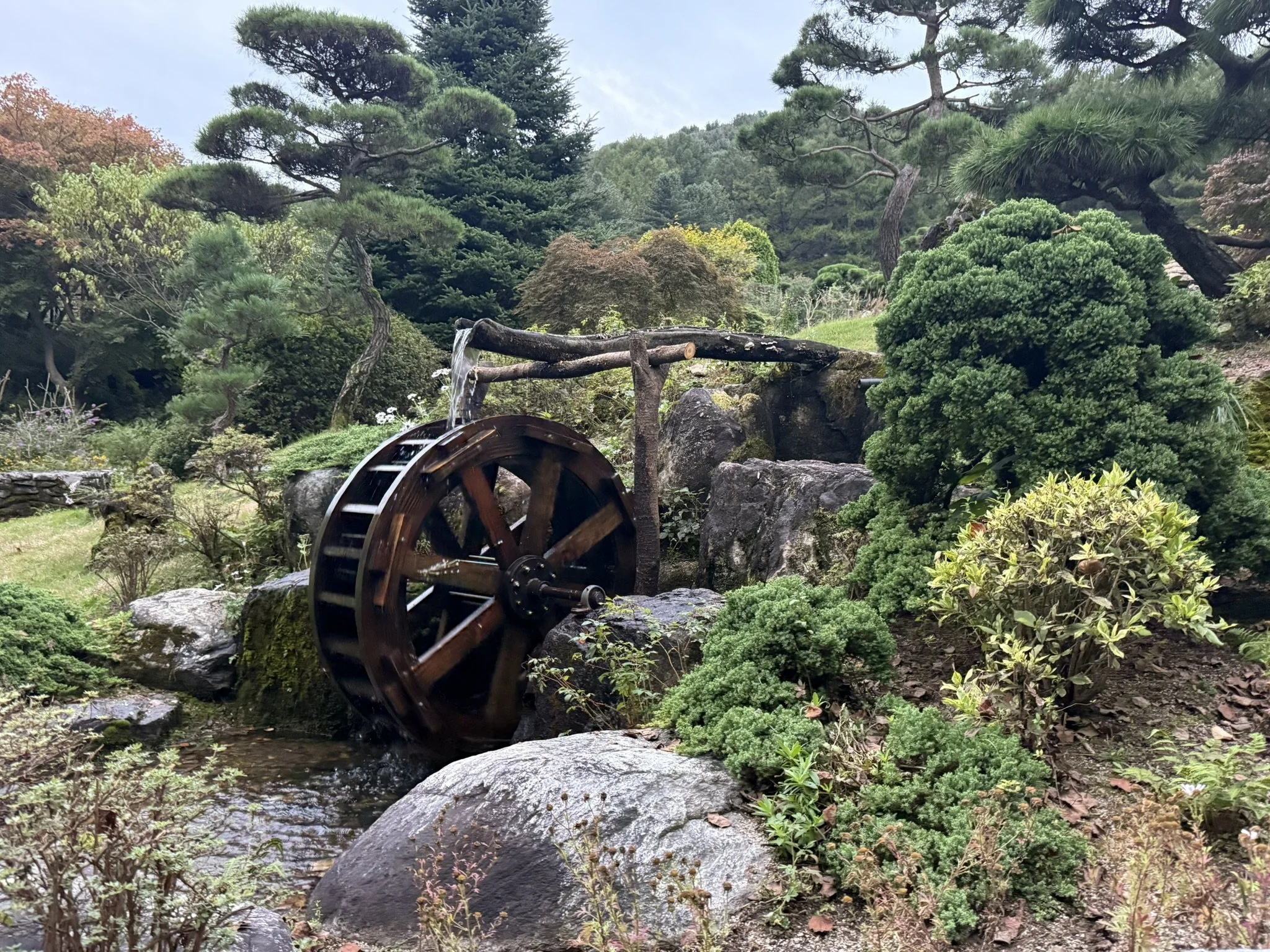
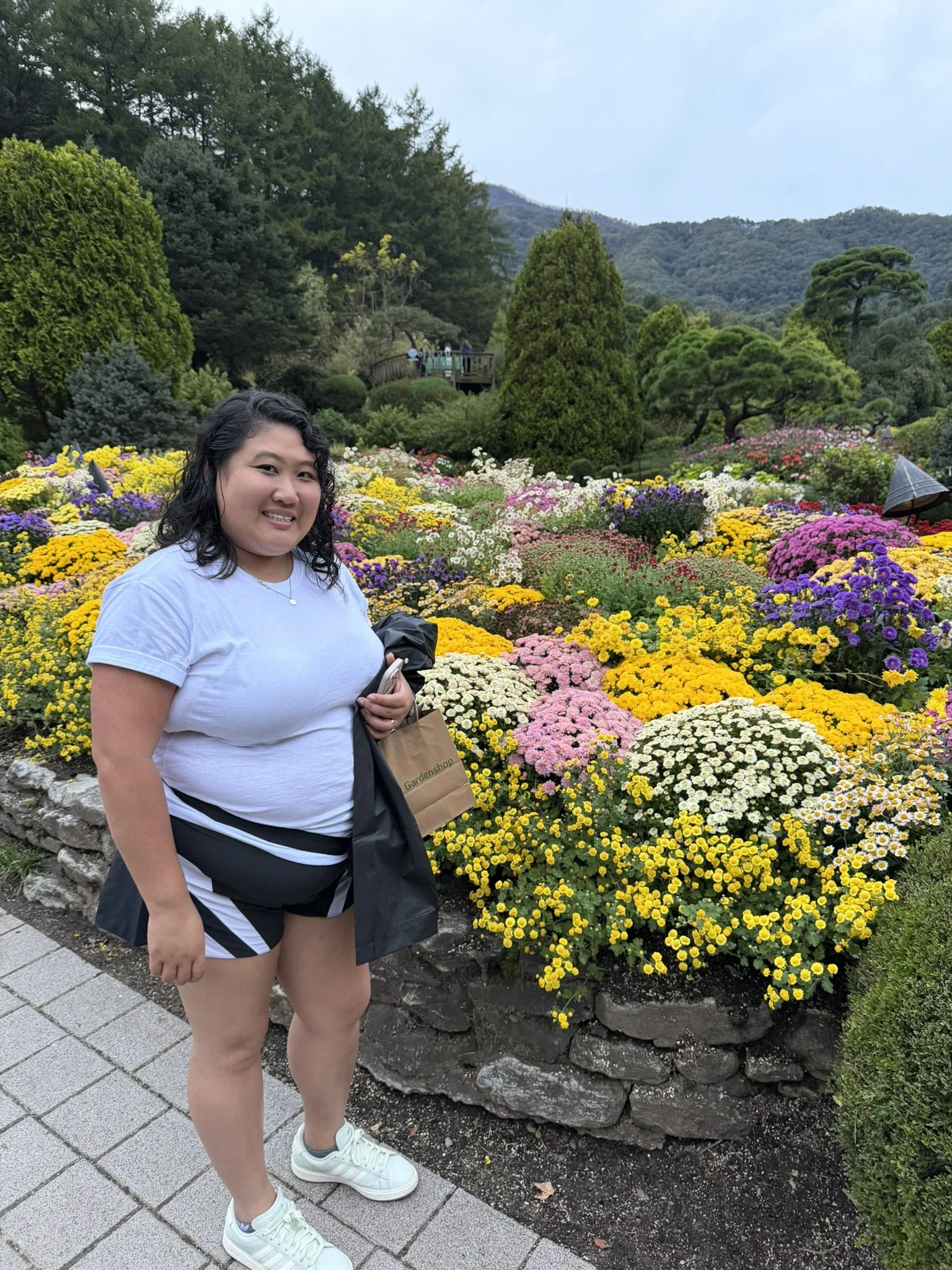
Our last stop on the tour was the Garden of Morning Calm, which highlighted Korean gardens and artistic concepts. It officially opened in 1996 and has over 5000 species of plants in 30 different themed gardens. Some of these gardens included the Bonsai Garden, Rhododendron Garden, Secret Garden, For Rest Garden, Korean Garden, Dahlia Garden, Heaven Garden, Moonlight Garden, Conifer Garden, and a Wildflower Garden to name just a few. It was full of tranquil paths and many beautiful flowers.
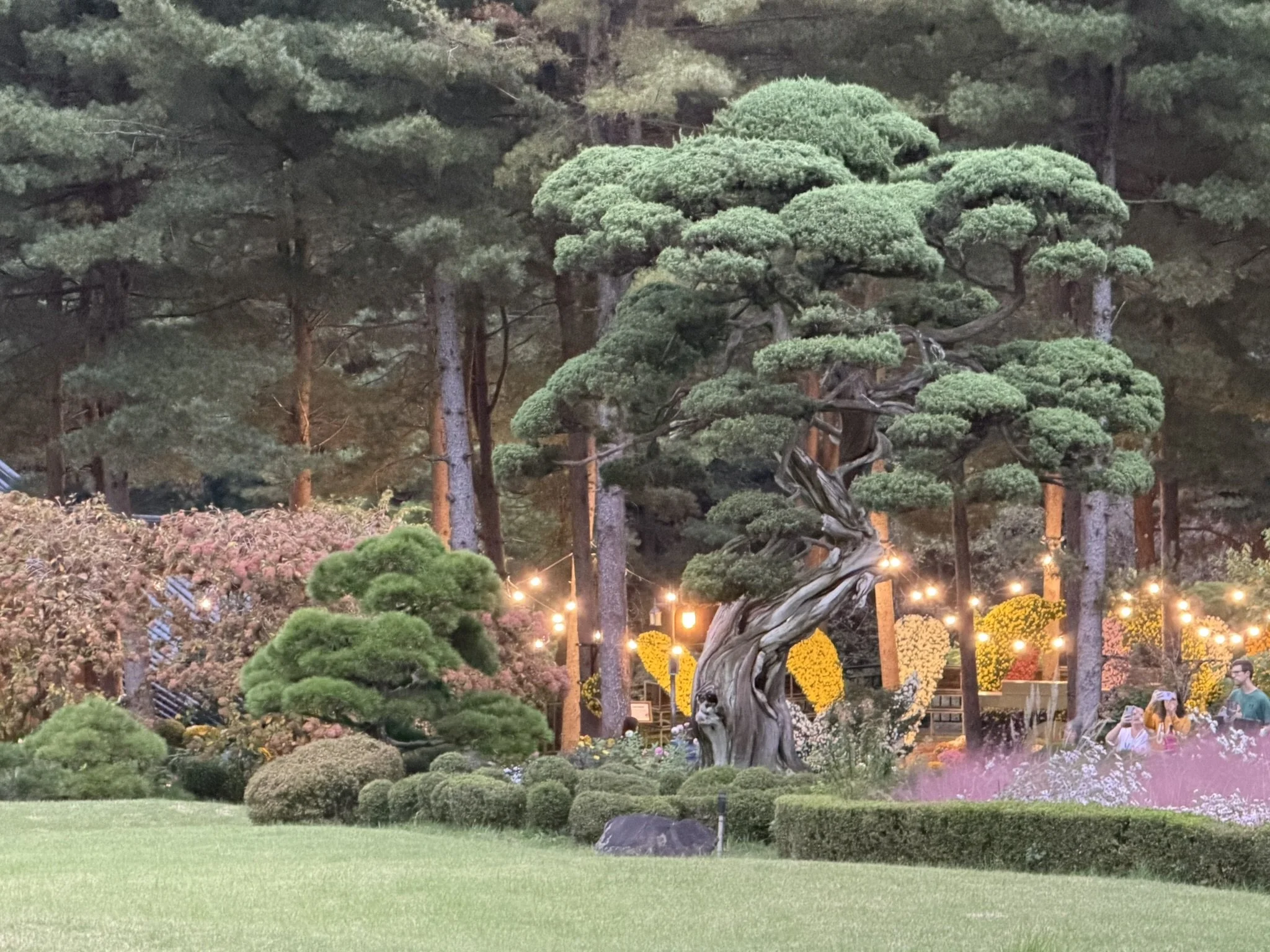
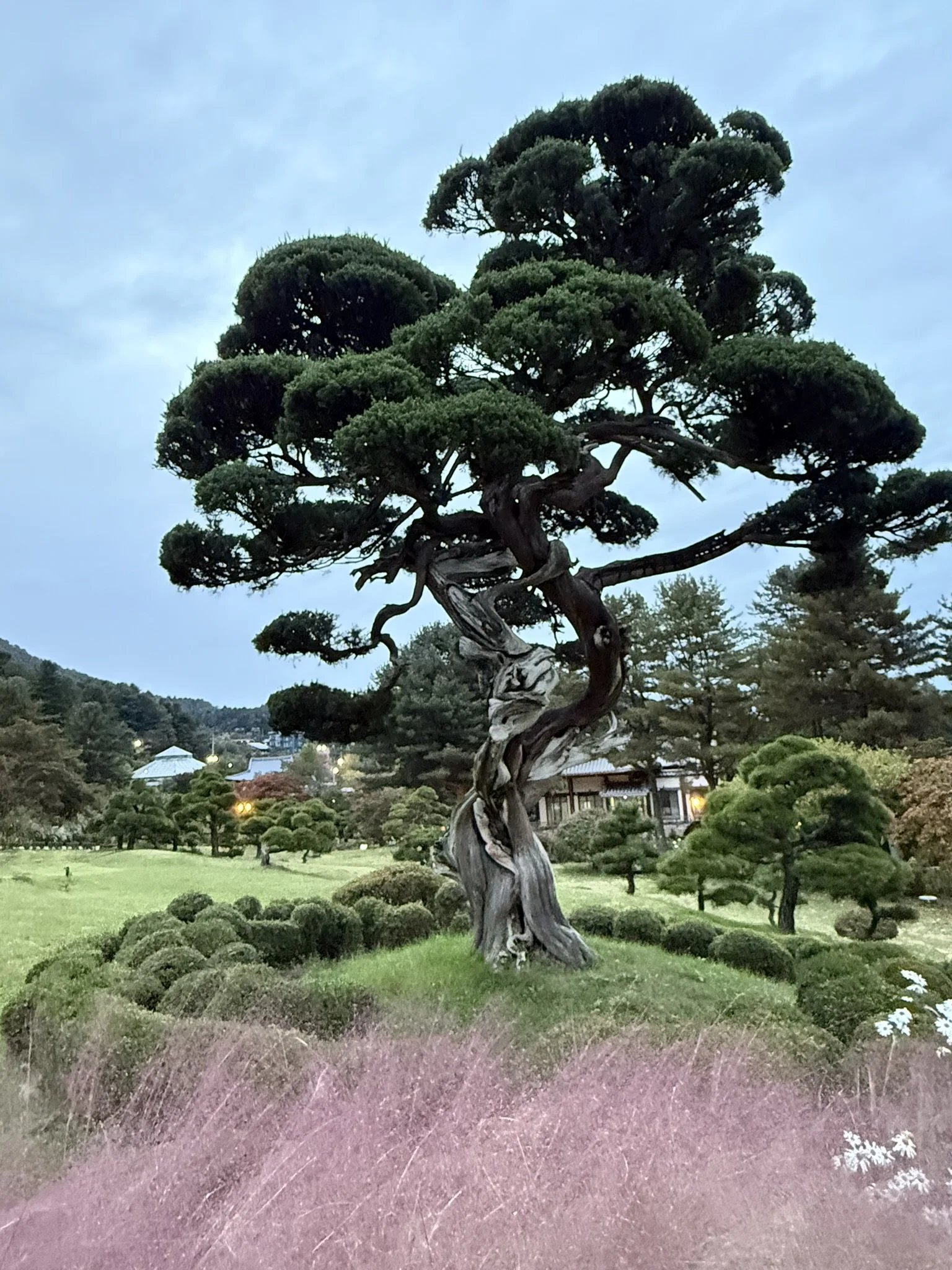
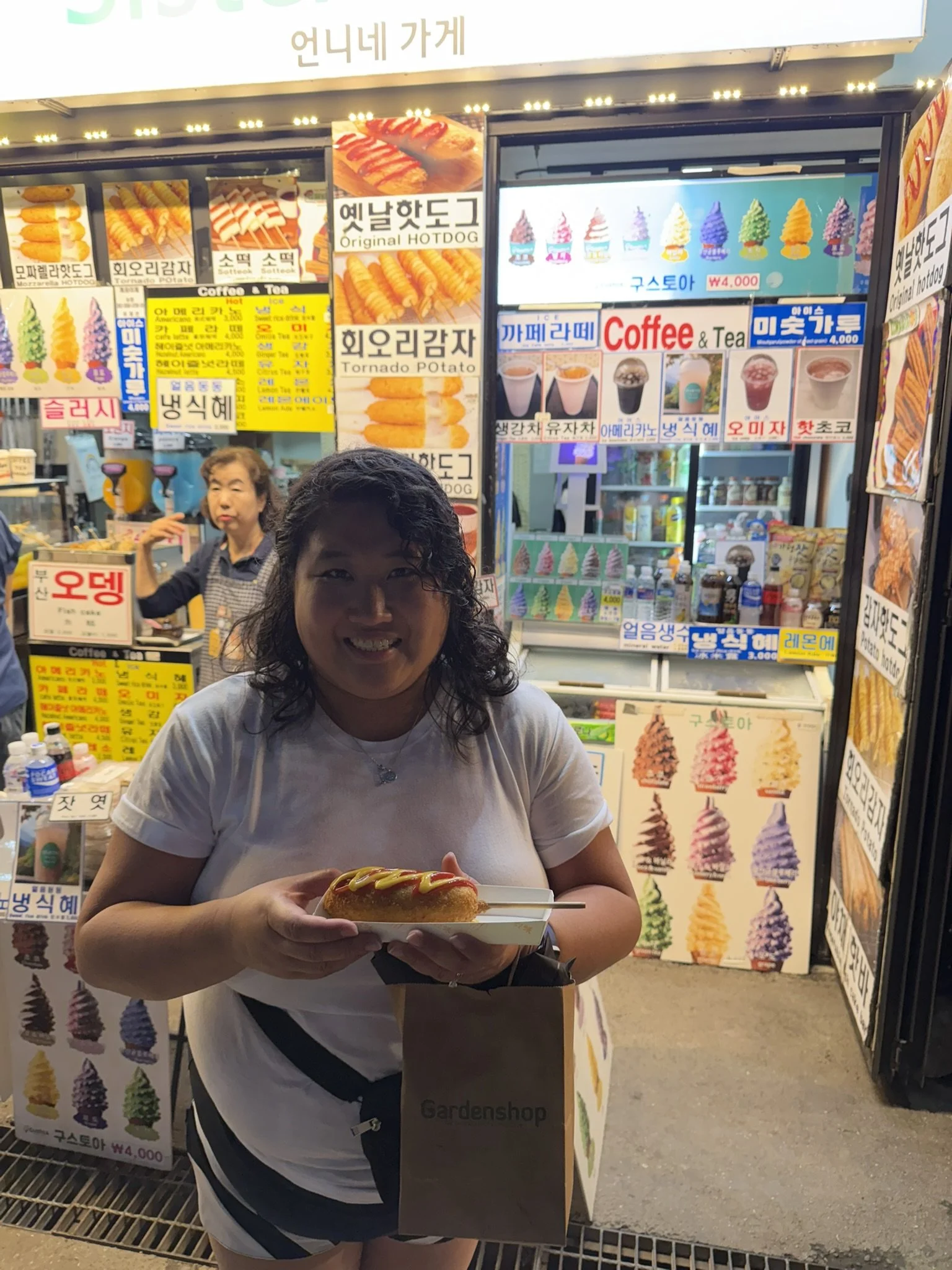
One of the highlights was the 1000 year old Millennium Juniper Tree. It was originally grown in the Southern part of the country and then moved to this garden as part of a renovation process. Since Korea does not have many things in its history that are very old, this tree holds extra importance and beauty. After, we grabbed a corn dog as a snack before we headed back to Seoul, just under 2 hours left on the bus ride. Once we all got back into the city, we asked our tour guide Patrick for a recommendation for soup. He led us to a restaurant that served 2 types of soup and 1 type of dumplings. The dumplings were amazing and the soup was the perfect meal to end the evening with.
Day 4: Saturday October 18, 2025 Drive to Hapcheon and Jinju and Water Lantern Festival
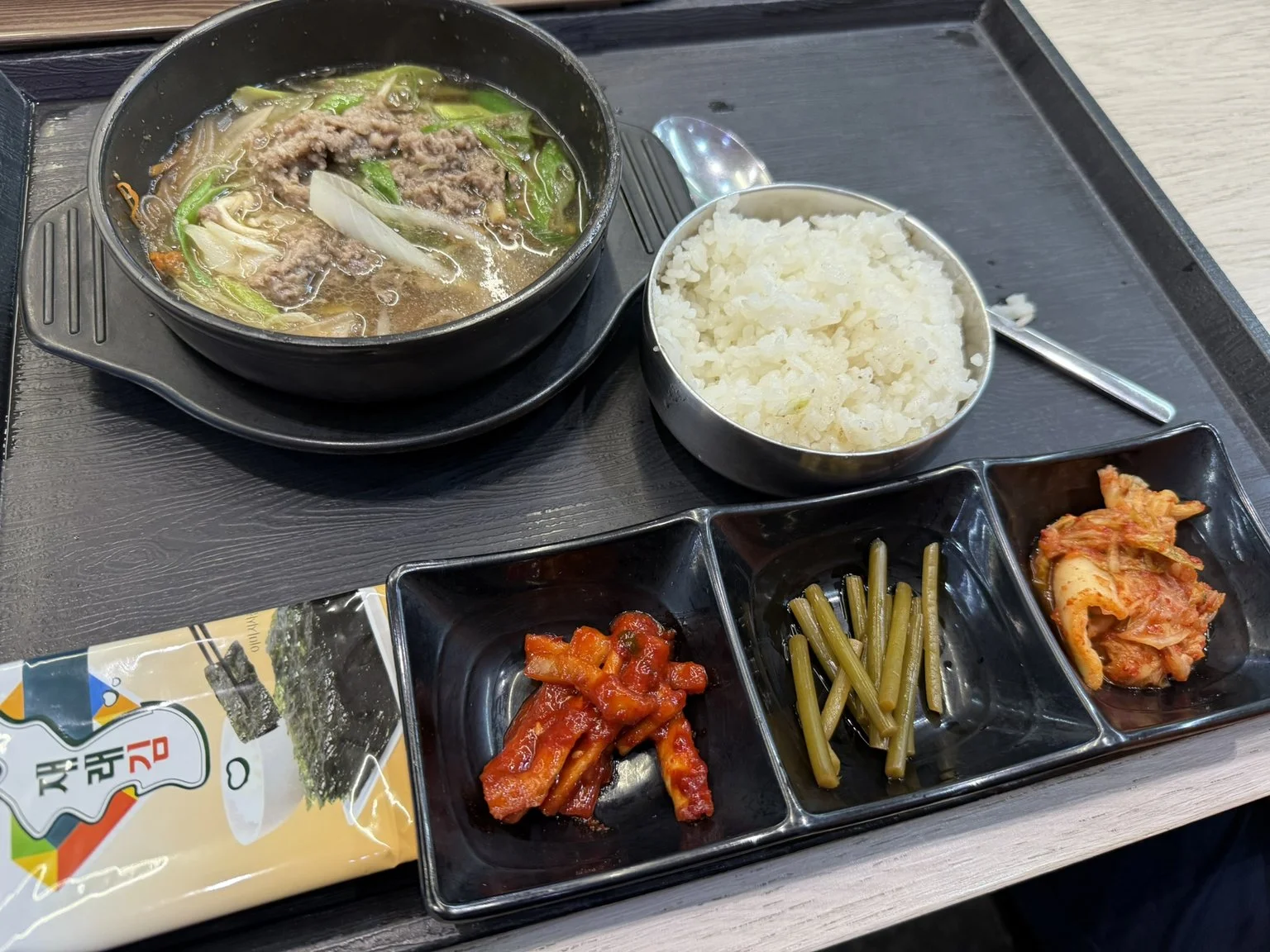
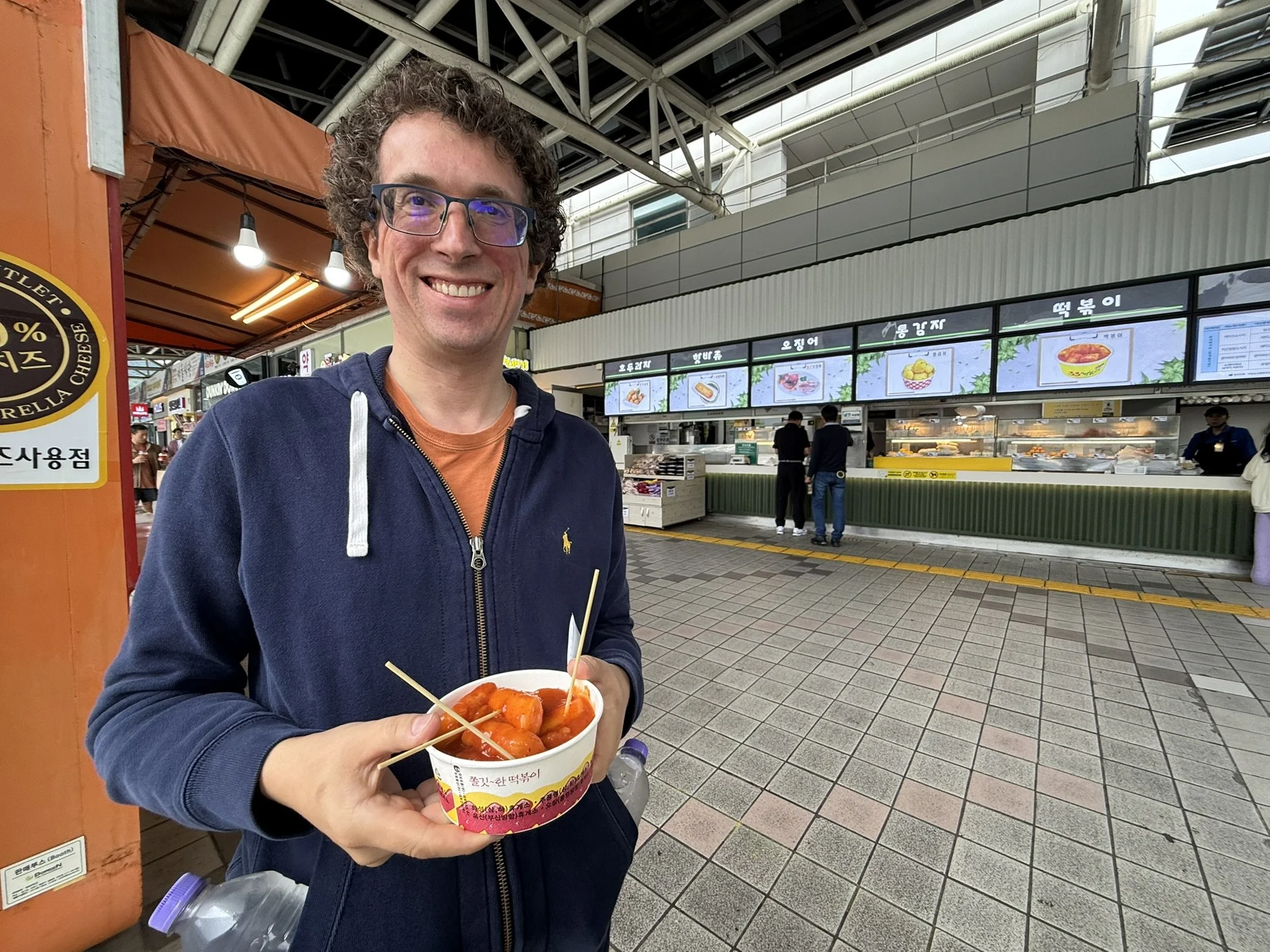
We slept in a bit and then took the bus down to the outskirts of Seoul to grab our rental car. We didn’t want to drive in Seoul so this seemed like the best option. Driving wasn’t too bad, but our first toll was an experience. We didn’t go in the cash lane and went through the Hi-Pass lane at first, so we didn’t get our yellow ticket. When we tried to get off the tollway, we first didn’t have the yellow ticket. Then we realized it didn’t take international credit cards. We had a T-money card, but it didn’t have enough money on it because we didn’t realize that was how you paid the “cash.” Finally, a woman came out and we were able to pay her in cash. We gave her the bills and thanked her so much, but then she wouldn’t let us leave until she paid us back our change of 100 won ($0.07USD). We did stop and eat lunch at a rest stop though. Naver was amazing to use, and the gas station/rest stop lunch was good! They don’t have restaurants or fast food along the roads, so this is where everyone stopped to eat and stock up. There was also a restroom stop every few miles so that was really nice too!
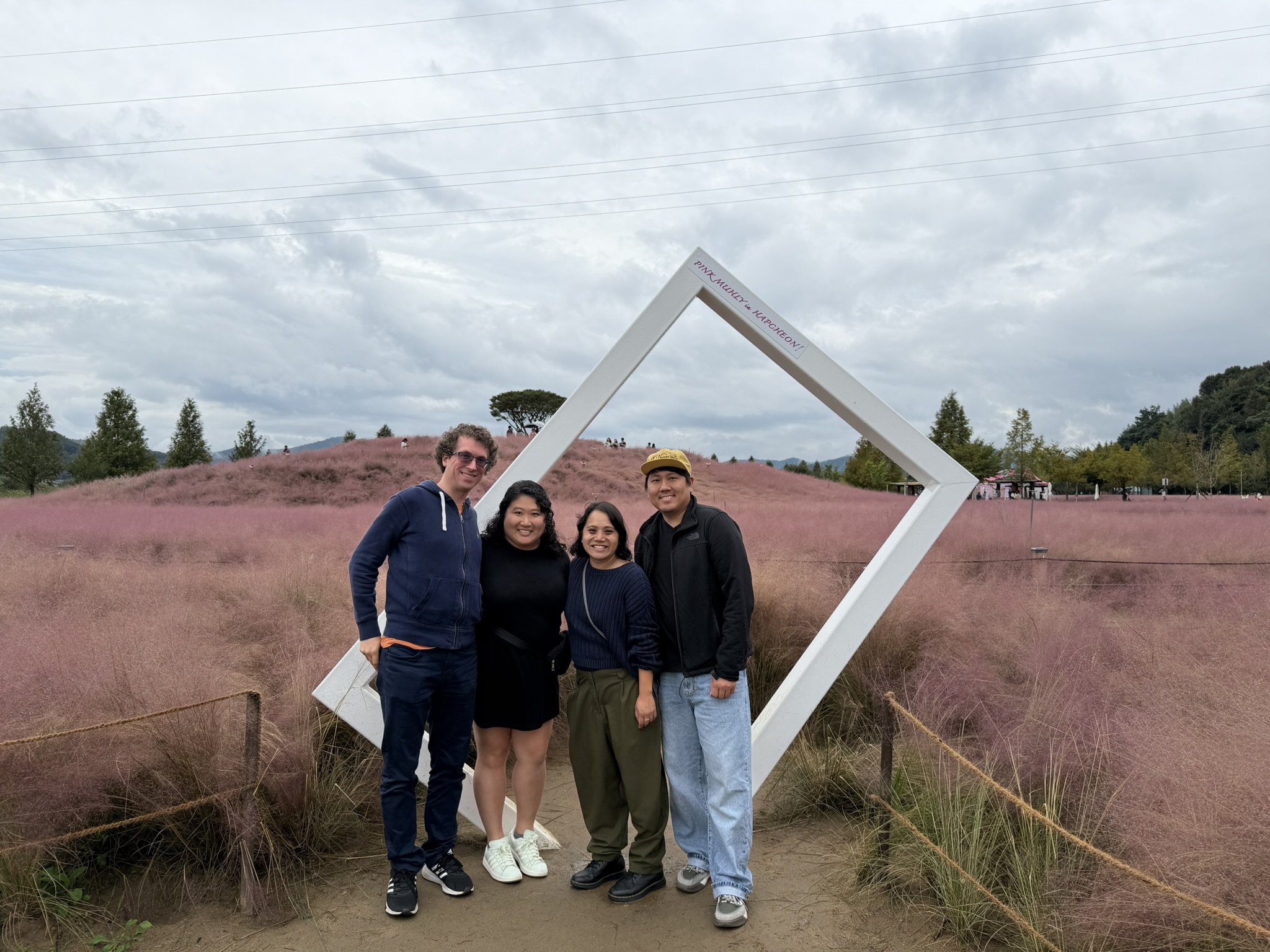
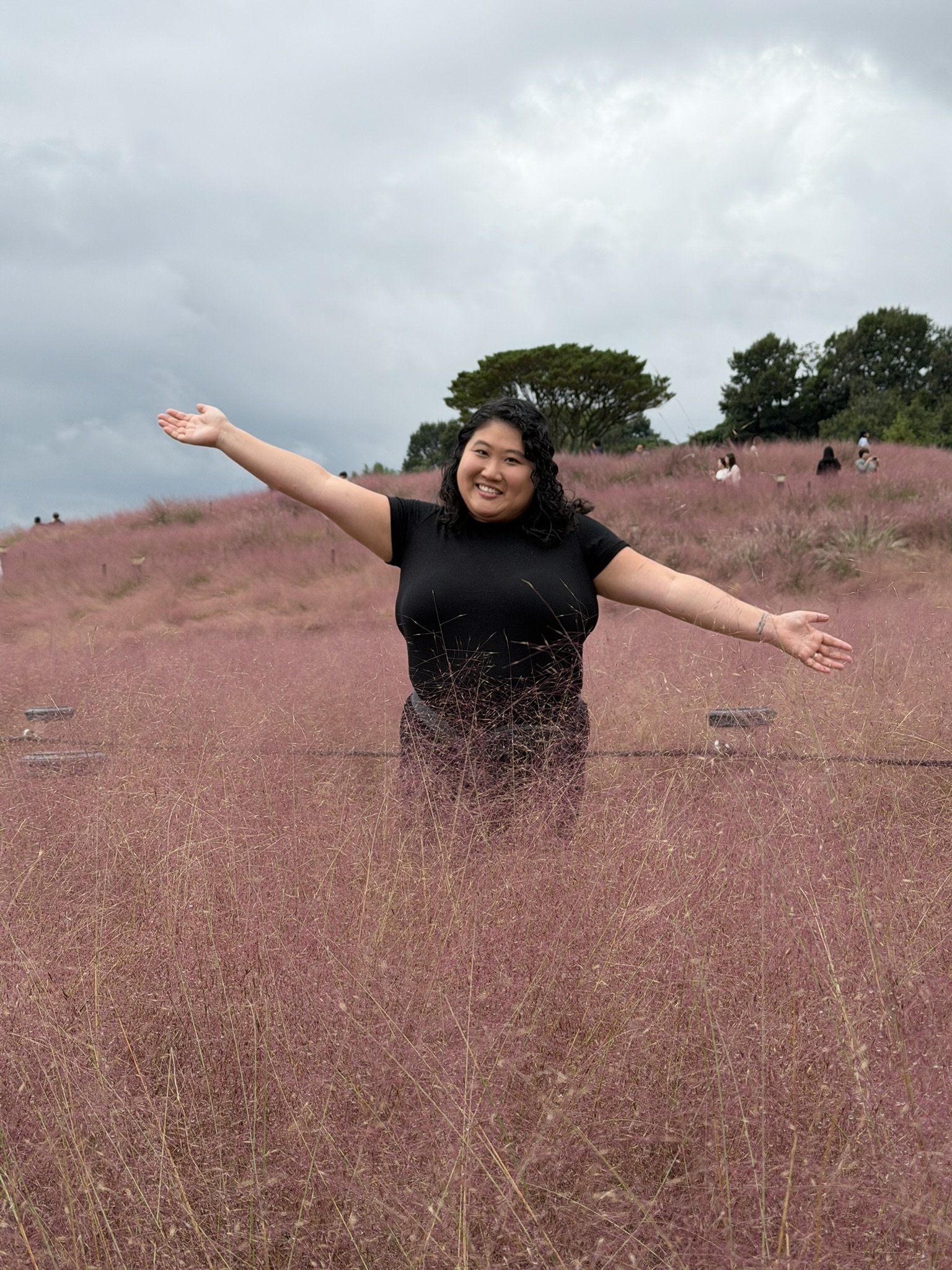
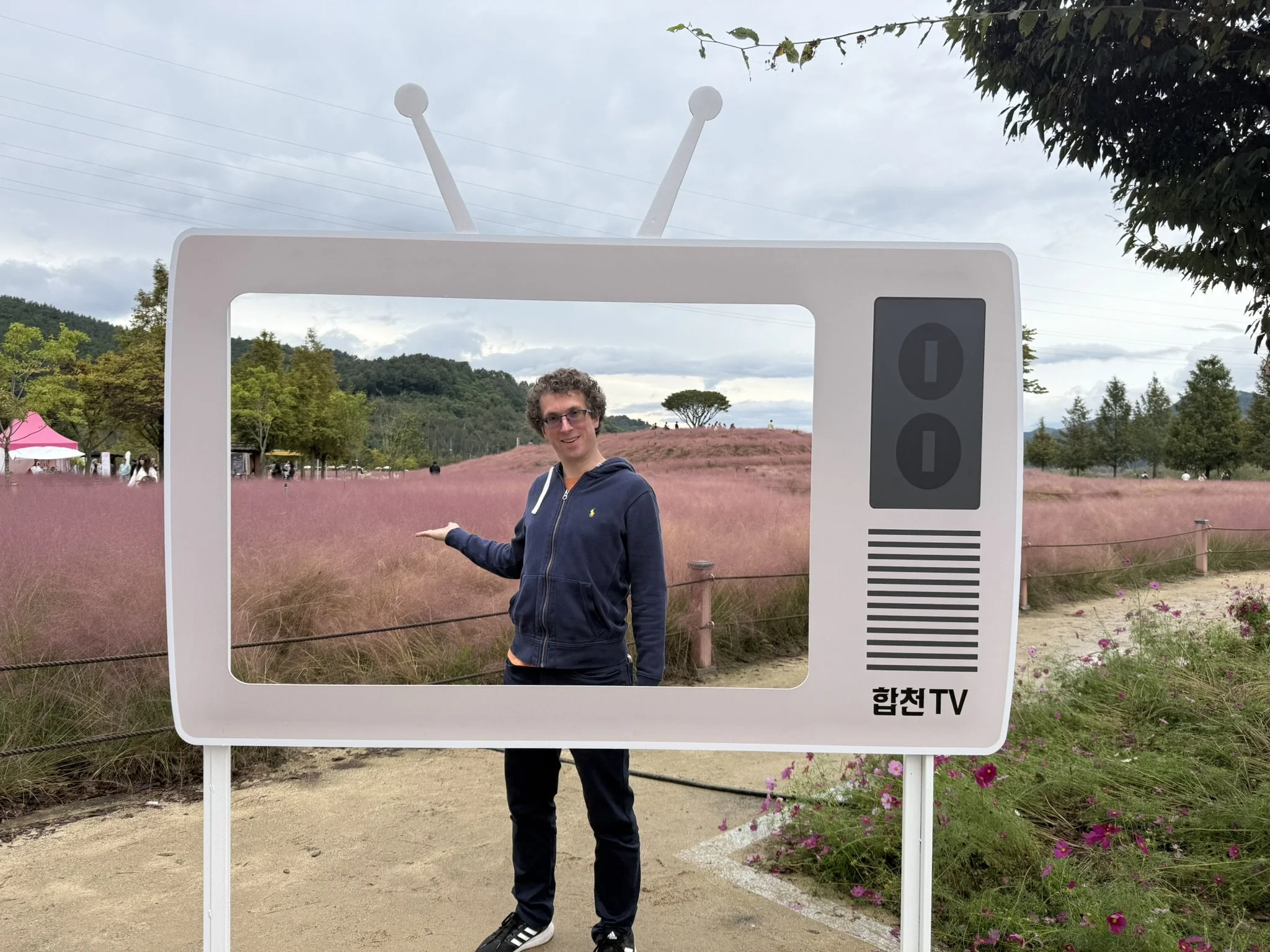
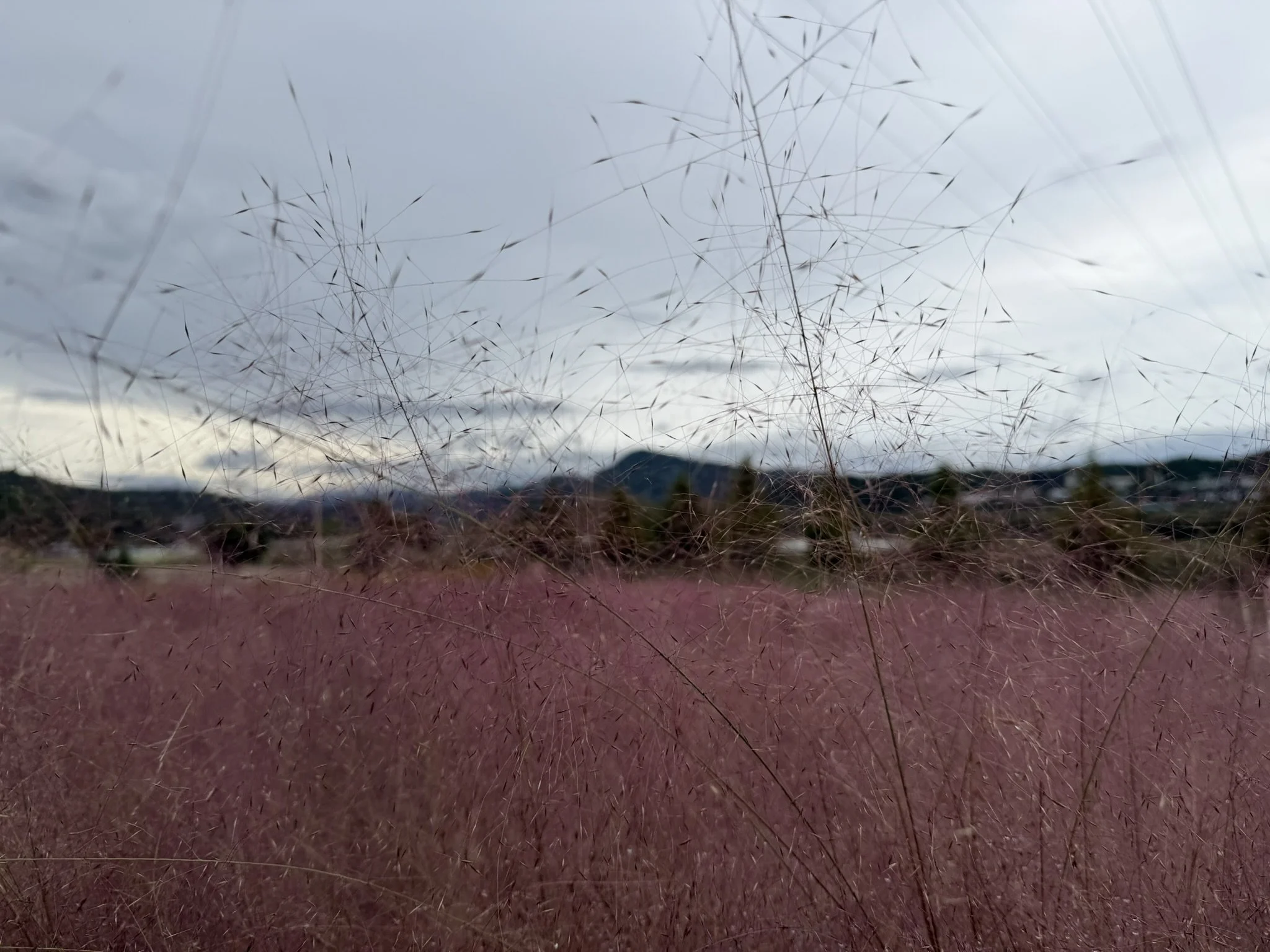
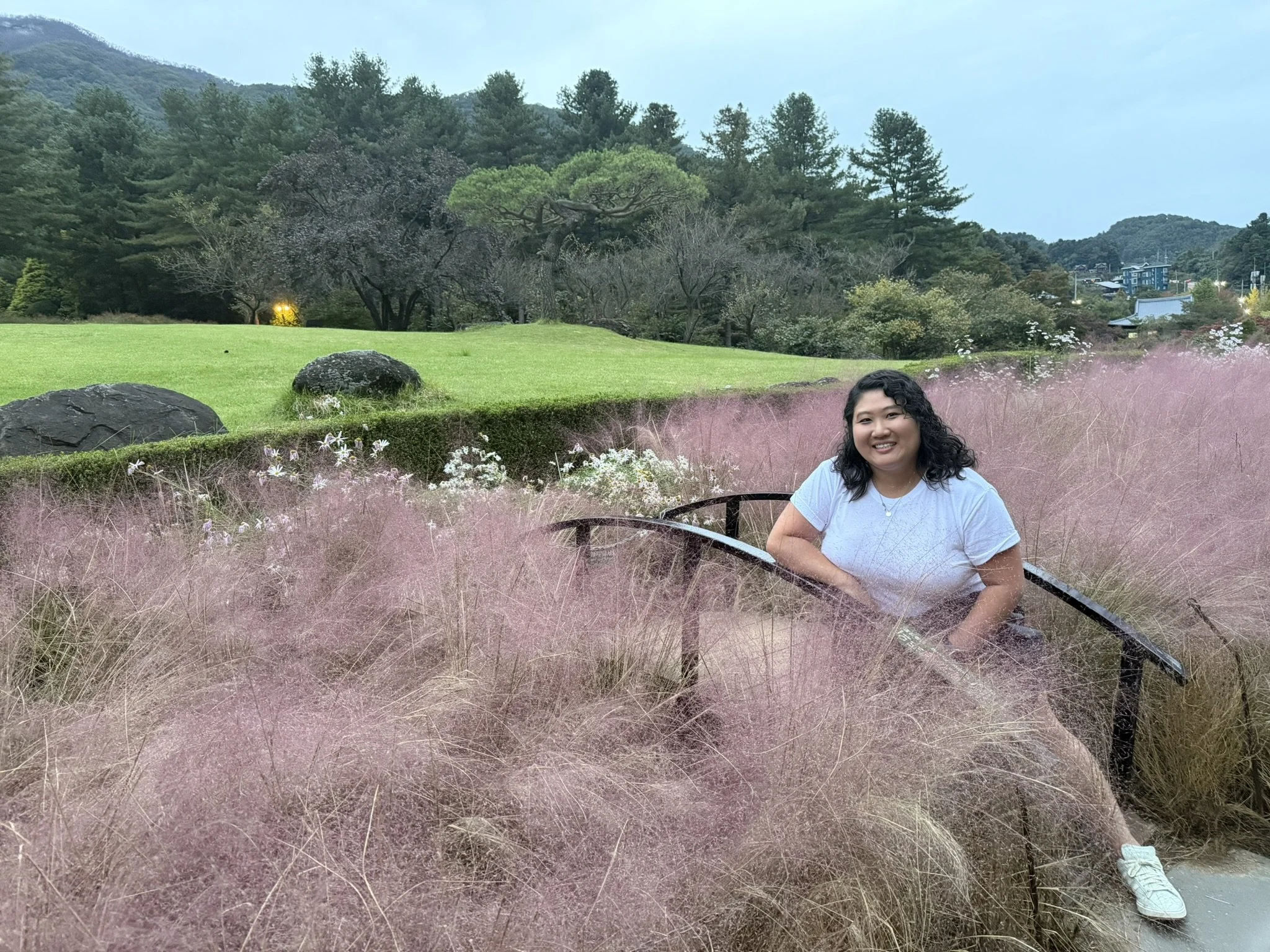
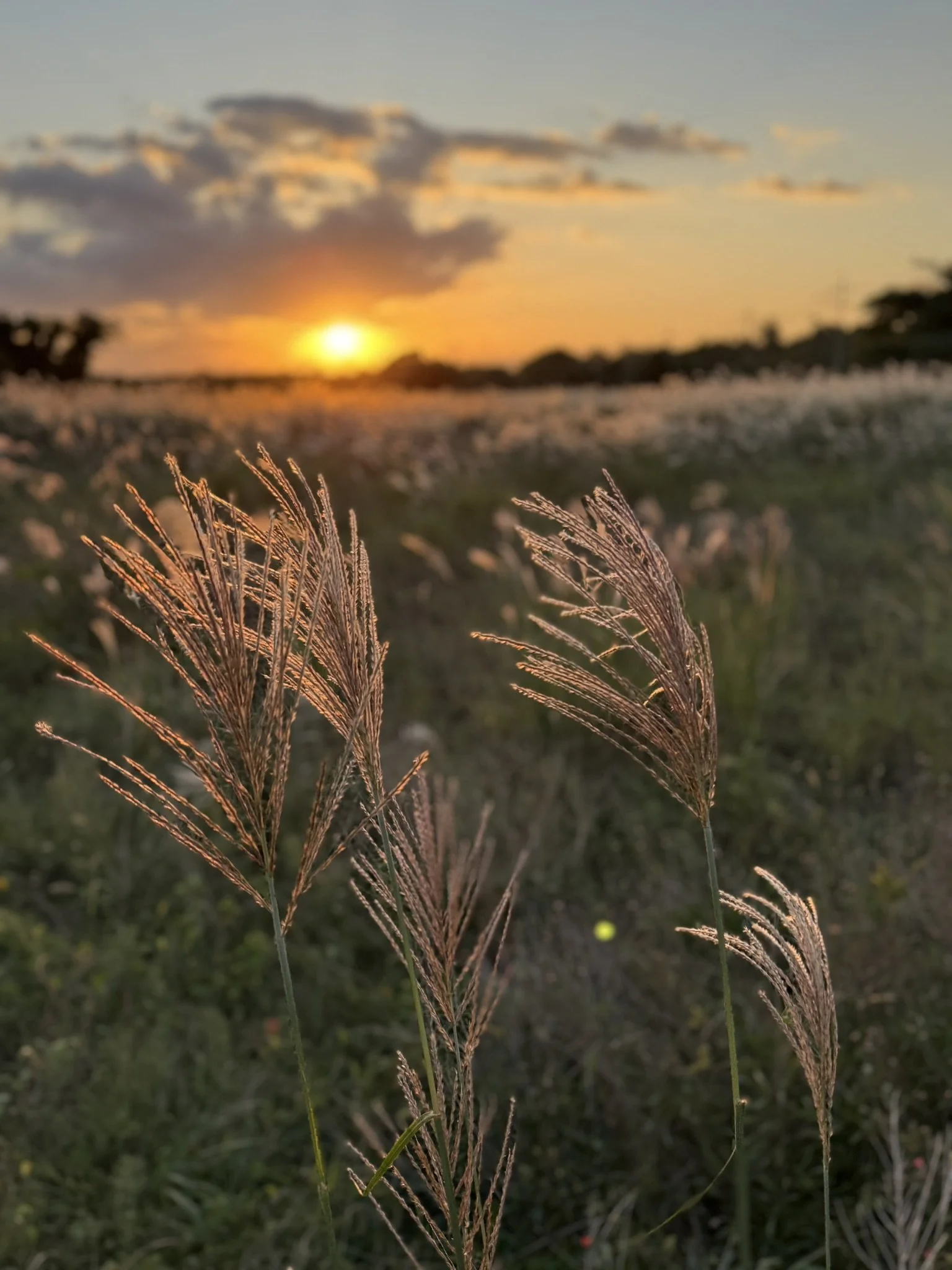
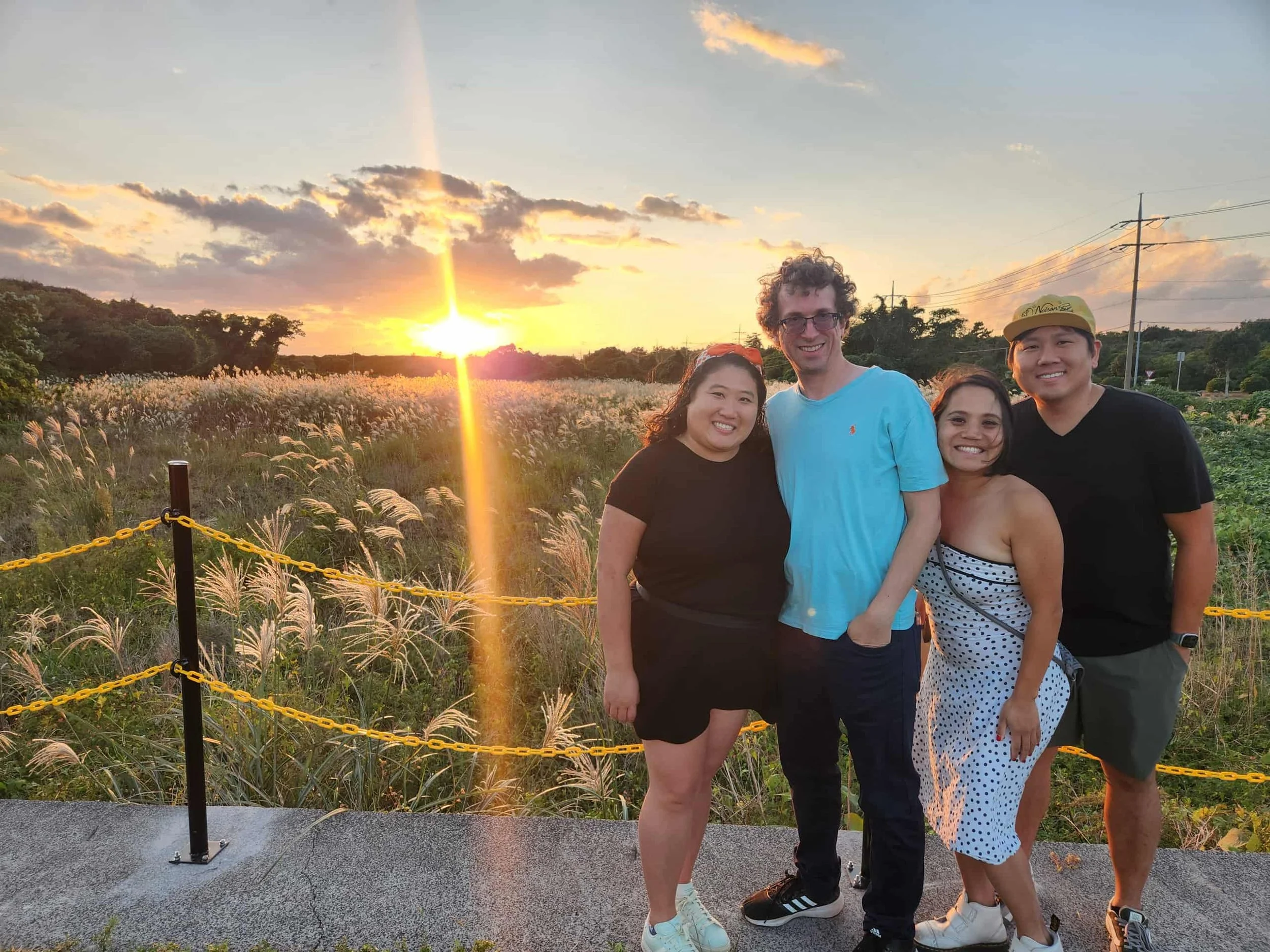
On our drive, we stopped to see pink muhly grass in Hapcheon. It’s actually native to America, but Koreans love the pink muhly grass in the fall. Today, Koreans think of pink as an autumn color as well. This was just a quick fun stop on our way to our evening event.
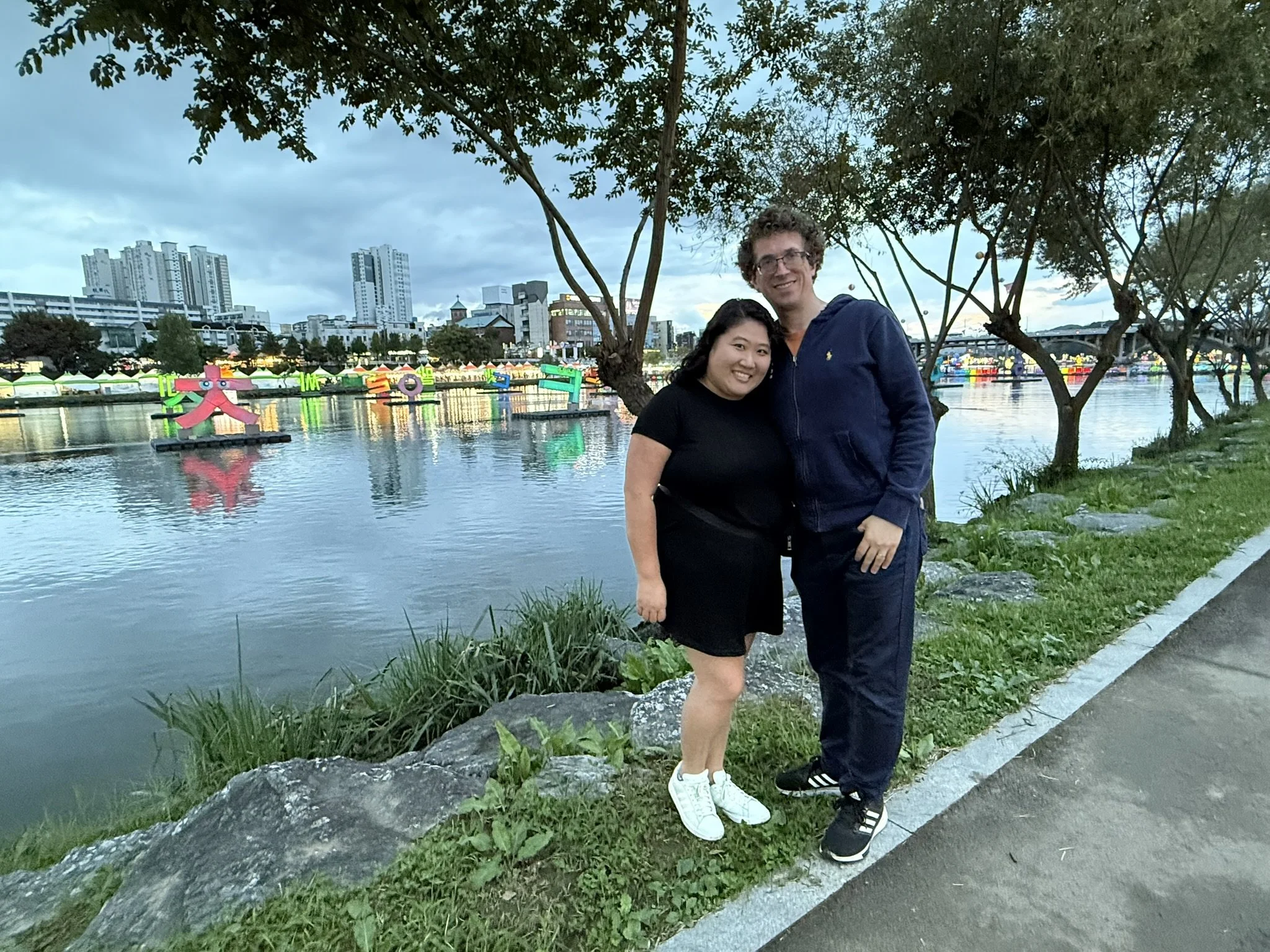
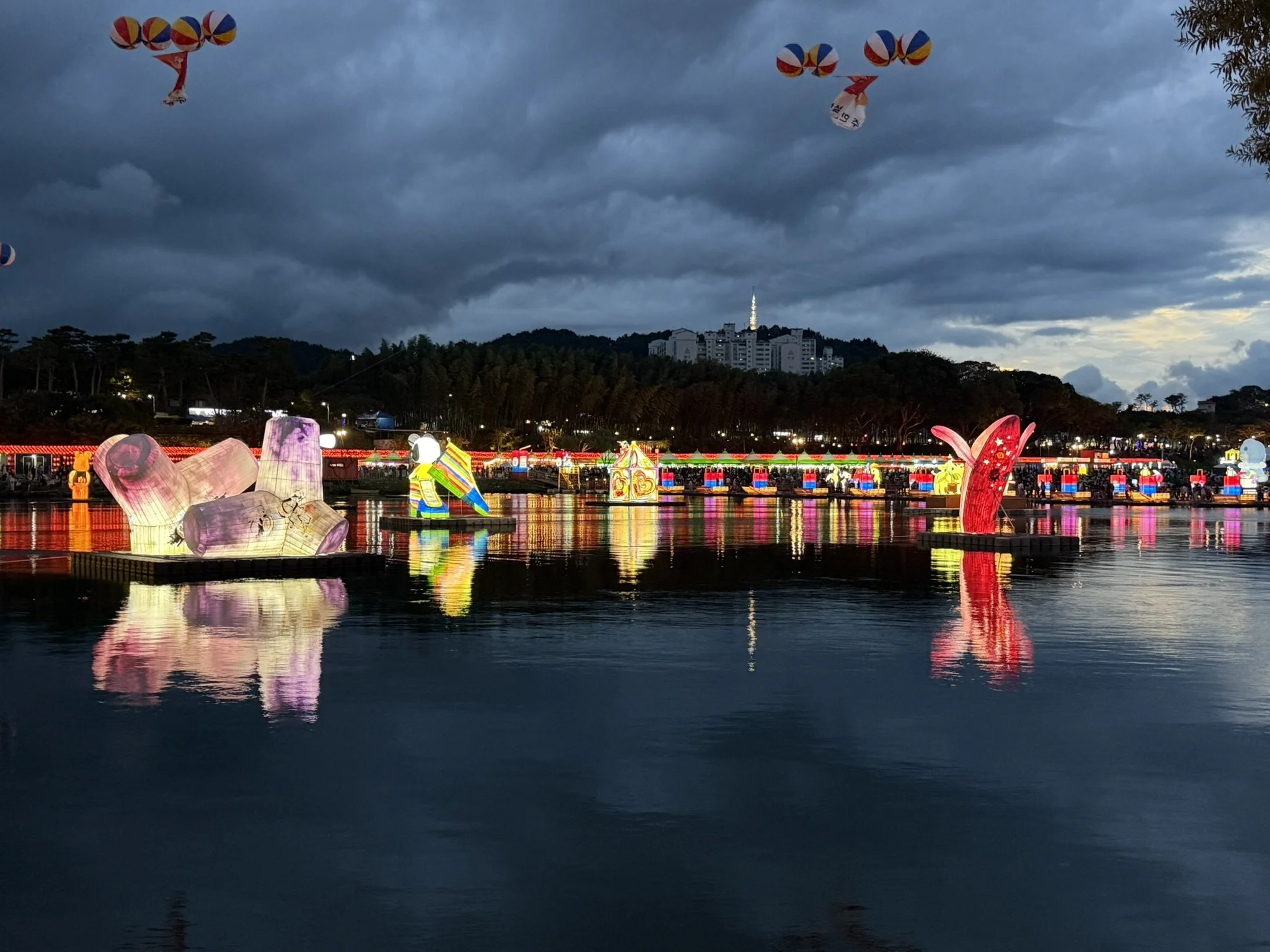
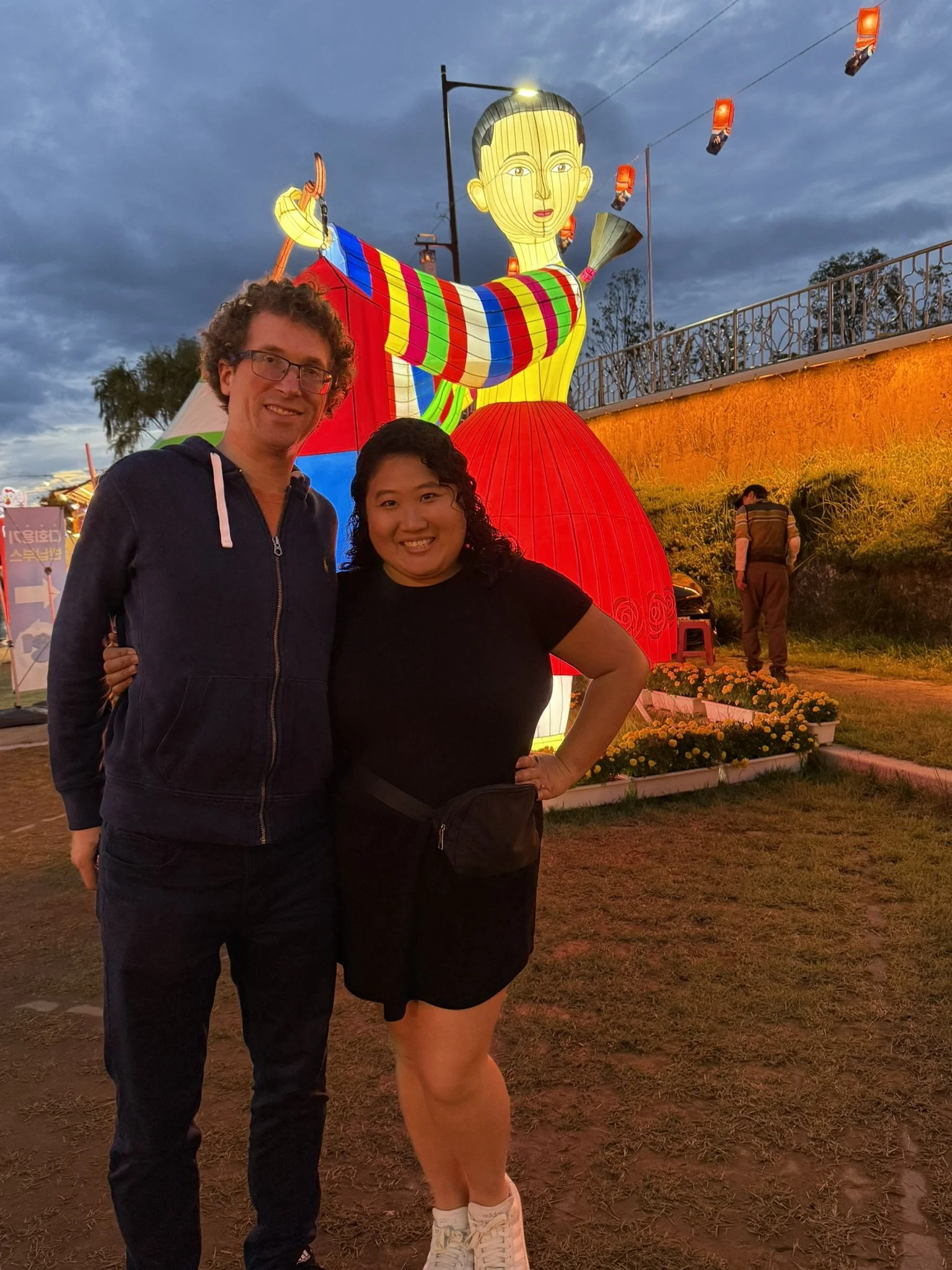
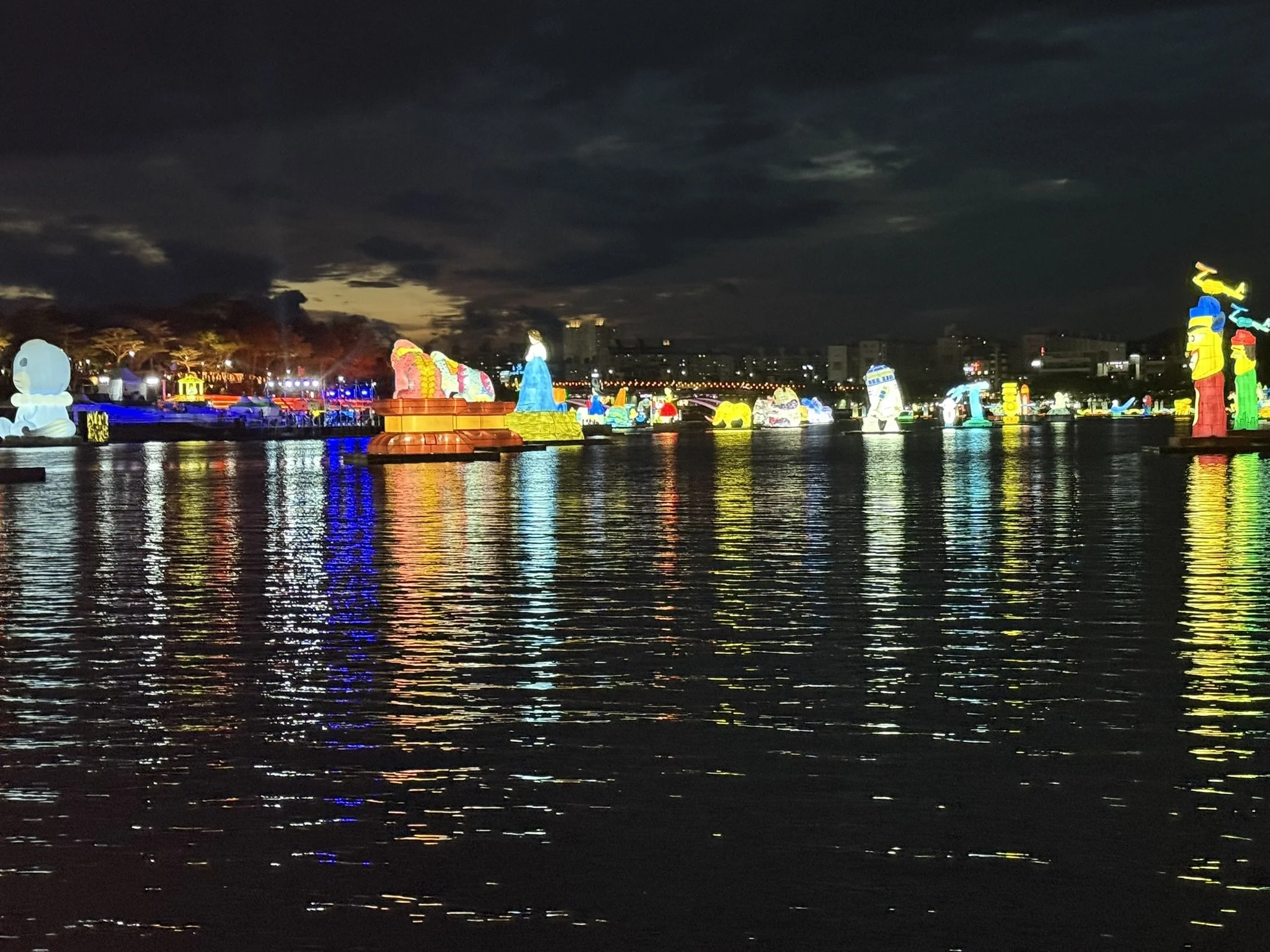
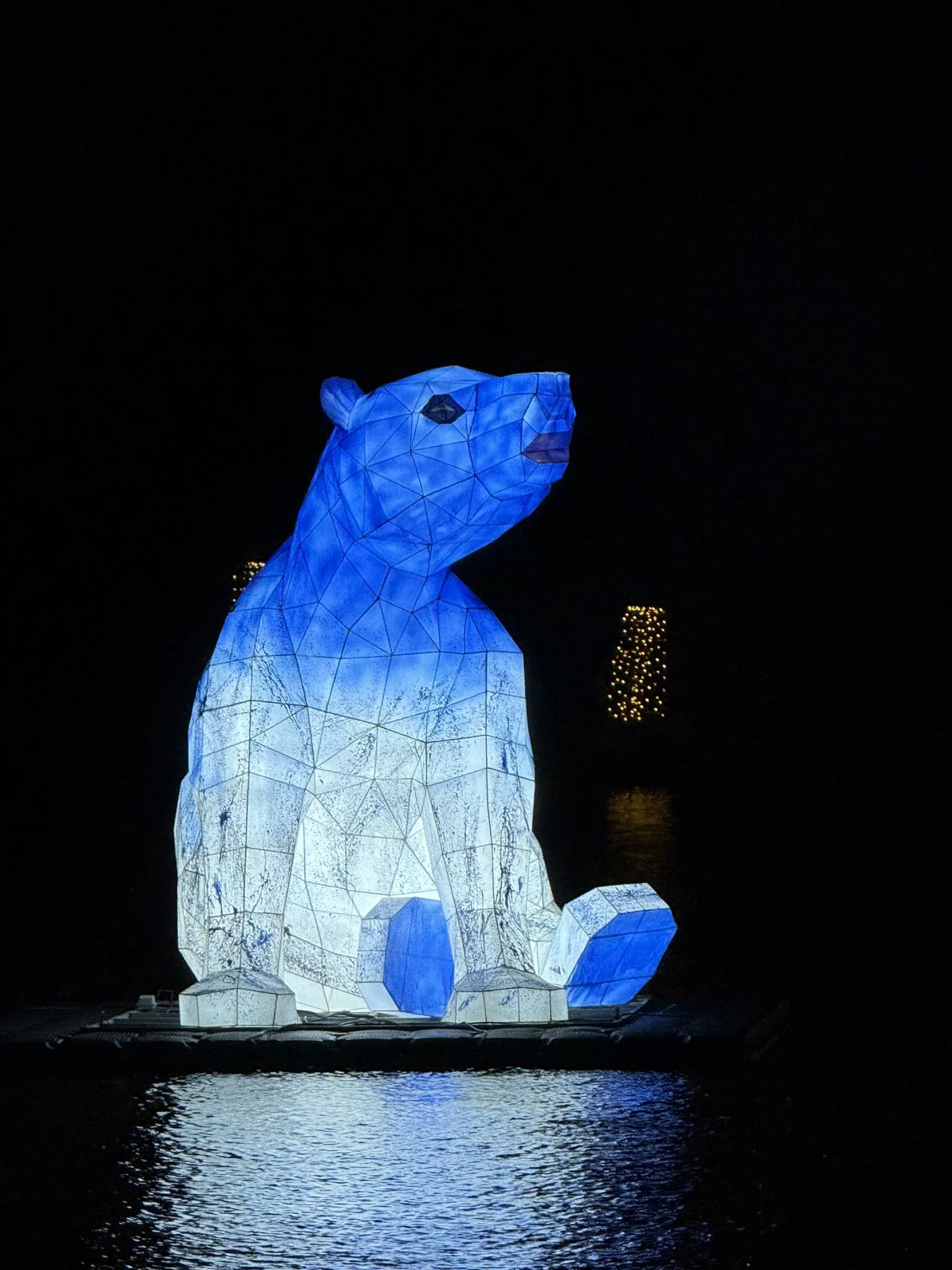

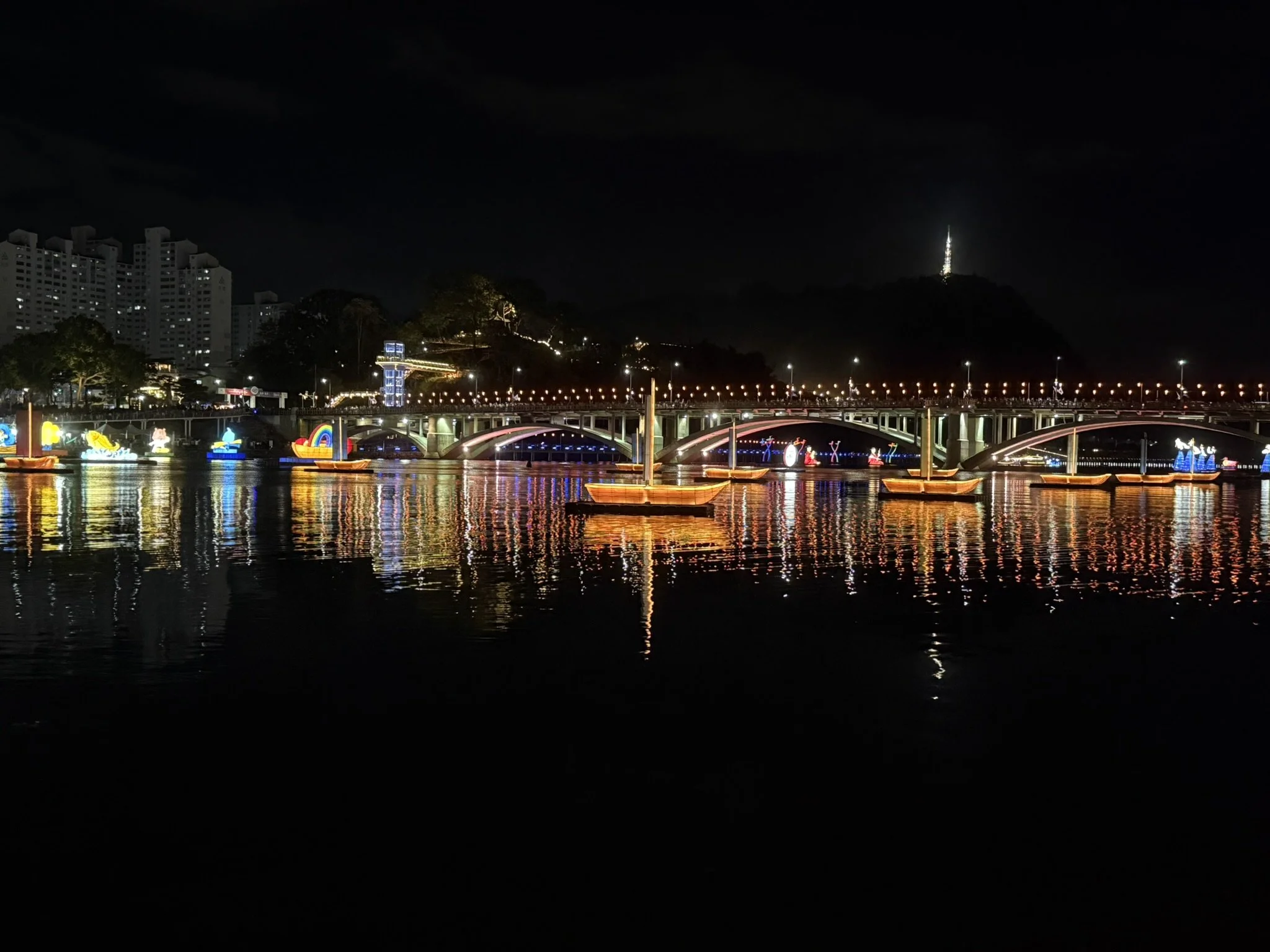
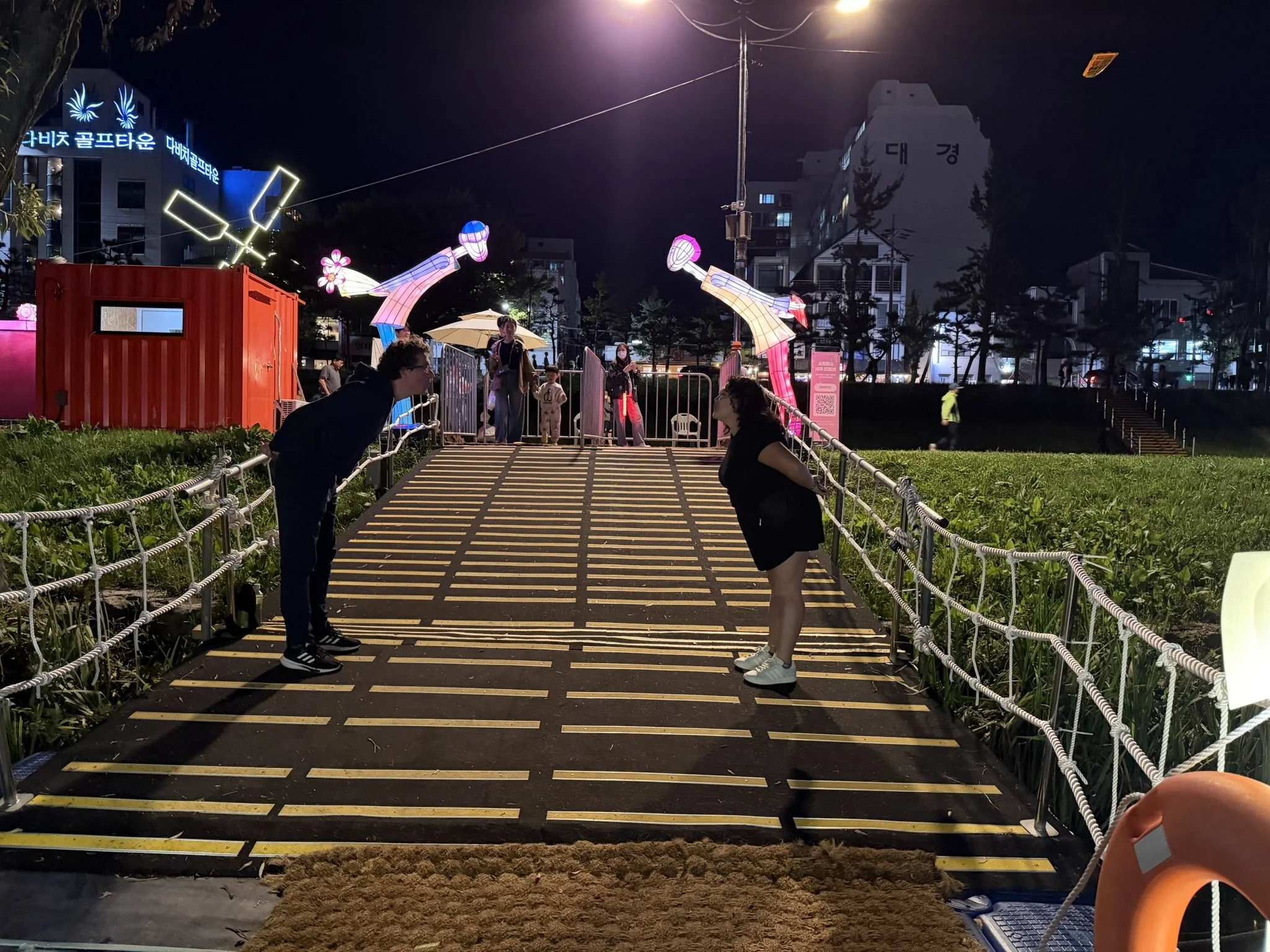
The main reason we drove to Jinju (in the Gyeongsang province) was to see the Jinju Namgang Yudeung Festival (floating water lantern festival). It is part of the event that continues the practice of making wishes by floating colorful lanterns down the Namgang River. This started in 1592 during the Siege of Jinju and Yudeung. When the Japanese invaded Korea in 1592, yudeung (oil lanterns) were lit in the battle at Jinjuseong Fortress to stop the Japanese army from crossing the Namgang River, and to contact families outside of the Fortress. It continued as a way to commemorate the Koreans that died during this battle and it continues today. Currently, there are World Pungmul lanterns, traditional lanterns, wish lanterns, religious lanterns and customized lanterns. This year, there were more than 70,000 lanterns with multiple themes. They had lanterns depicting a soldier’s day at the Jinju Fortress, lanterns depicting a sword dance, boat lanterns, animal lanterns, sponsored lanterns, symbol lanterns, lanterns of the joys and sorrows of life, climate change themed lanterns, peace and hope lanterns, lanterns based on traditional elegance, King Sejong and Hangul lanterns, a wishing tree lantern, and fantasy lanterns including Star Wars and Minecraft.
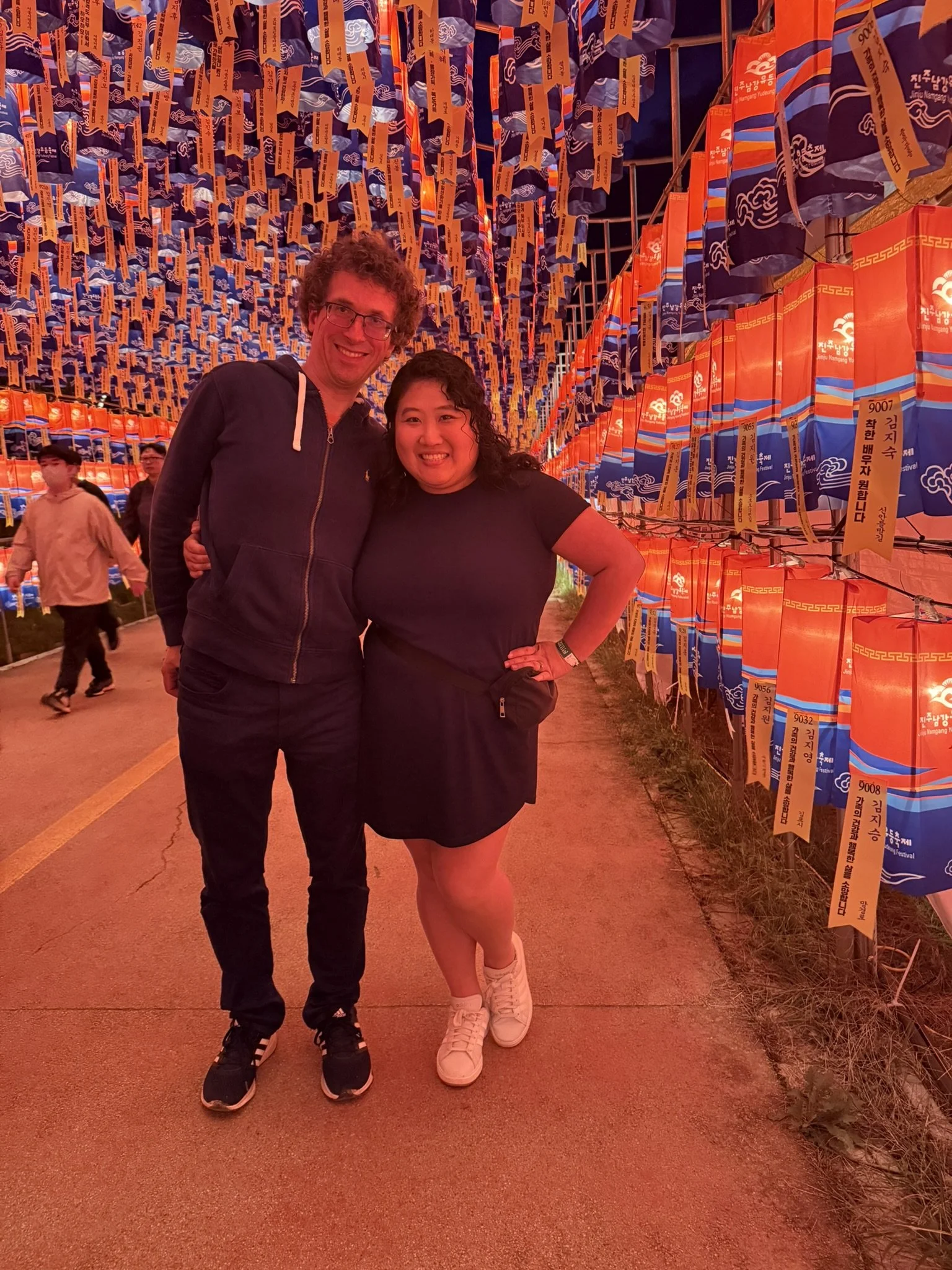
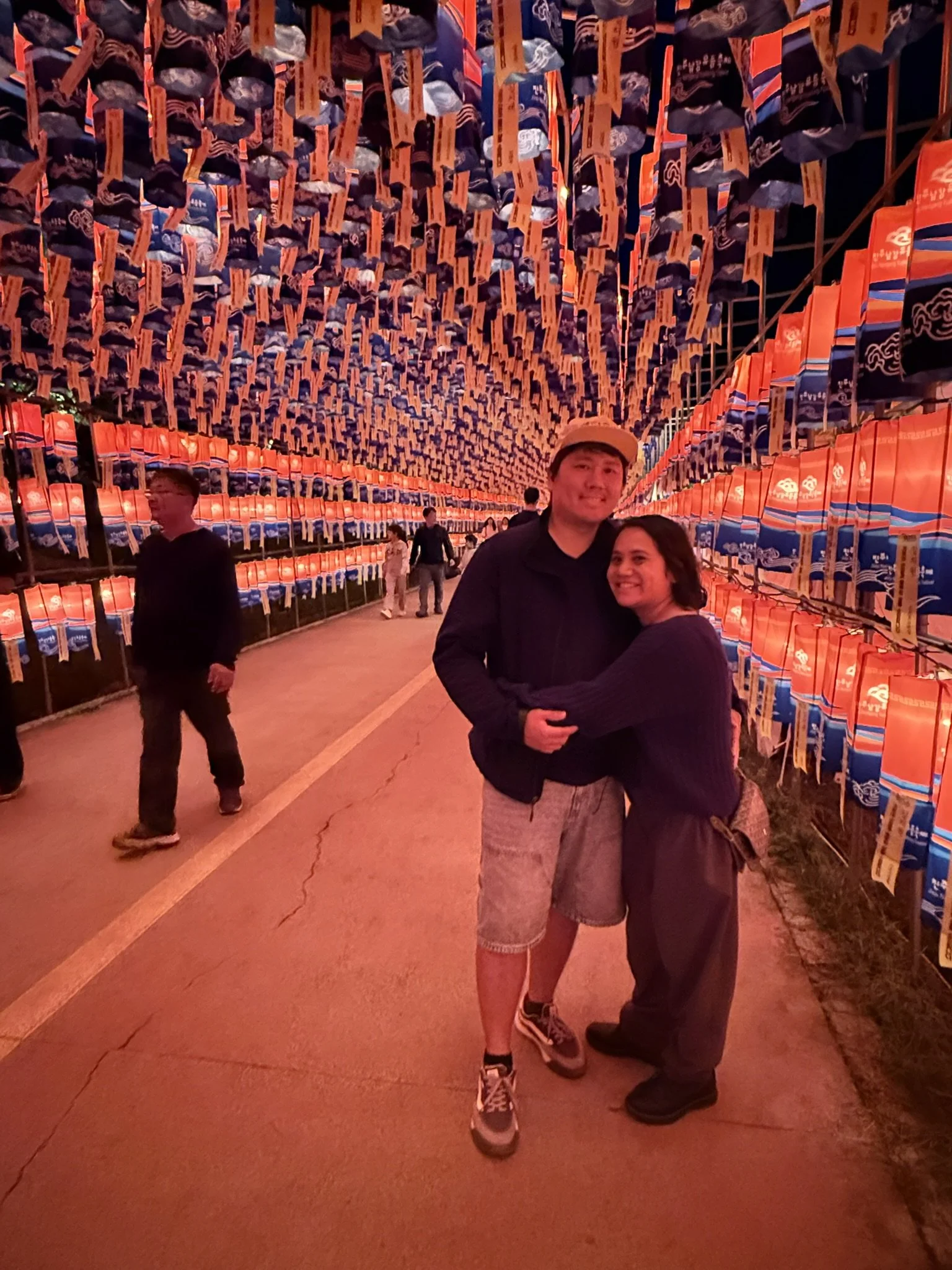
There was also an extremely long tunnel of red prayer lanterns that we could walk through. Bryce tried to count them but after 21,000, the numbers stopped appearing on them and we gave up trying to figure out how many there were.
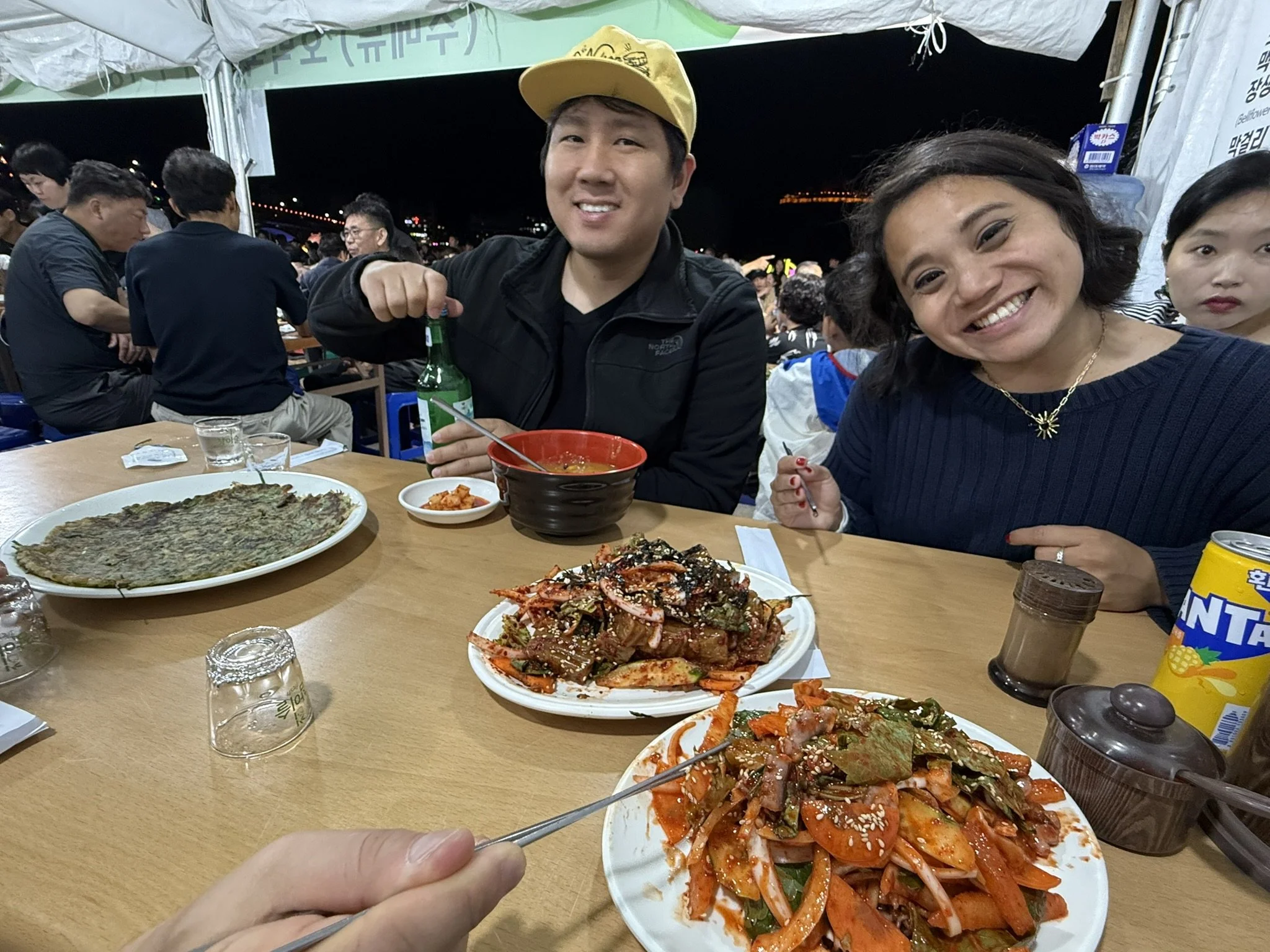
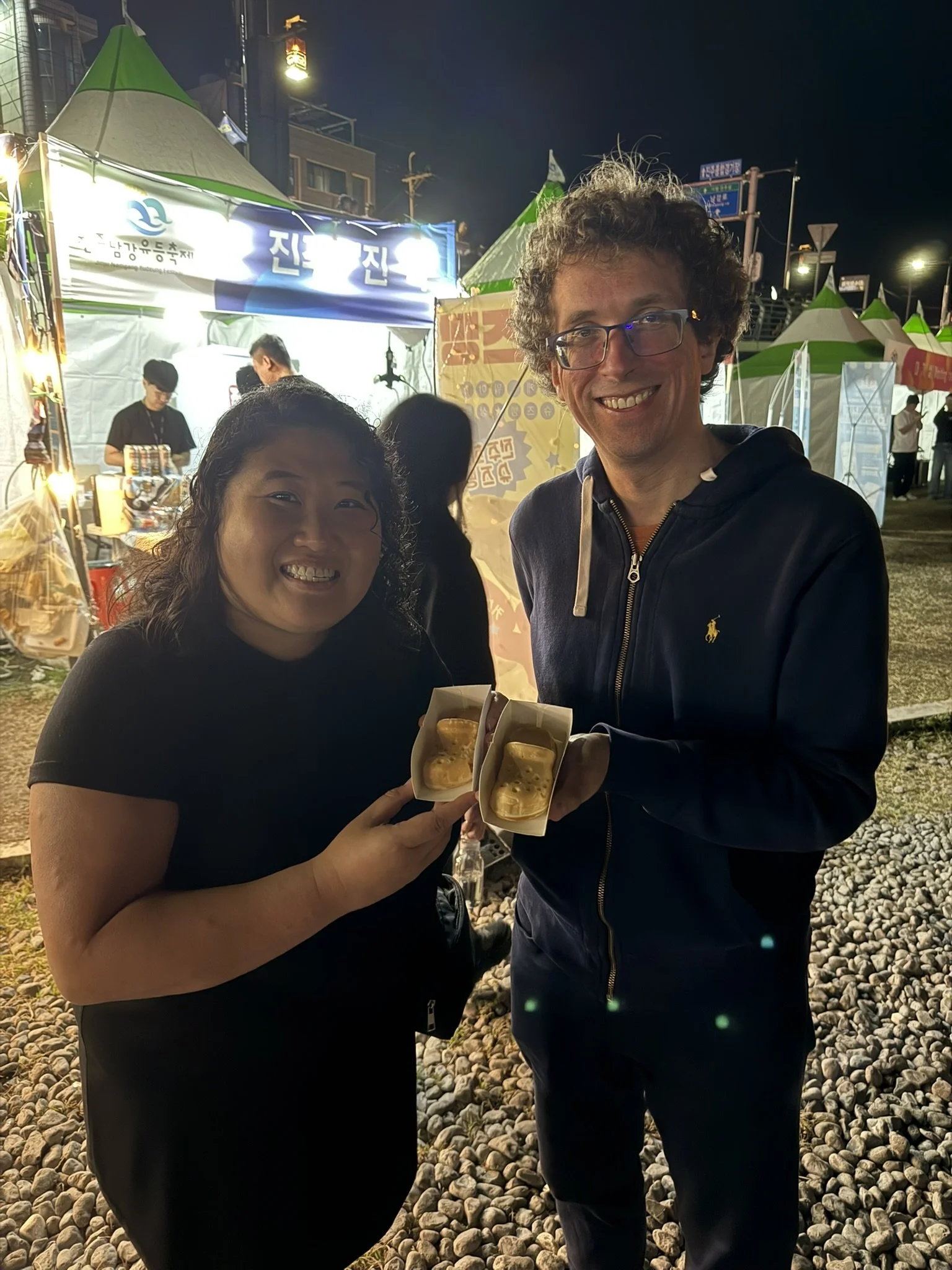
For dinner, we got a pumpkin porridge, ramen, octopus and vegetable salad, tofu with stir-fried kimchi, hot chili chive pancake, soju, and sodas. For our snack, Bryce and I found these crocs to eat. It was a sweet dough with a cheese inside.
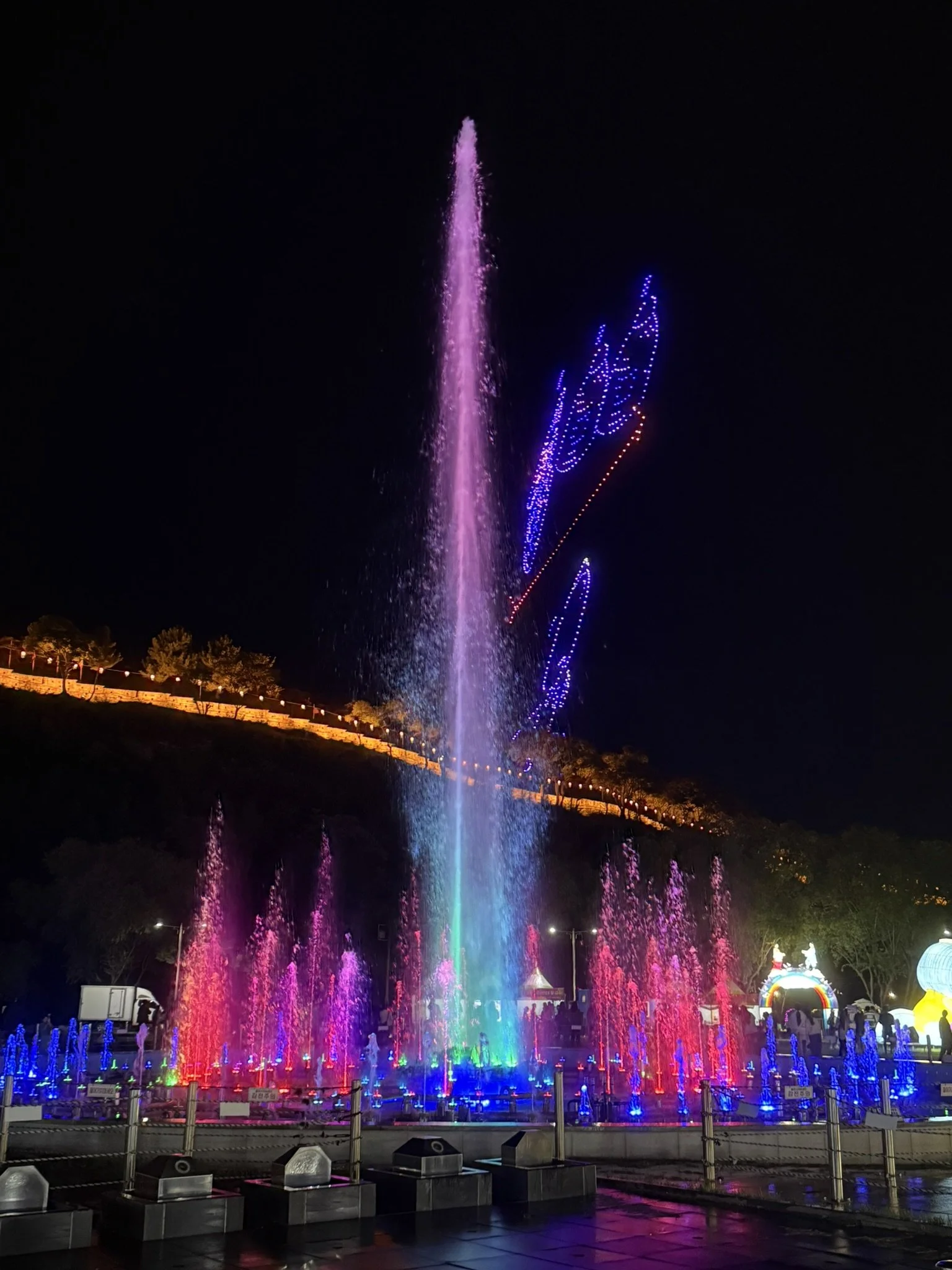
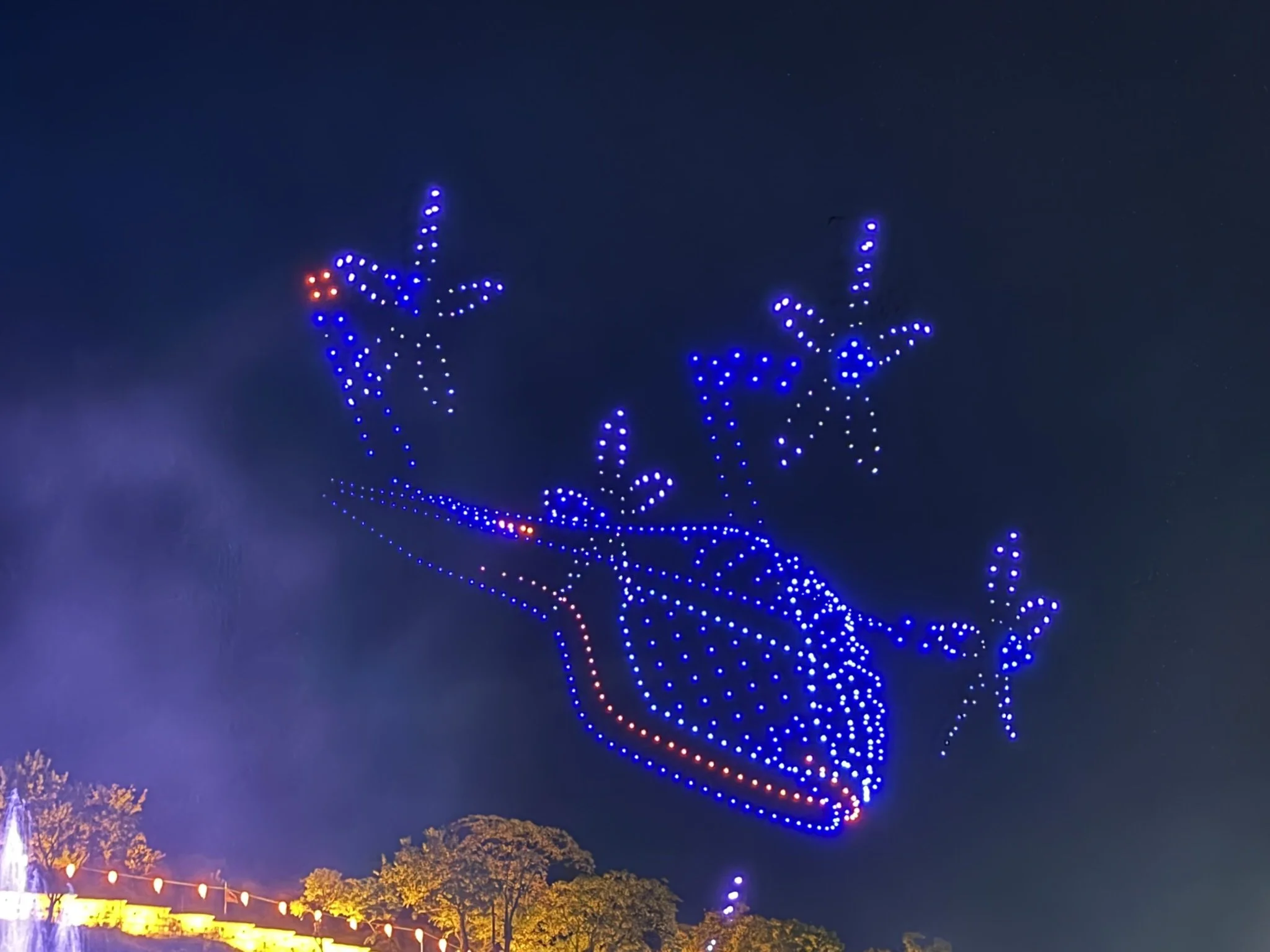
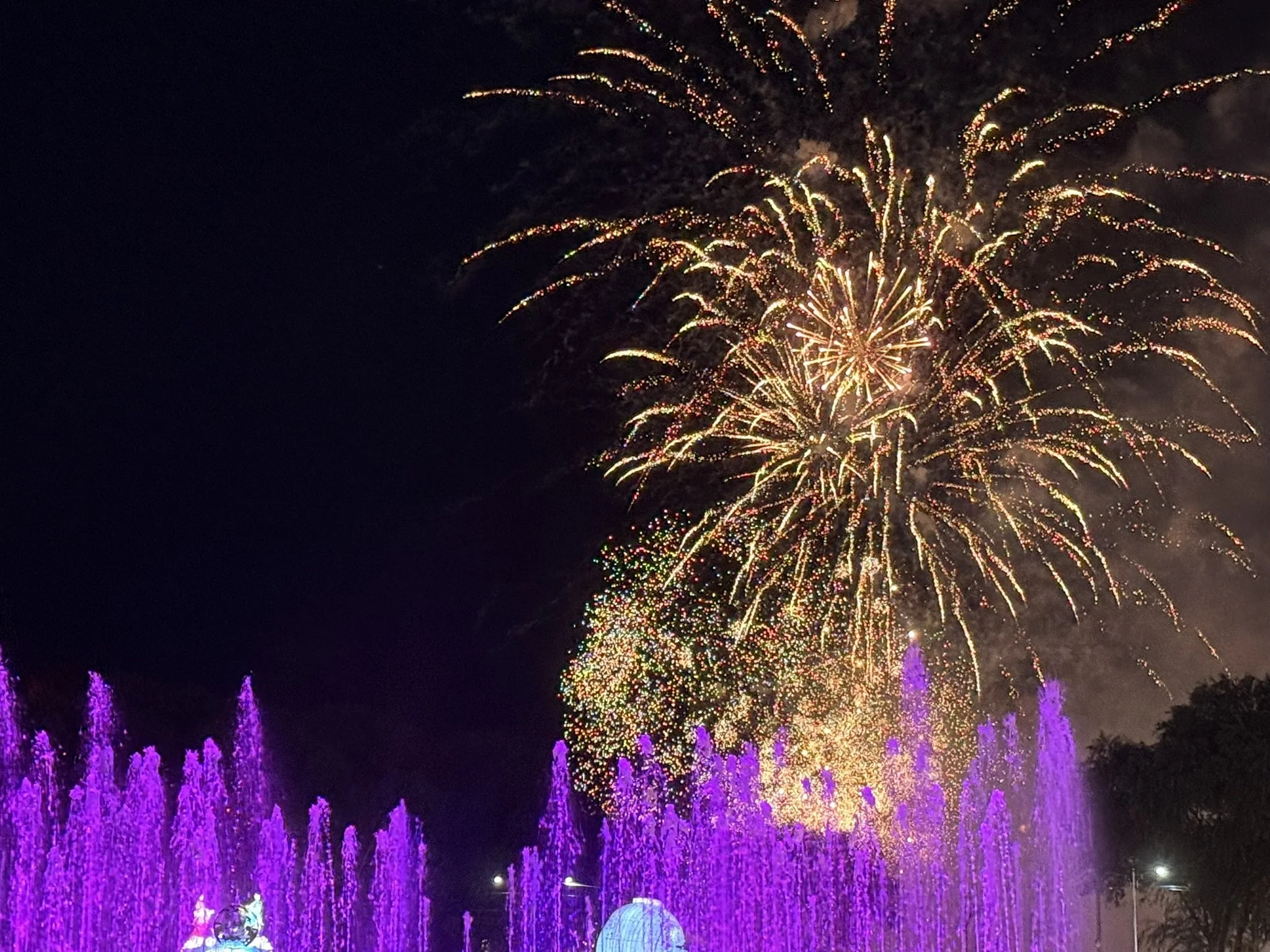
A few hours into the festival, a drone show and a firework show was held in the sky.
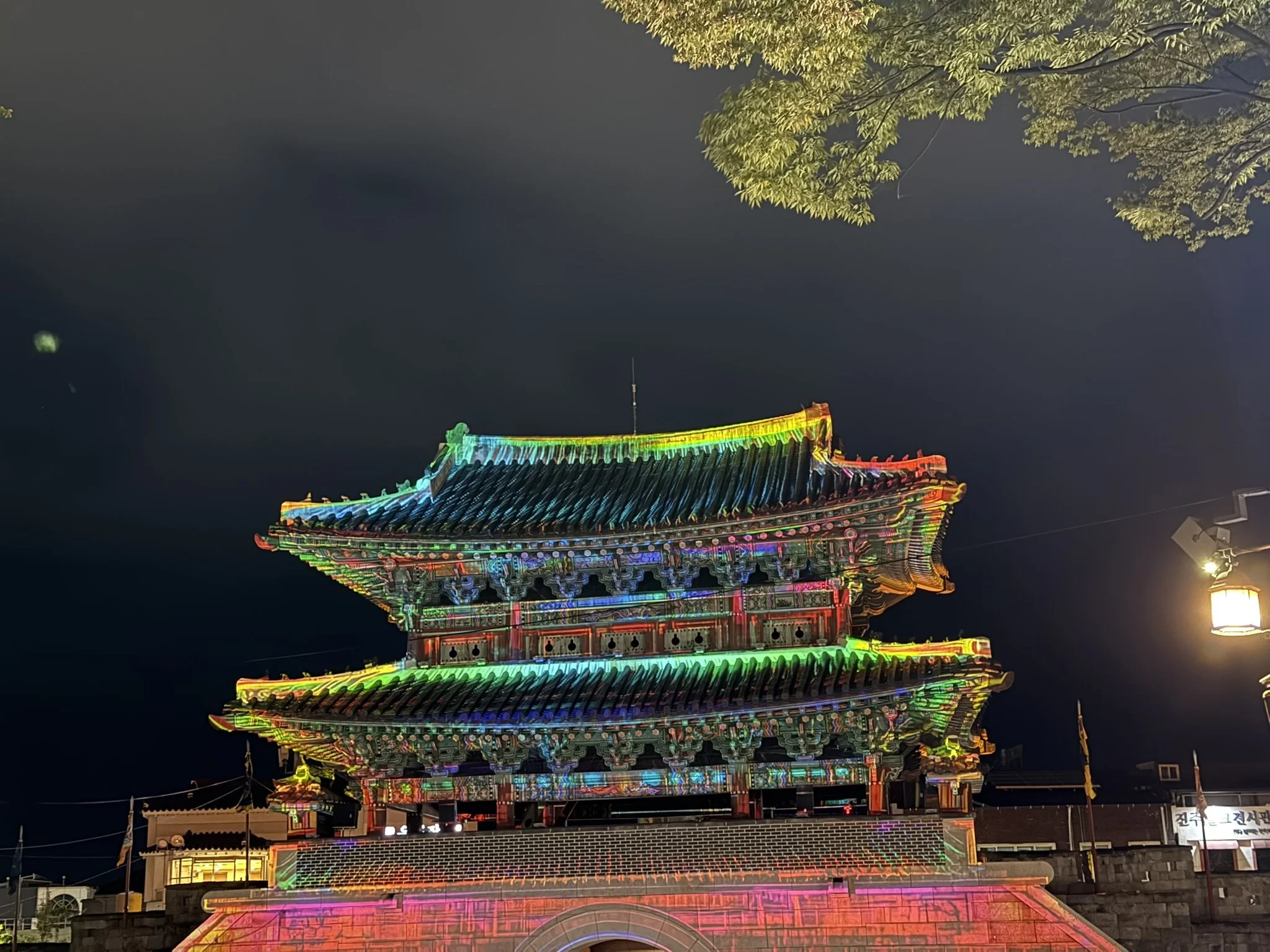
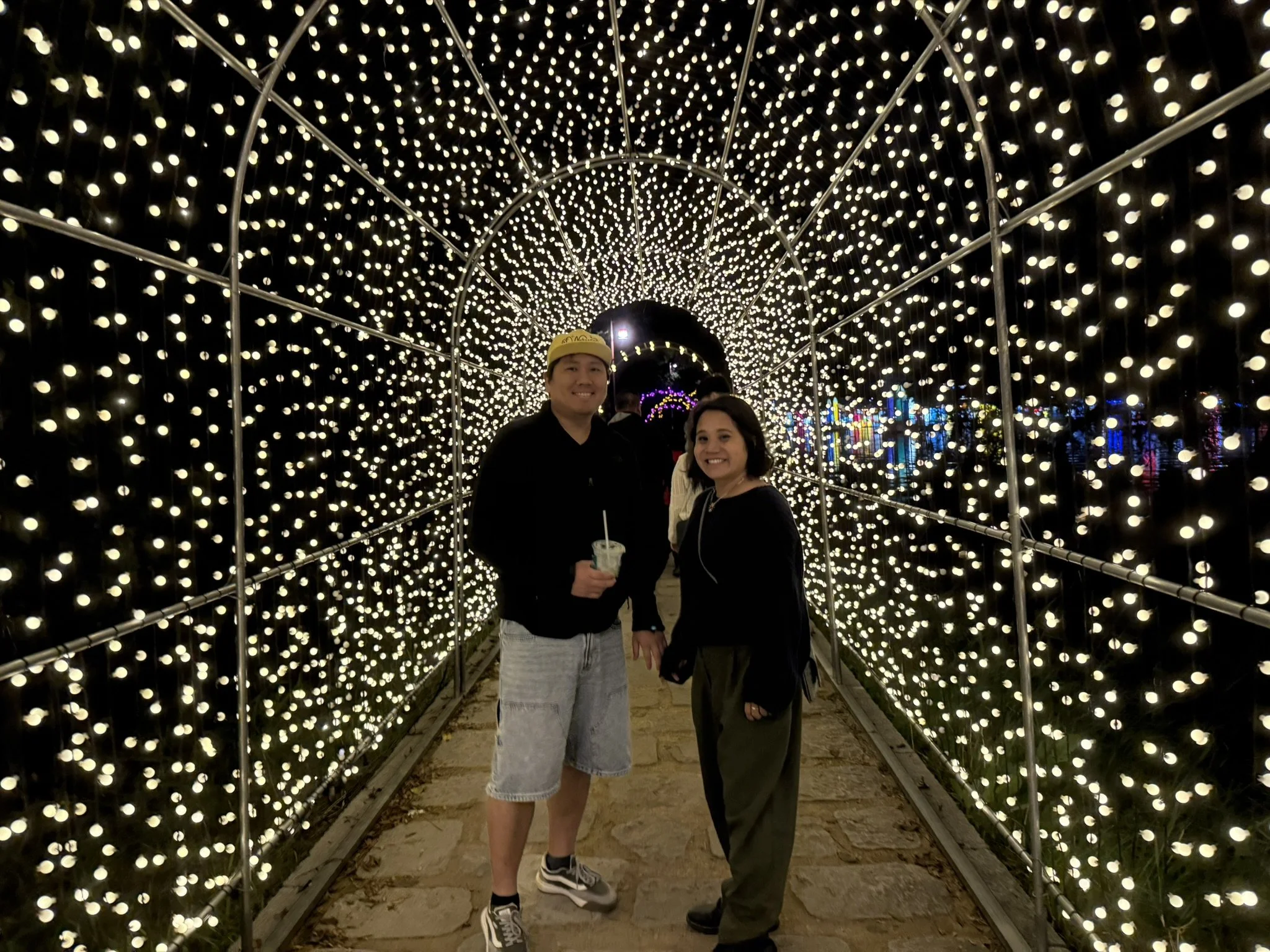
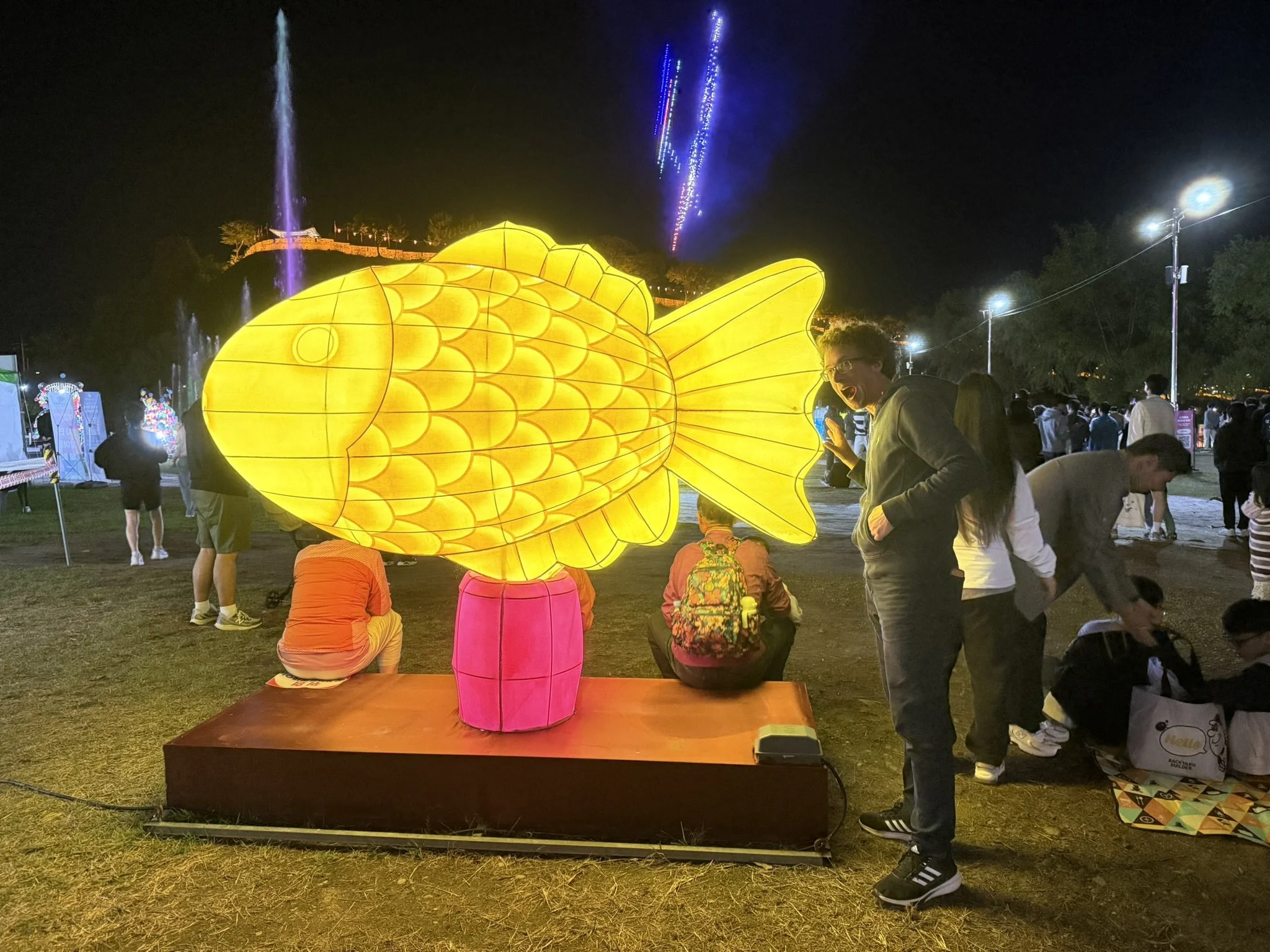
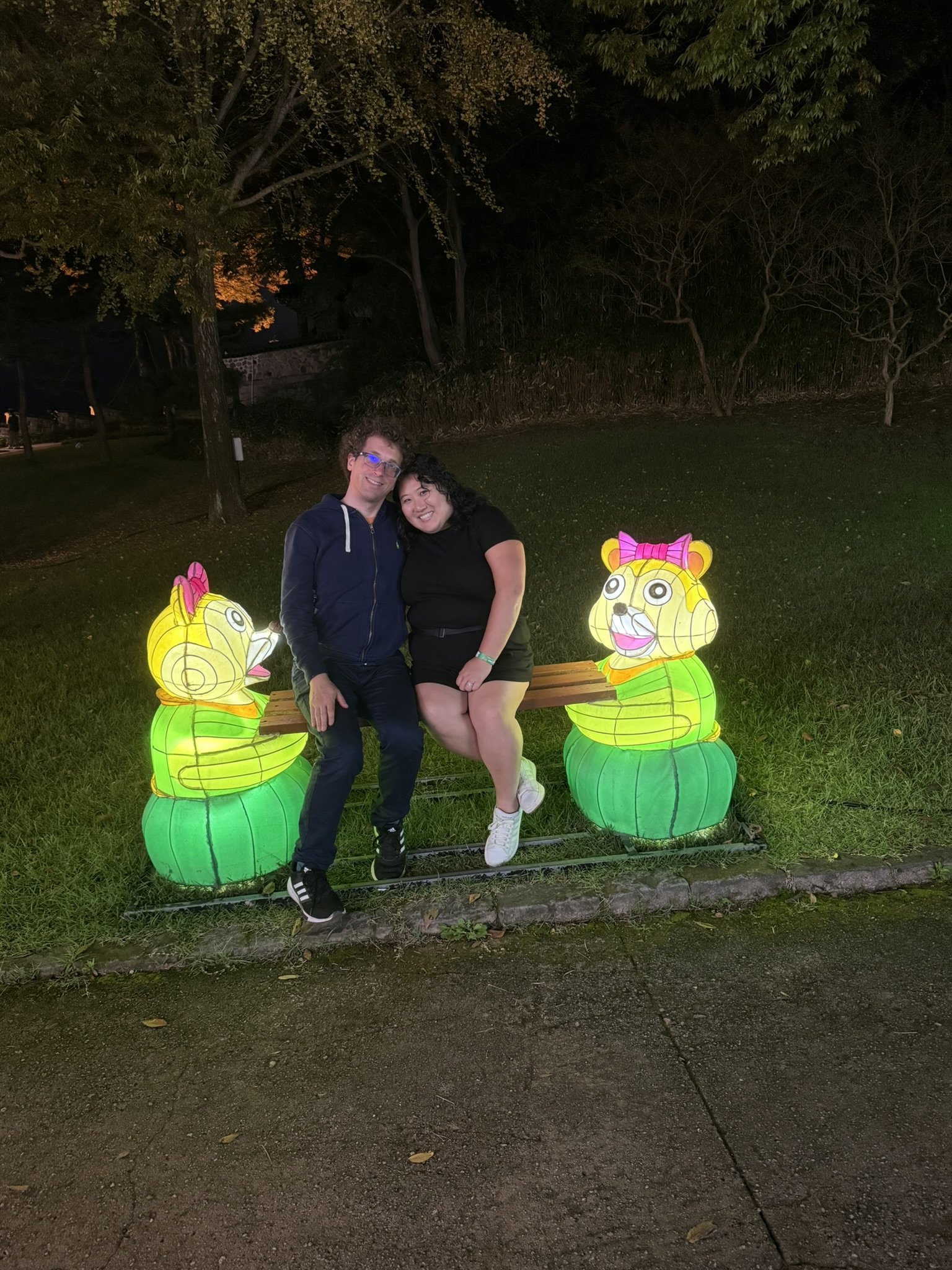
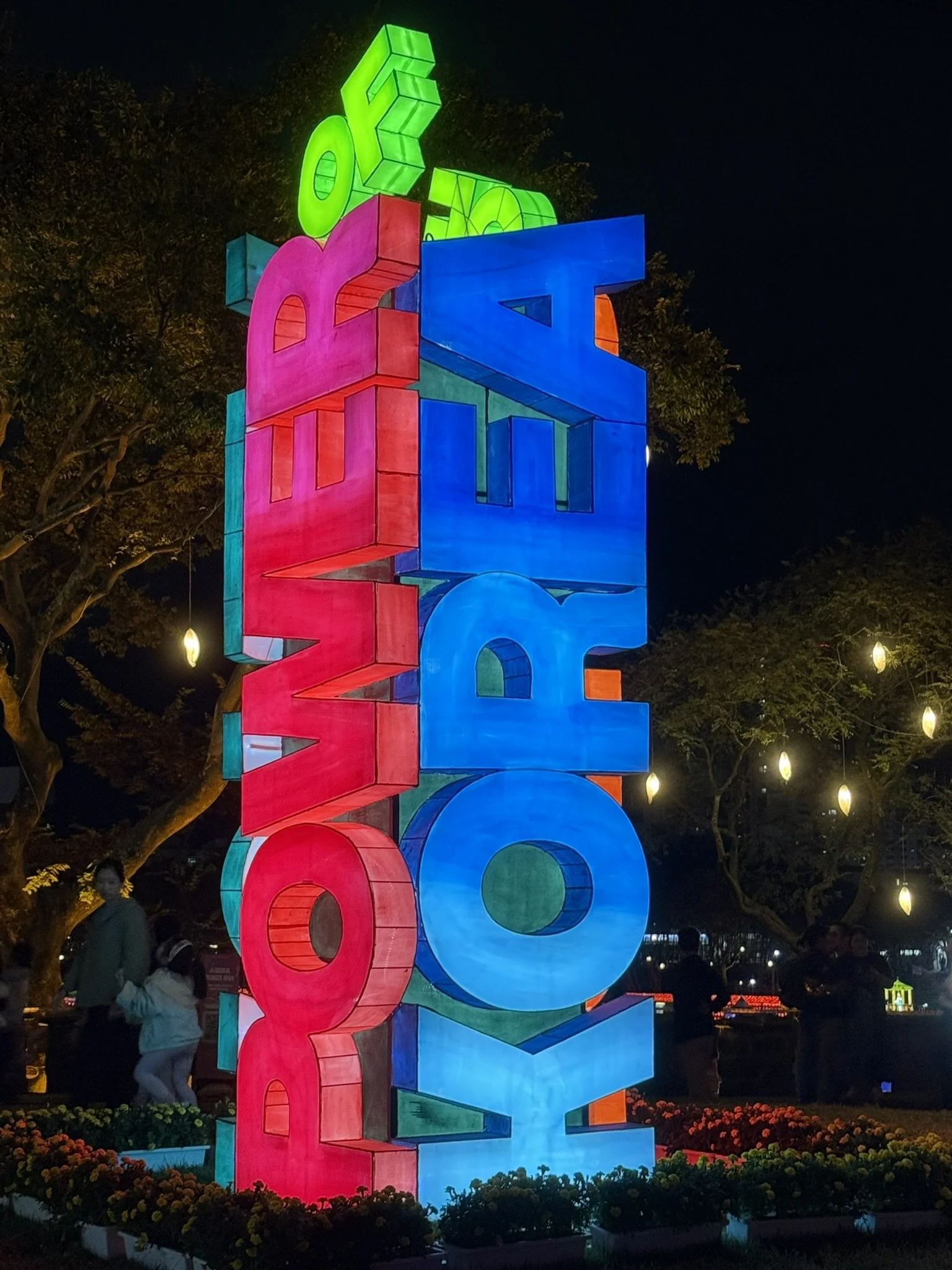
After the drone and fireworks, we continued walking. We crossed the river again (they built additional bridges across the river with water lanterns) and thought we were finishing up the festival. Turns out there was even more to see. Another hour later on our way back to the hotel, we realized we missed an entire section! However, after 4 hours of walking around, we were tired and headed back to the hotel.
Day 5: Sunday October 19, 2025 Bamboo Forest and Meta-Provence/Meta-Sequoias
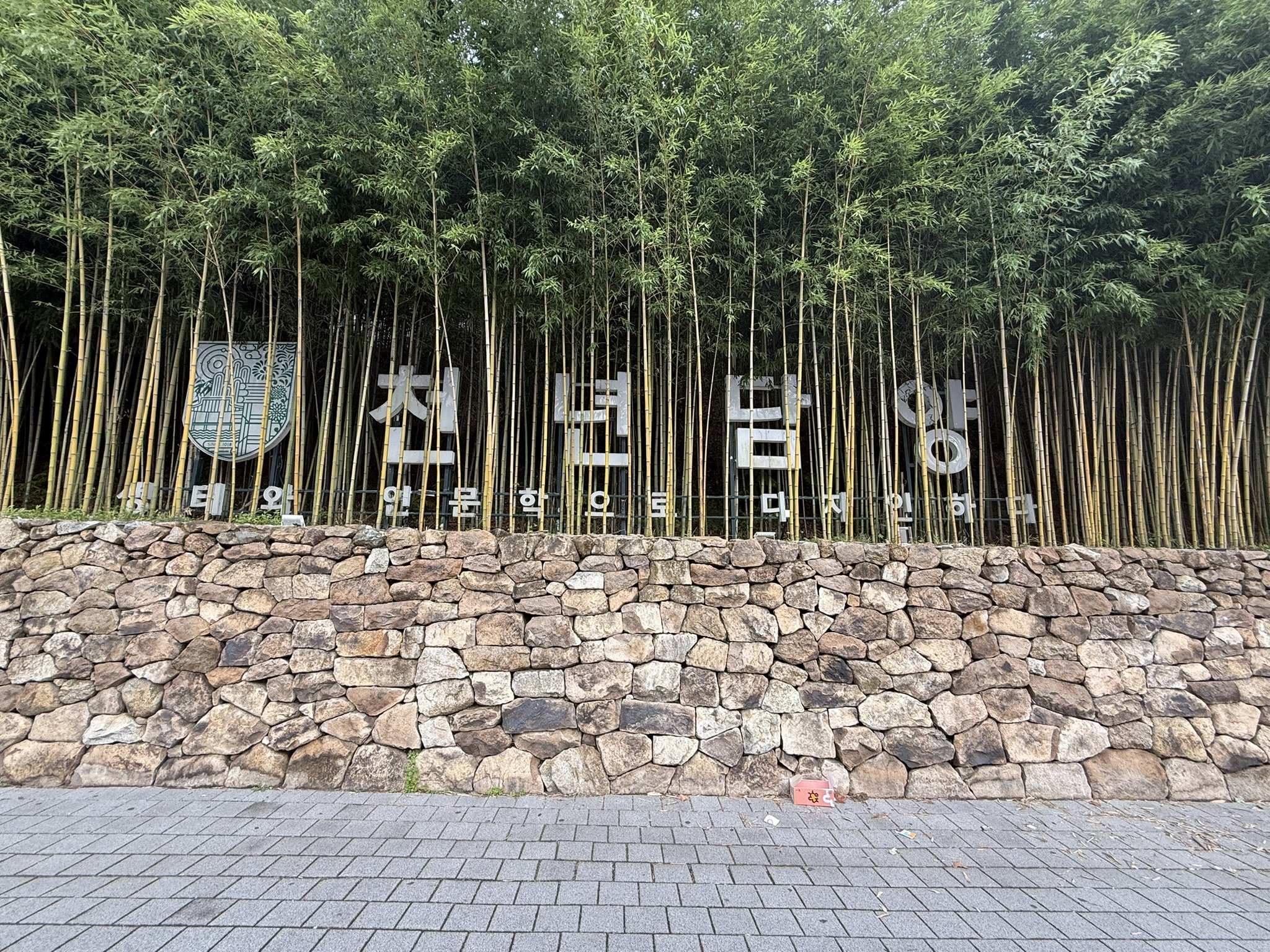
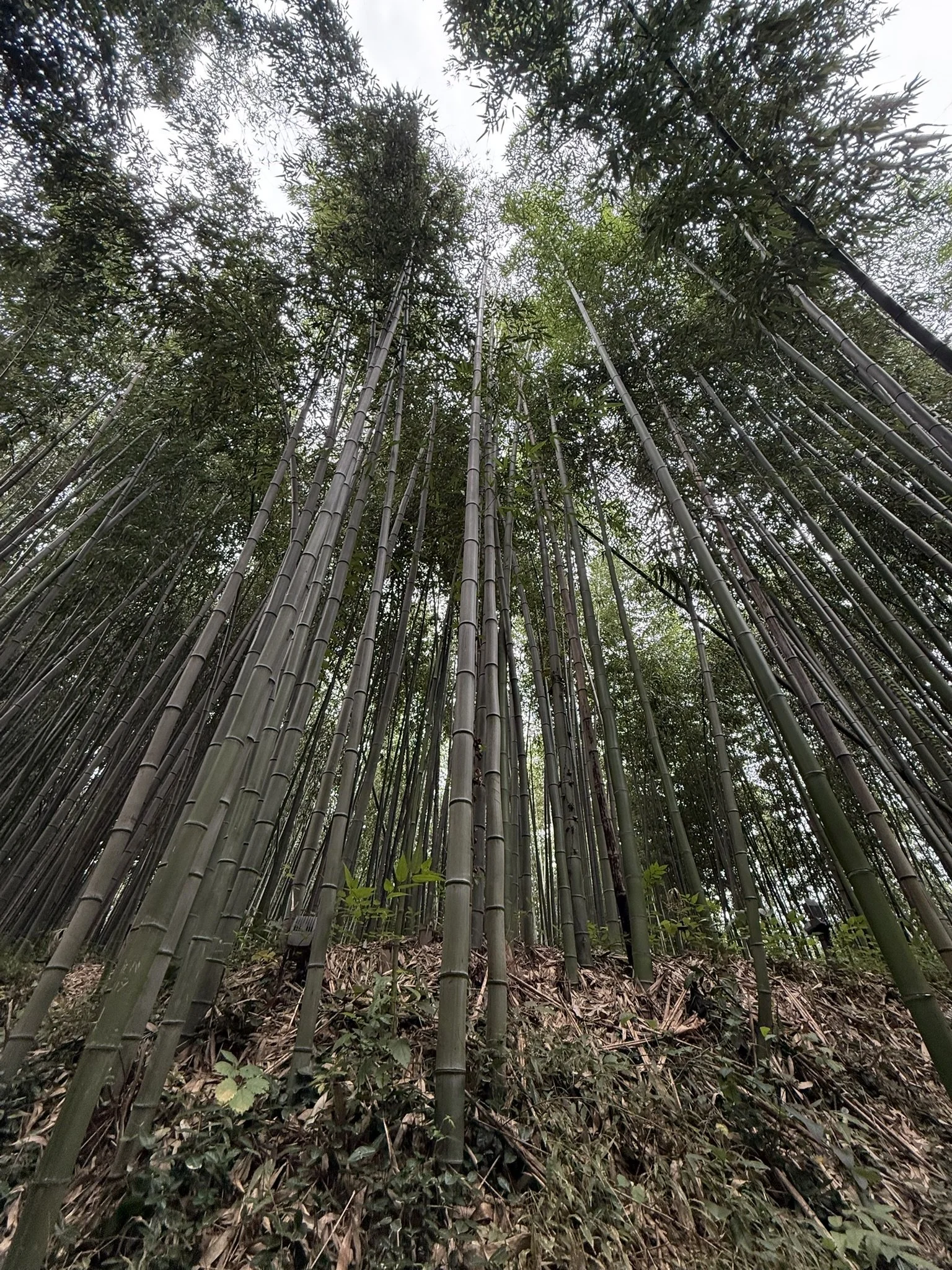
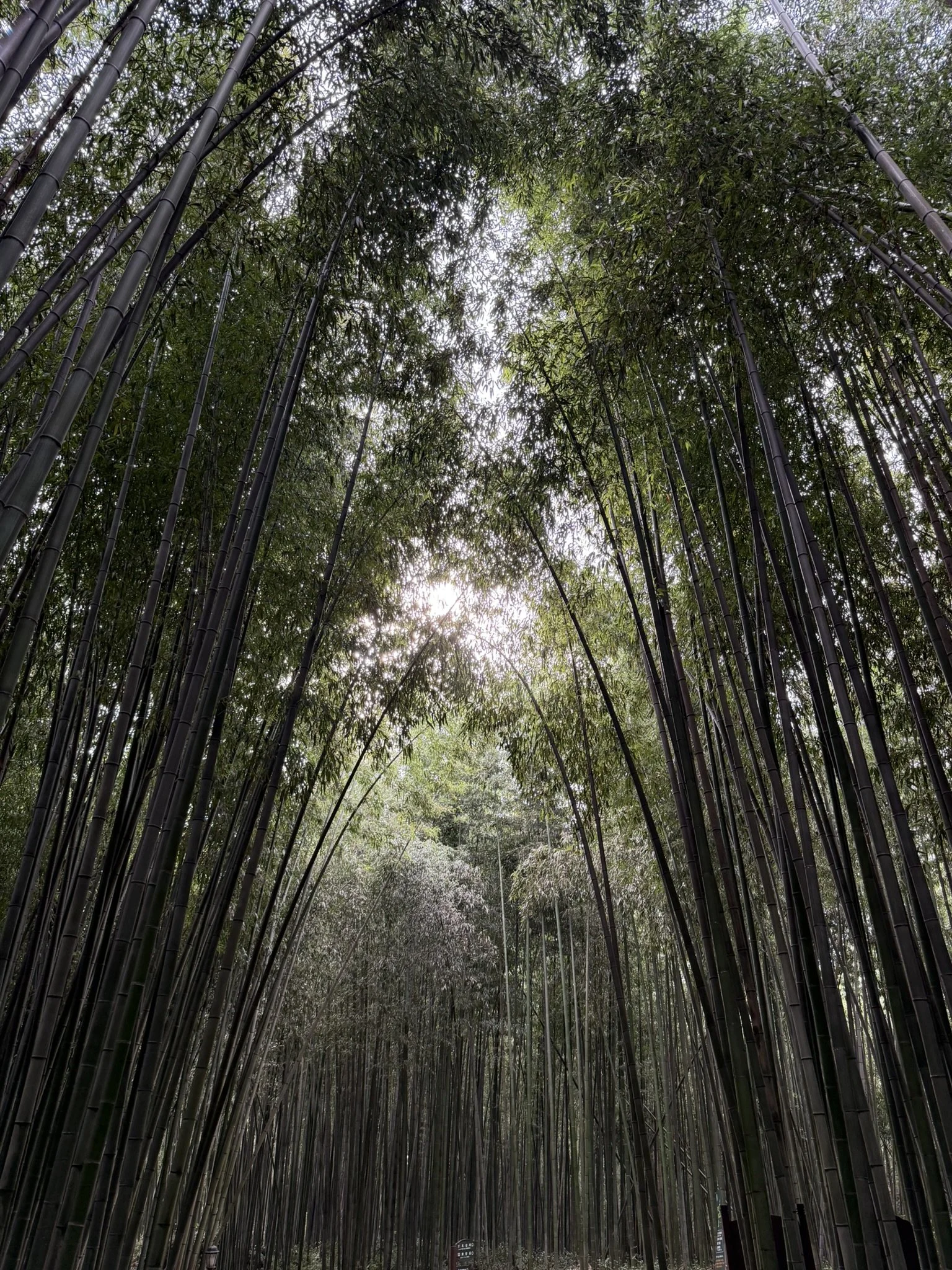
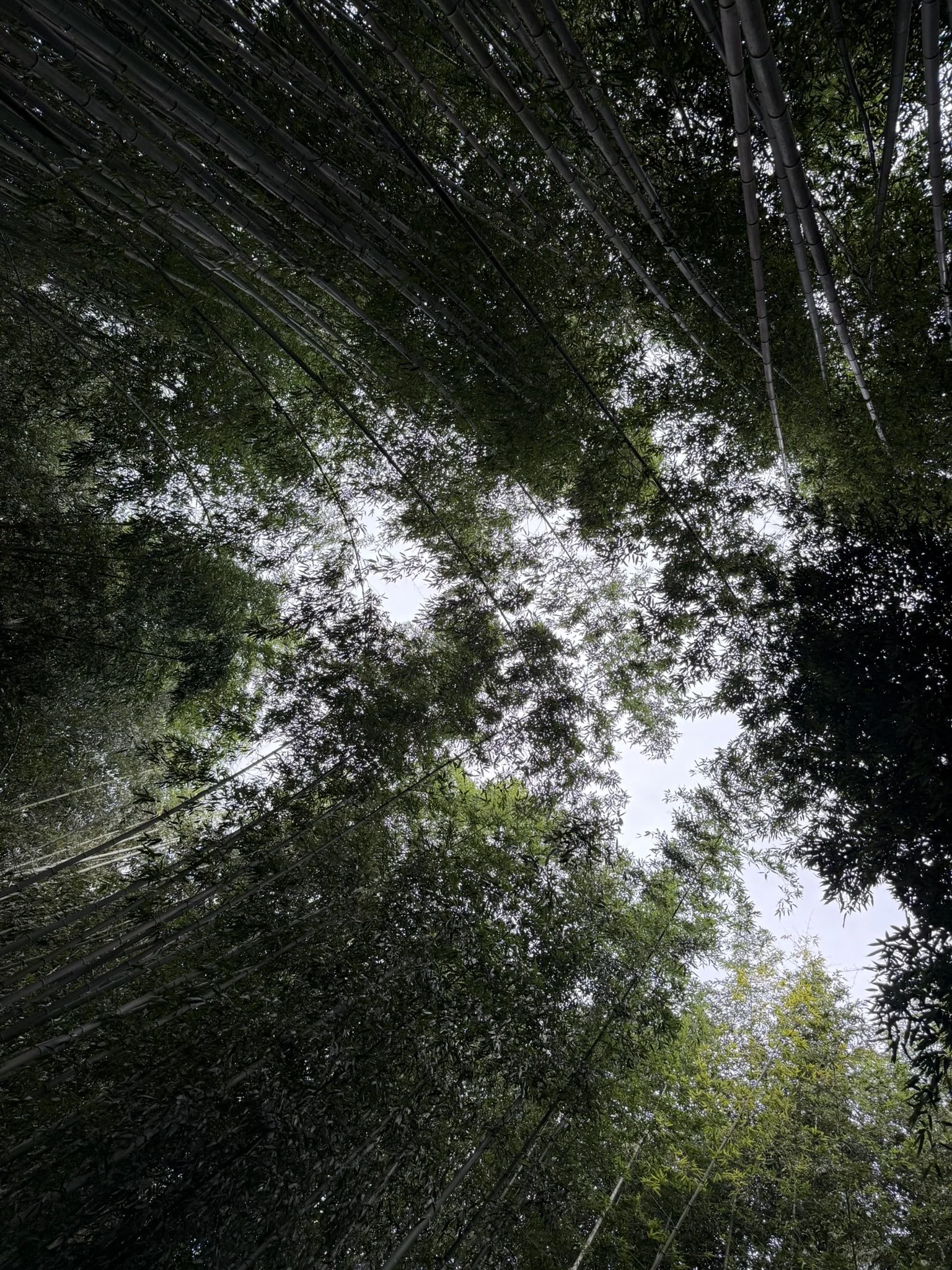
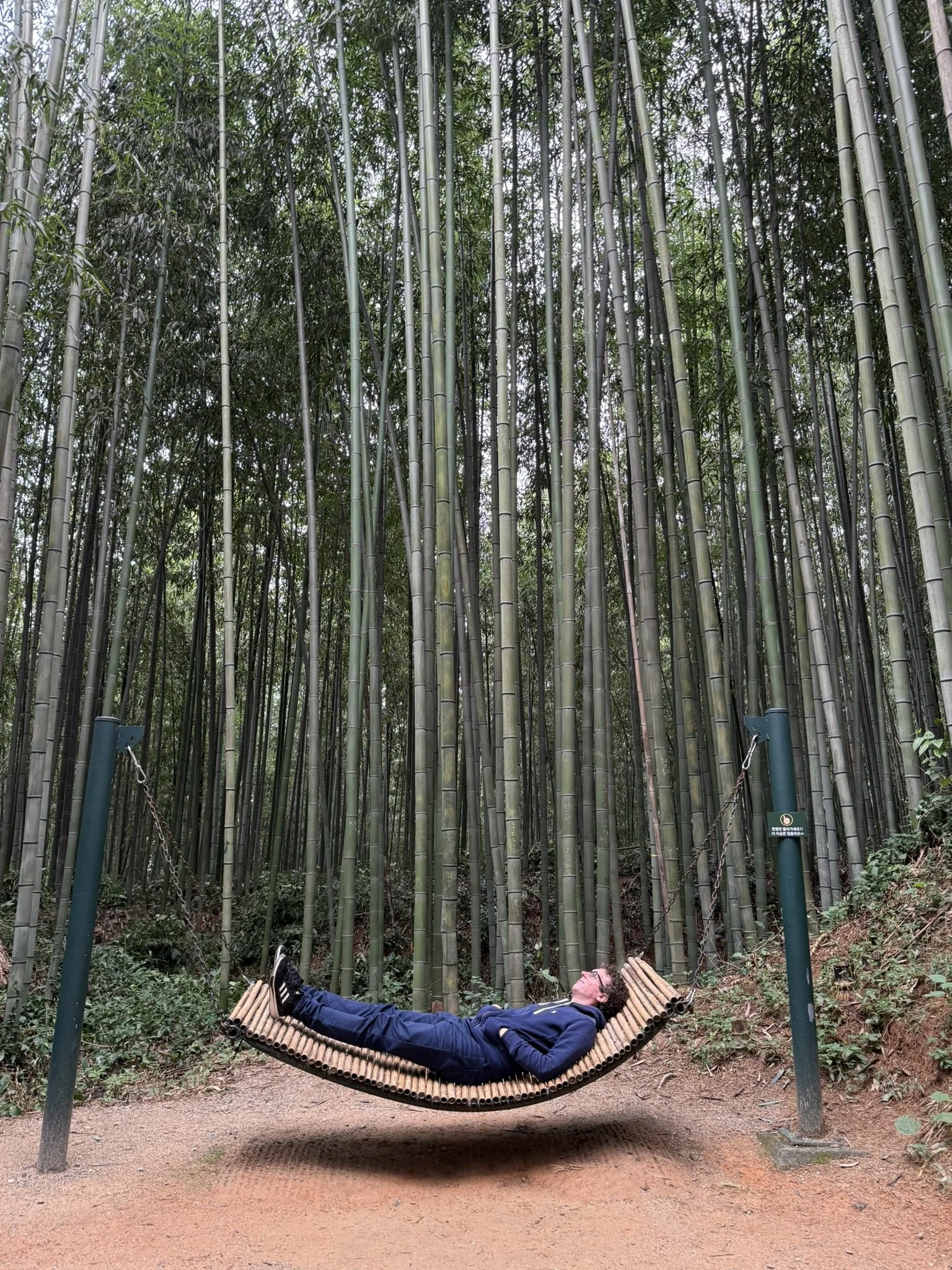
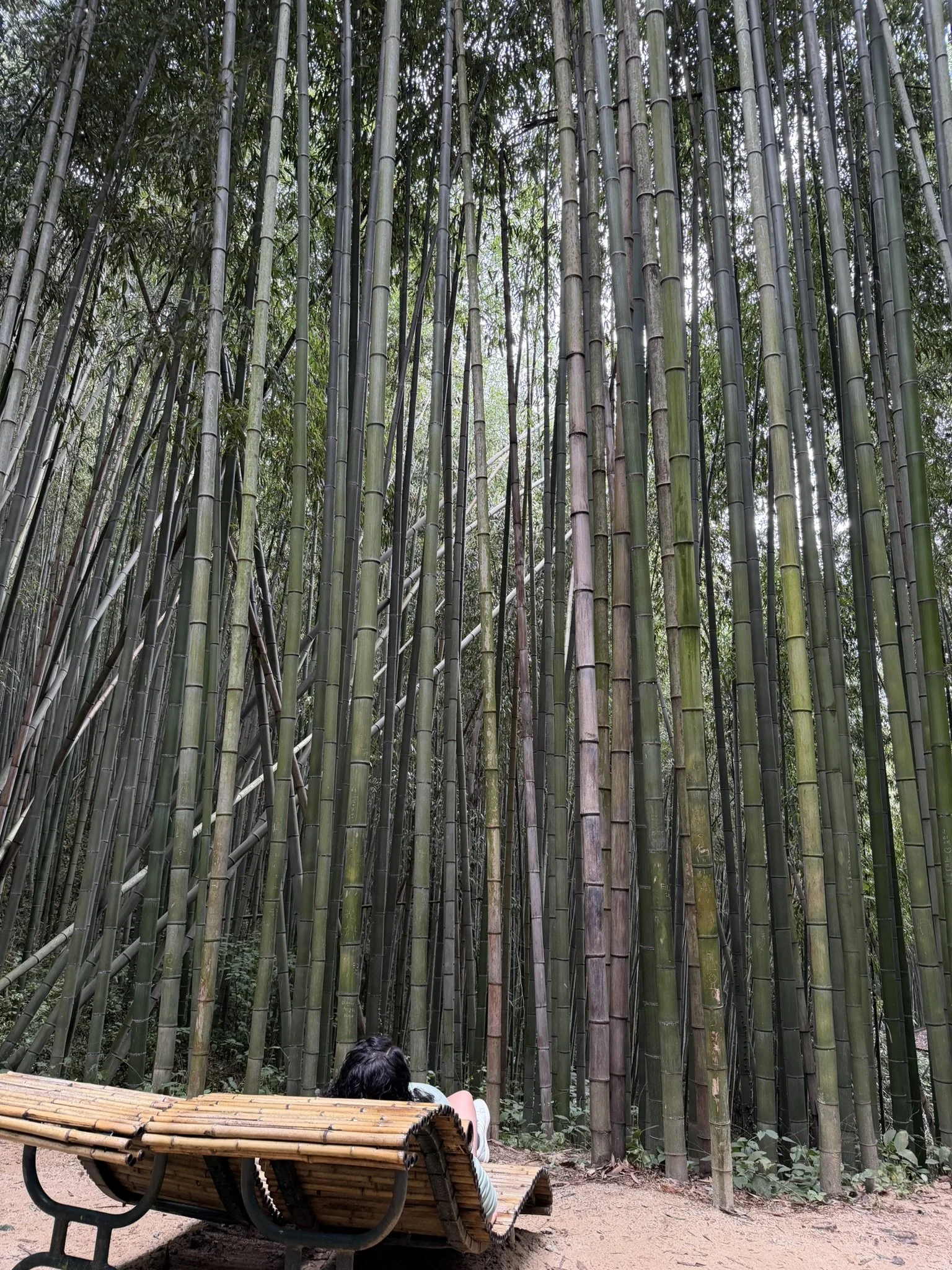
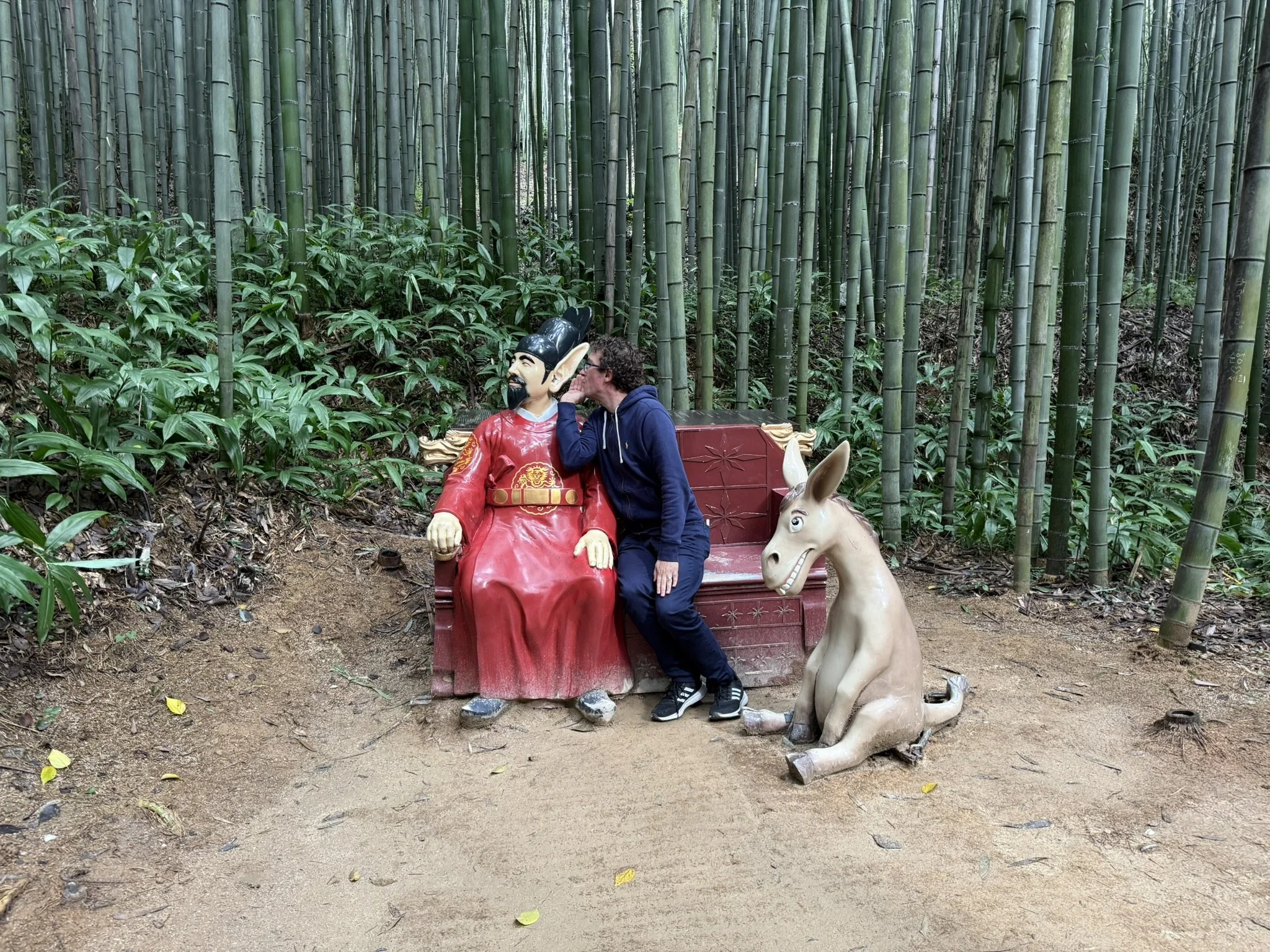
Bryce and I split from Kyle and Danielle again. We both wanted to visit our birth cities so we decided to go our separate ways for 2 days. Bryce and I made a detour to Juknokwon Bamboo Forest in Damyang. It is a cultivated bamboo forest that was opened in 2005. There are 8 trails throughout the forest, so while this forest is much smaller than the bamboo forest in Japan, it felt much larger as you could walk throughout the entire forest. A few paths we took included the Unsudaetong Road (Good Luck Road), the Lover’s Lane path, and the Philosopher’s Way path. There are many pavilions, benches, and hammocks that we could lounge in throughout our time in the forest.
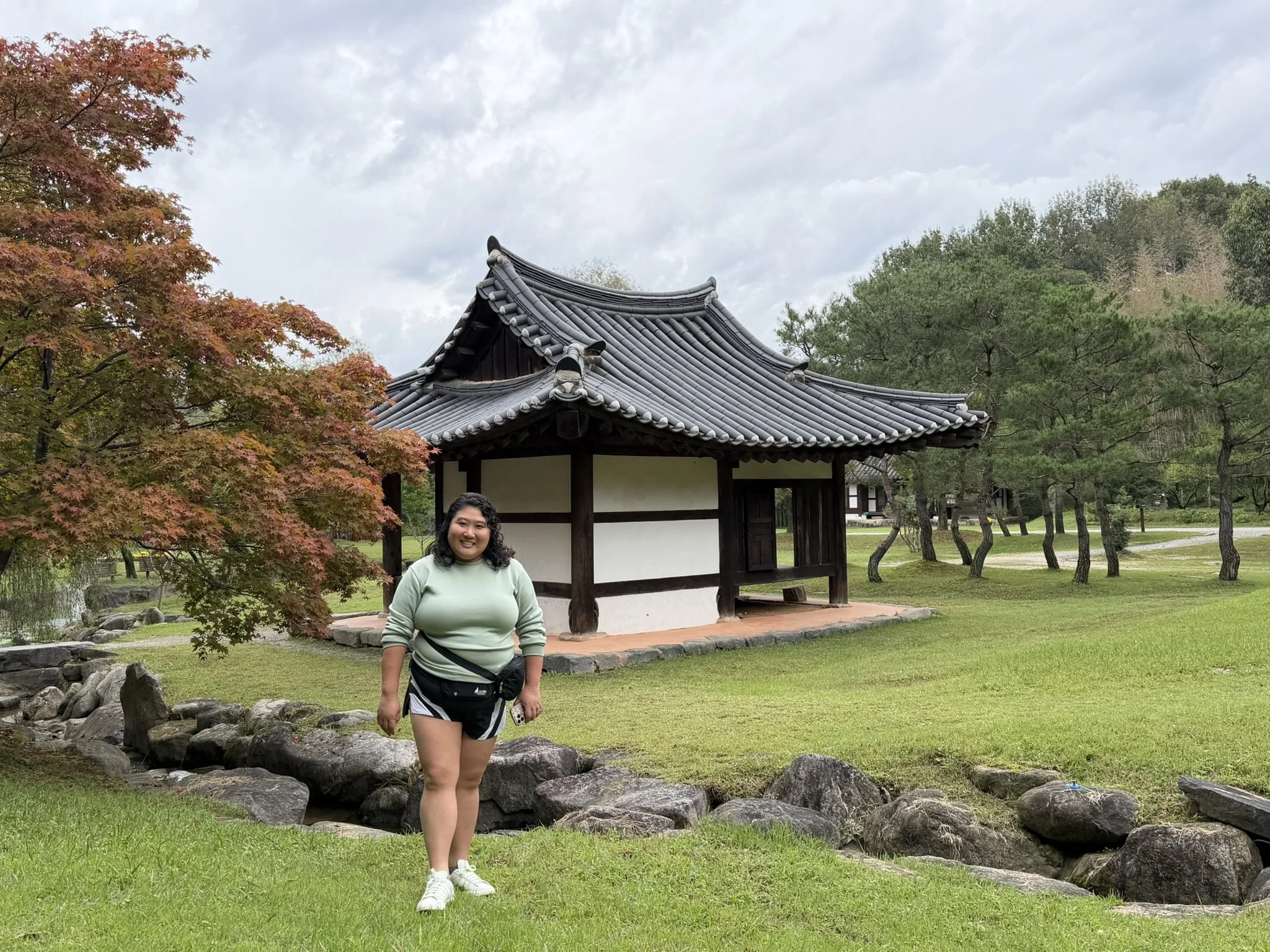
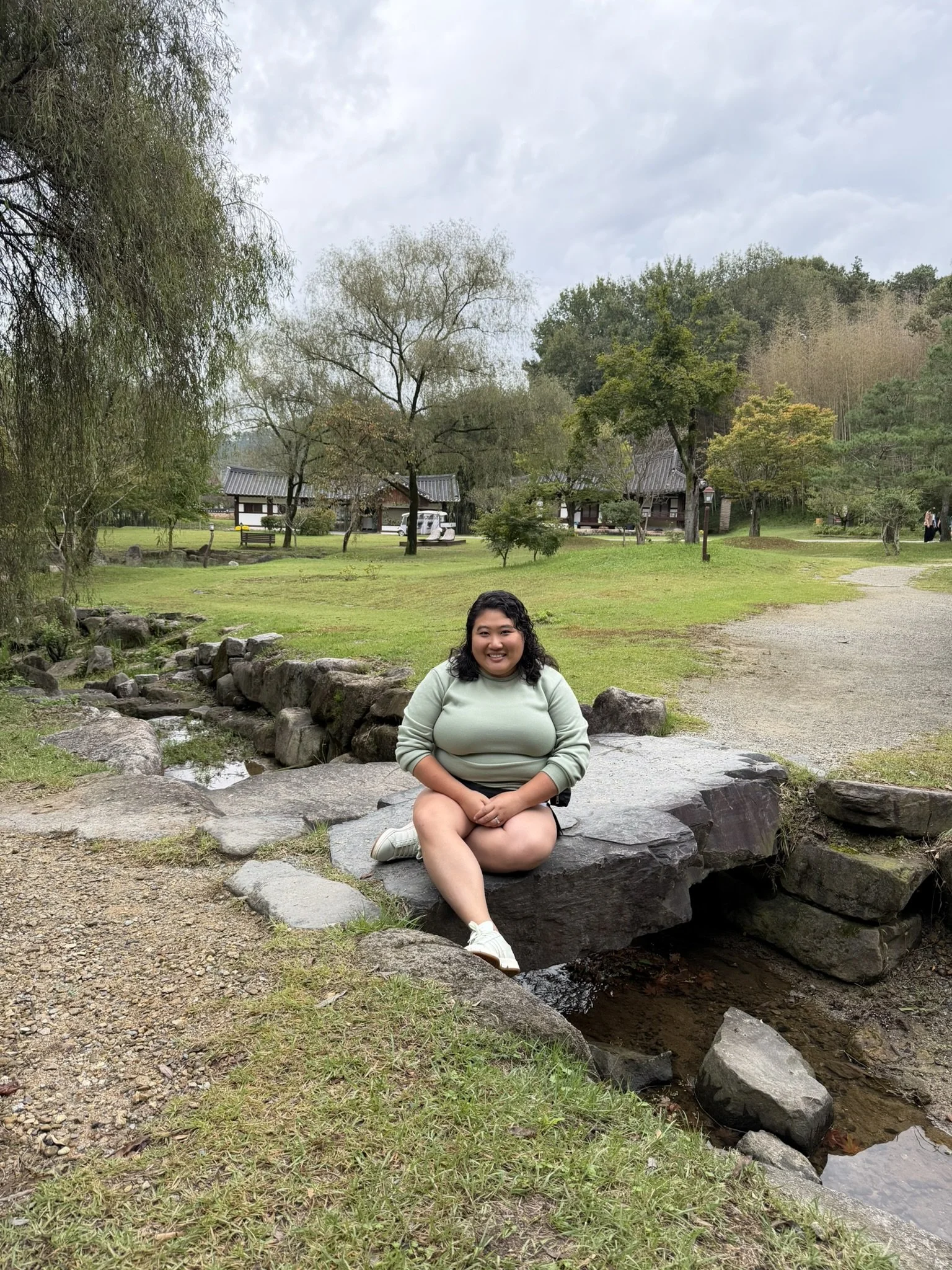

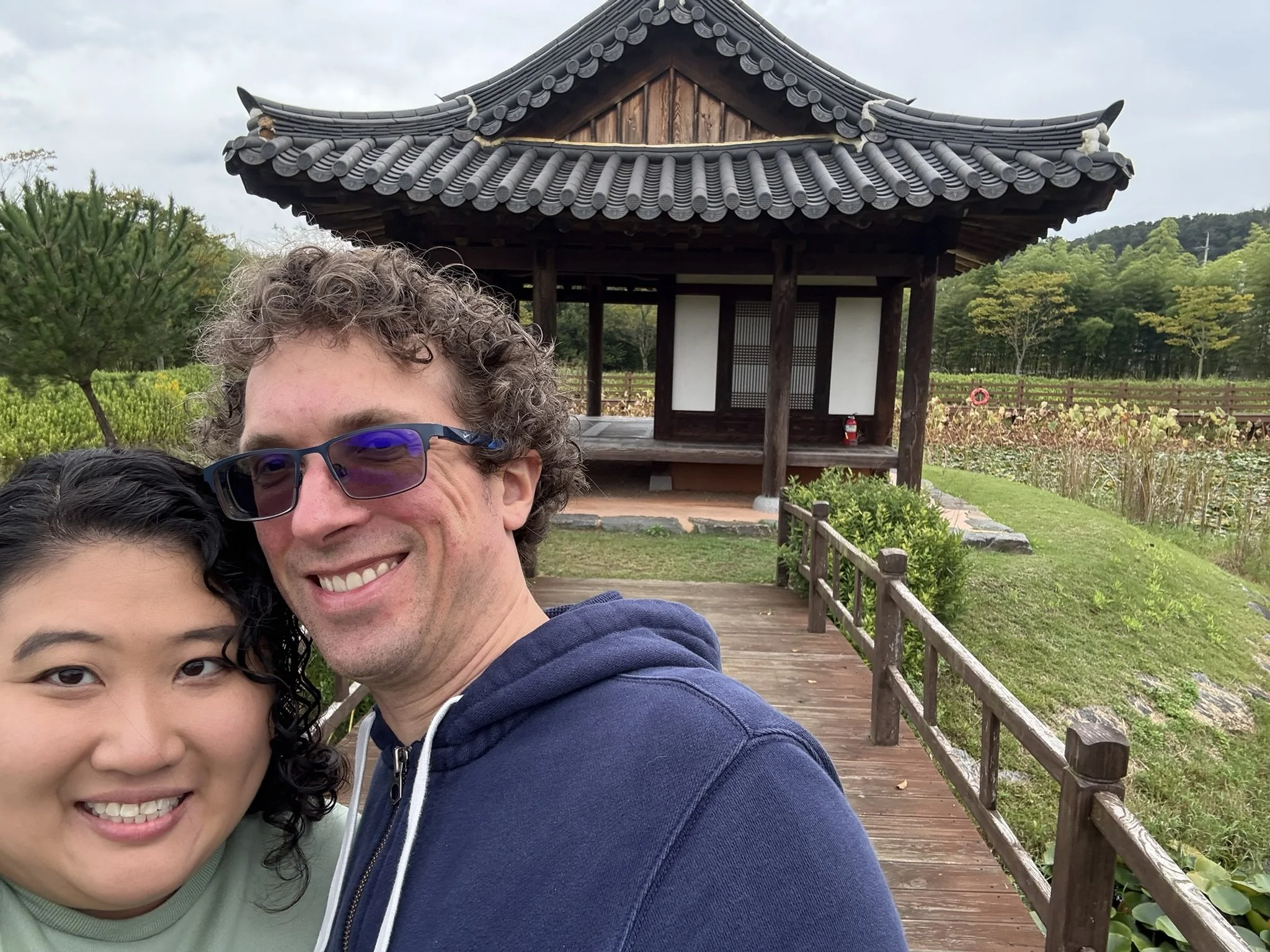
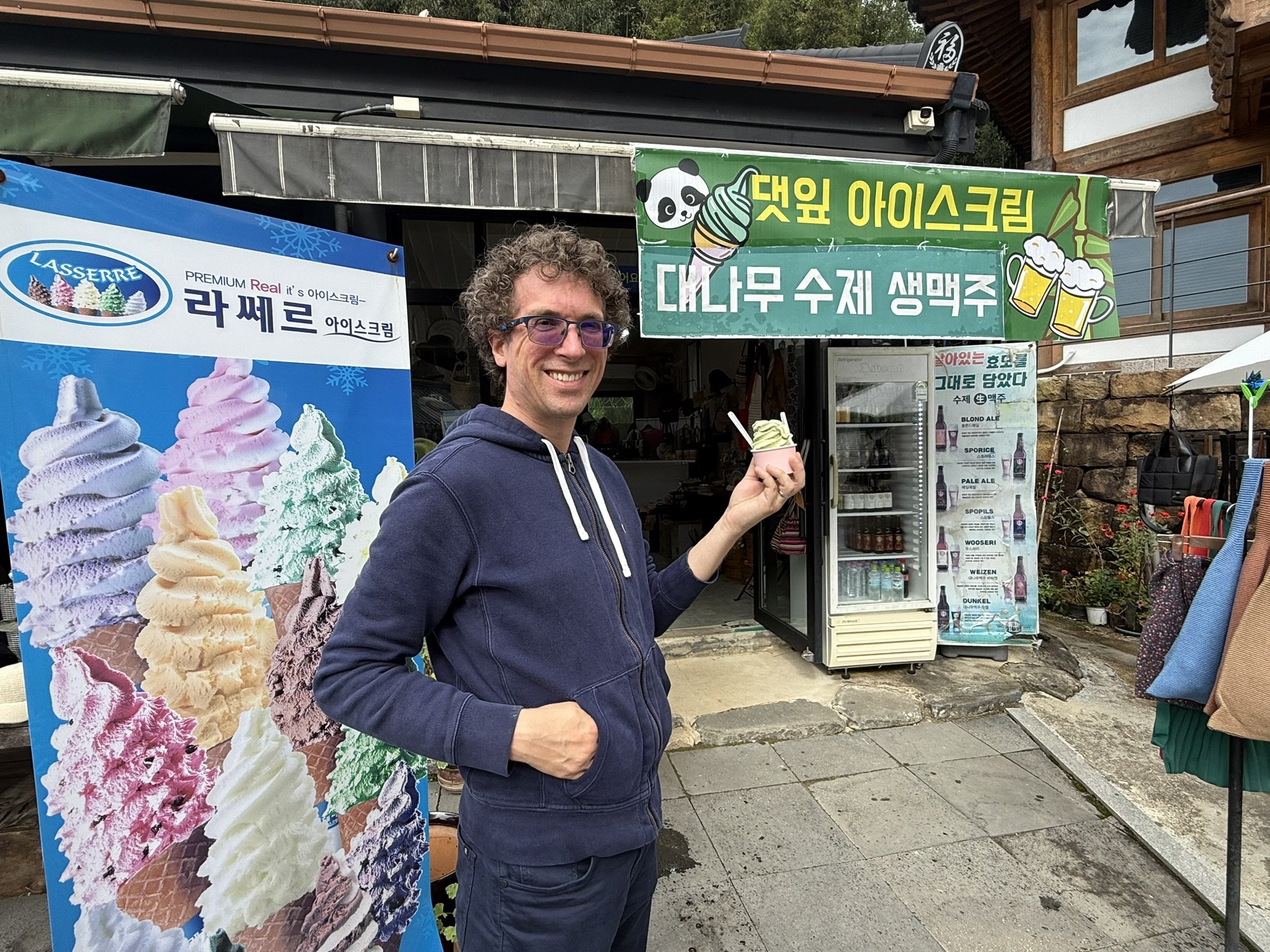
There is also the Siga Culture Village that features buildings, sculptures, streams, and a pond. Afterwards, we stopped and got bamboo ice cream at a little shop before heading out for lunch.
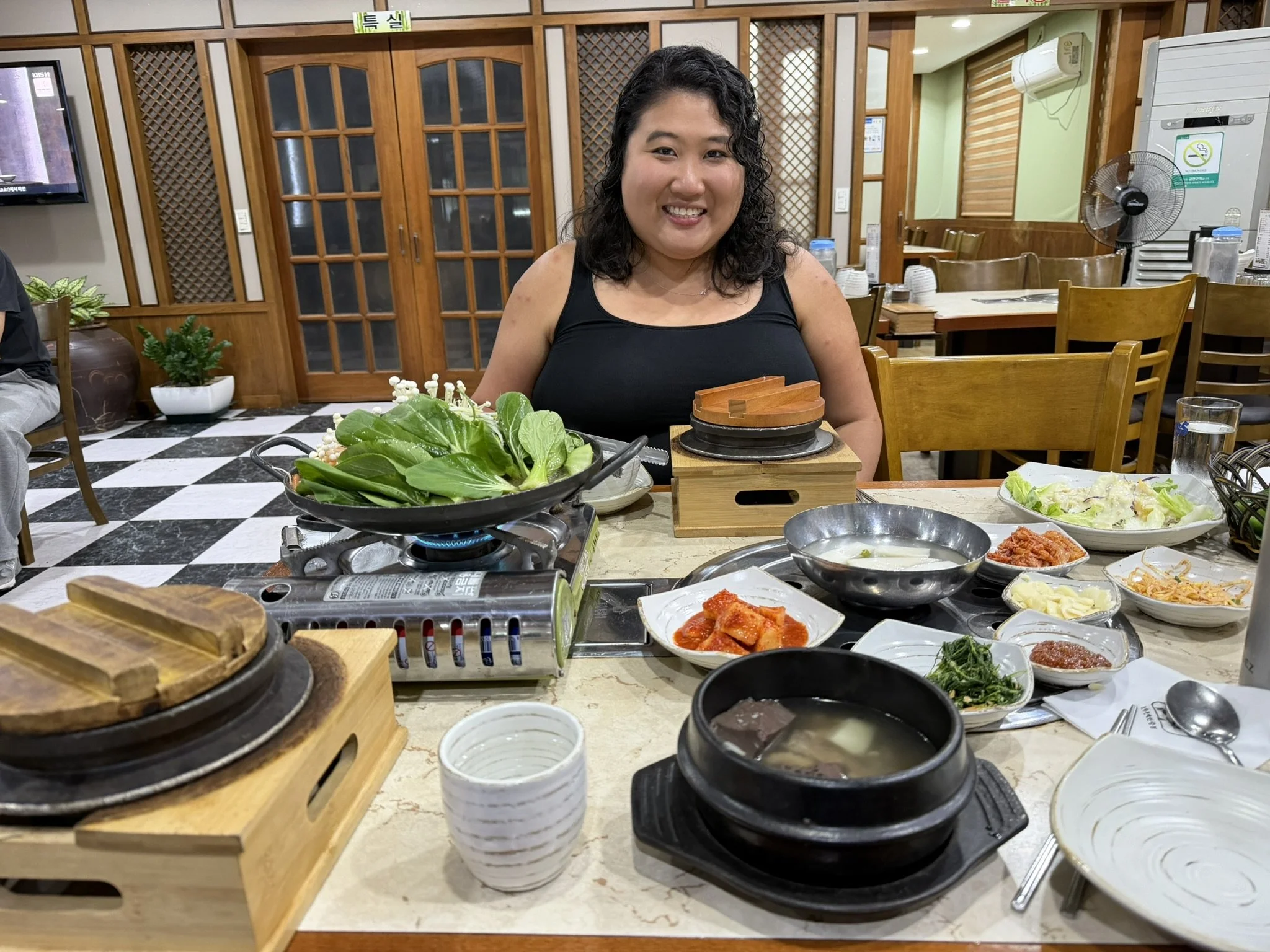
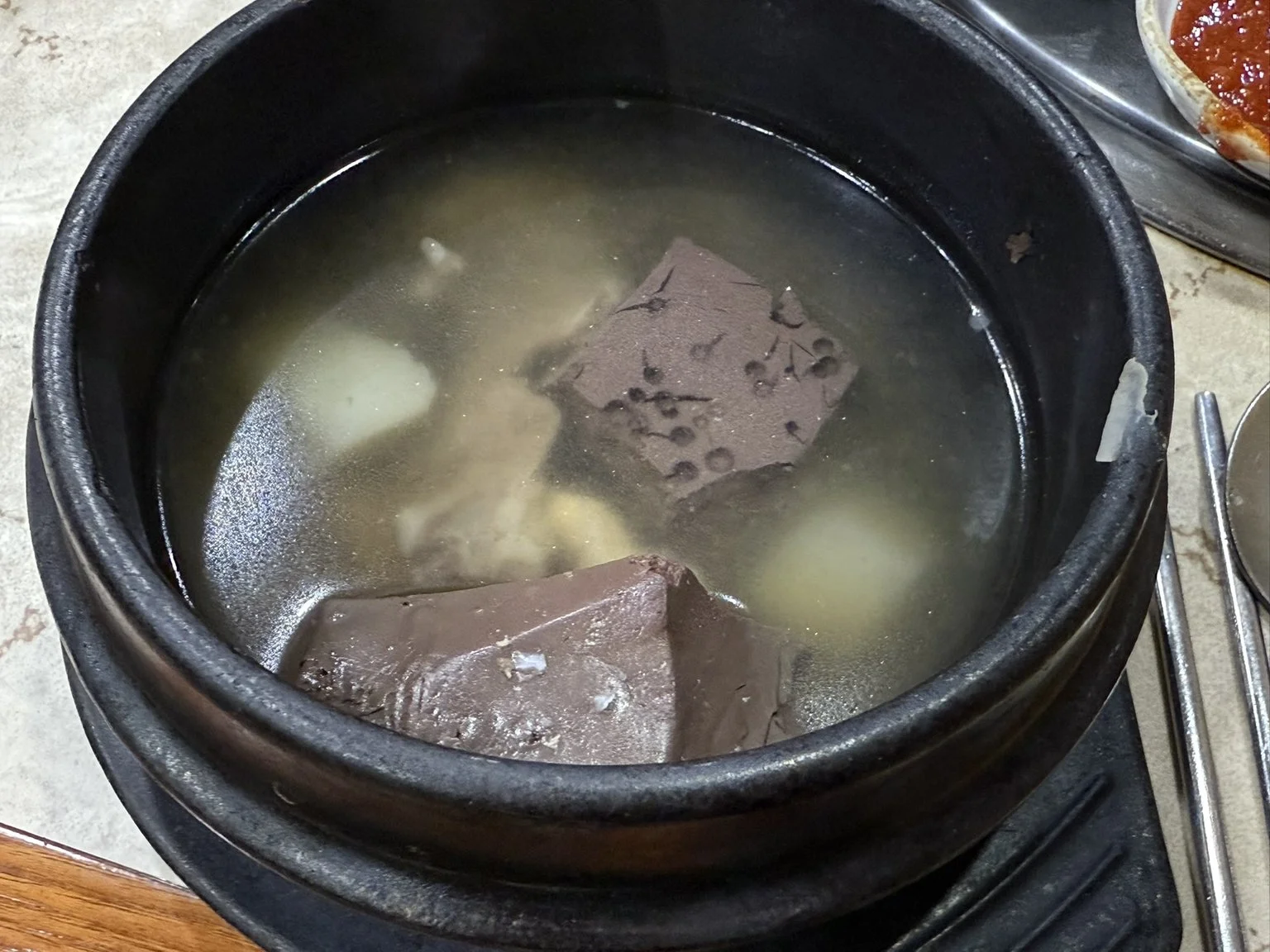
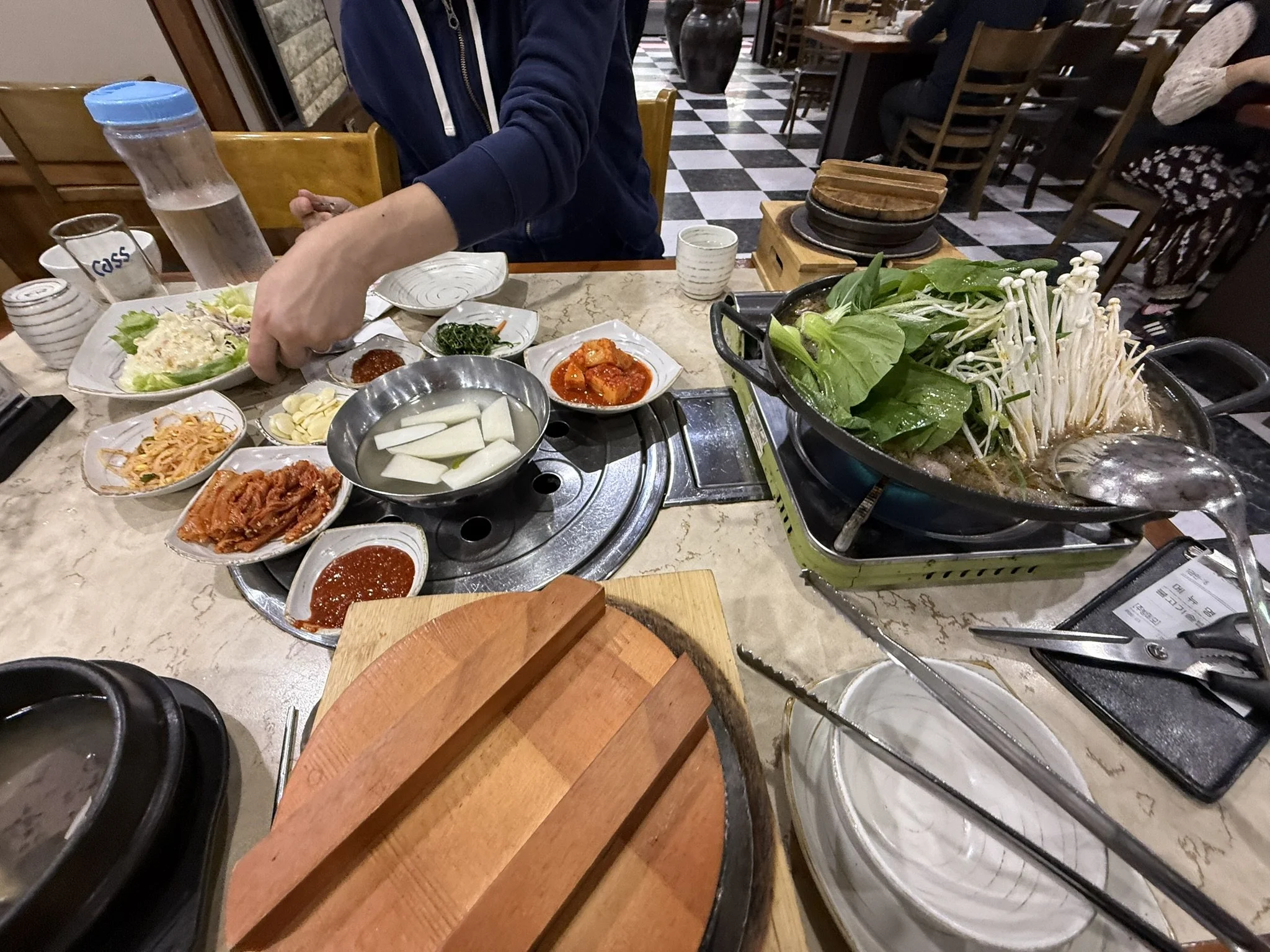
We got the best bulgogi for lunch. The bulgogi was more of a brothy pan of meat and veggies, with a seasonal pot of rice (it had beans and squash in it). We got an amazing soup that I was such a huge fan of. I didn’t know what it was but later found it out was Seonjitguk (cow blood soup). They had an amazing cabbage coleslaw dish with a tangerine dressing and these peanut sprouts that were also delicious. This might have been one of our favorite meals because everything was so delicious here.
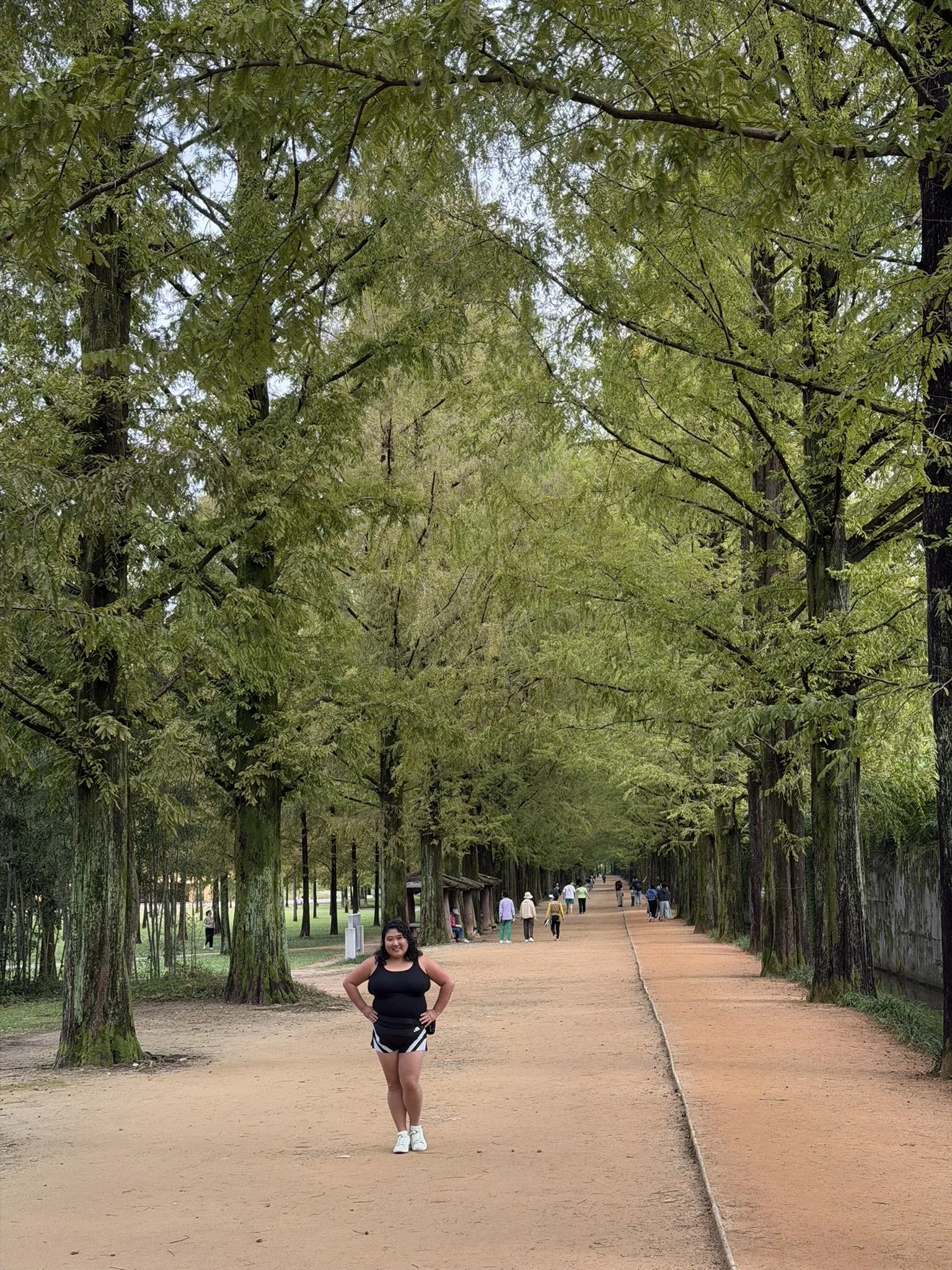
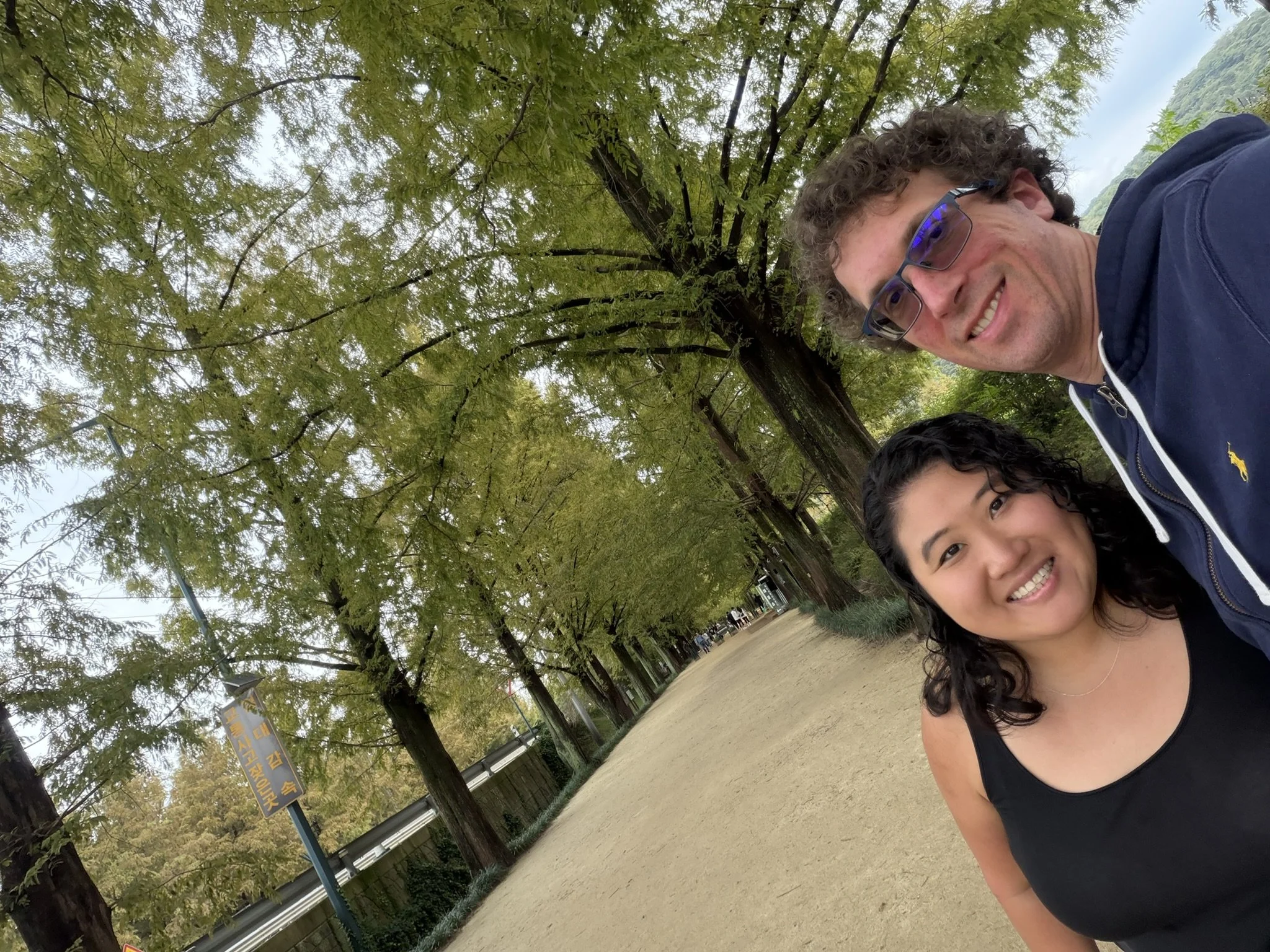
After lunch, we drove to the Damyang Metasequoia lined road. It was added to the National Road 24 in 1970’s after the road there was rebuilt. This is apparently one of the most beautiful roads in Korea and is just over 5.25 miles long. I was hoping that the trees would be changing for fall by now, but it was still a really pretty peaceful stroll even without the leaves changing colors.
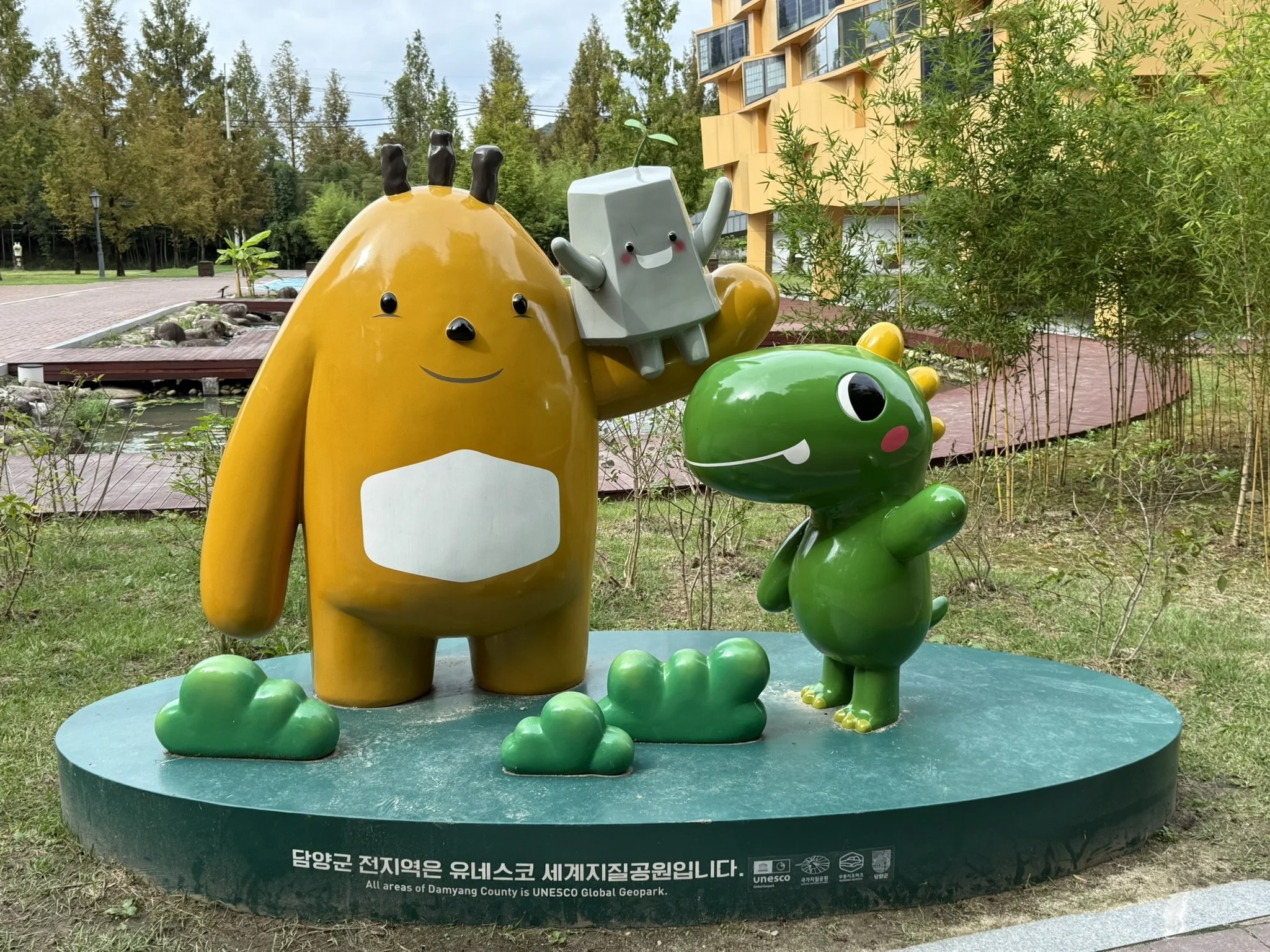
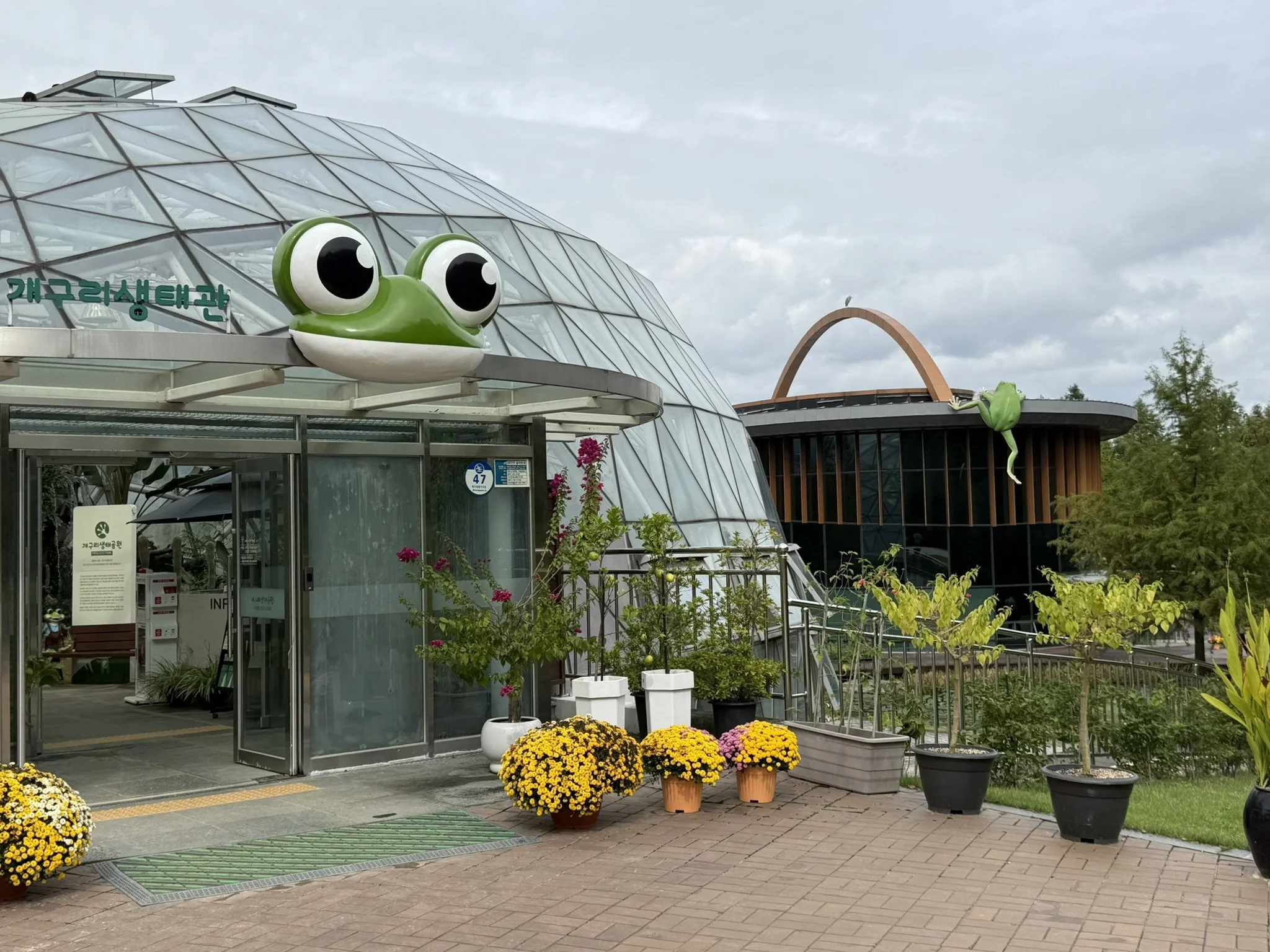
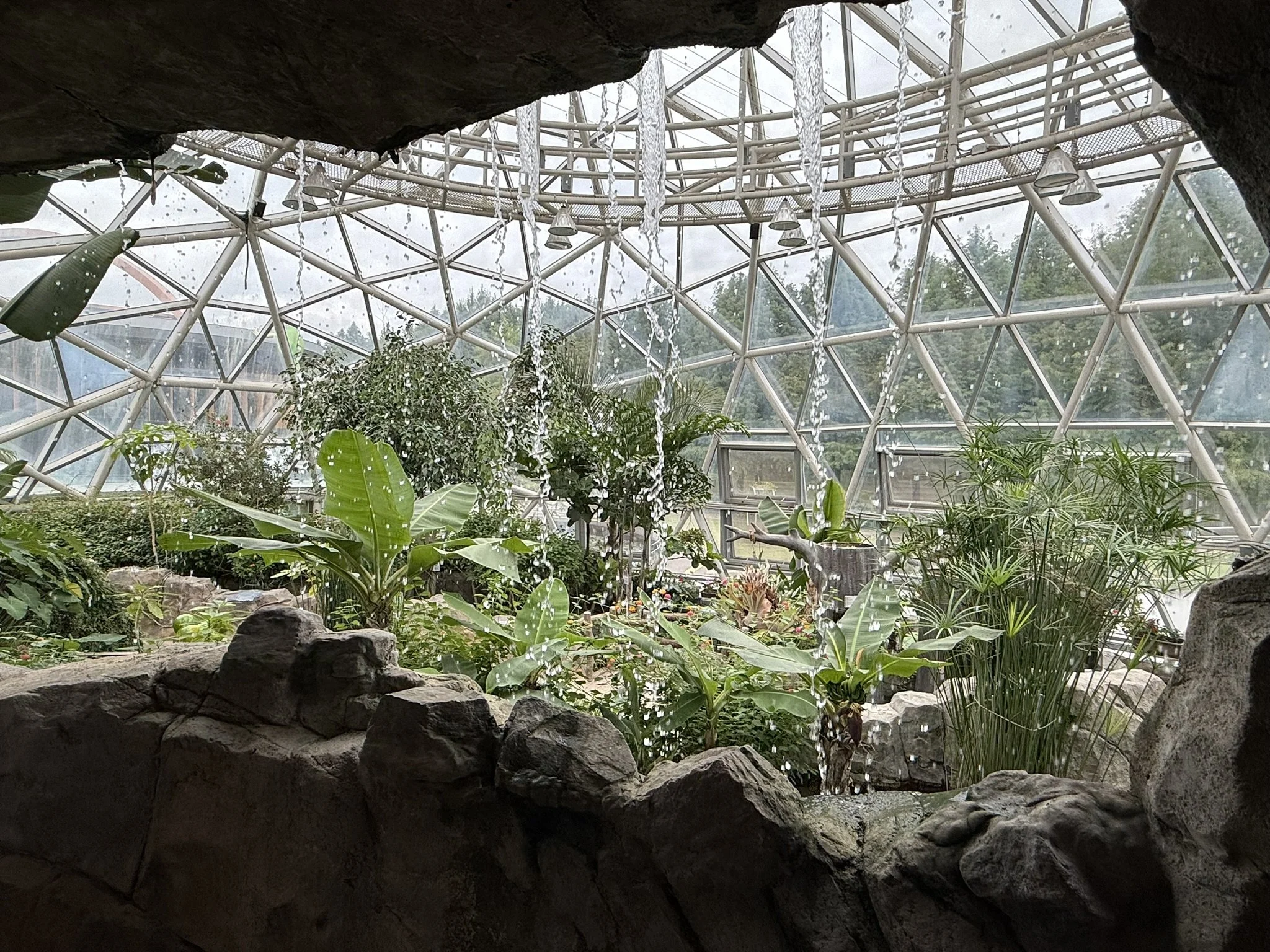
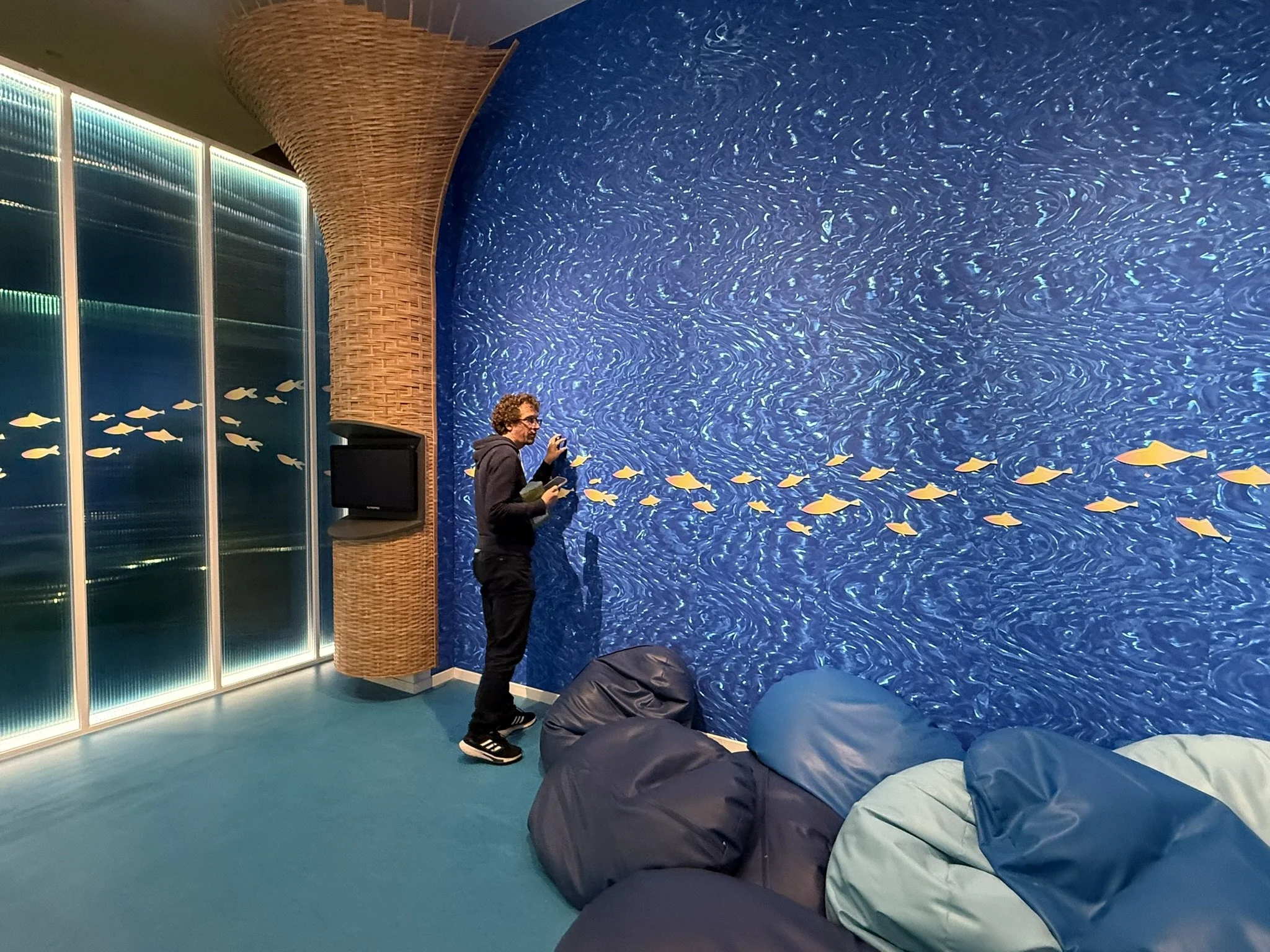
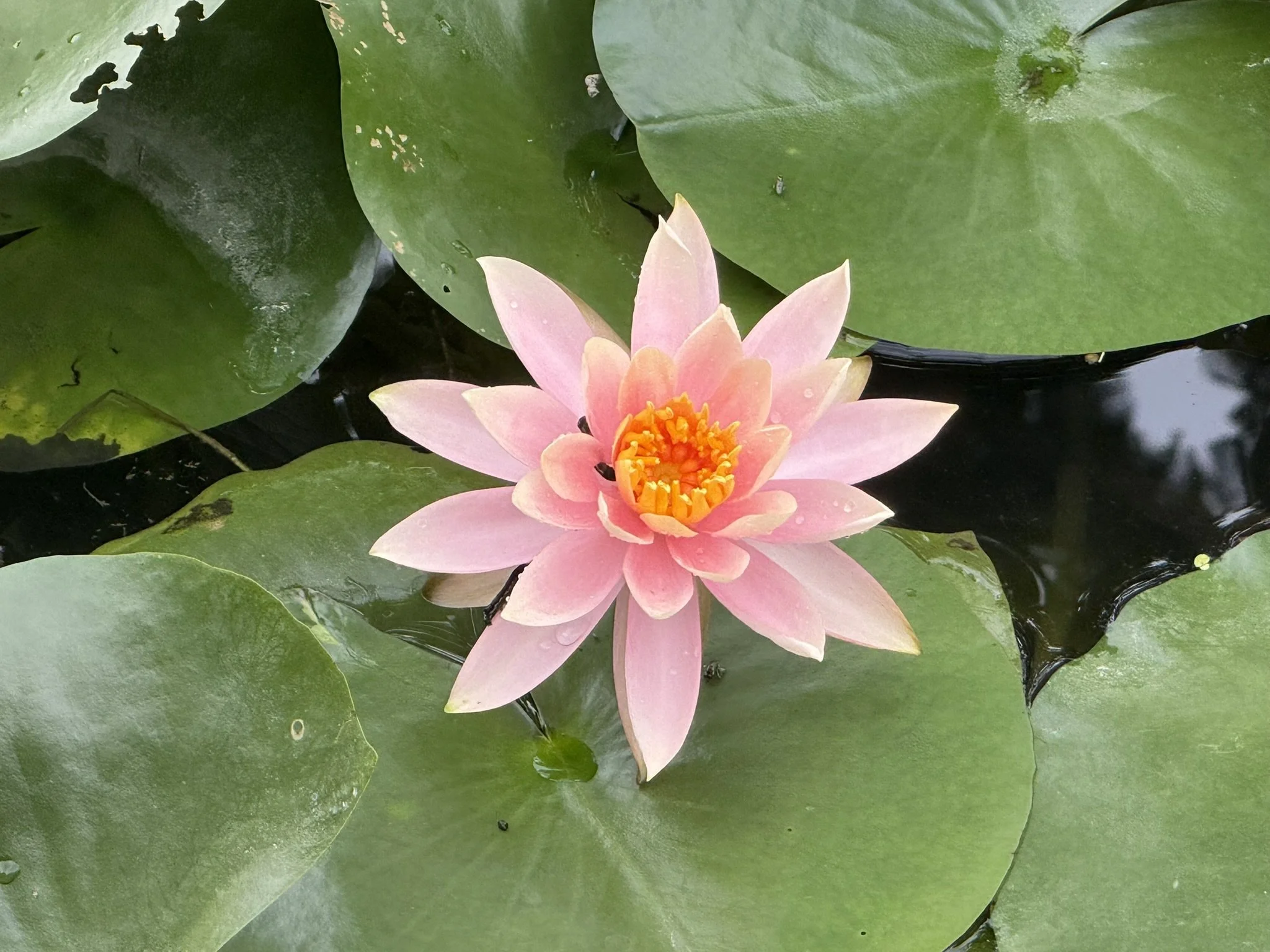
Located within the Metasequoia lined street is the Honam Climate Change Experience Center and Children’s Museum. It was an interactive museum that talked about the eco-friendly city of Damyang and talked about how it incorporated renewable energy into its building (such as solar power windows and geothermal heating and cooling that draws its energy from 150 meters below ground). There was even the Frog Ecology Park that housed various kinds of frogs.
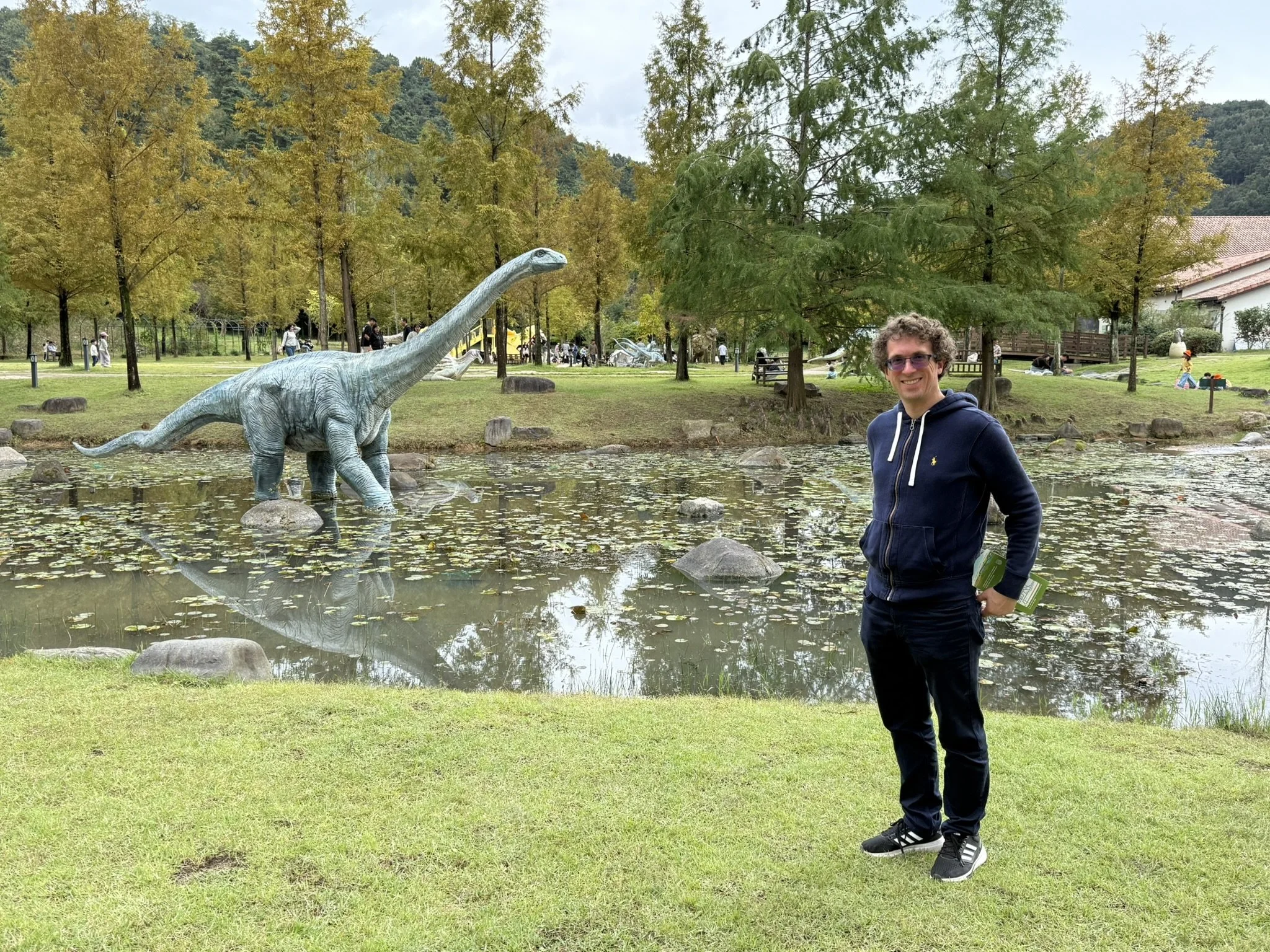
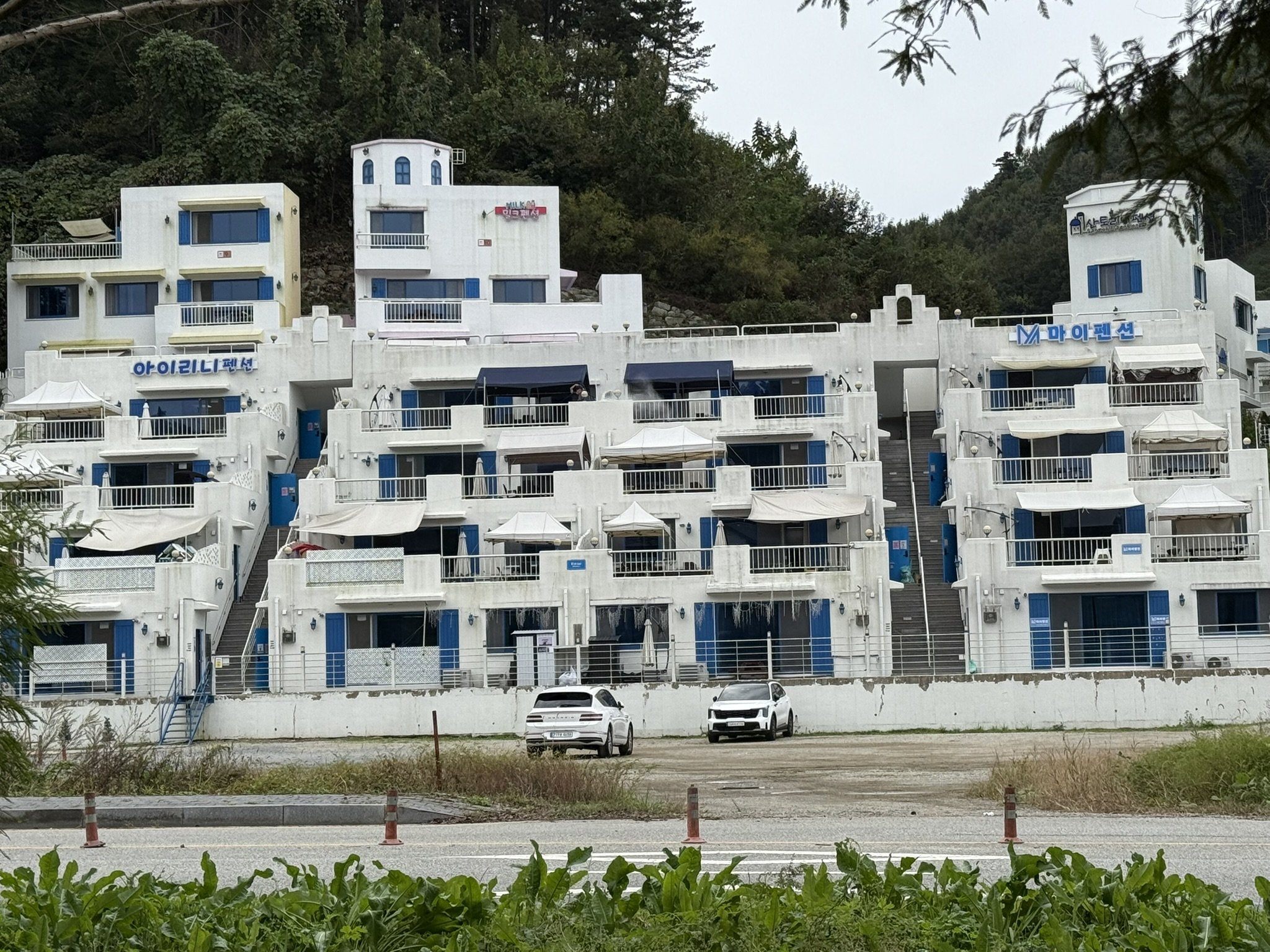
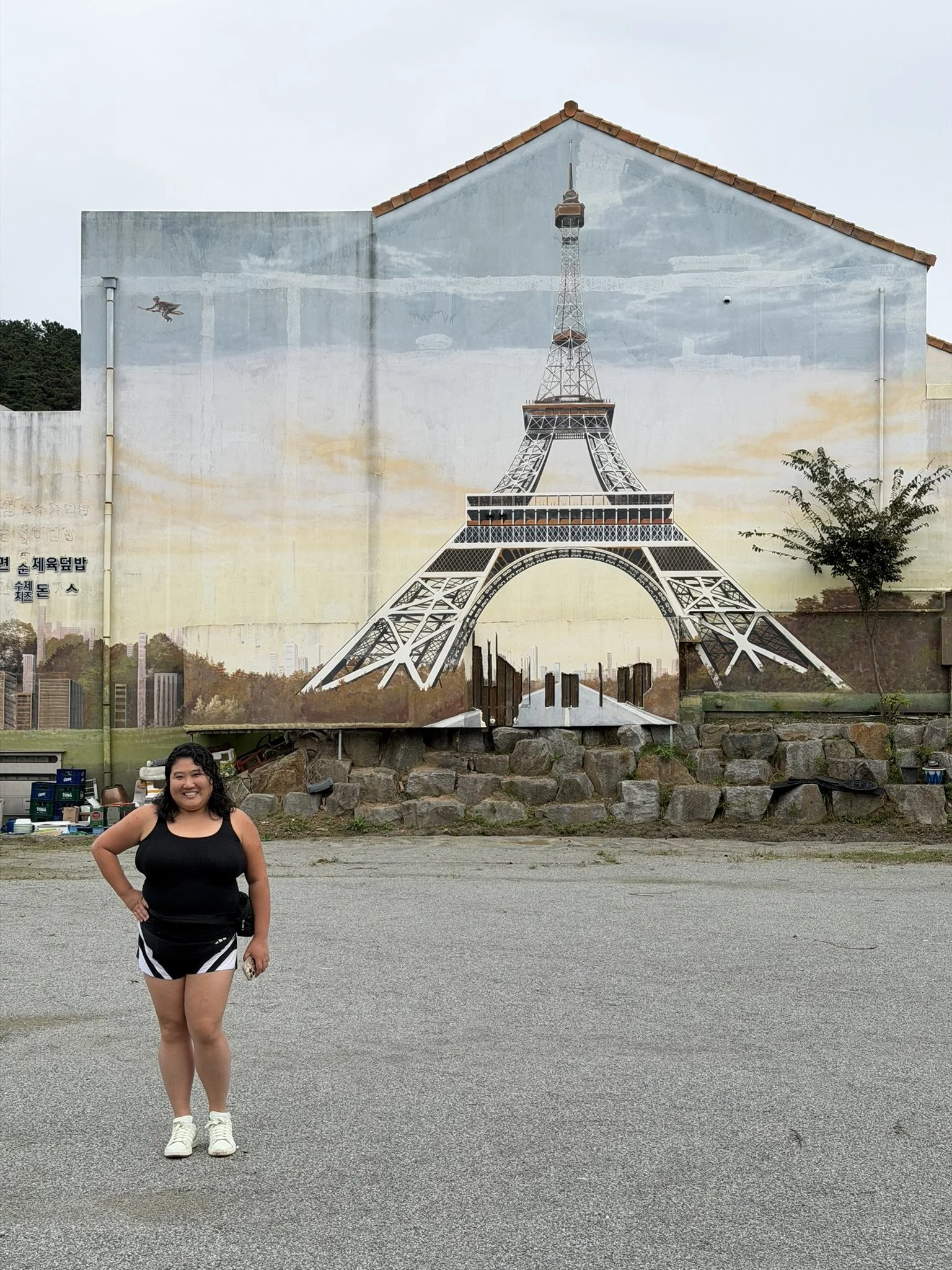
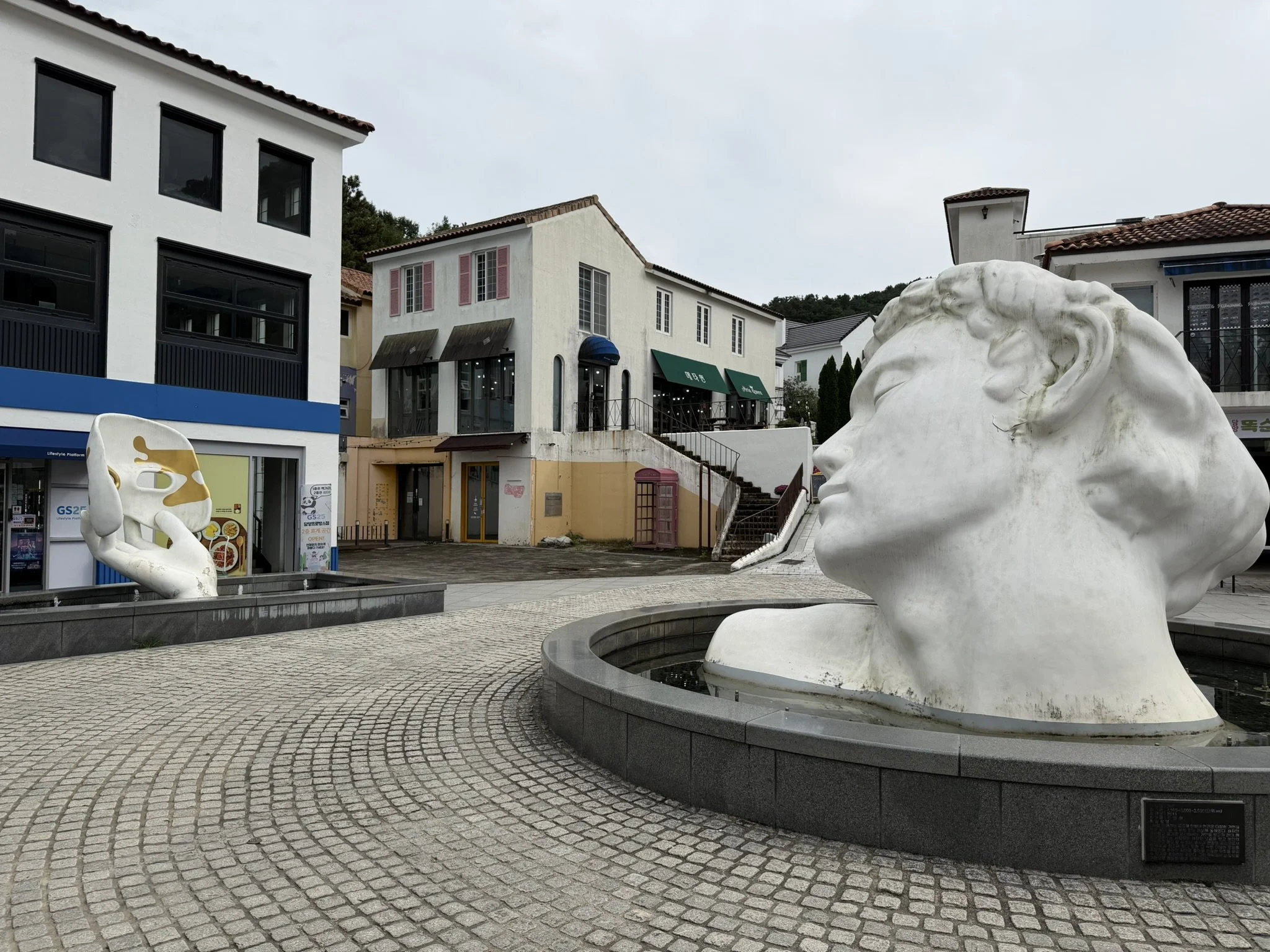
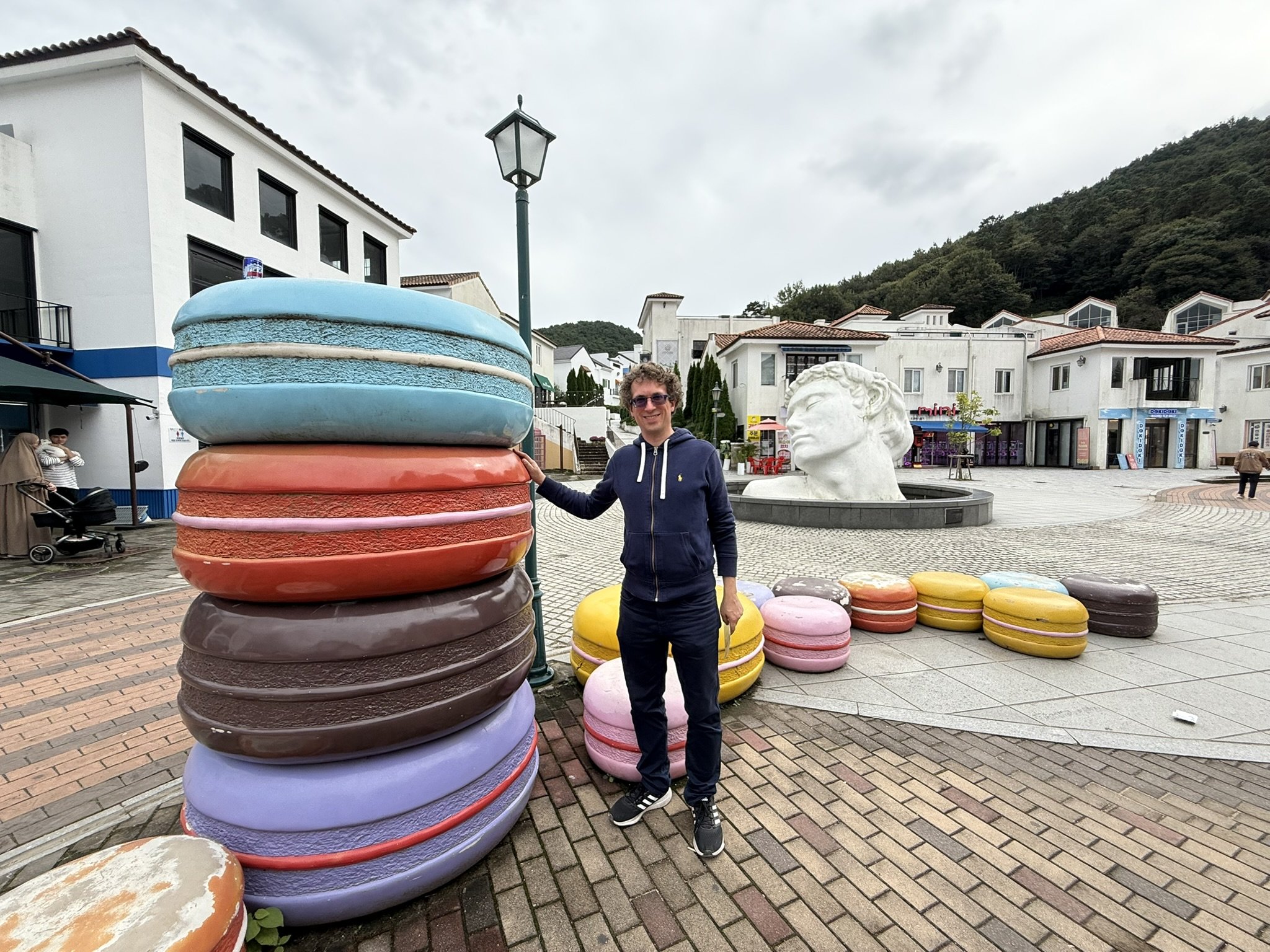
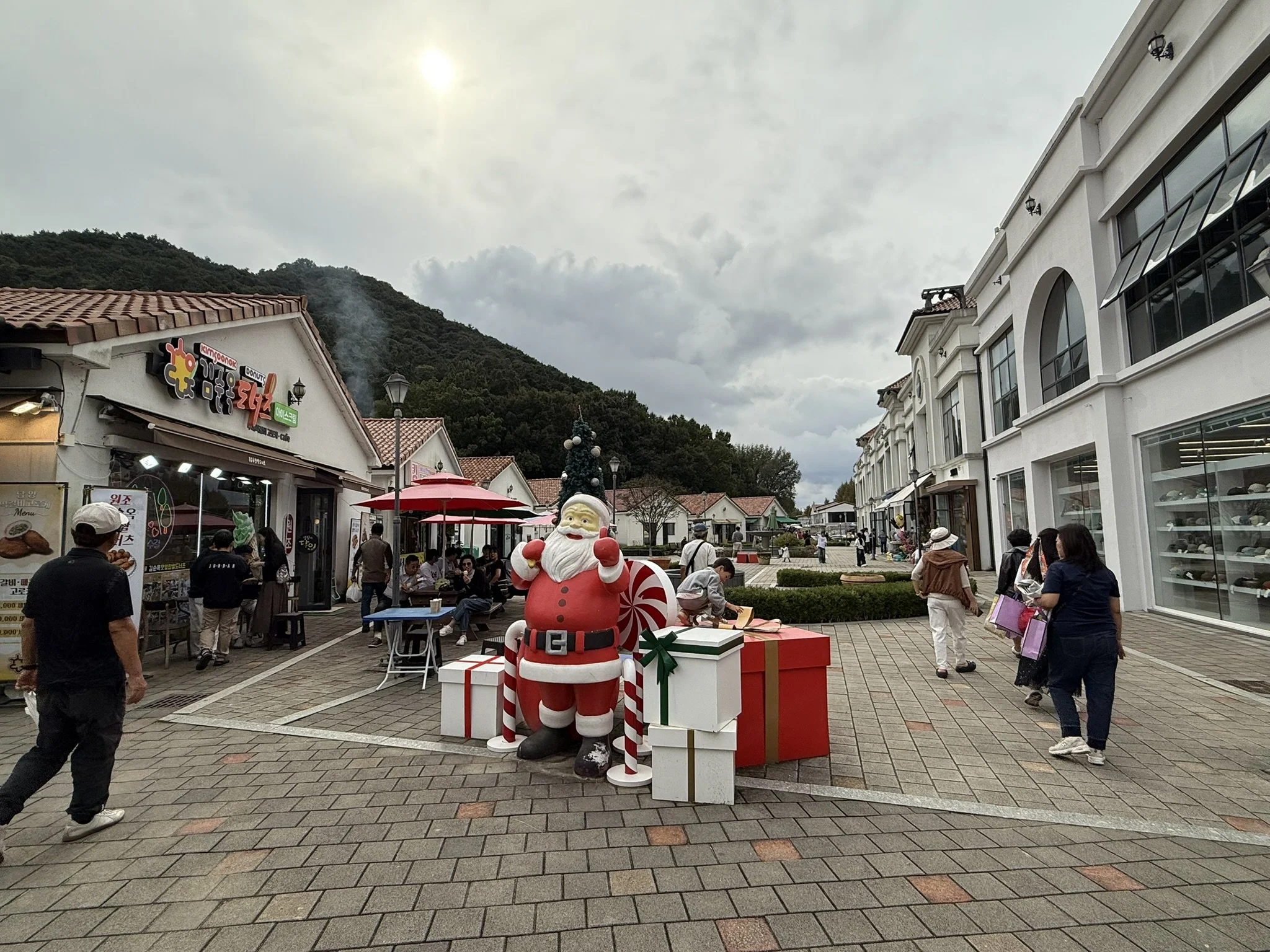
Right next to the metasequoias was Meta-Provence, the Provencal part of Korea. It was supposed to draw inspiration from the countryside in France, but it felt more like a jumble of European influences all thrown together in a little square. While I did find a mural of the Eiffel Tower, one can see (in the top left photo) that Harry Potter is zooming around on his broom around the Eiffel Tower. There are many coffee shops, but there was also lots of Santa and Christmas decorations and a small housing complex that looked like Santorini. We stopped for drinks. I got a bamboo condensed milk latte and Bryce got a coffee type latte.
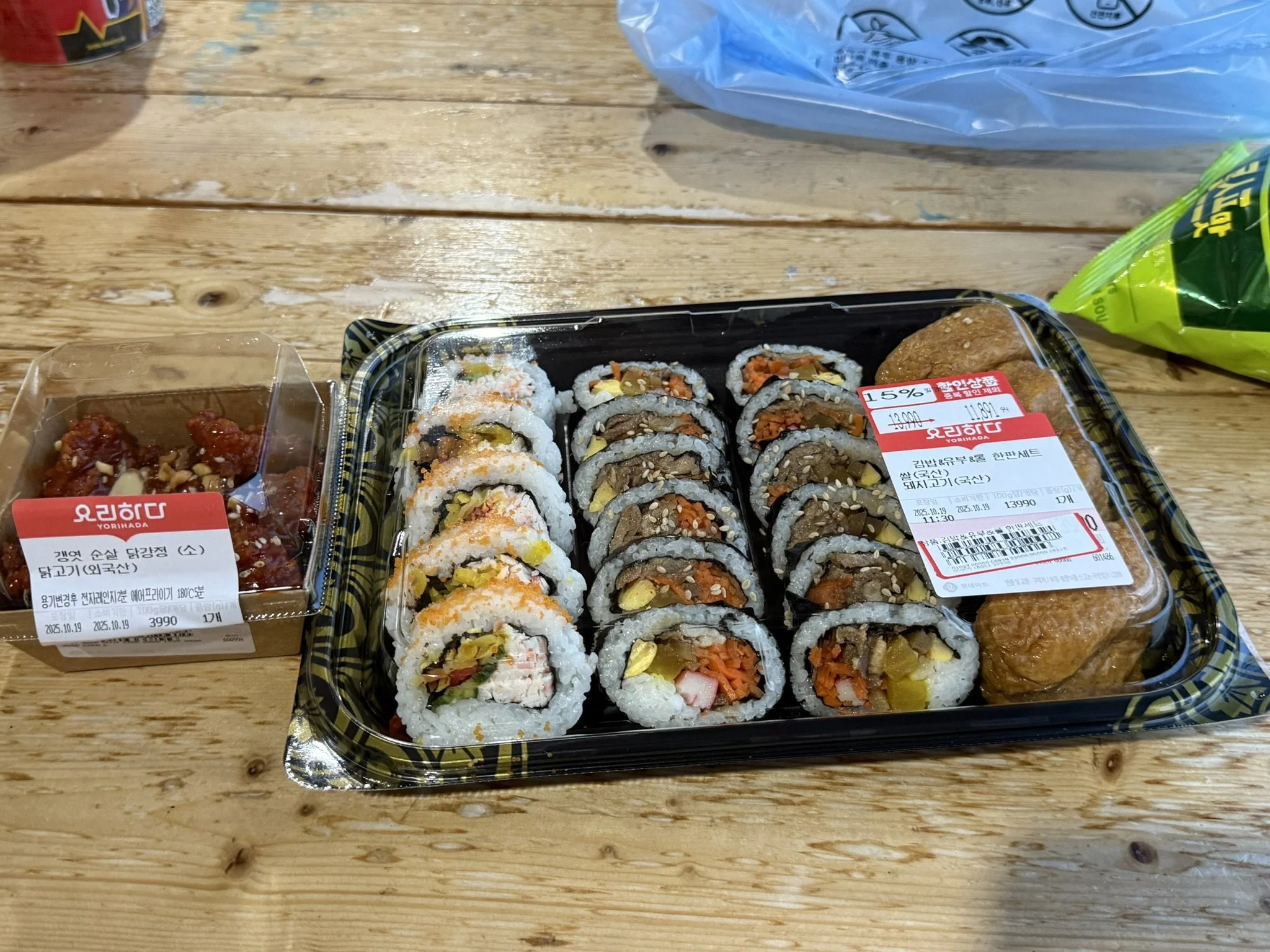
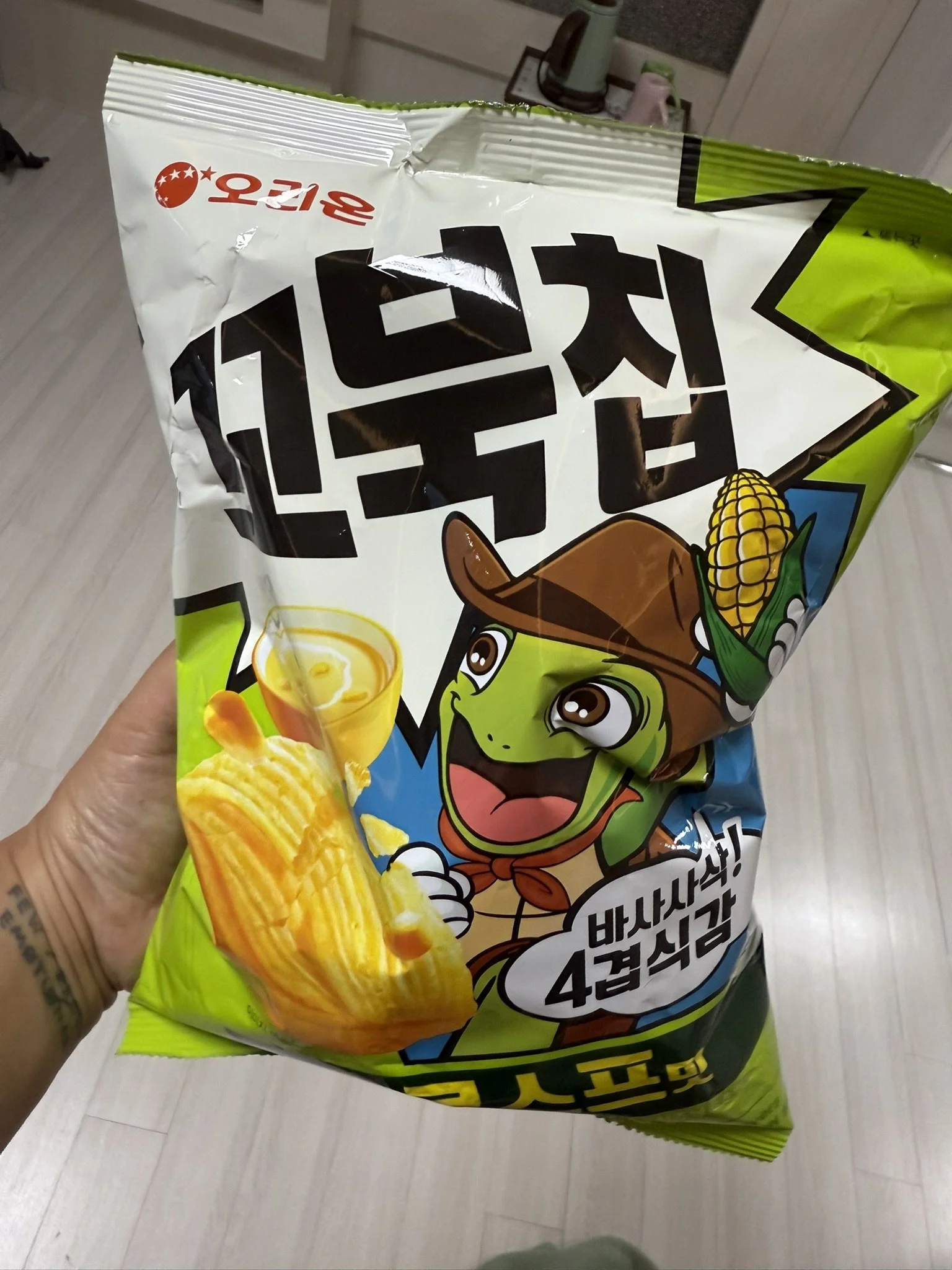
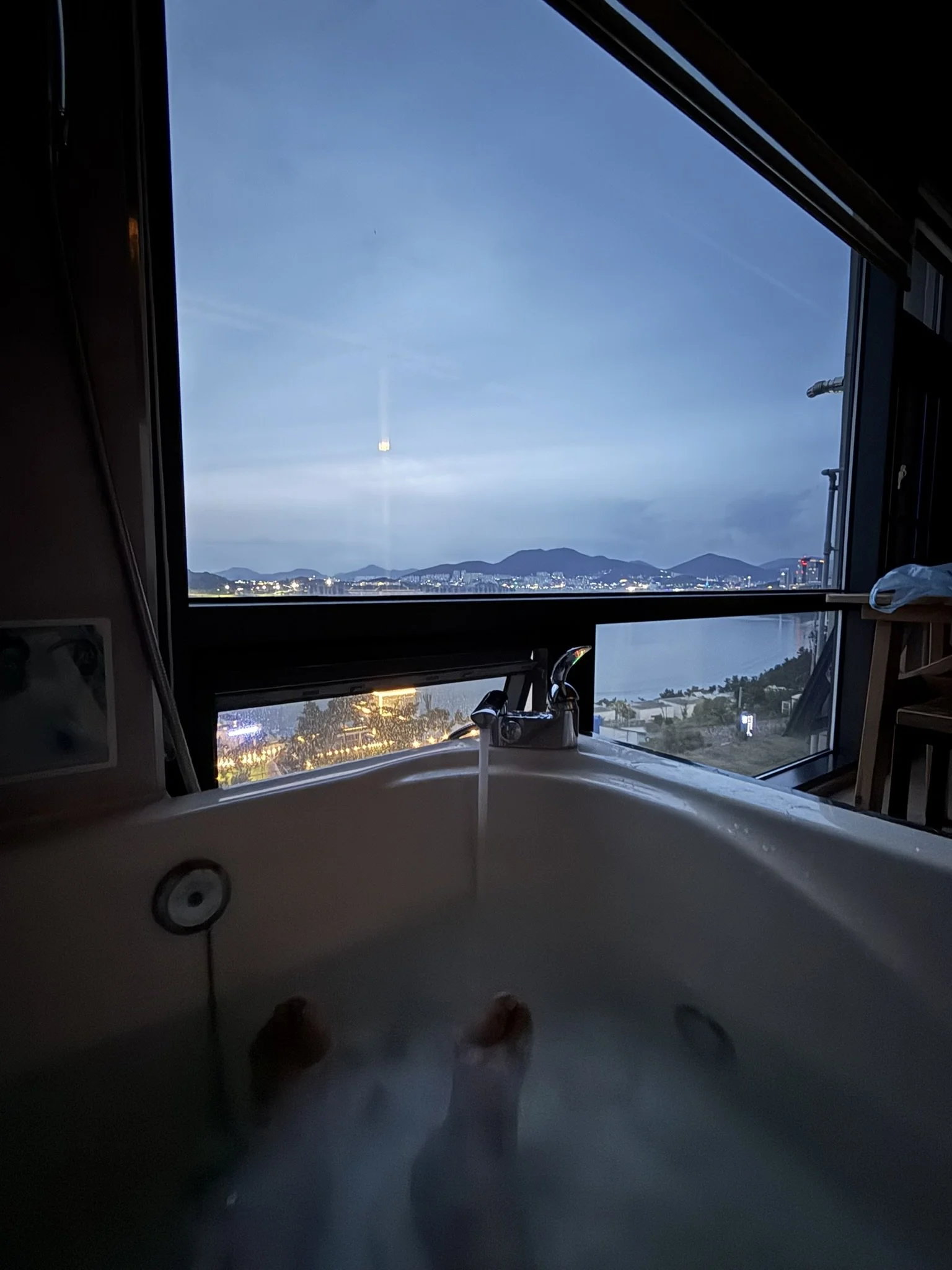
After our drinks, we only had 1.5 hours left to drive before reaching Yeosu. Once we arrived, we stopped at Lotte Mart for some quick dinner (kimbap, fried chicken, and turtle chips) before checking into our hotel. Yeosu is a coastal city on the south shore of Korea in the South Jeolla Province. In 1998, Yeosu City, Yeocheon City, and Yeocheon County merged into present day Yeosu. There apparently is a lot of conflict regarding this merge still, as the residents of all three areas did not want to be incorporated into one city. There’s two different cultures here due to the fact that the coast line (fishing region) is now combined with a mountain region. In 2012, Yeosu hosted the 2012 World Expo. Now, the city is a resort town with many resorts along the coast. In terms of our stay, Bryce and I got to relax in one of the resorts overlooking the water.
Day 6: Monday October 20, 2025 Yeosu
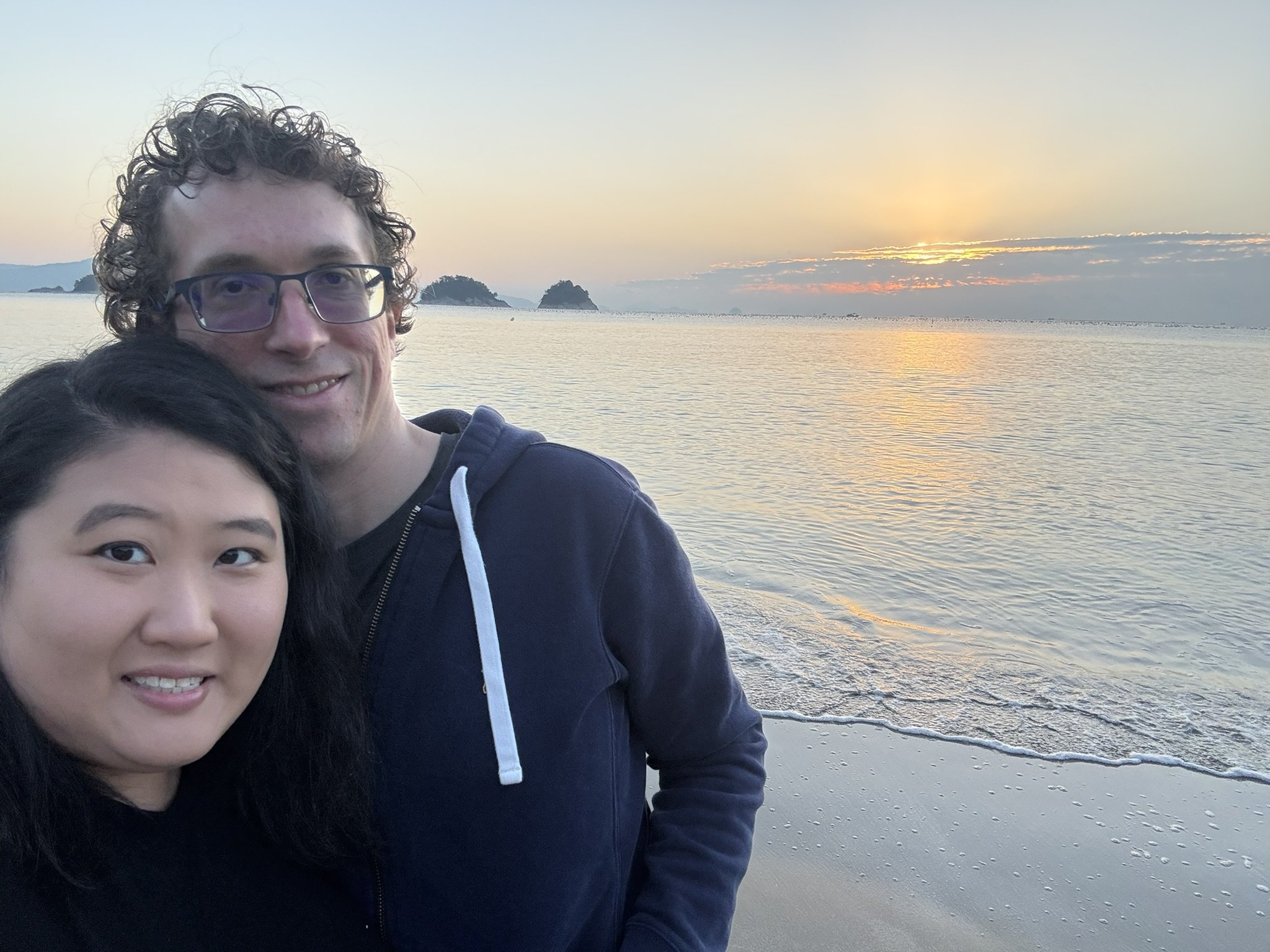
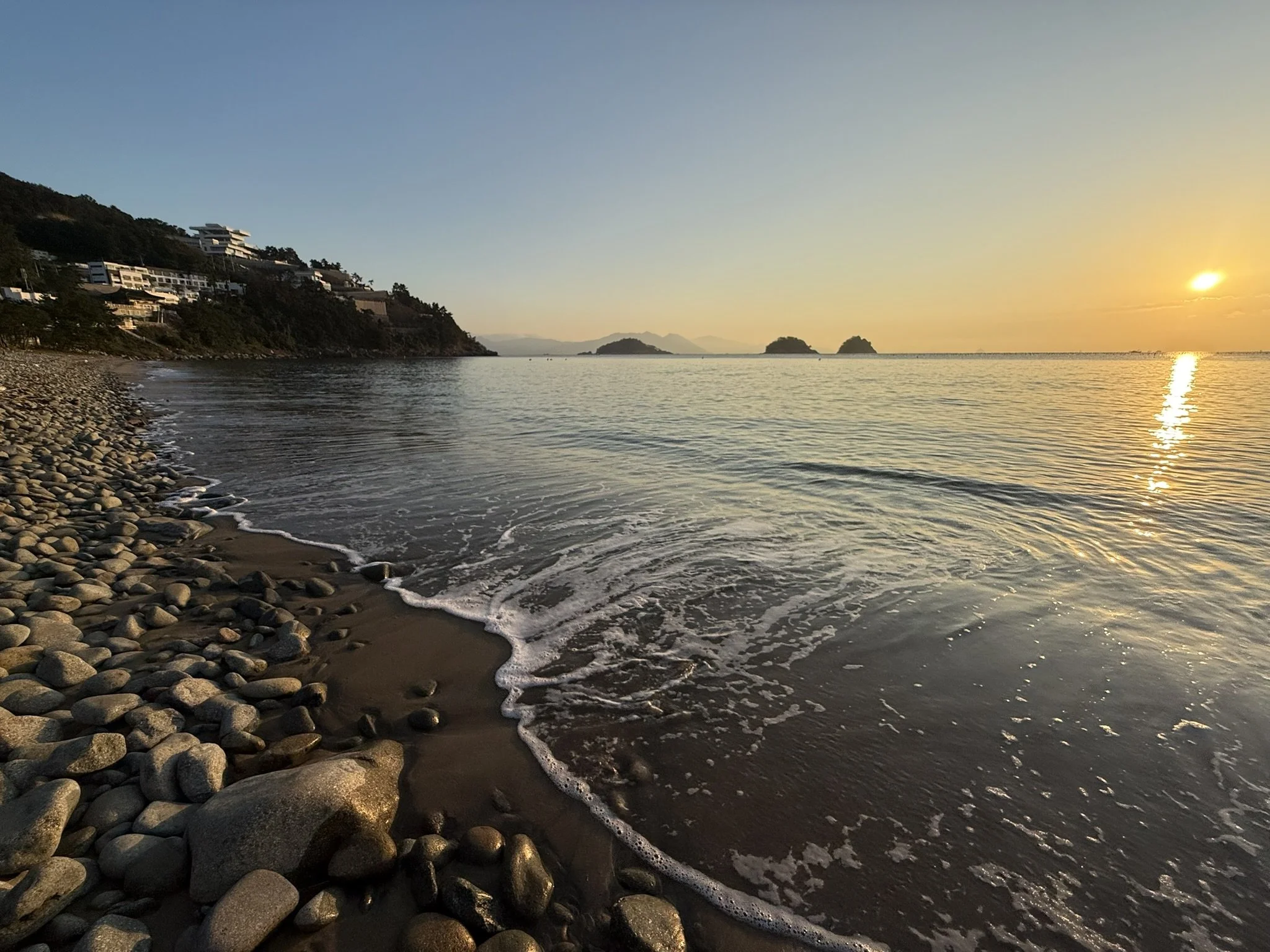
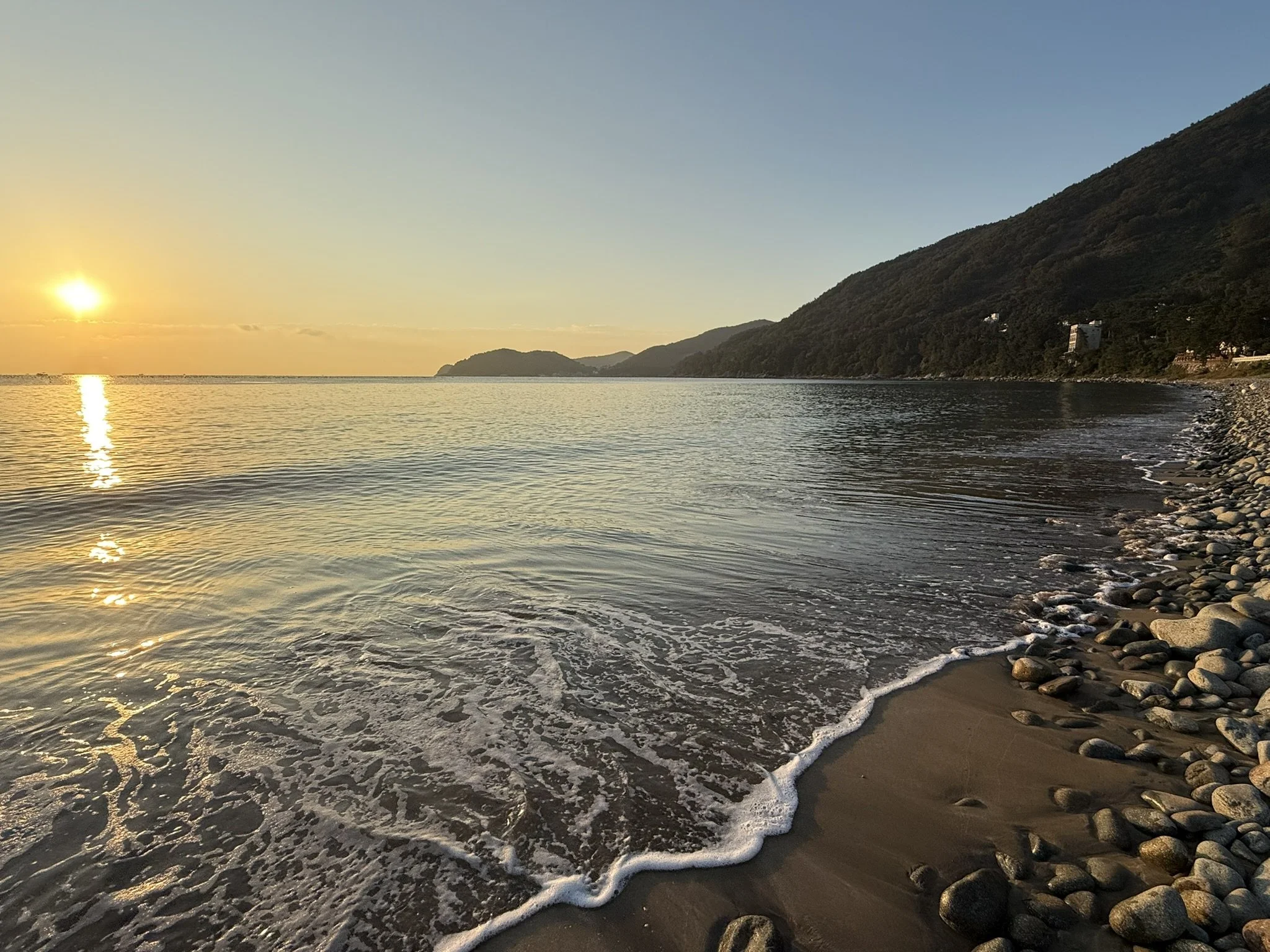
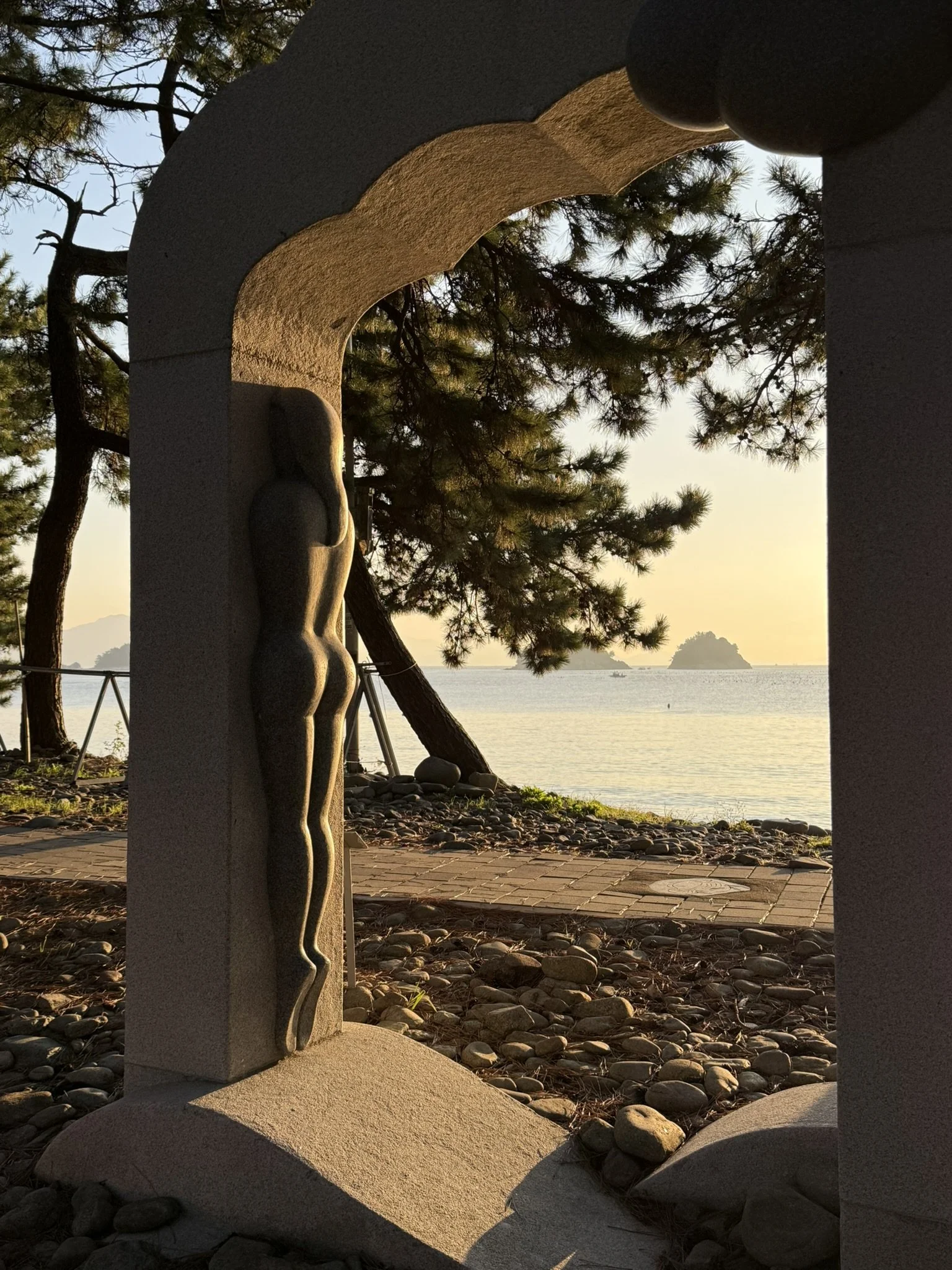
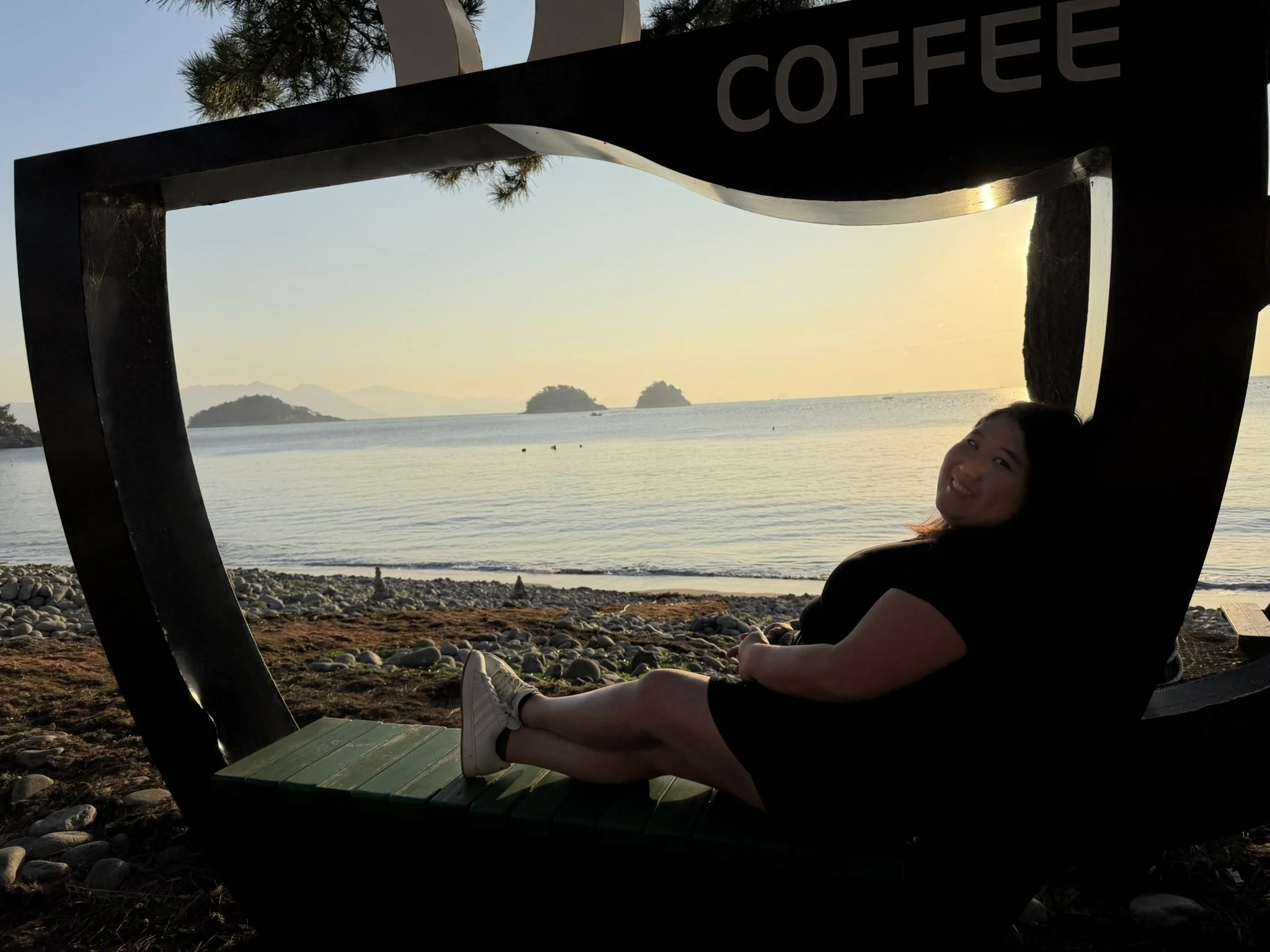
We started the morning off watching the sunrise at a nearby beach. It was so pretty. I loved the soft mountains and islands in the distance. Yeosu consists of the Yeosu peninsula as well as 365 islands (48 are inhabited and 317 are uninhabited). While it is a smaller city, there were still a lot of things I wanted to see. However, I decided to take it slower to really absorb the city.
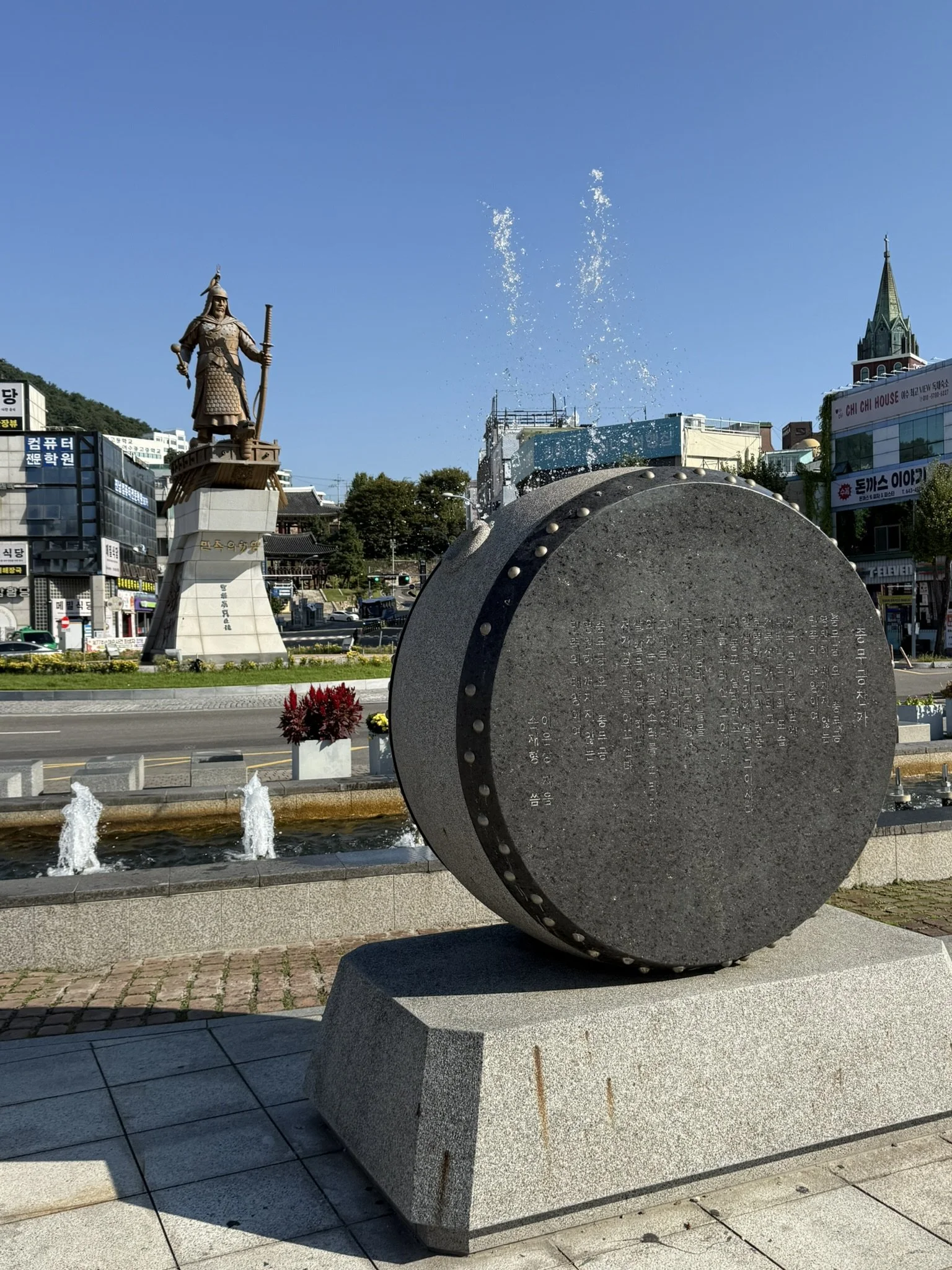
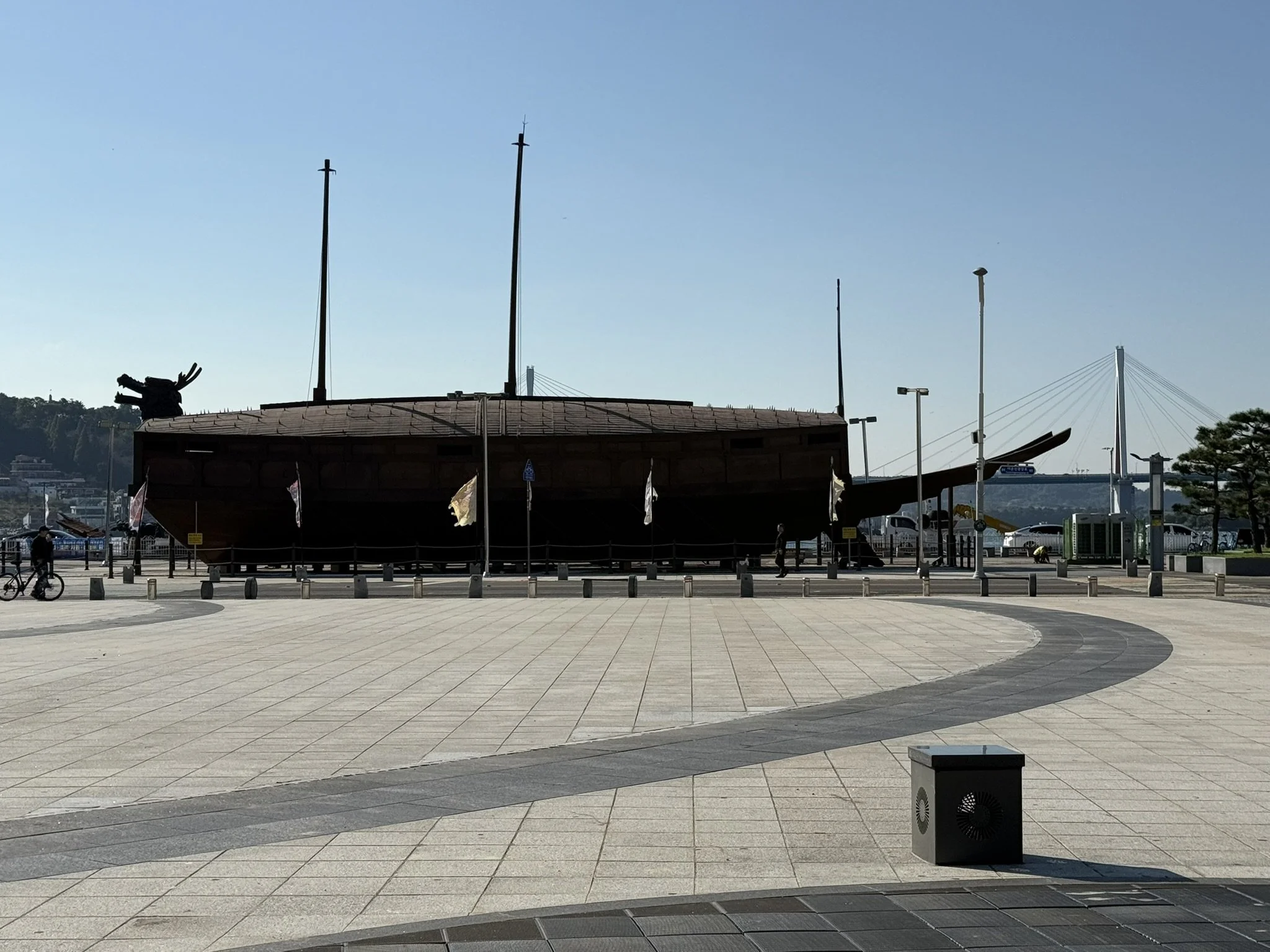
We drove over Yeosu Hang Port and found a parking spot. We walked the port area and around Yi Sunsin Square. We mainly stayed in the old Yeosu City, since that would have been the part I would have been from (prior to the merge in 1998). I wanted to drive around the city and see the fishing ports. I was born into a fishing family, so I wanted to see the place where my birth father would have worked (or may still be working at). The square contains history and the achievements of the General Yi Sunsin and even has a life-size turtle ship that we were able to walk inside. Turtle ships, known as gwiseon, were noted back in 1413 as a way to fight the war against the Japanese. The turtle ship we walked in is a 1:1 scale of a real ship. They are called turtle ships because they are said to resemble a turtle and its shell.
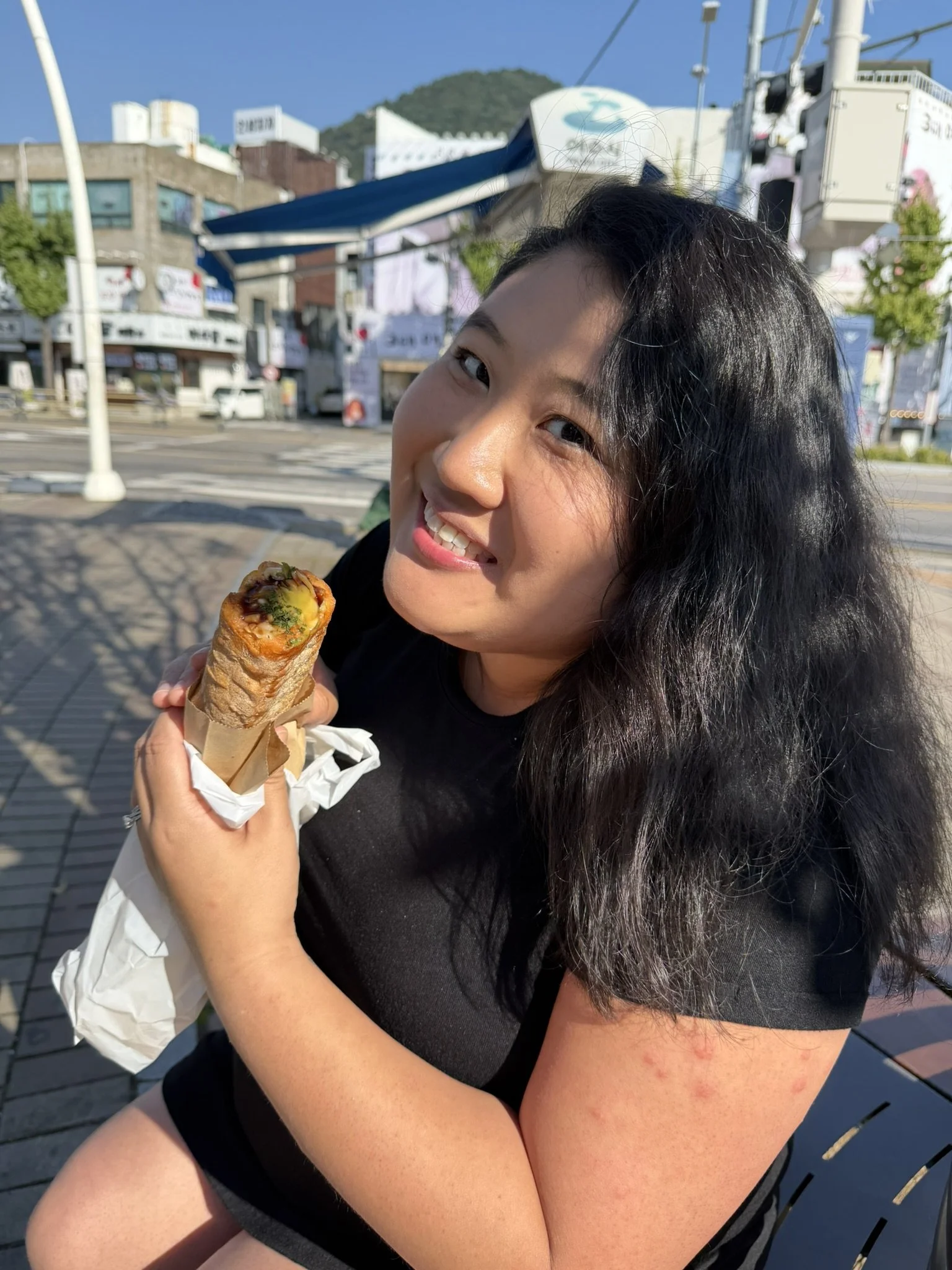
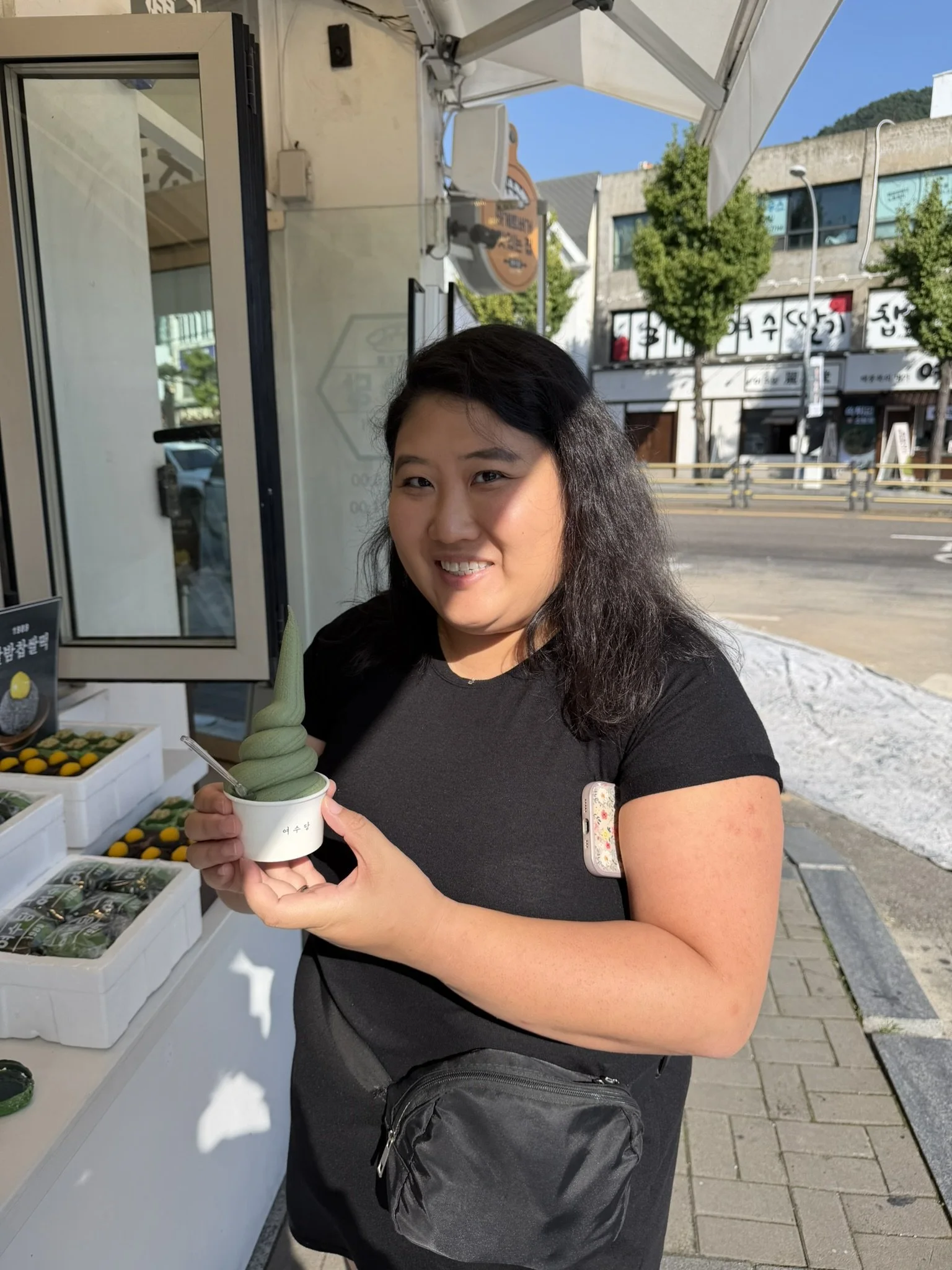
Throughout my life, I’ve never really been into breakfast food. I just want “real” food. Turns out, Koreans don’t have any dedicated breakfast foods. They eat anything they want, at any time of the day. Rice? Soup? Beef? Yes to all of it. So when we found a baguette burger served with mugwort ice cream and sweet corn ice cream at 9:00am, we had to eat it for breakfast. Turns out, we weren’t the only ones as there was a line for these two menu items this early in the morning. Mugwort is an Asian plant in the sunflower family. In Korea, mugwort is used in savory dishes as well as baked into sweet pastries or made into tea. It has a herbal and floral taste but in the form of ice cream, it was good. I think I still preferred the sweet corn ice cream though.

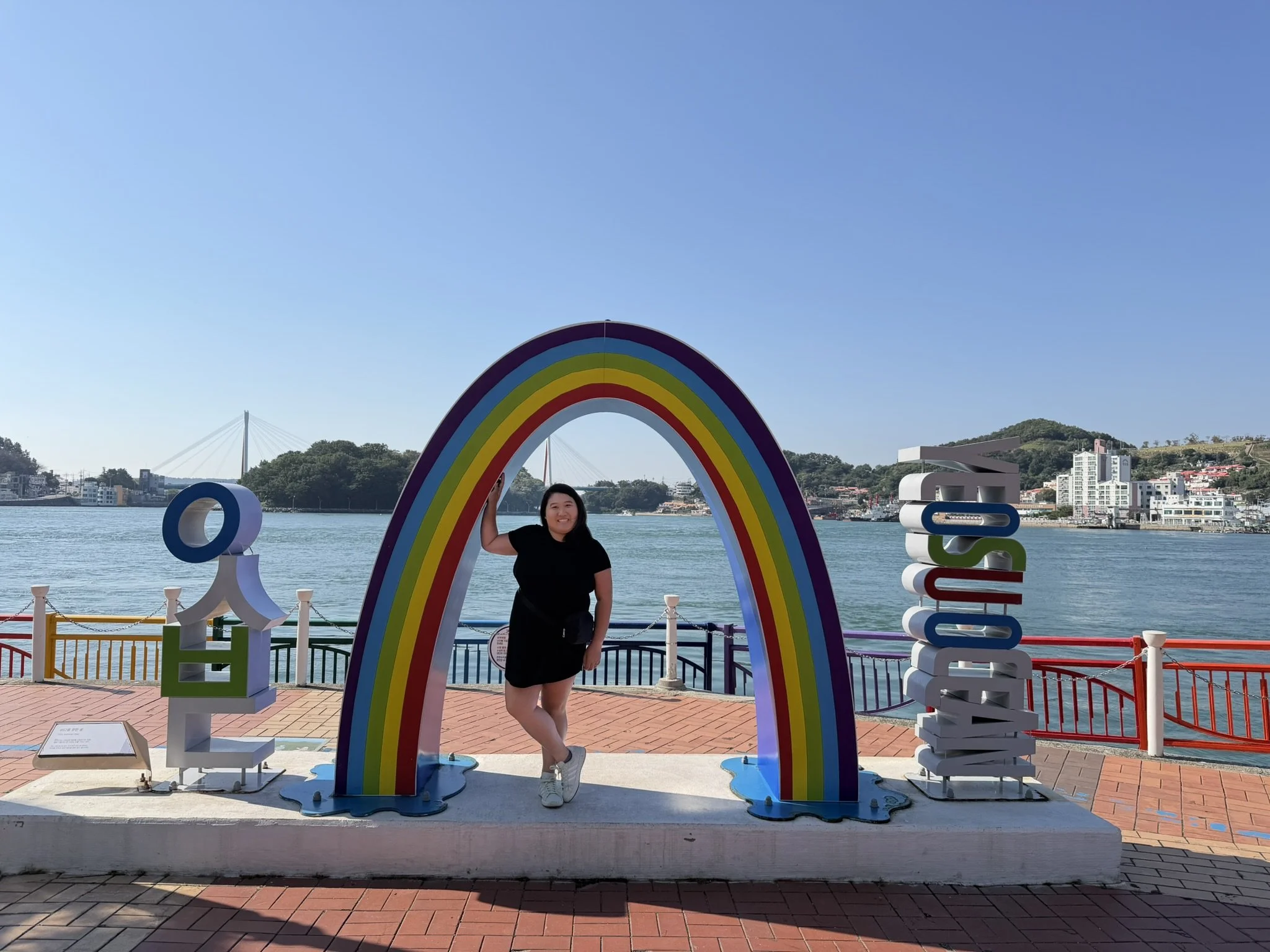
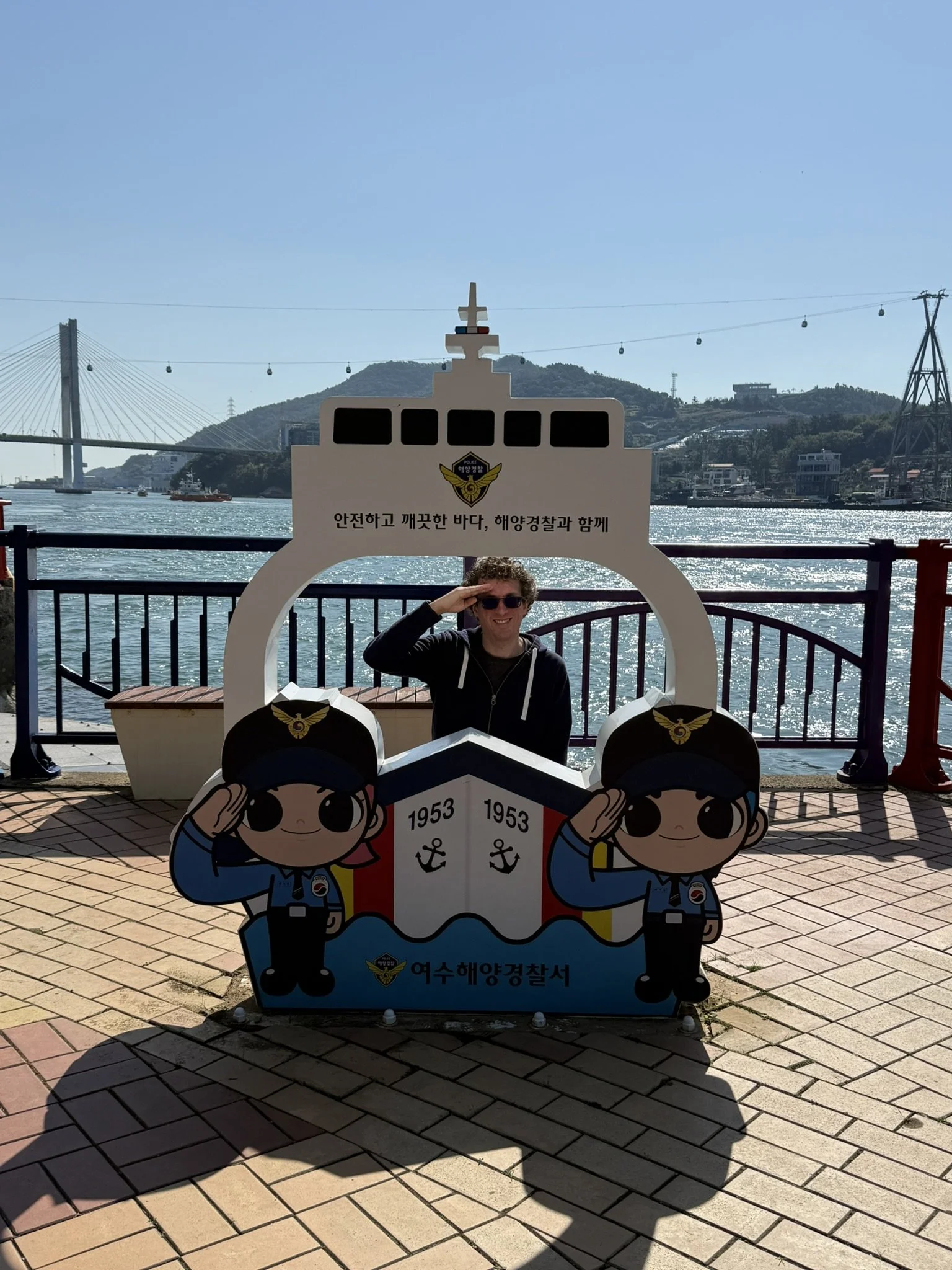
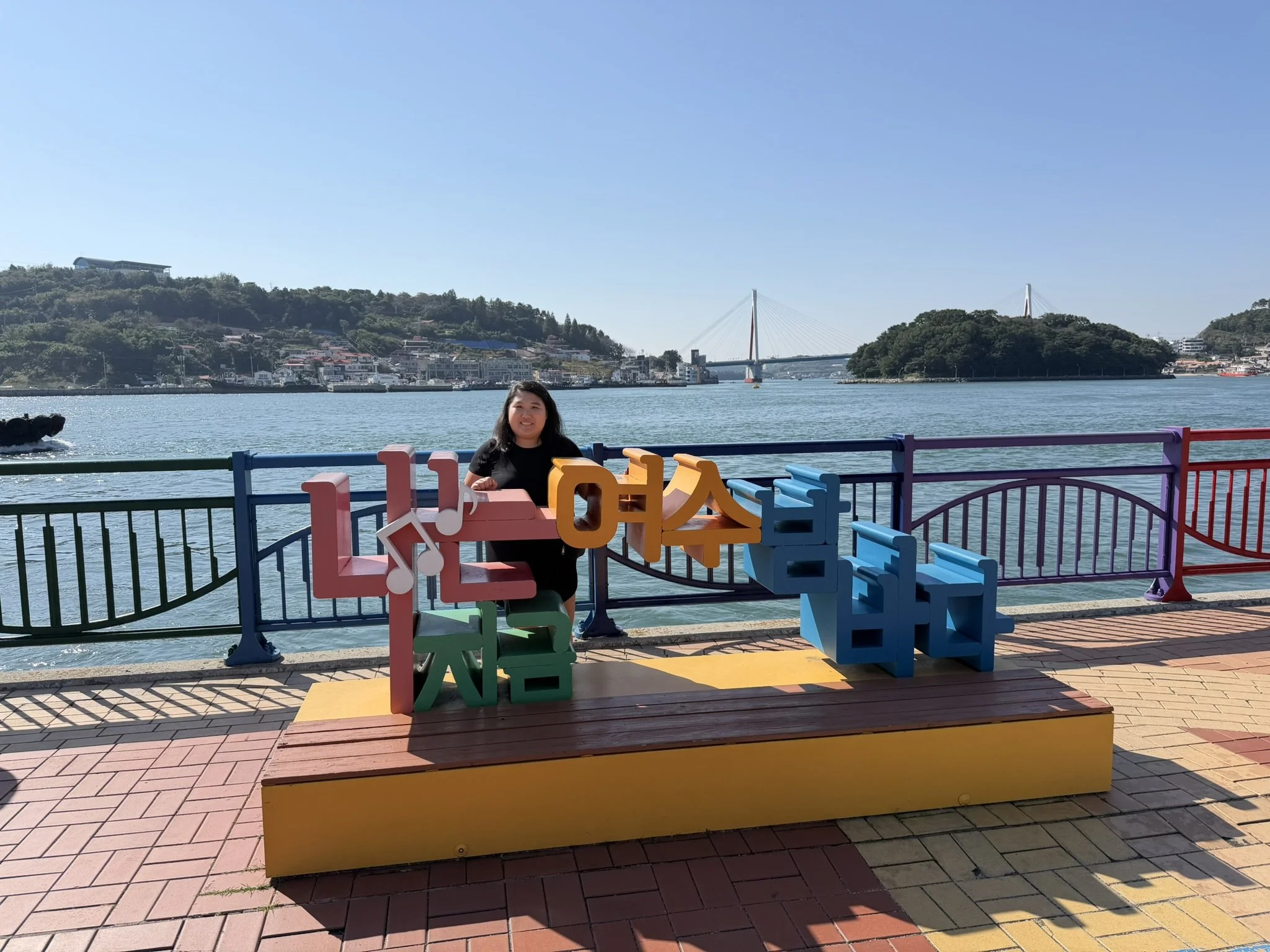

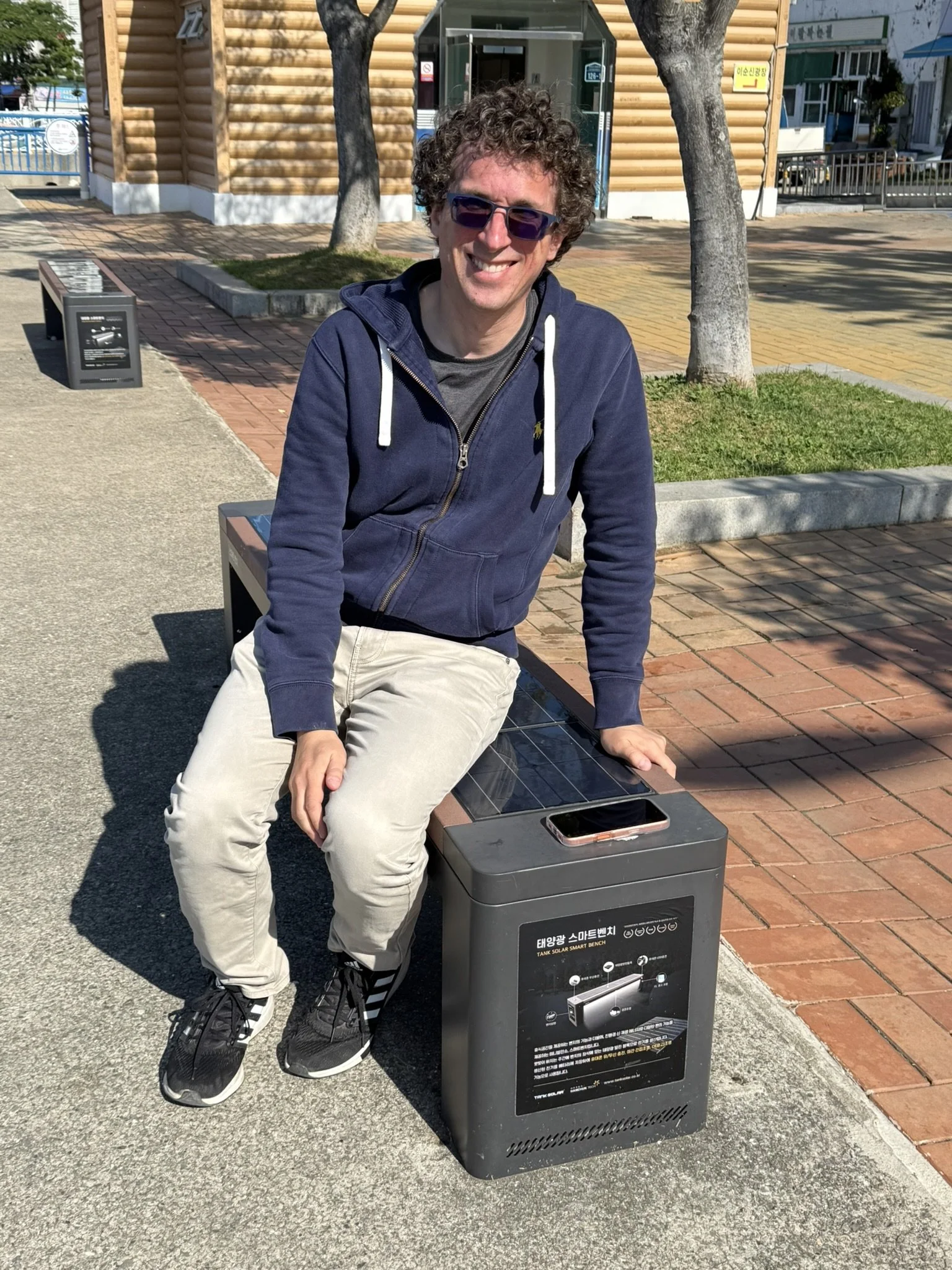
After exploring the turtle ship and eating breakfast, we walked the Jongpo Marine Park. Located right along the coast and connected to the Yi Sun-sin Square, it was a great path for a leisurely walk. We could see the water and take photos at the many photo ops along the way. In the evening, the street is lit up and food stalls and bars pop up. Bryce really liked the benches with solar panels on them. He could charged his phone while we rested along the path!
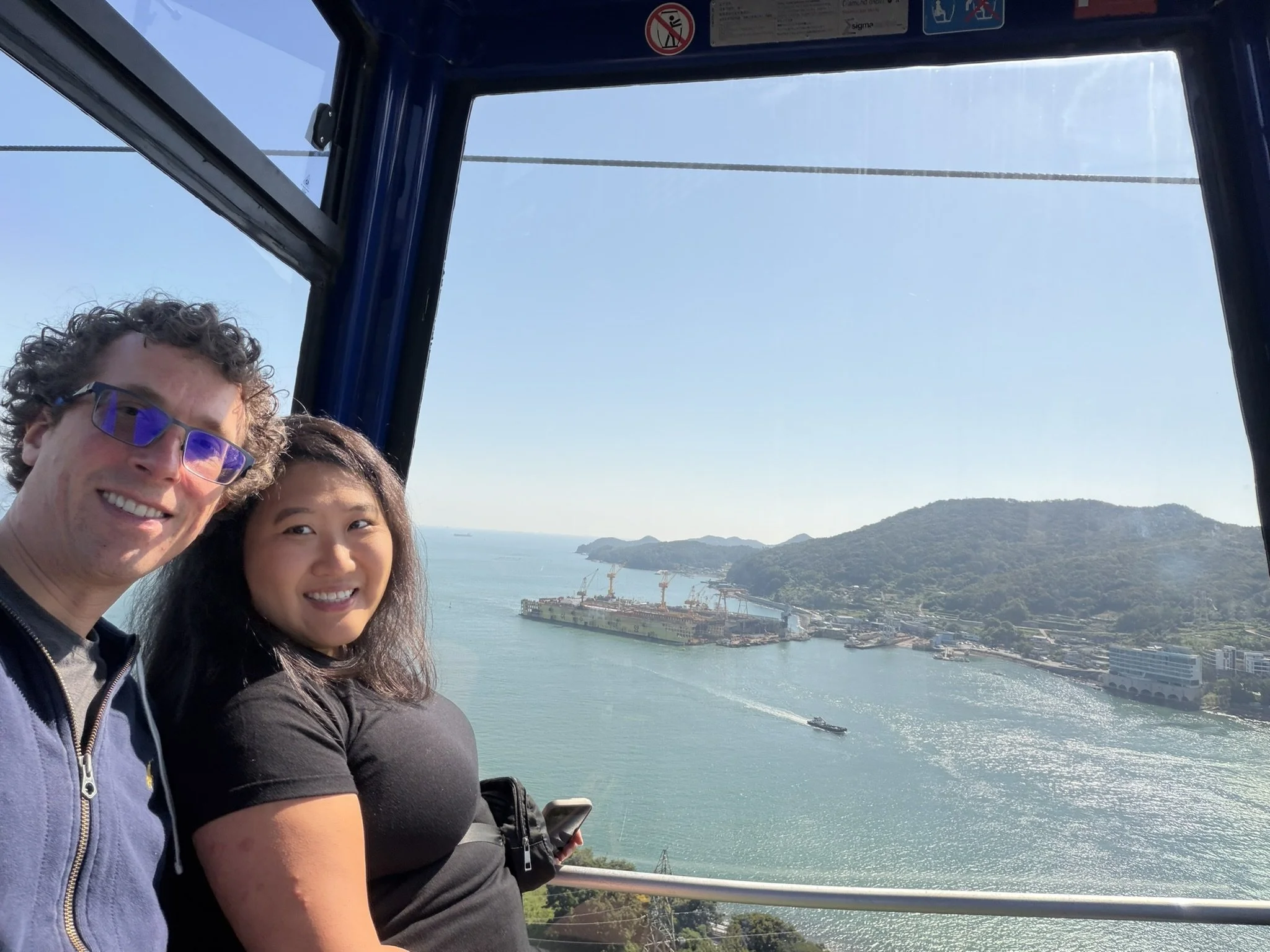
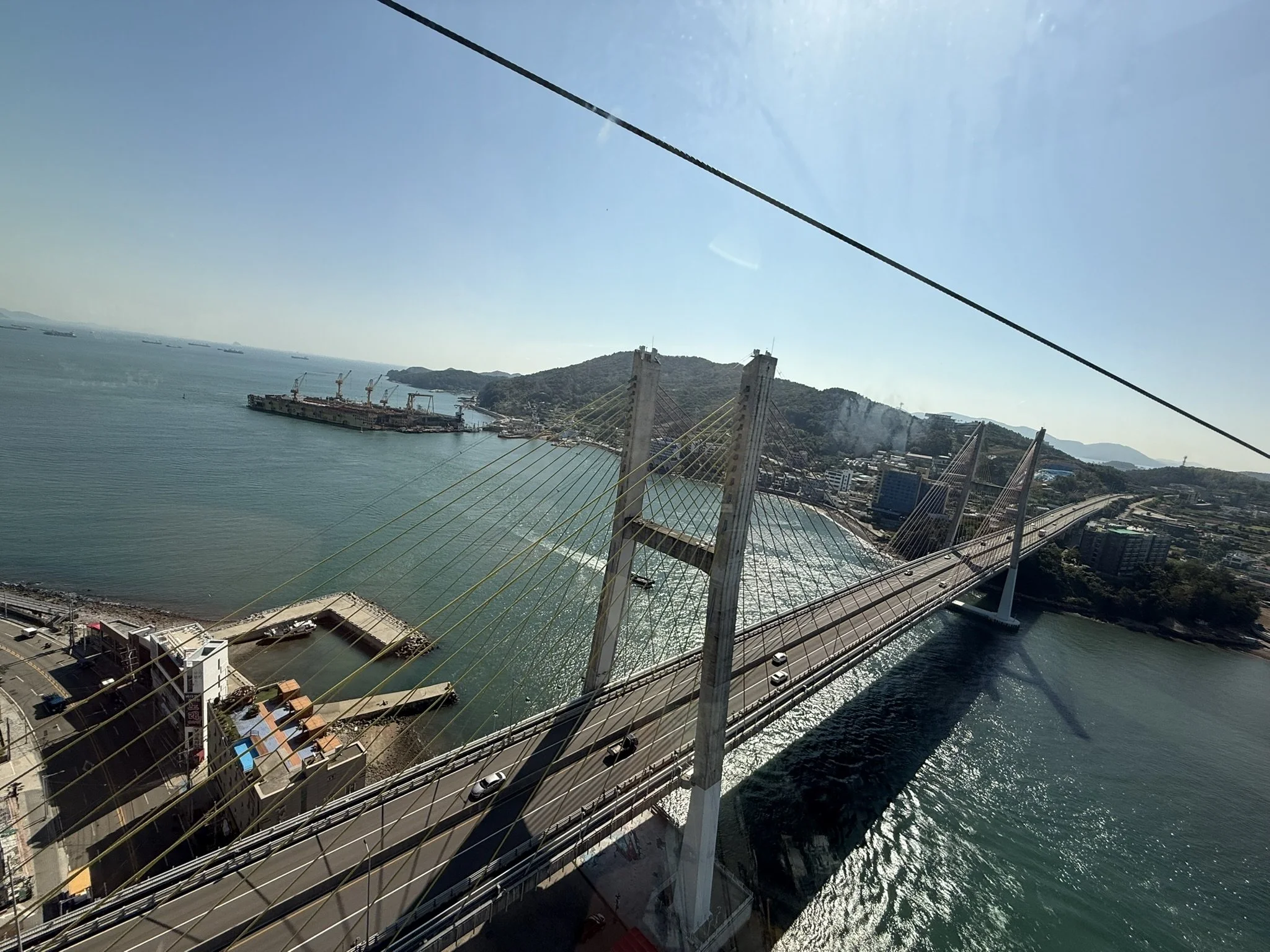
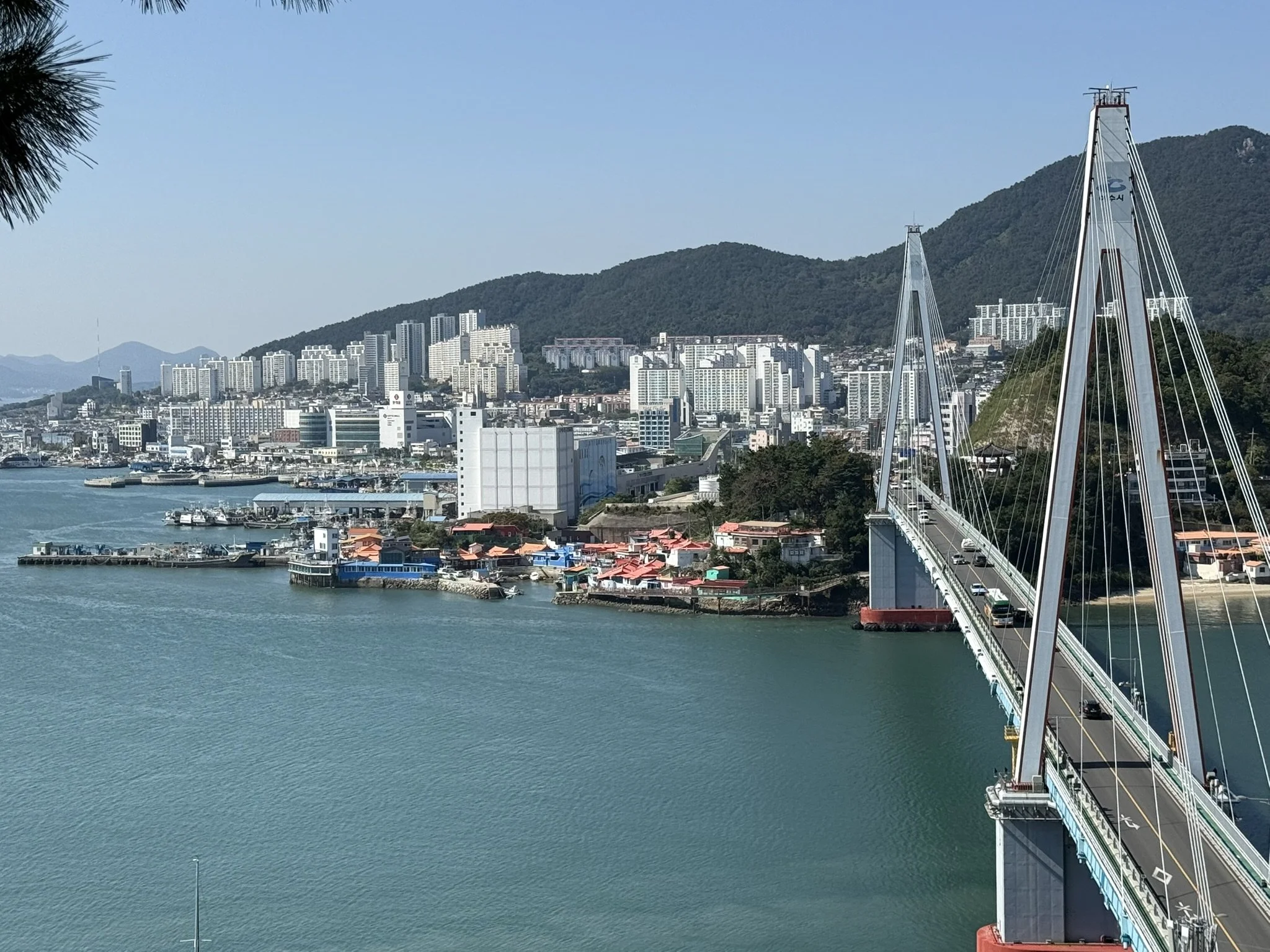
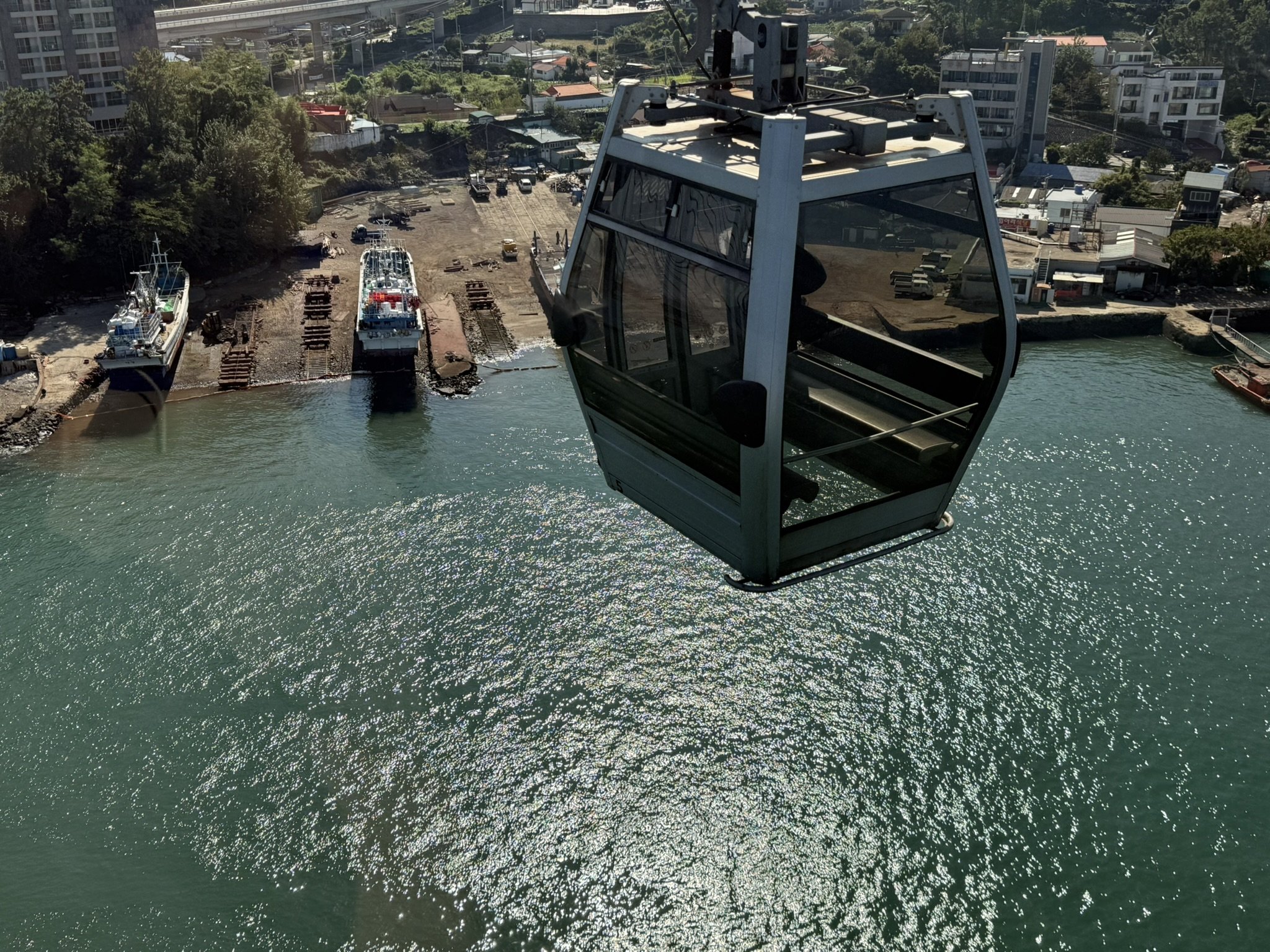
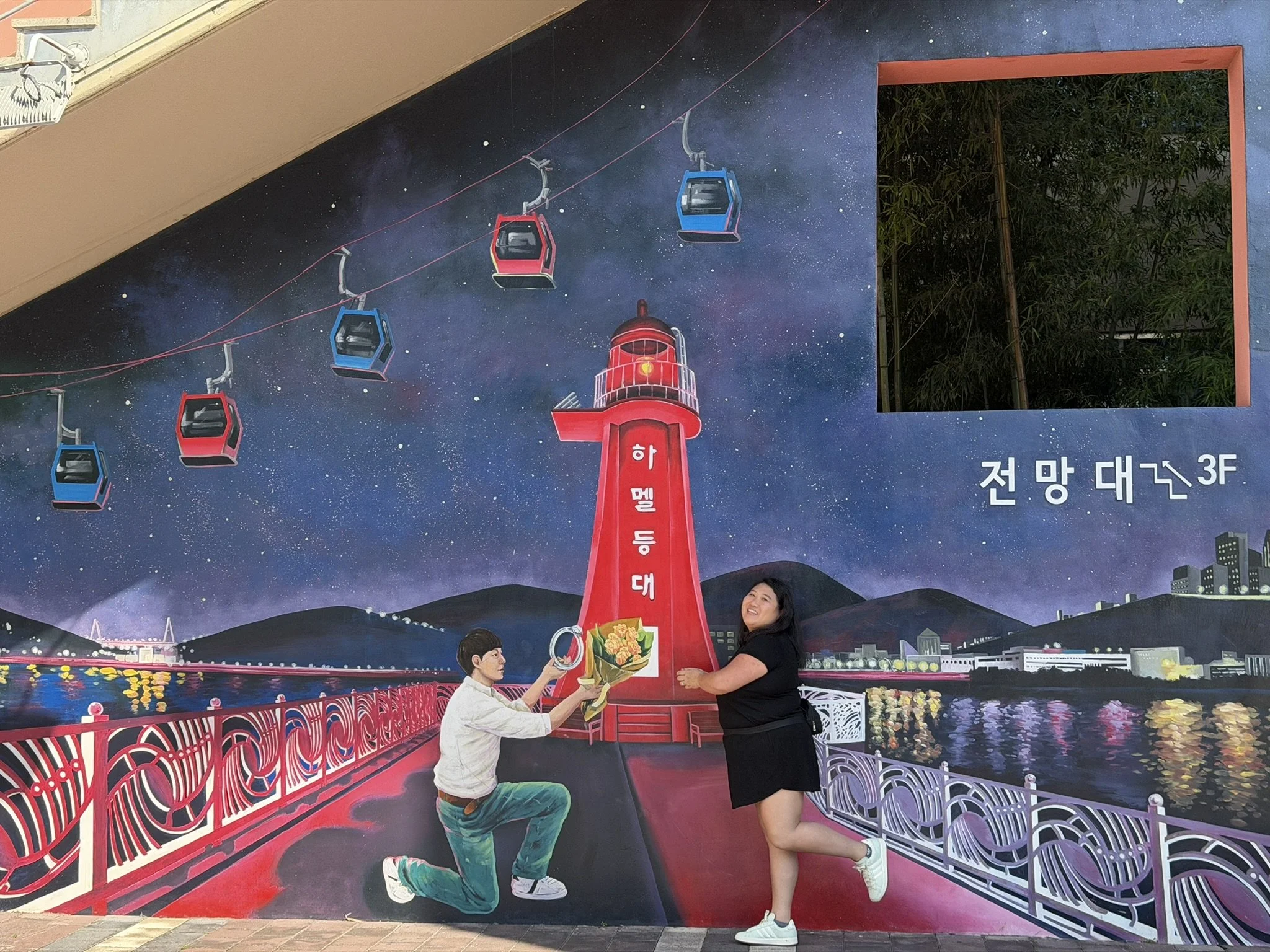
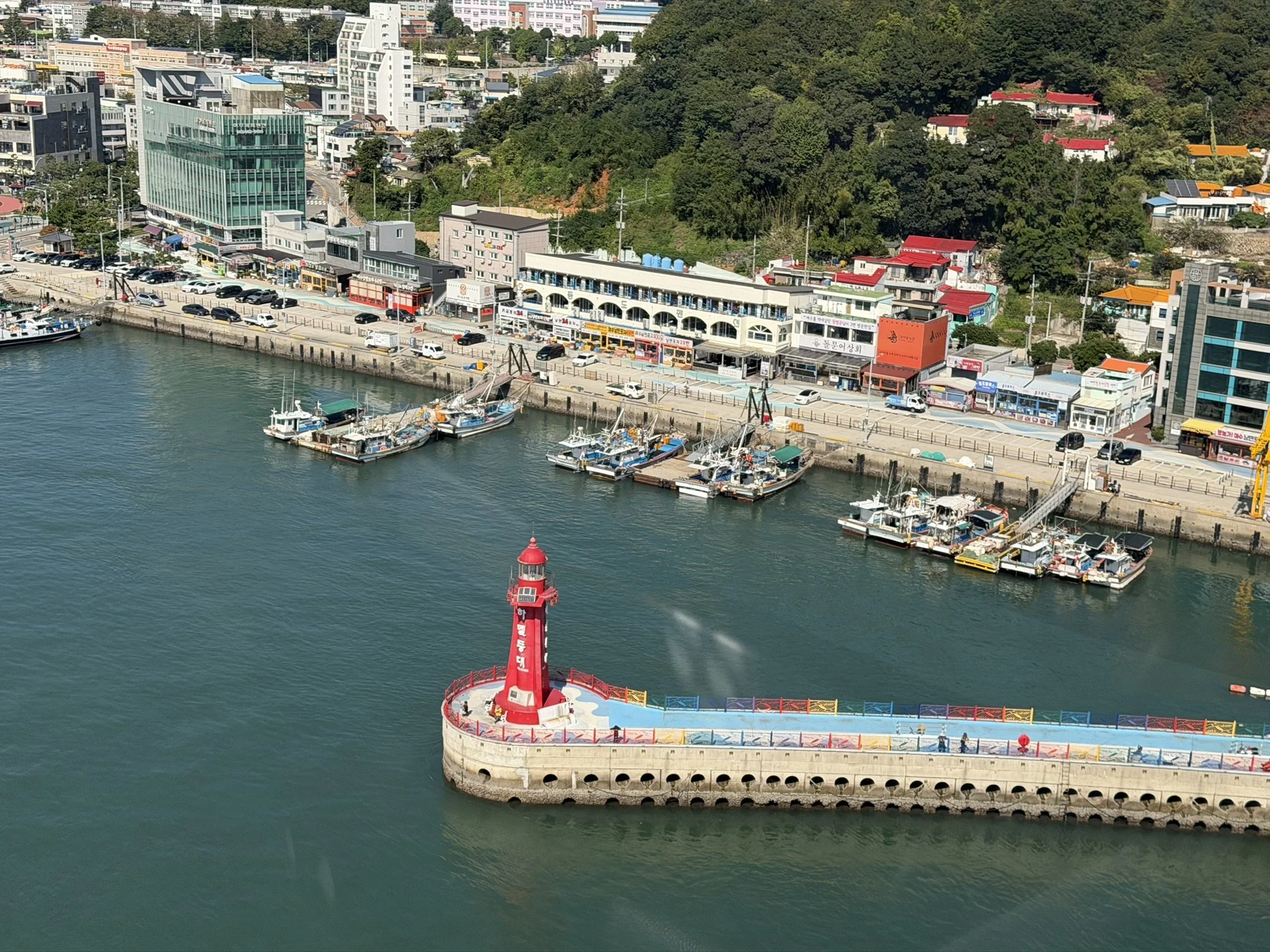
We decided to check out the Yeosu Maritime Cable Car which connects the main city of Yeosu with Dolsan Island. We picked the crystal cabin that allowed us to see the ocean below us.
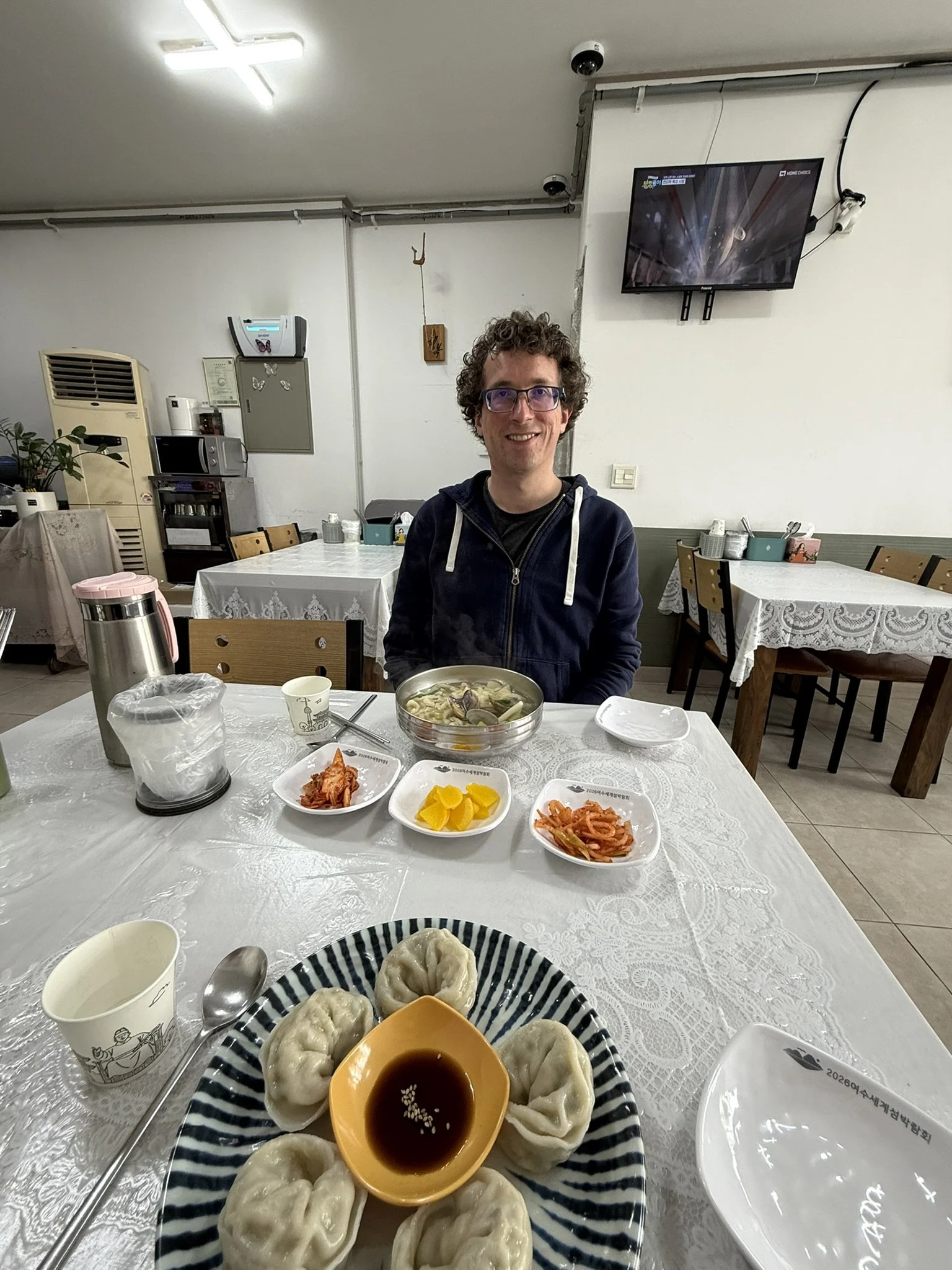
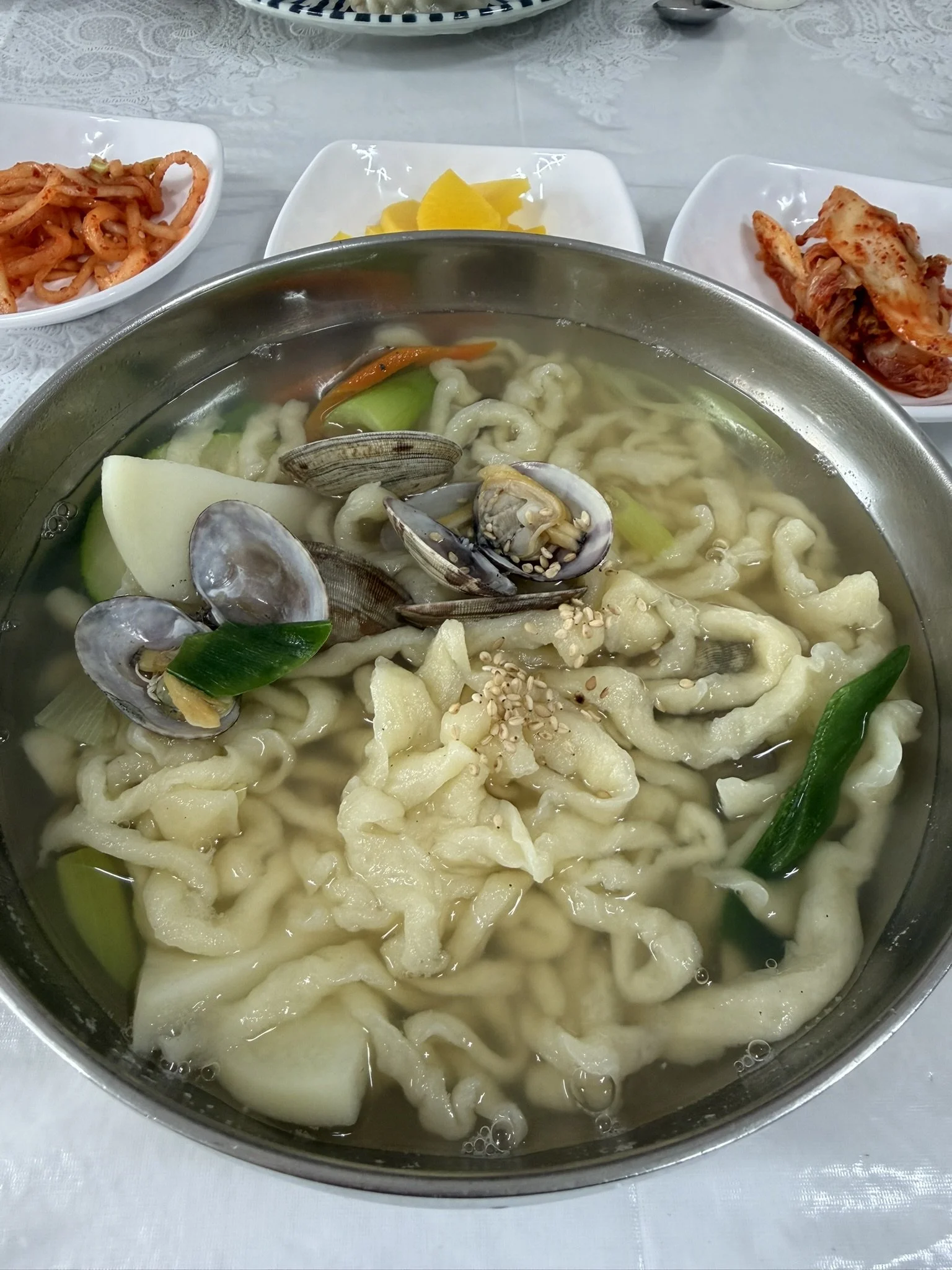
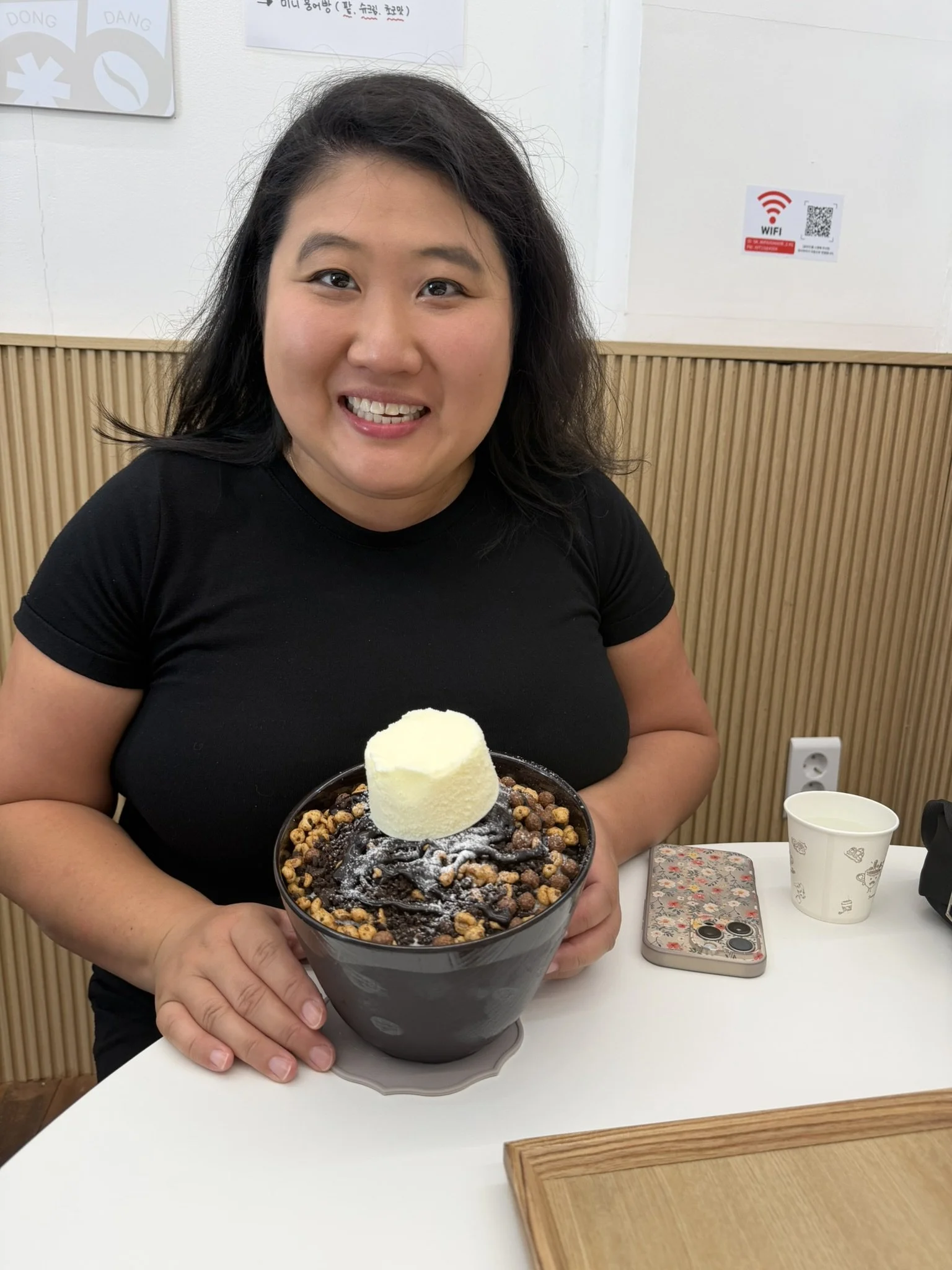
For lunch, I ordered dumplings while Bryce got a clam noodle soup. The noodles in his soup were almost like homemade noodles. Afterwards, we drove around the city and then stopped and got bingsu, a frozen milk shaved ice dessert with lots of chocolate on it.
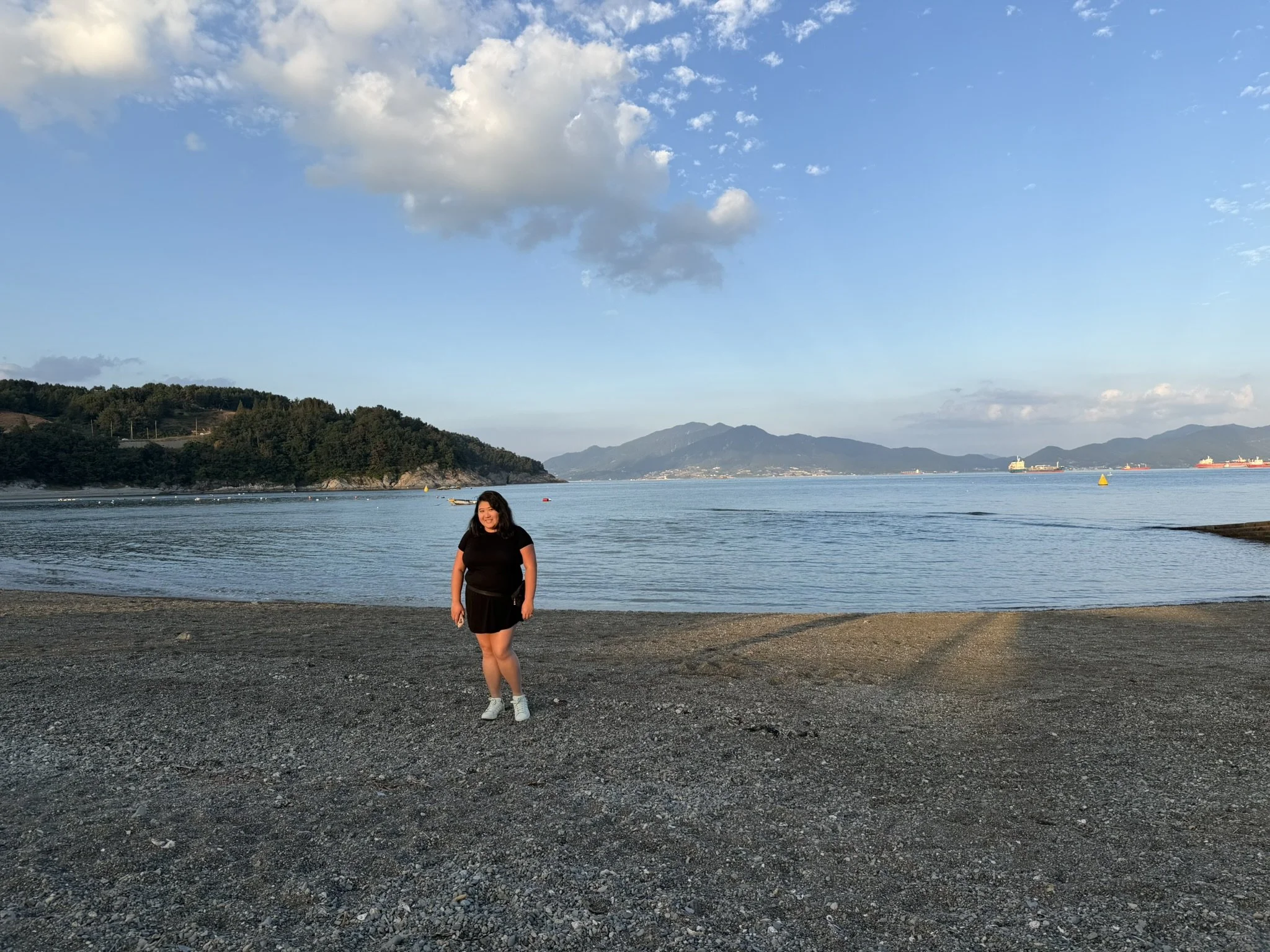
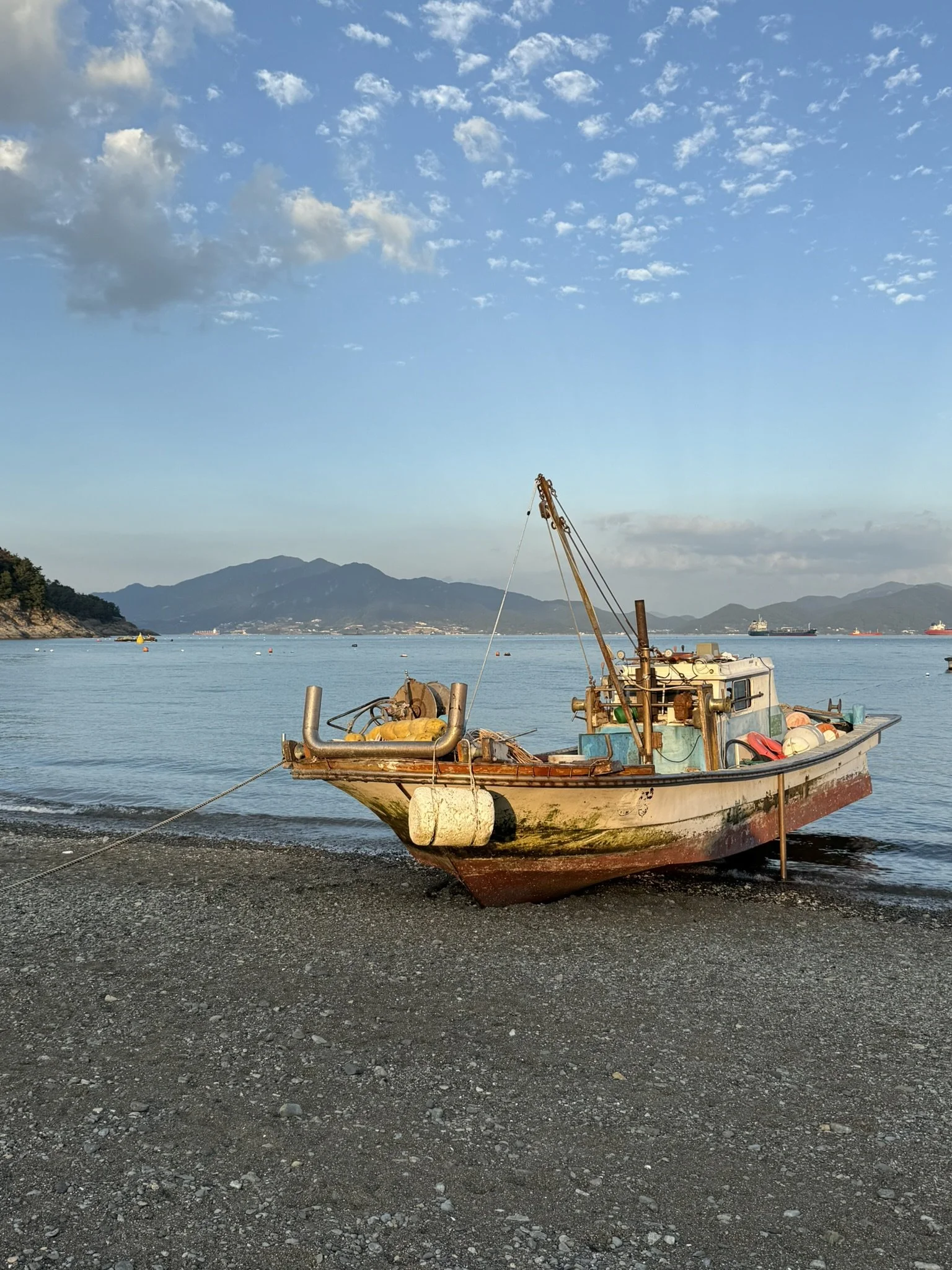
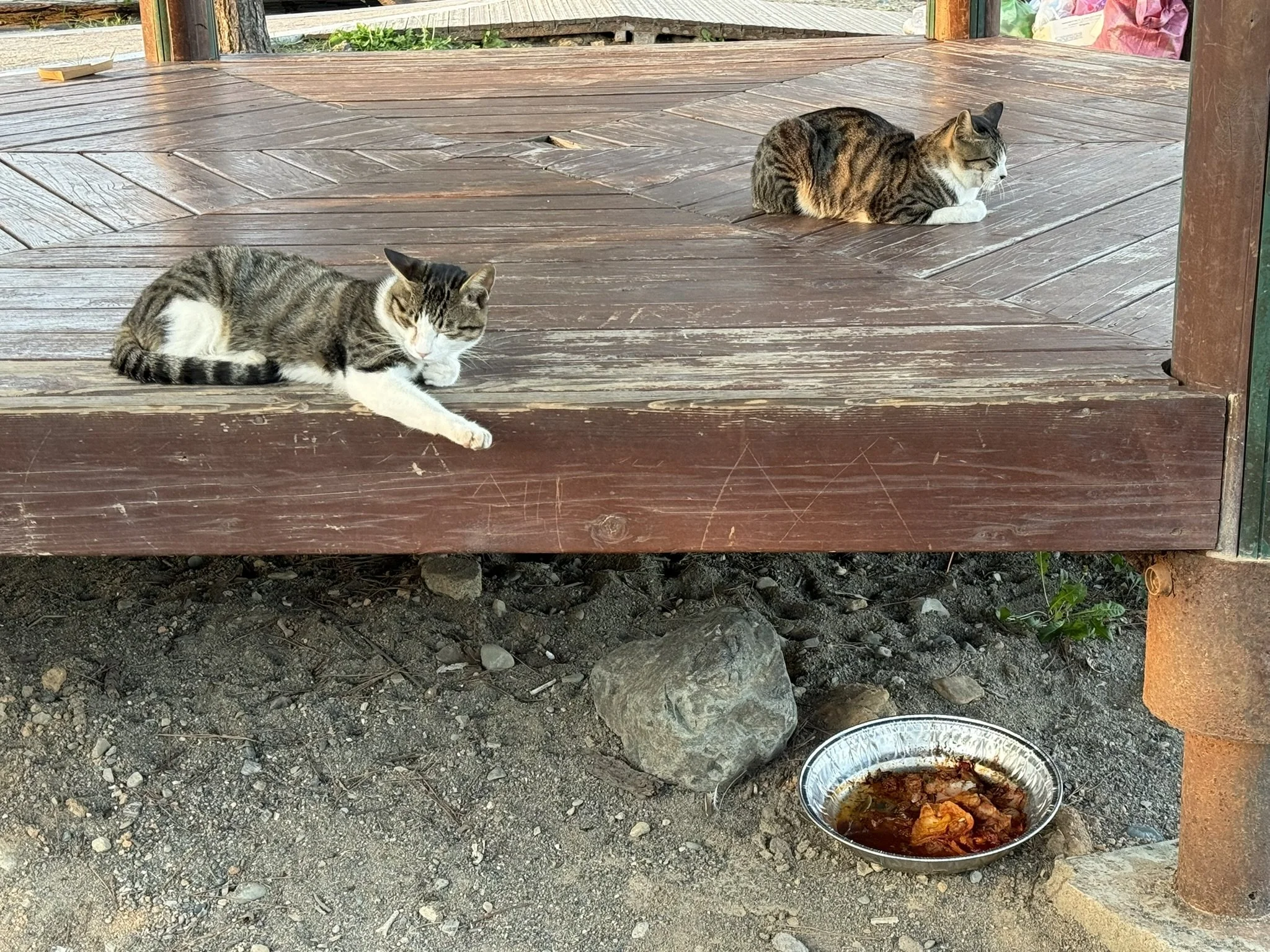
After bingsu, we stopped by the Manseongri Black Sand Beach. It’s not a very large beach, but it was pretty. We walked around and even saw Korean cats eat Kimchi!
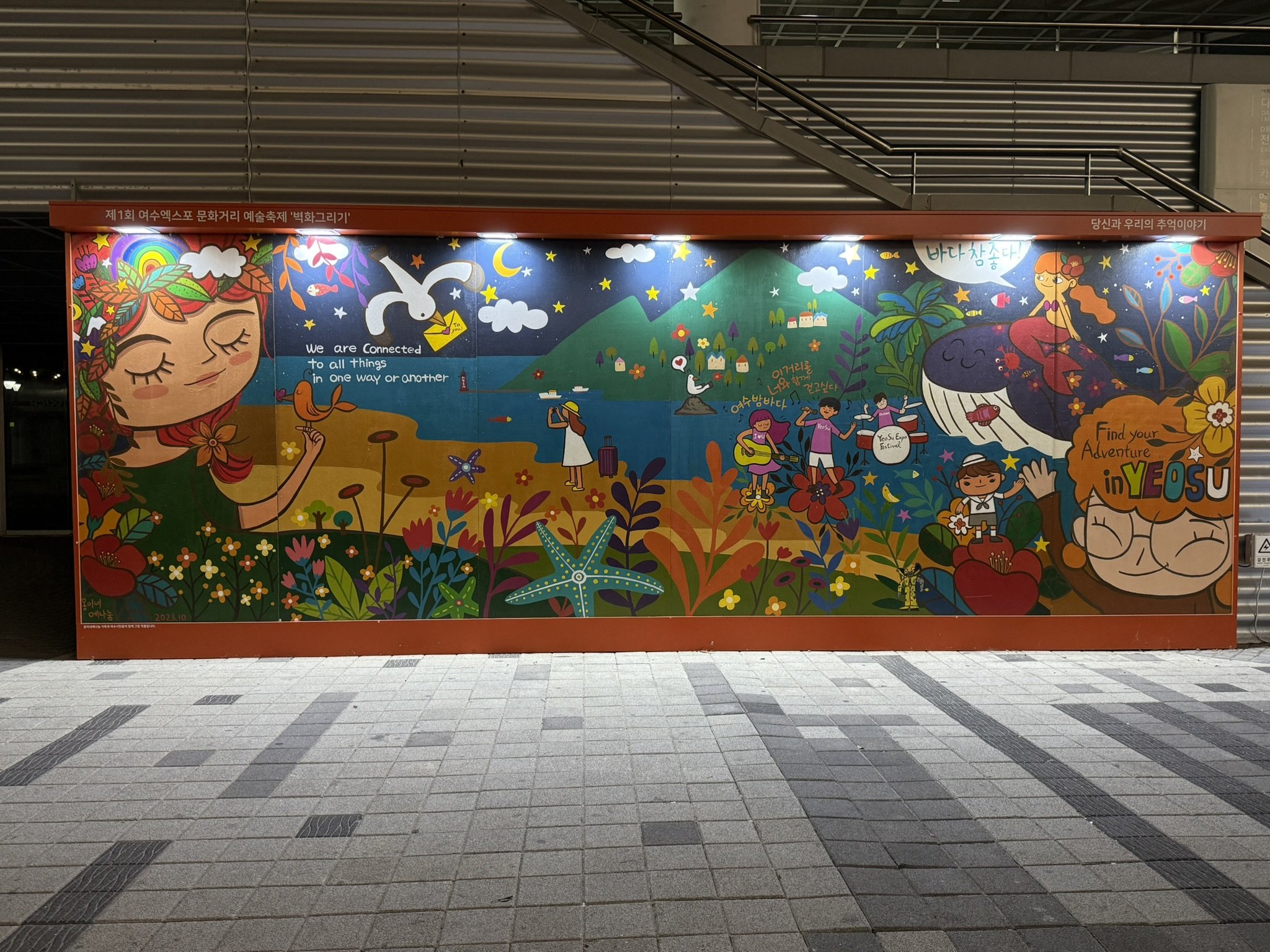
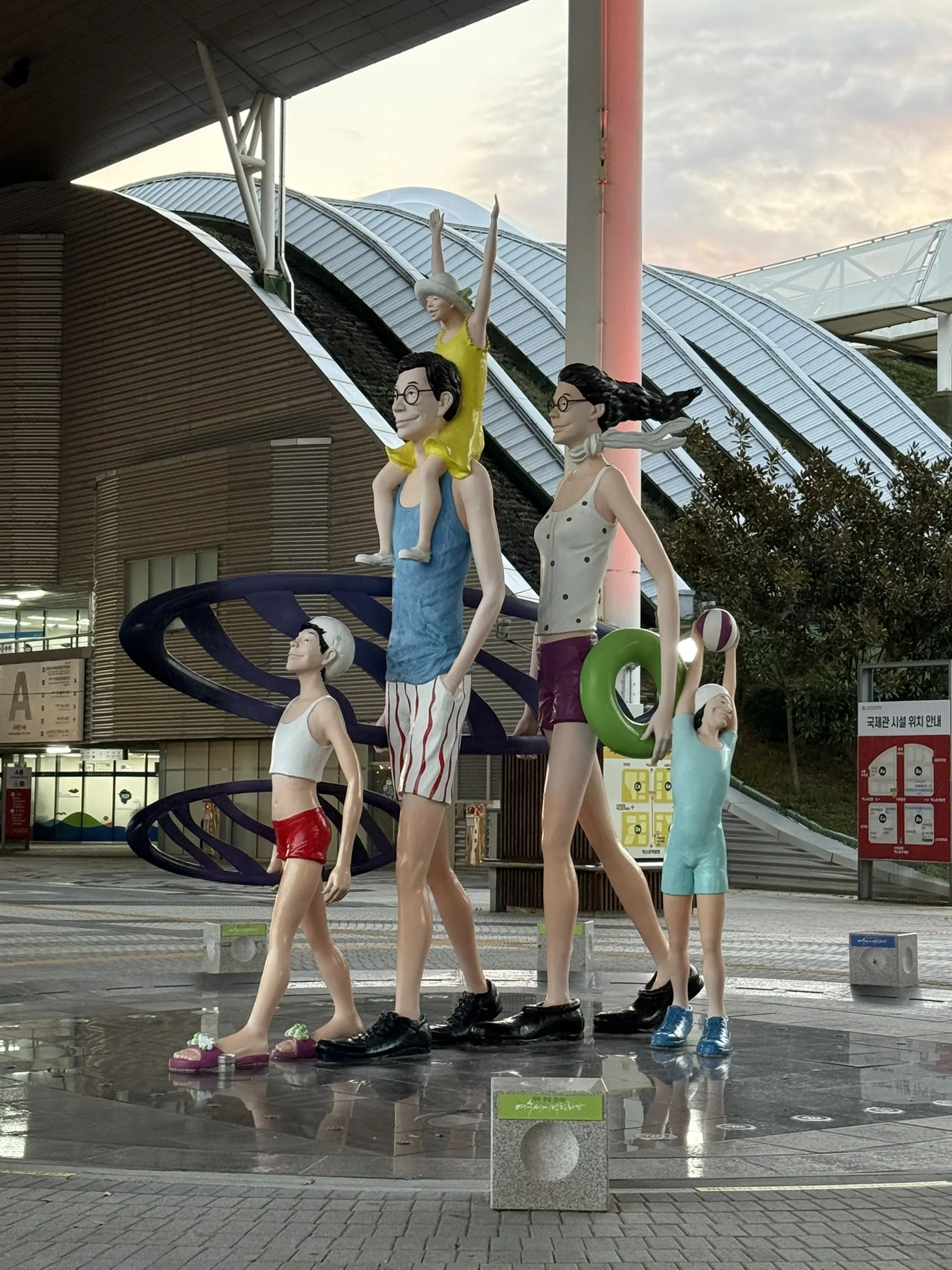
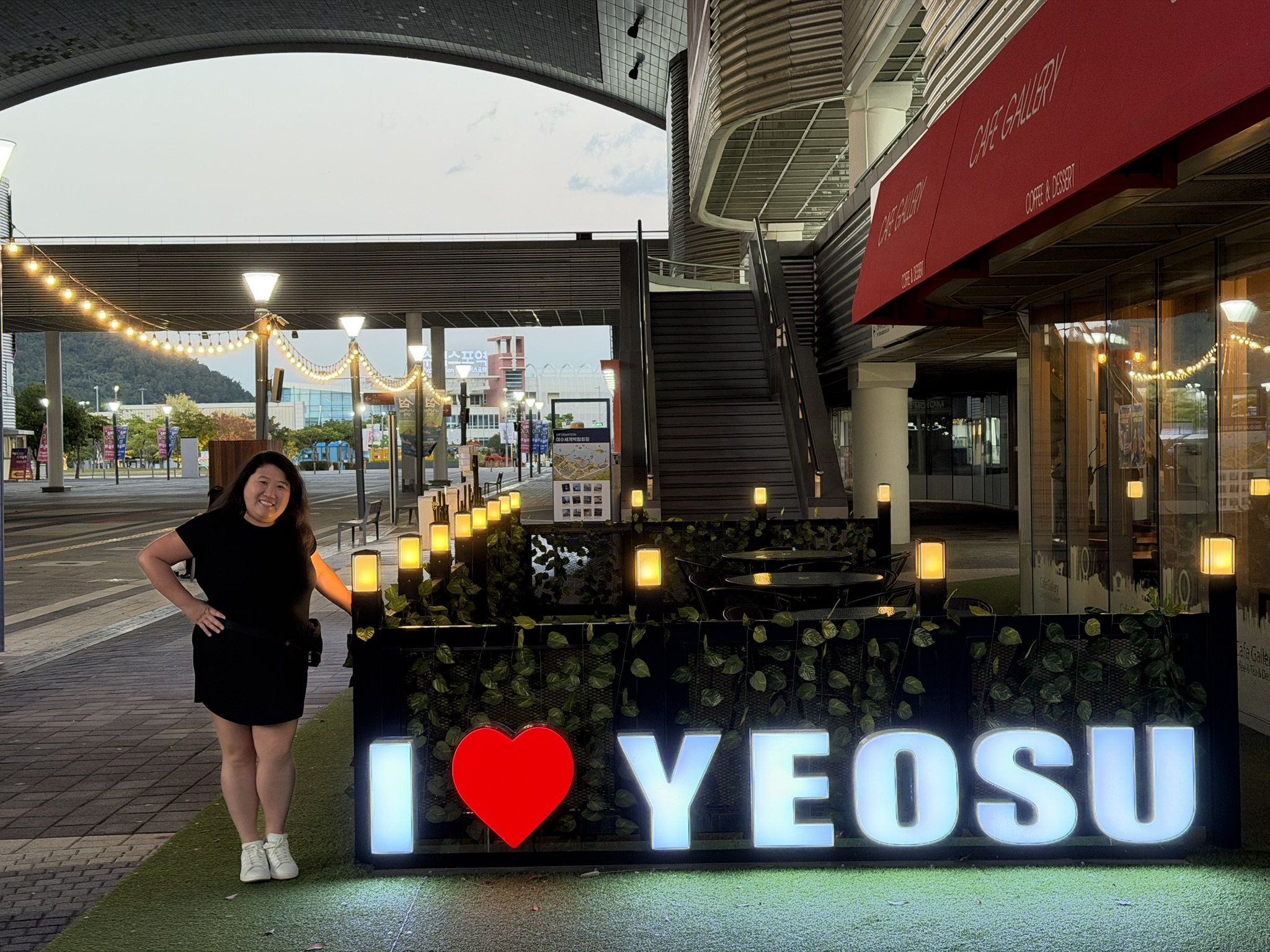
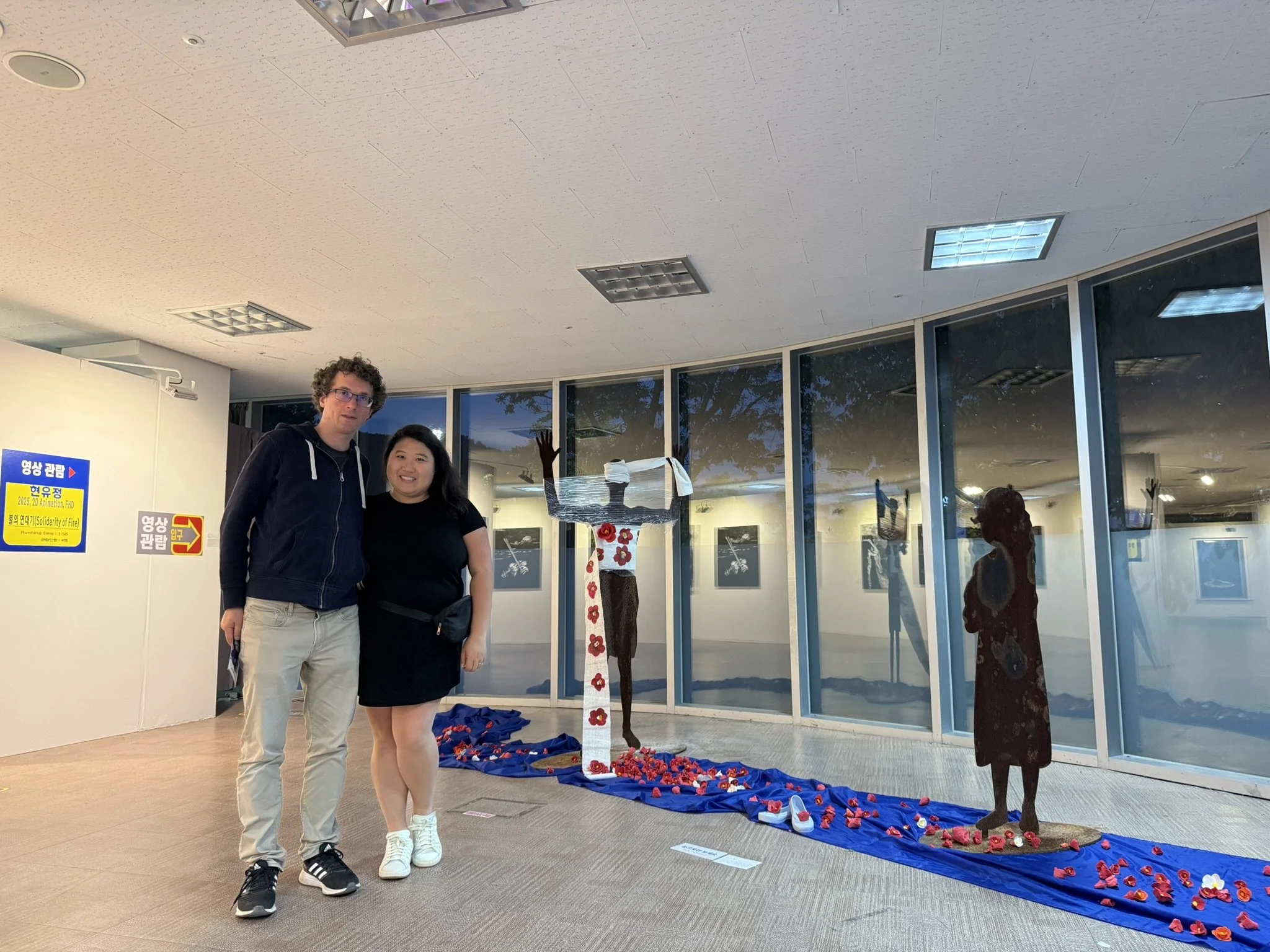
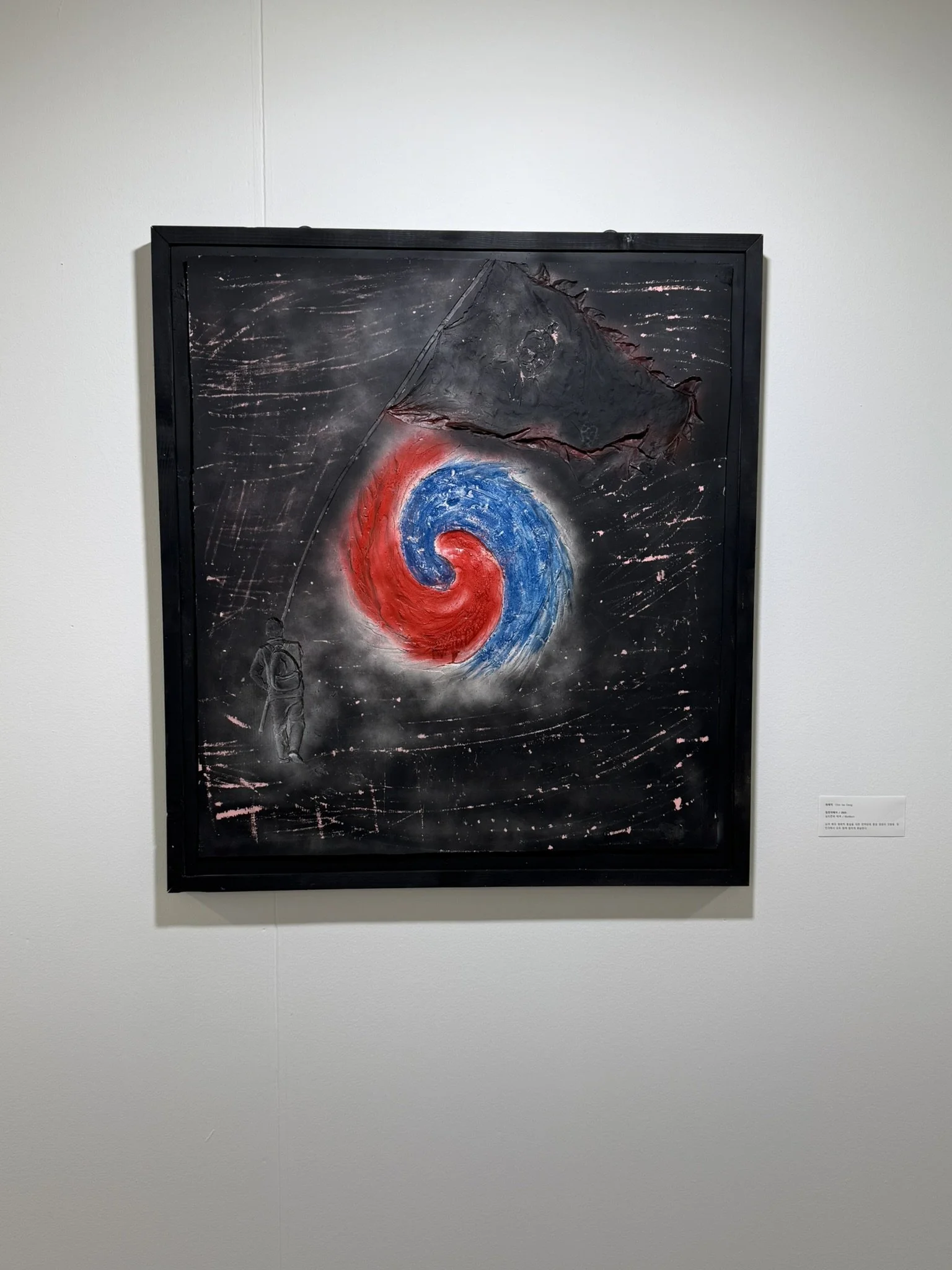
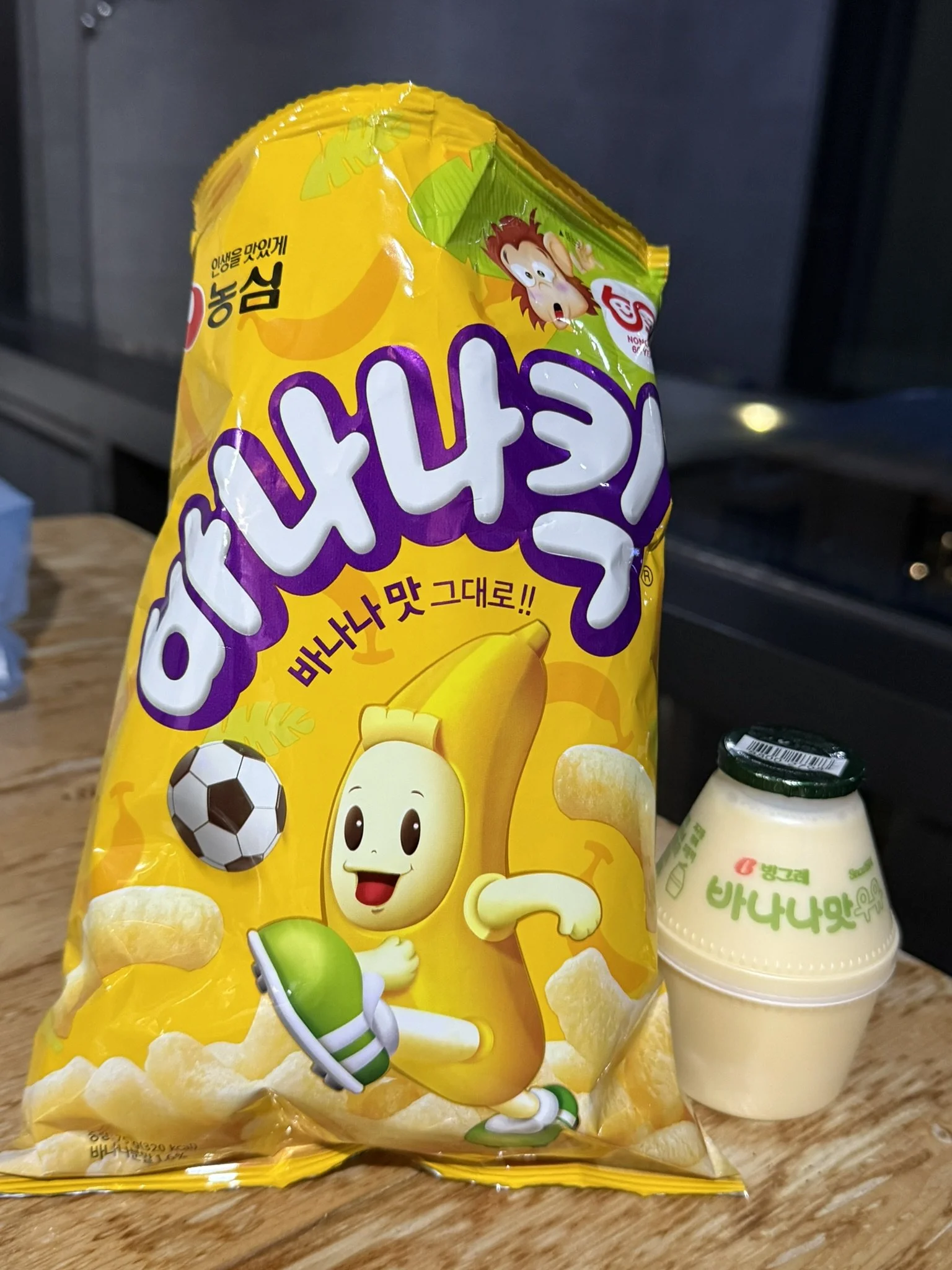
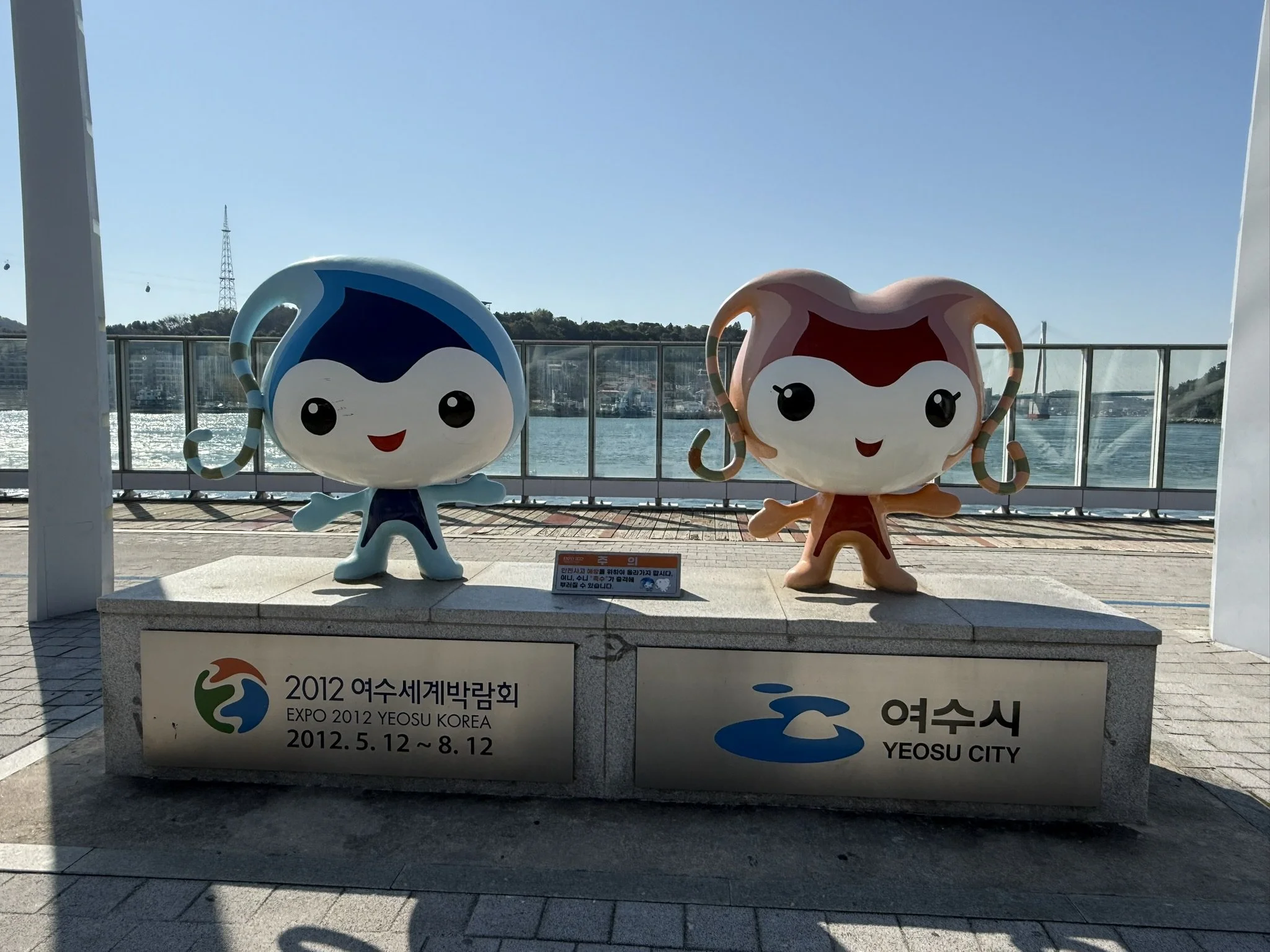
We stopped by the 2012 World Expo. The theme of this Expo was “The Living Ocean and Coast”, “New Resource Technology” and “Creative Marine Activities.” There were 105 countries involved and Yeosu saw over 8.2 million visitors. The Yeosu mascots were Yeony (Yeo=beautiful) and Suny (Su=water), and they are both plankton! We stopped in but there wasn’t much going on. We were able to see a small local art show though. For dinner, we just ate some spicy ramen from the CU. I tried grapefruit soju (which was better than plain soju) and ate banana chips with banana milk. There’s so much banana flavor here and I love it.
Day 7: Tuesday October 21, 2025 Travel to Jeju Island (Iho Tewoo Horse Lighthouses and Stone Park)
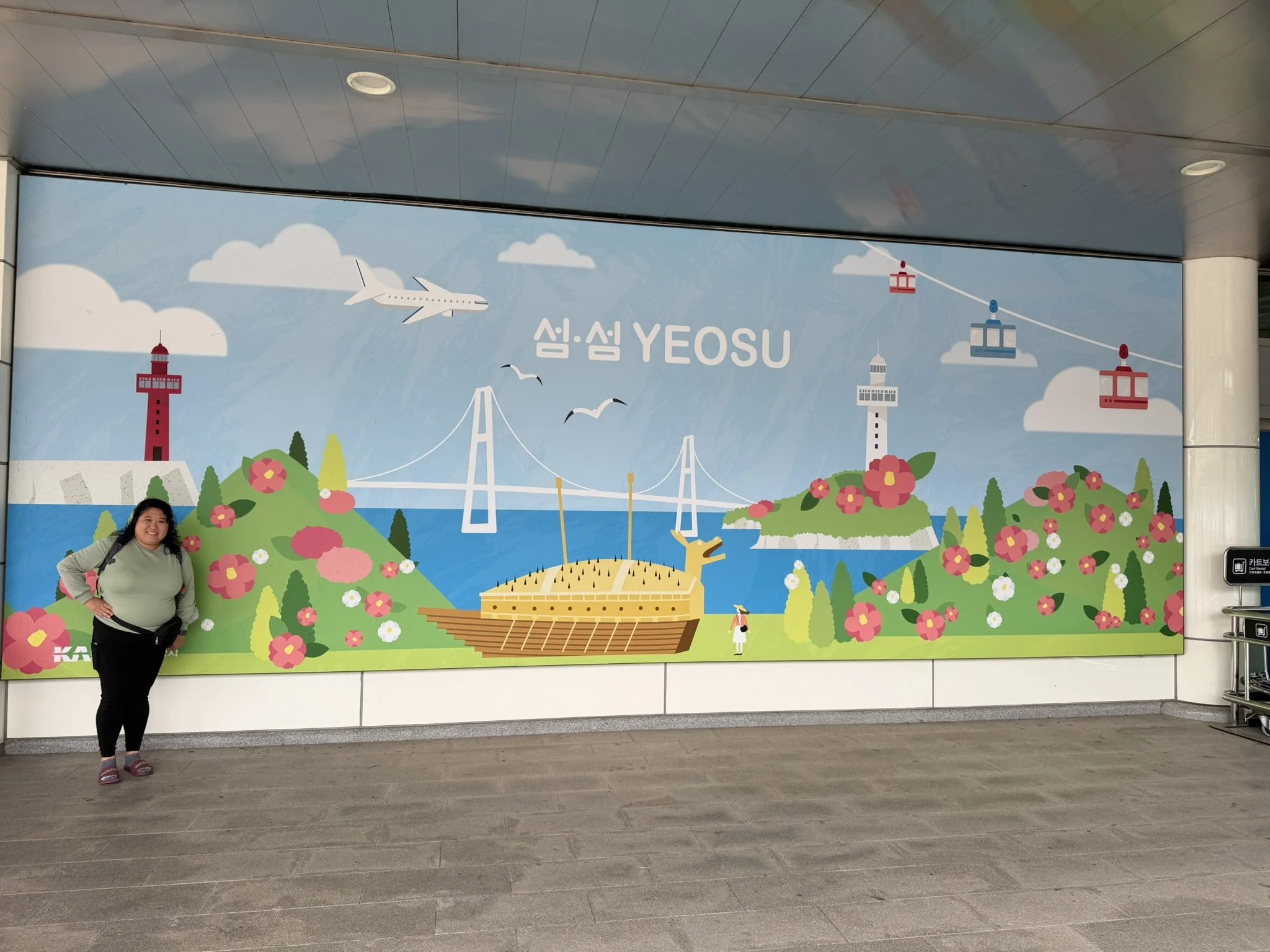
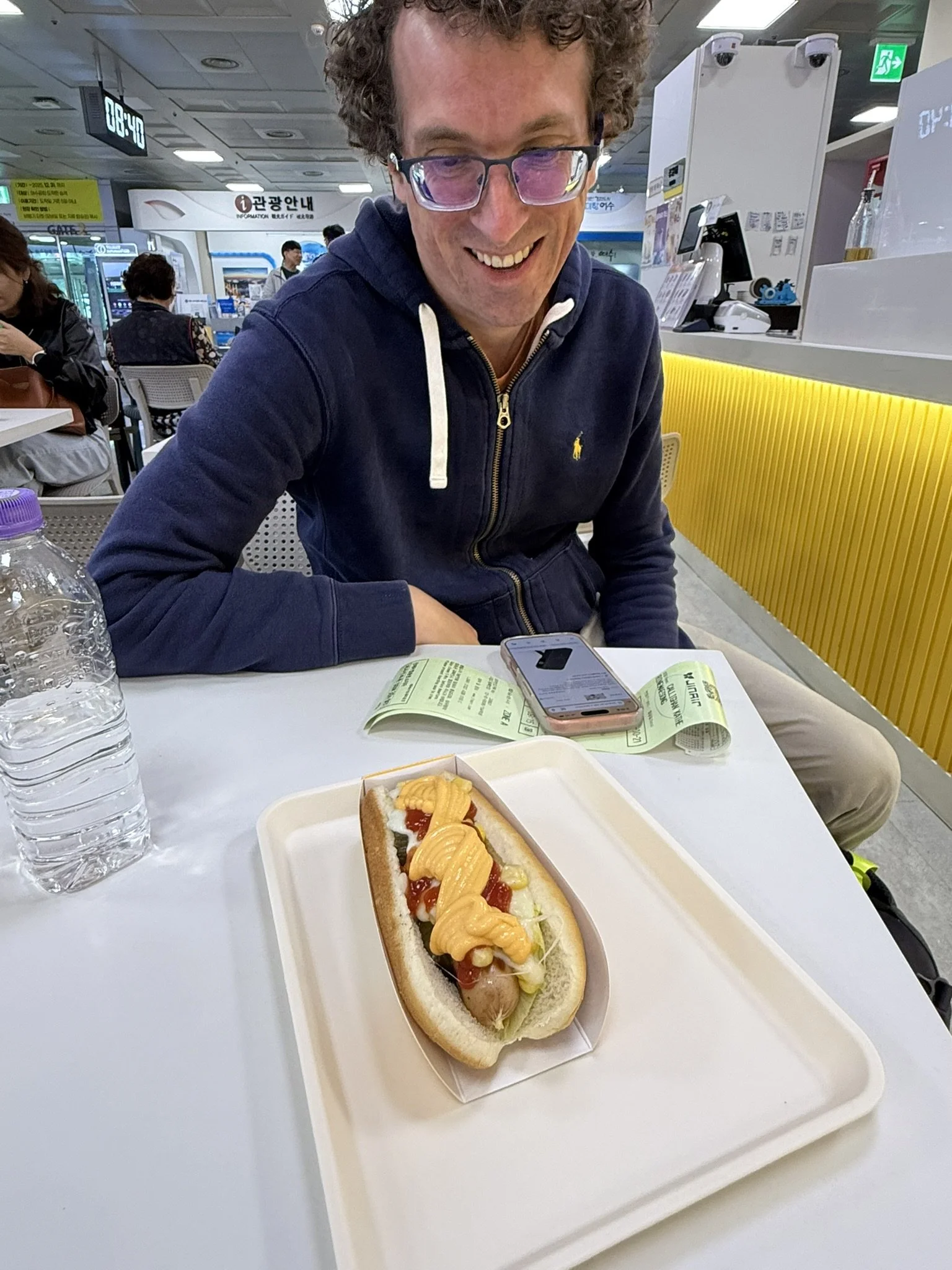
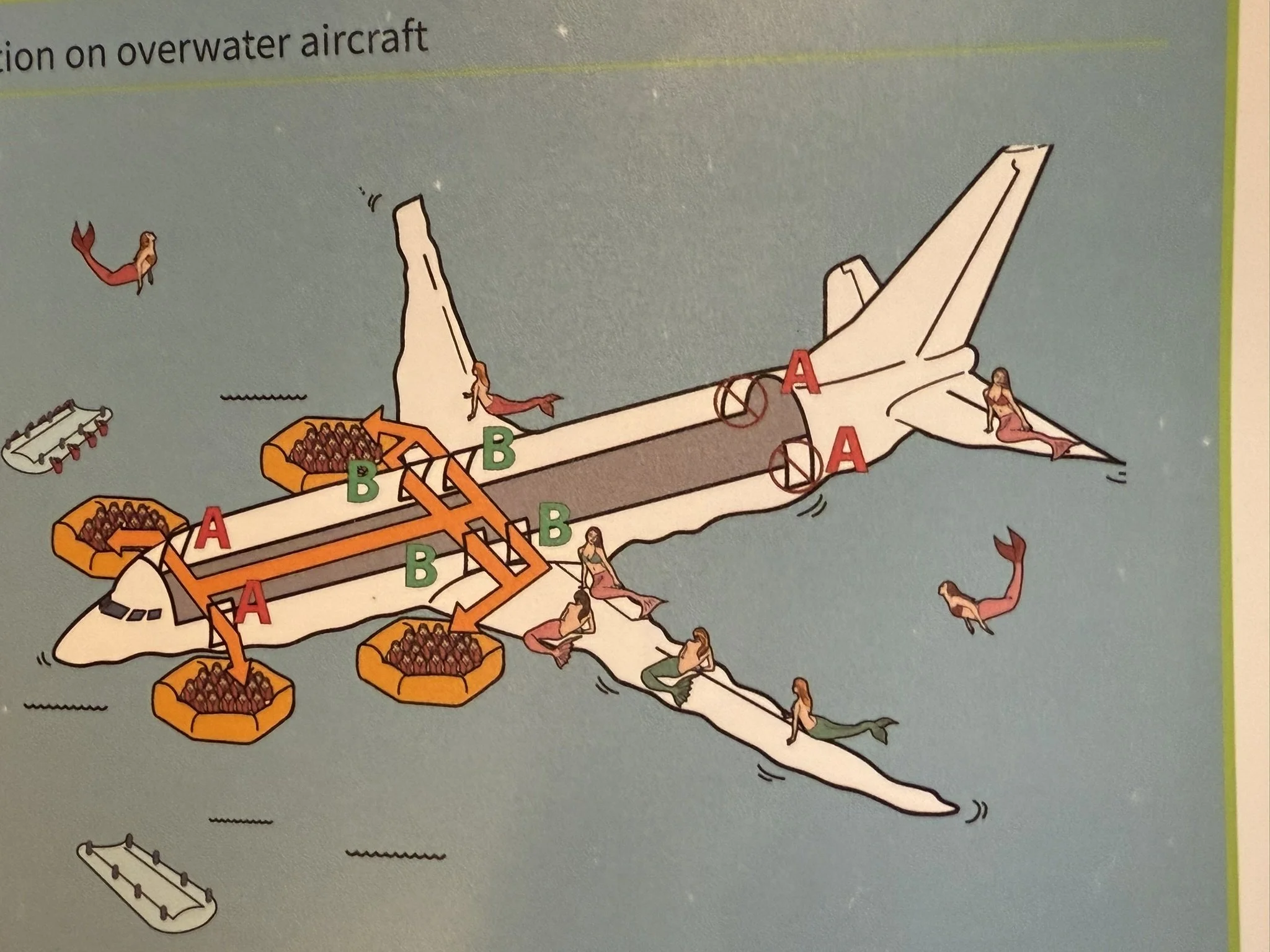
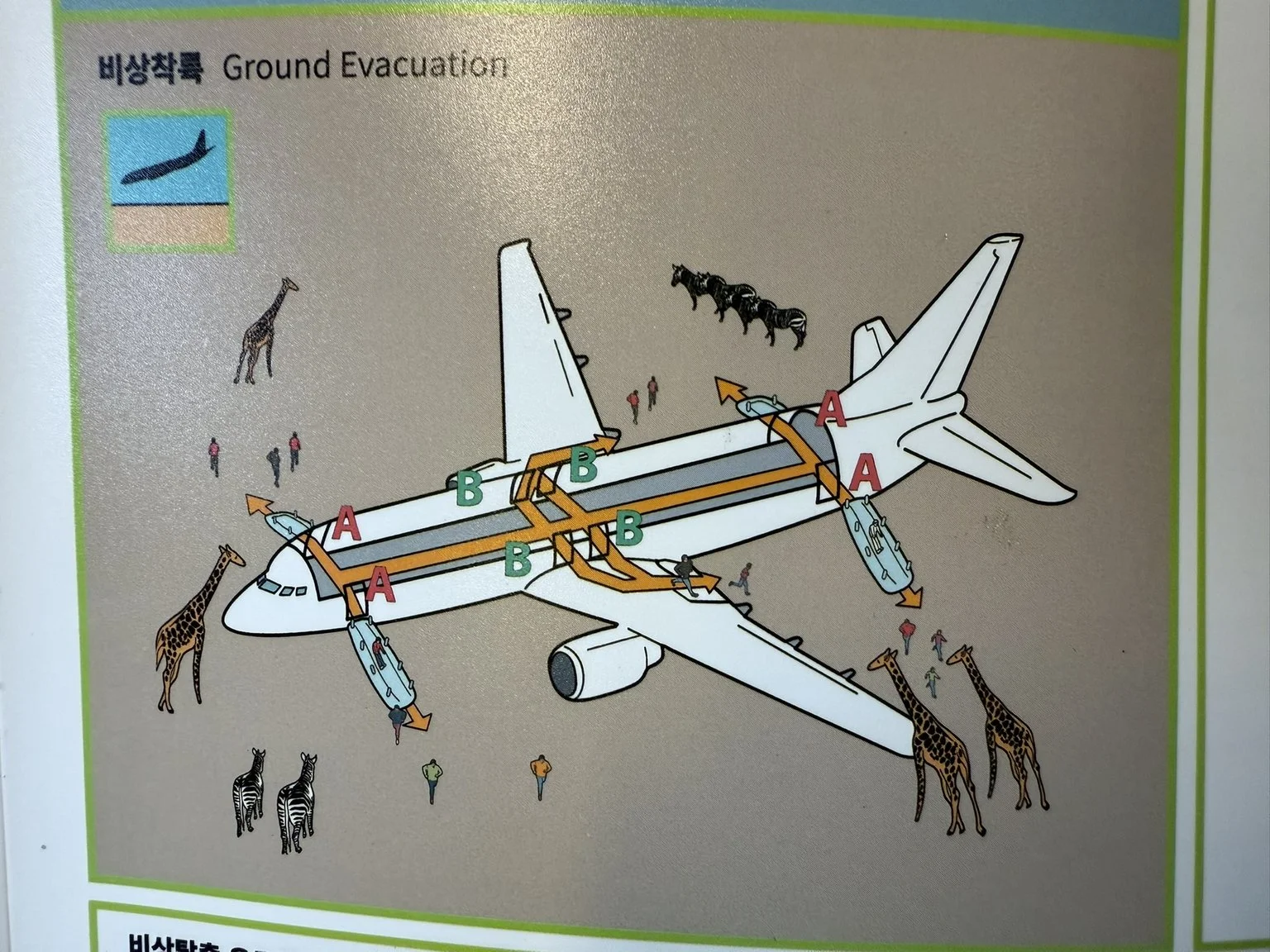
Before we left for the airport, we spent some time at the beach again. We wanted to see the sunrise, but it was too cloudy and the sun never came out. We went ahead and drove to the airport. Yeosu is really small, so I had to go inside to find the Lotte counter for us to return the car. The guy came out and said all we had to do was leave it and he would take care of it. Inside there was only one food spot. It served hot dogs. I ordered a corn one. It was a weird combination. I wouldn’t say the flavors didn’t go to together, but I’m not sure I can say that all of the flavors did go to together. It was a hotdog with sweet cabbage, pickles, ketchup, mustard, cheese sauce, and corn kernels. I think Bryce had quite the face when I received the food. Our JinAir flight was only 30 minutes, and they had funny safety information. They included mermaids, dancers on inflatables, punk rock hair styles, people falling in love when the air tubes came down, wildlife like giraffes, sea life like whales and dolphins, and people doing handstands to avoid the smoke in the air from fires.
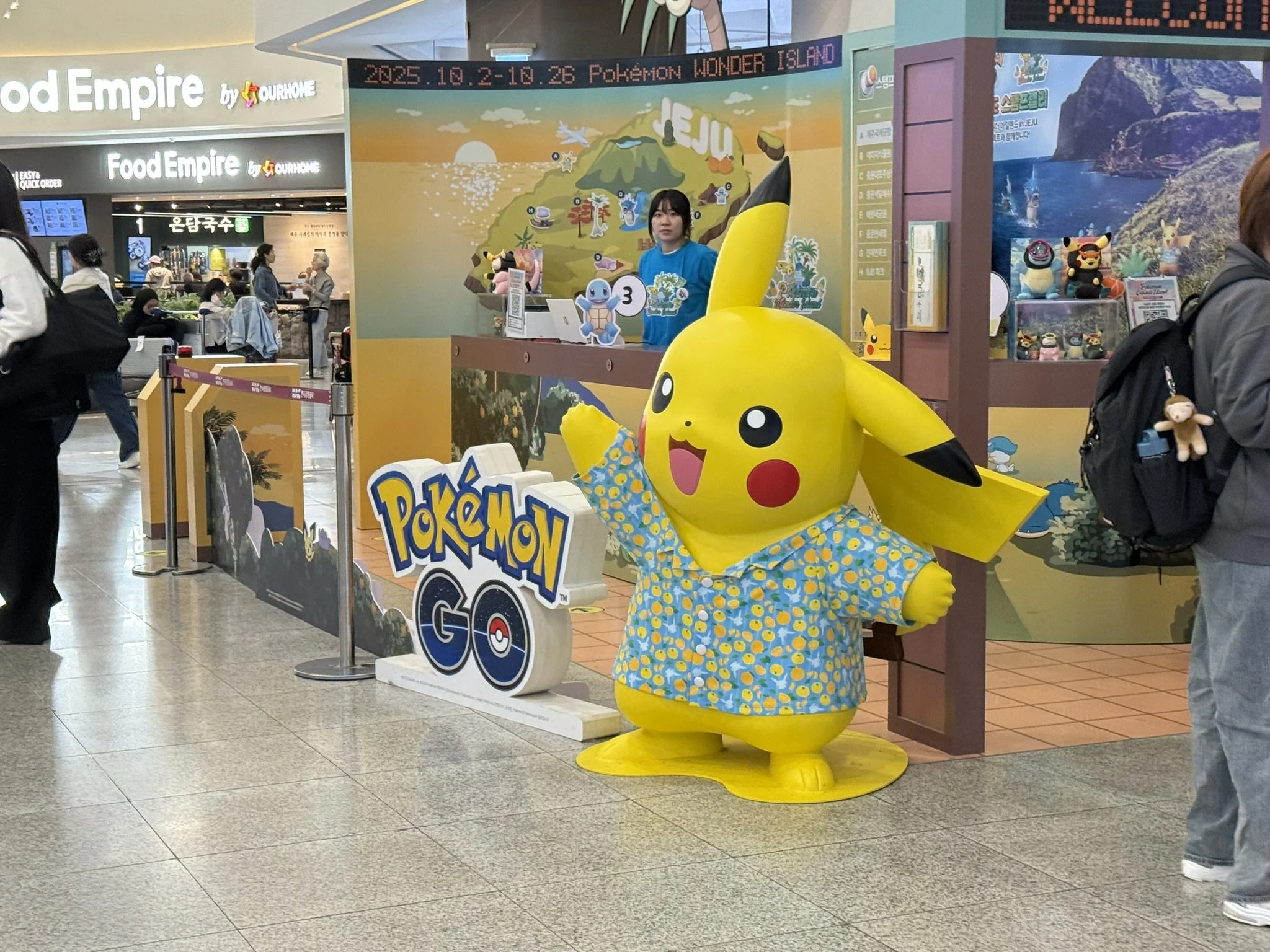
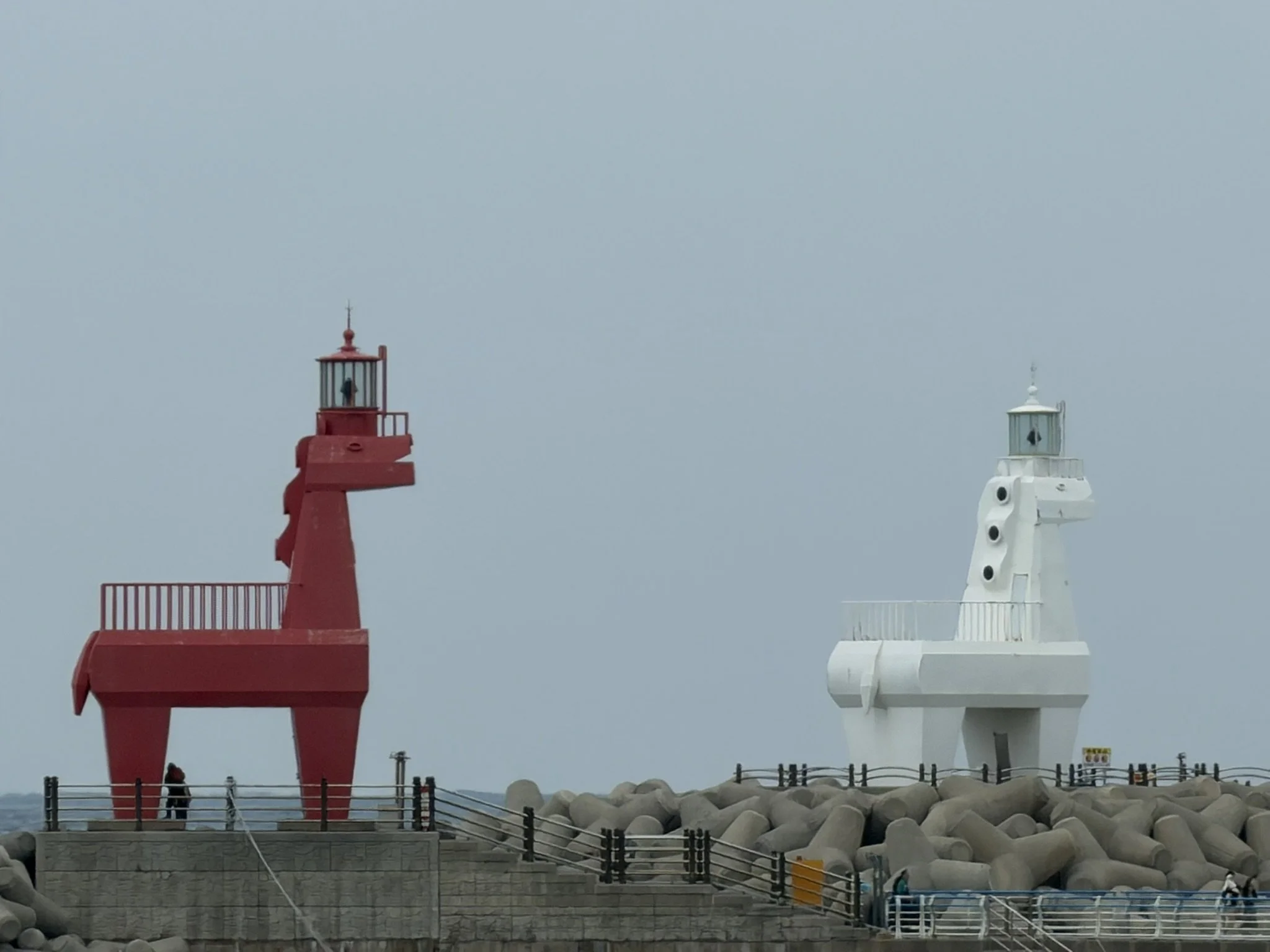
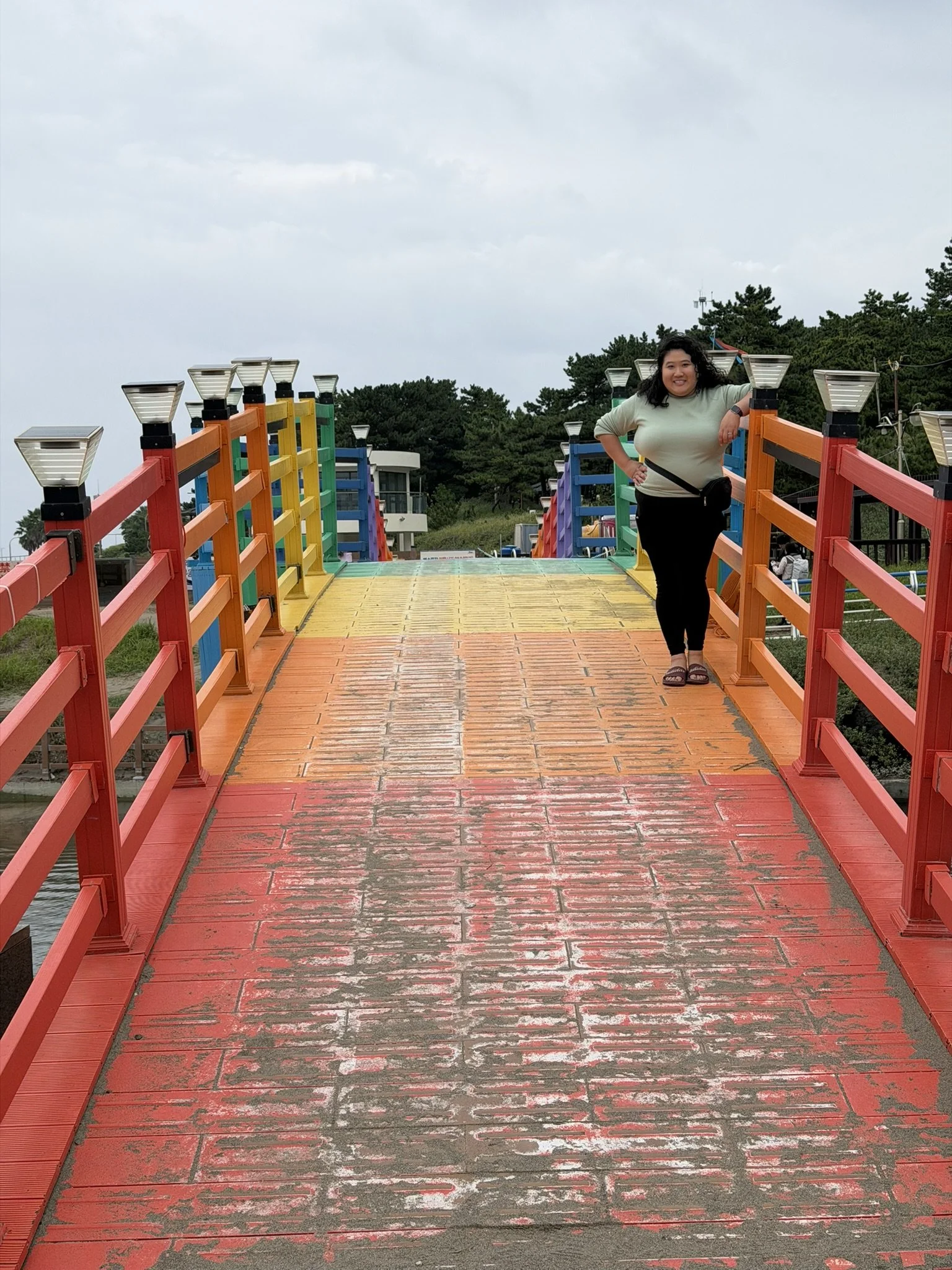
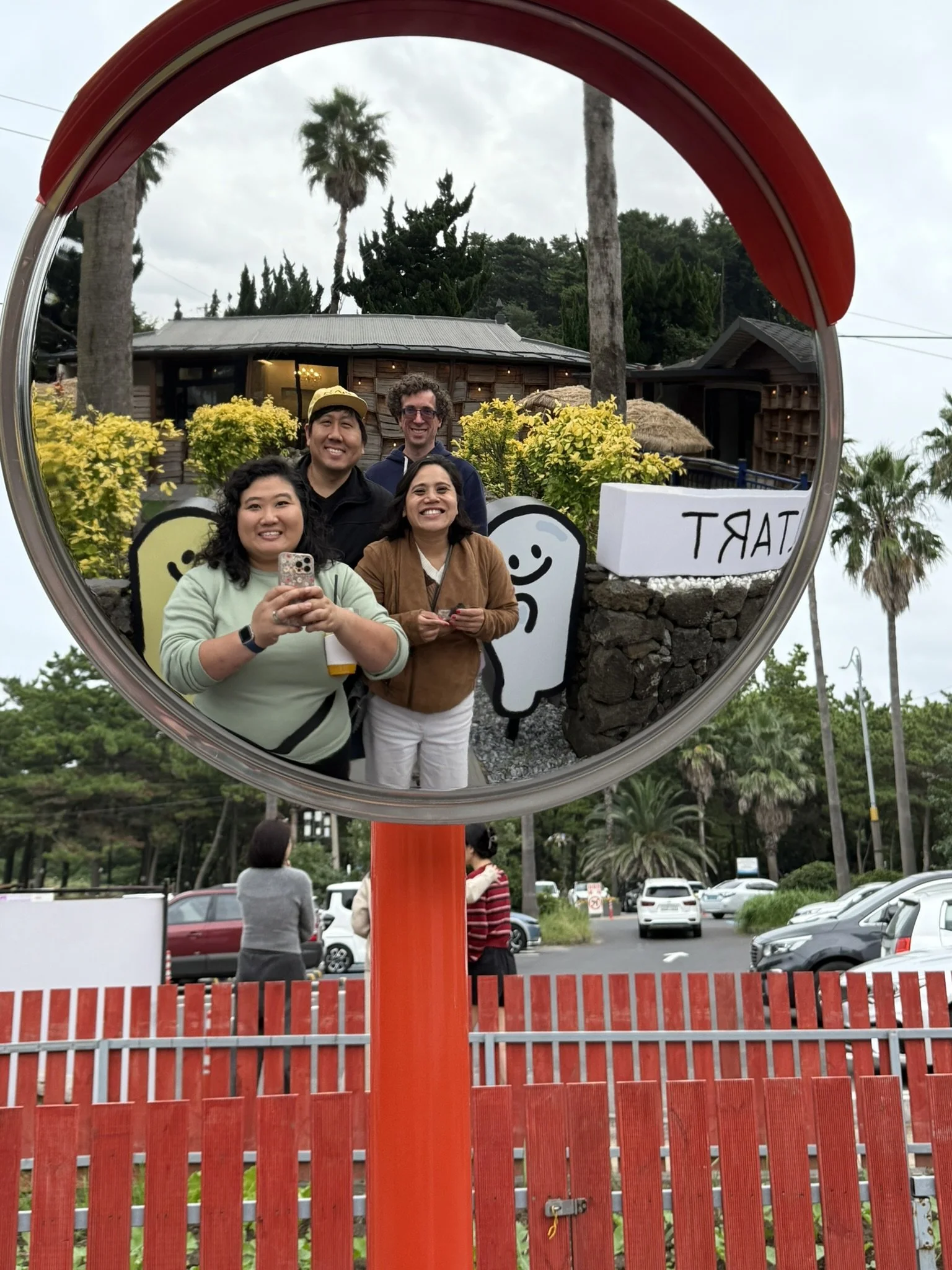
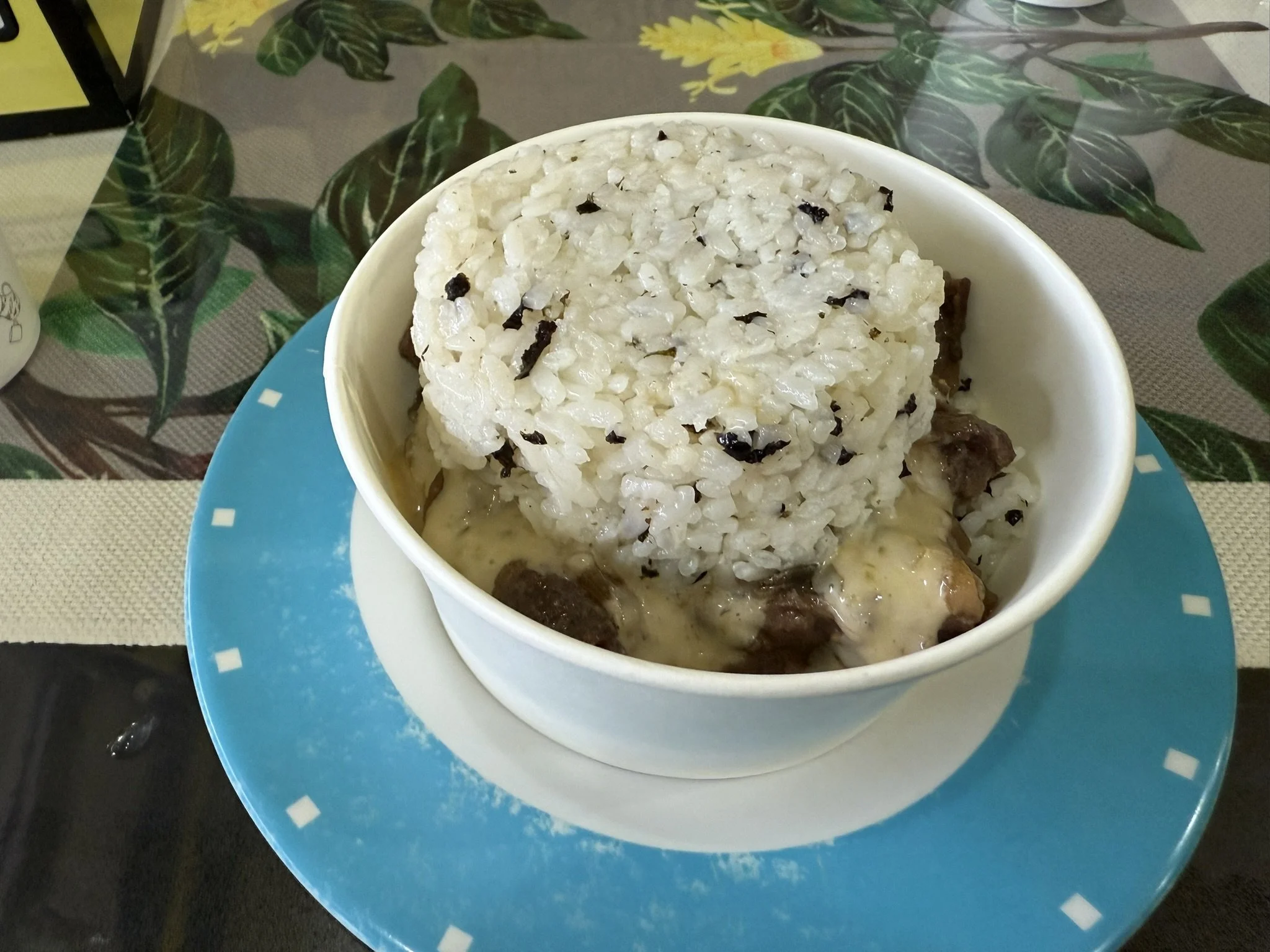
We met with Kyle and Danielle who arrived a few hours before us. We all gathered to the car rental area, got our car, and headed out. Our first stop was near the airport. It was the Iho Tewoo Horse Lighthouses. These are 39 feet tall “light horses” on Jeju island. Near the parking lot, there was a place called Eggultart. I got a Hallabong Ade and we split an Eggultart, a pastry-style tart made with mascarpone cheese and hallabong. Hallabong is a mandarin/tangerine grown on Jeju Island. It’s basically everywhere in Jeju. For lunch, we stopped at the University and tried rice burgers. I got one made with spicy bulgogi.
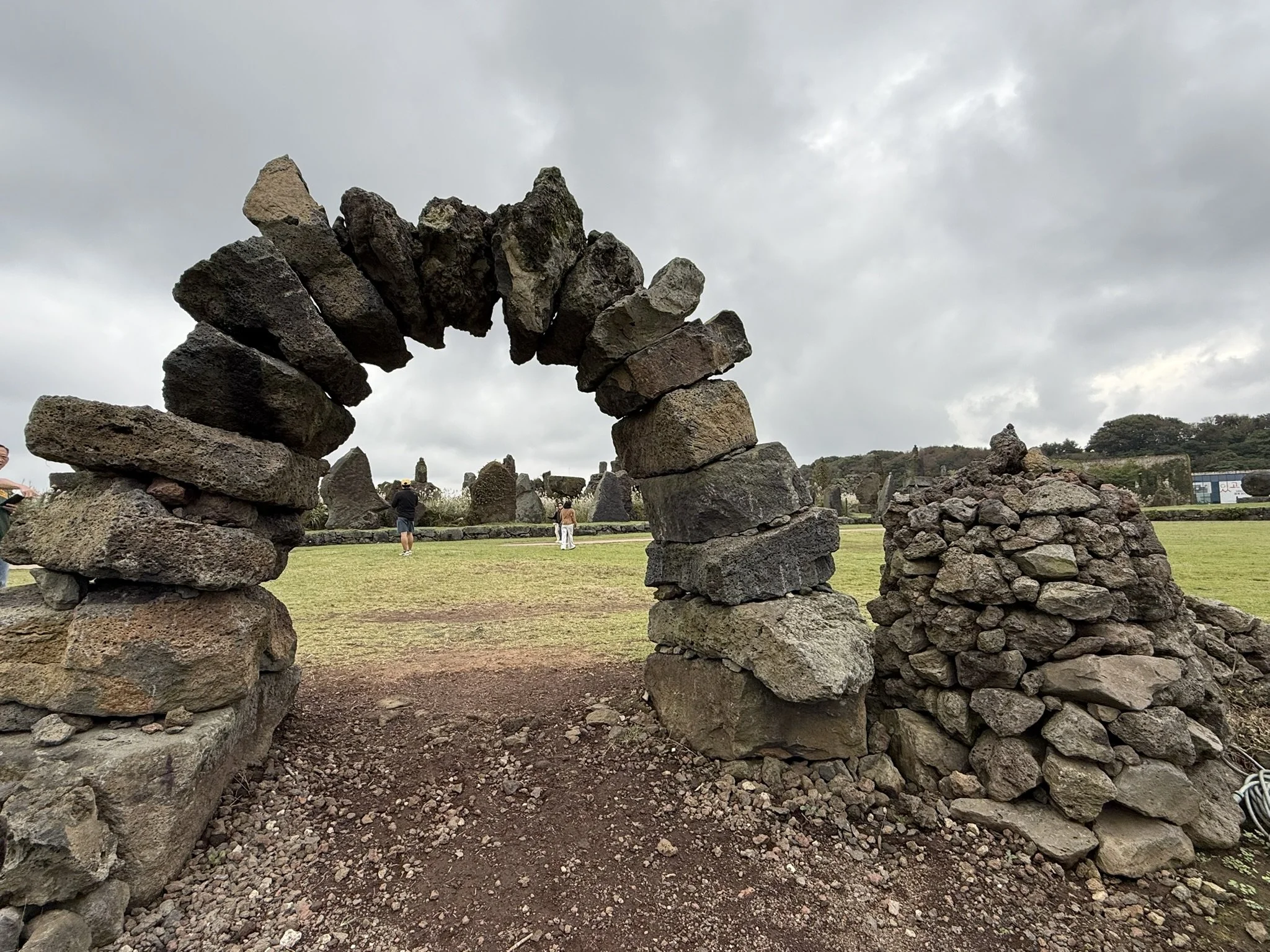
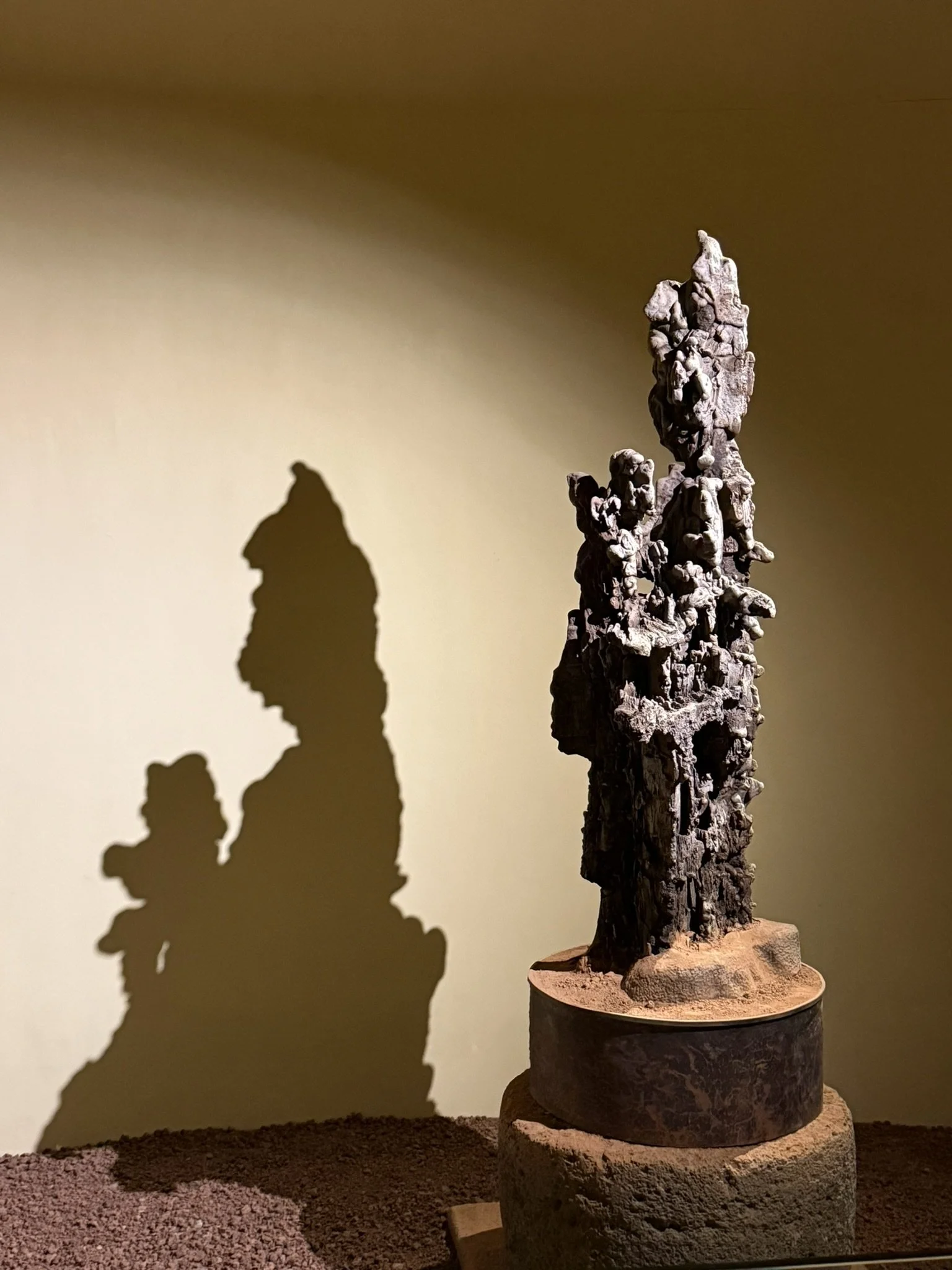
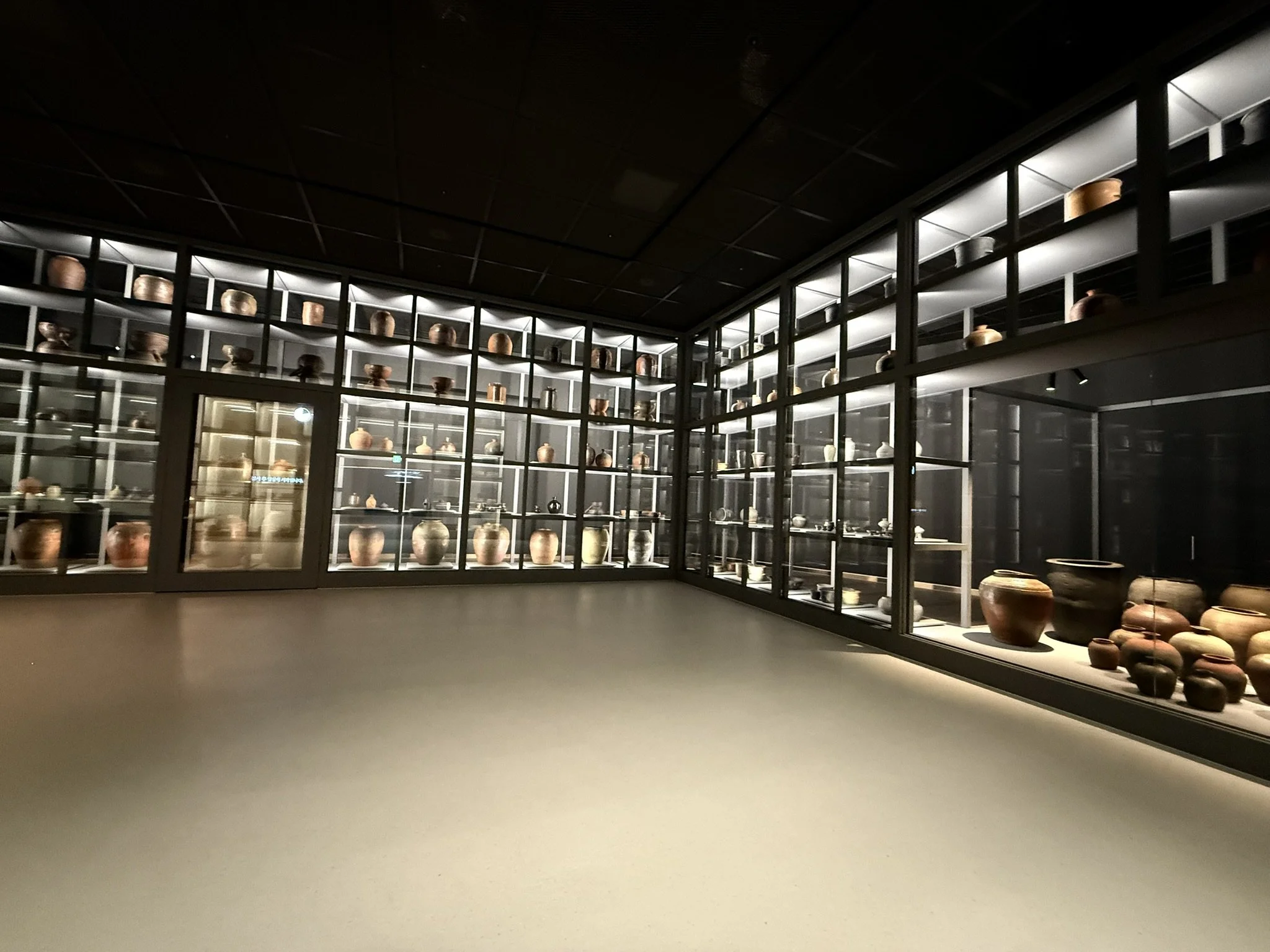
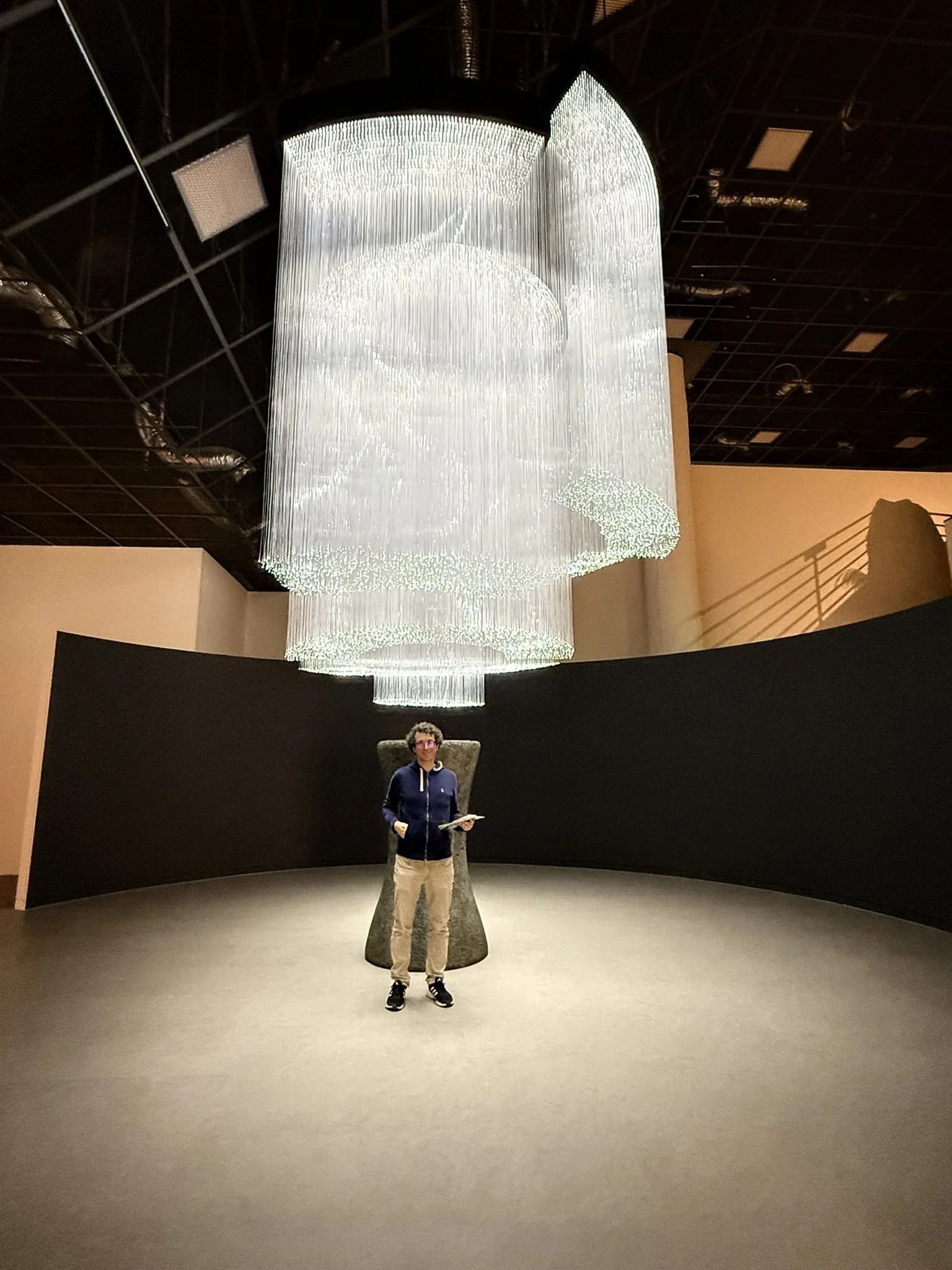
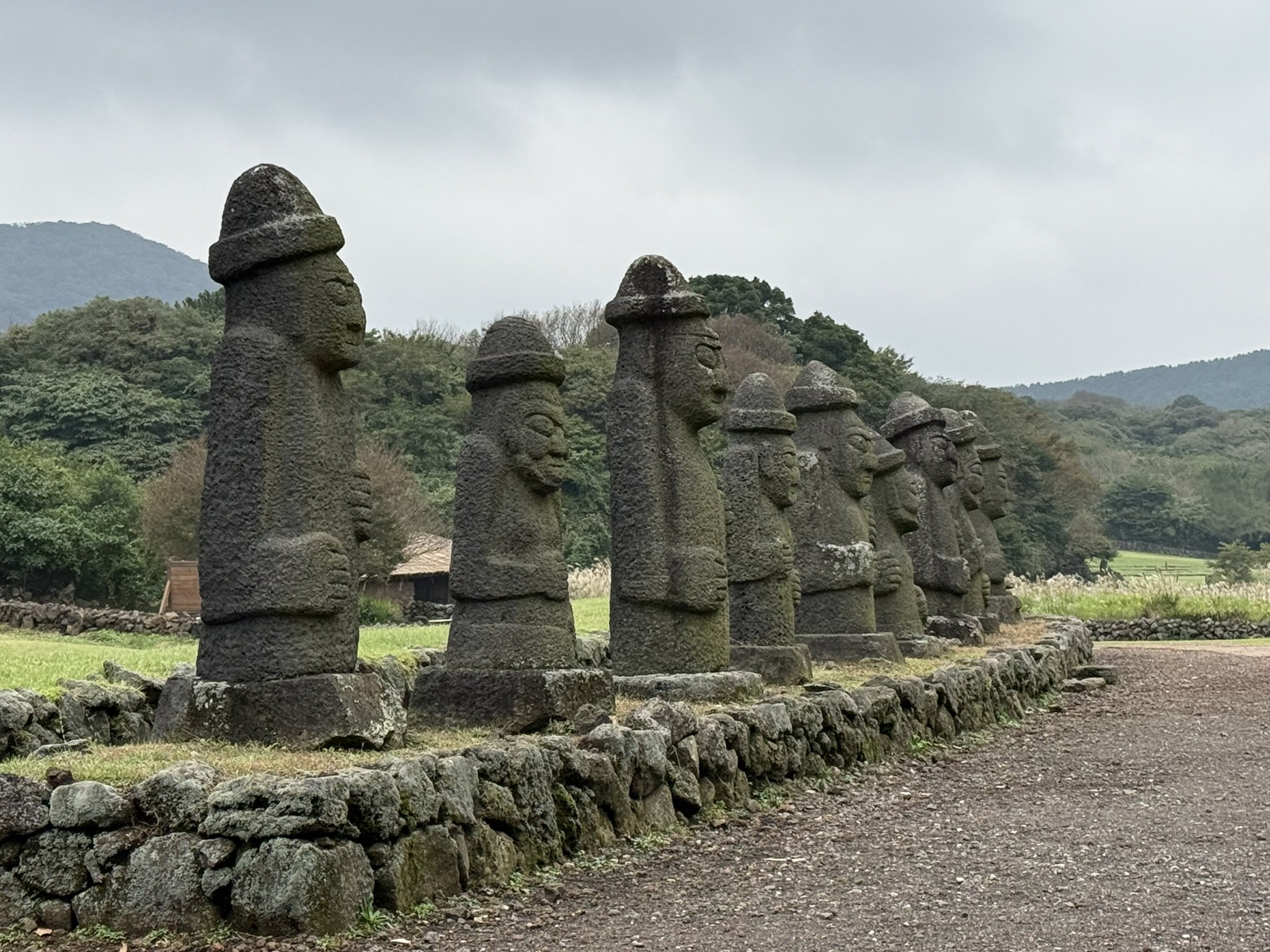
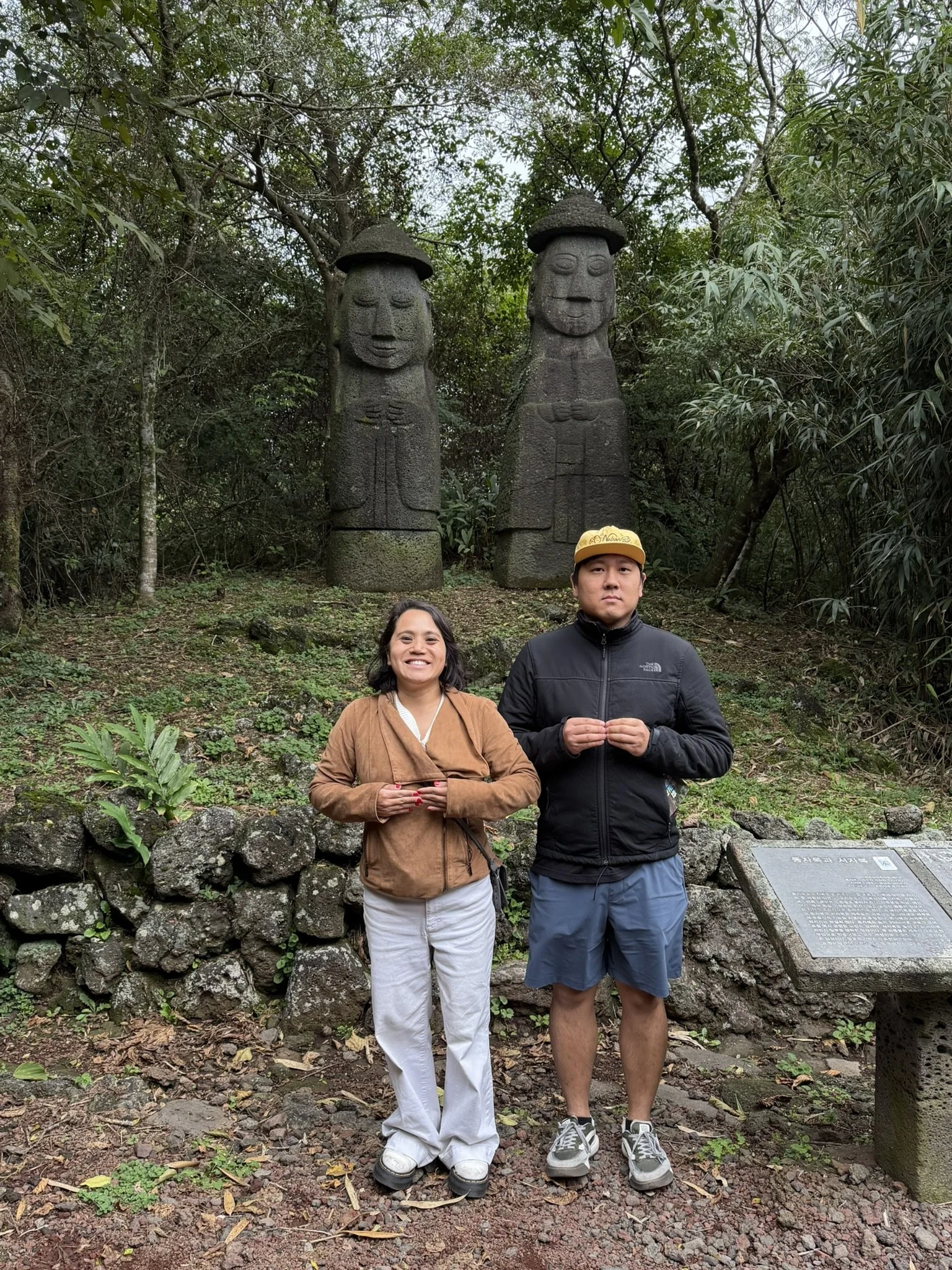

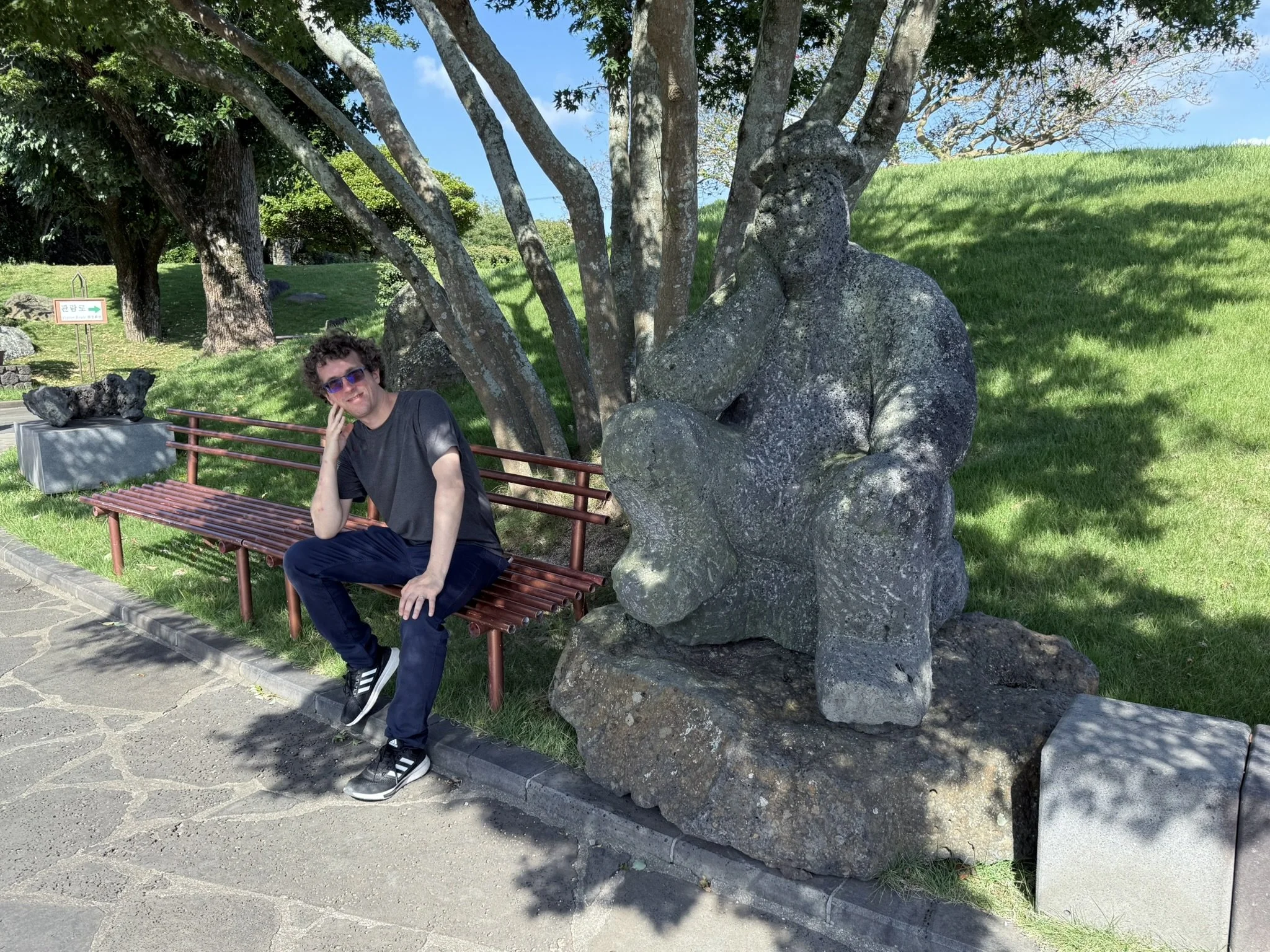
The four of us went to Jeju Stone Park. This is 810 acres that consists of the multiple areas. It actually took us over 3 hours to complete the park. We first explored the Obaekjanggun Gallery (containing the stone statues). It also included the stone statues inspired by the legend of Obaek Janggun (Five Hundred Generals). Our second section that we explored was the Seolmundaehalmang Complex (containing Jeju’s mythology, history, and folklore). This is inspired by Seolmundaehalmang, the giant goddess from Jeju mythology and serves as a comprehensive exhibition hall and center. After this, we explored the Stone Museum zone (containing academic and geological research) where we learned about volcanic activities on Jeju. The longest two sections were last. We completed the Stone Culture Outdoor Exhibition (Jeju traditional stone culture and lifestyle), which displayed and taught stone culture from prehistoric times to modern times. It felt more like a hike since we had to walk through the Jeju Gotjawal Forest. Lastly, we went through the Traditional Thatched Village (reproduction of Jeju traditional thatched village). This is a recreated village of 49 restored homes that reflect the island’s past. The statues around the park are known as dol hareubang and is a volcanic rock statute meaning “stone grandfather.” They are always depicted with a round hat, making them phallic and a symbol of fertility.
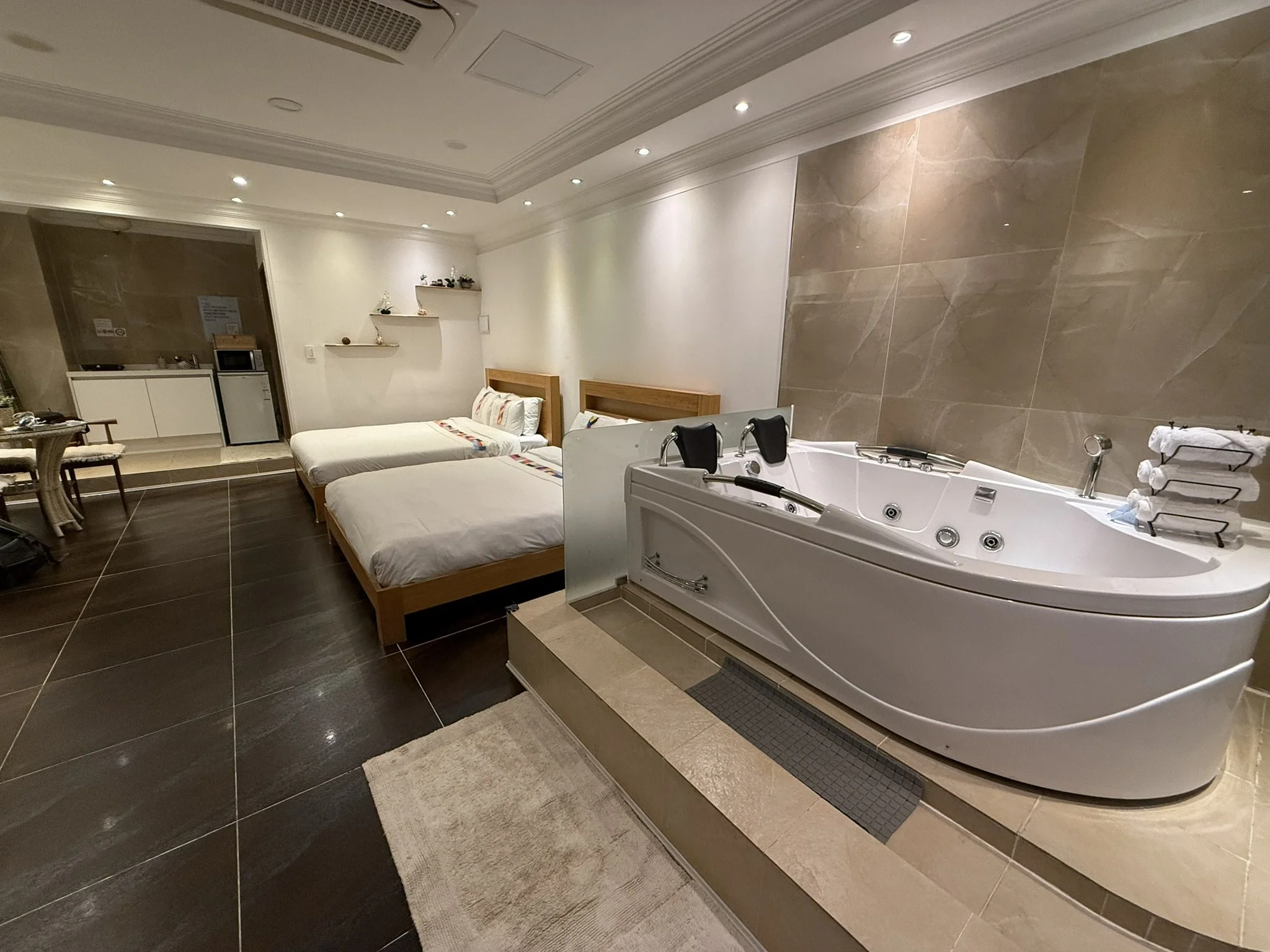
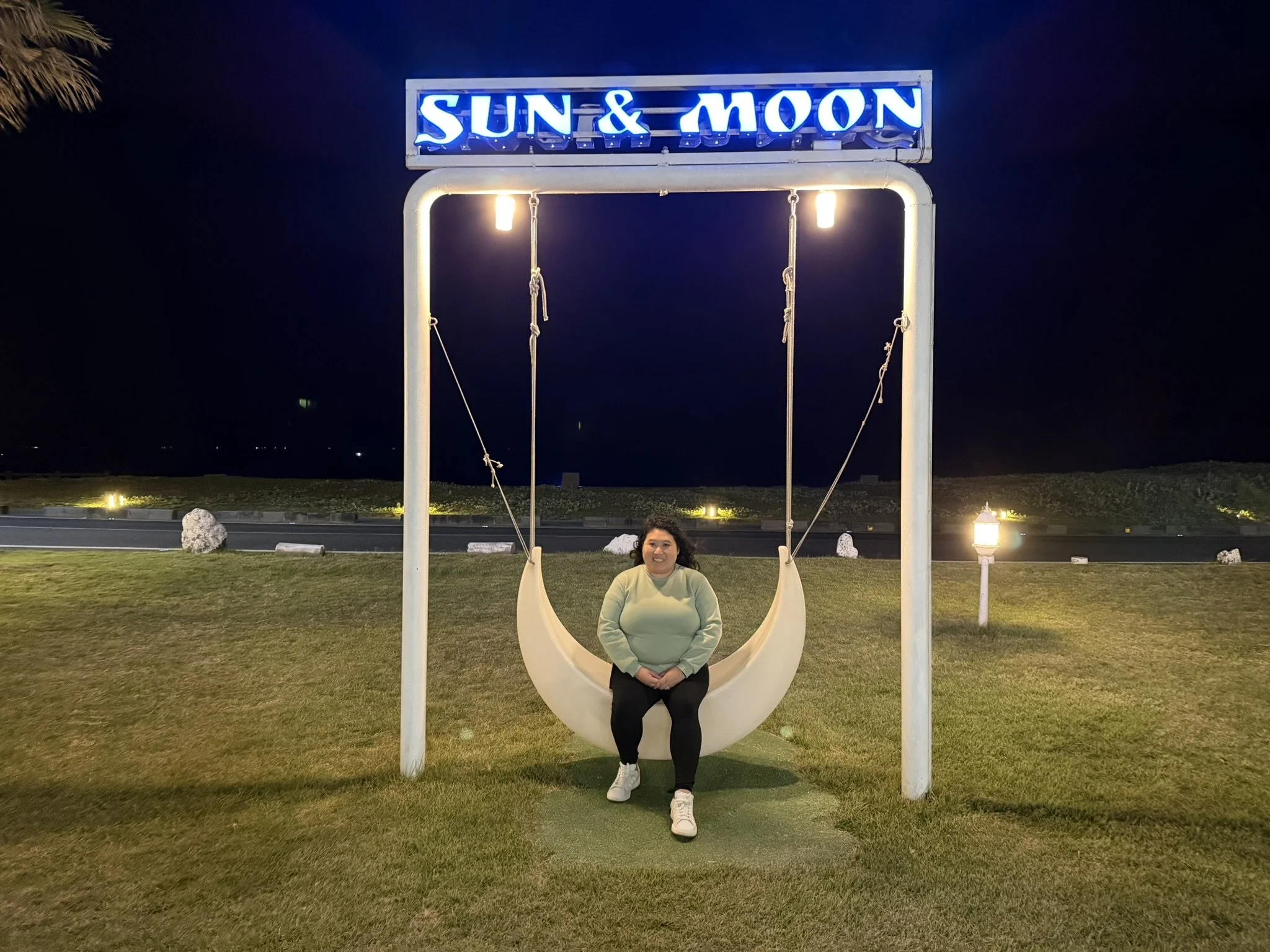
We checked into our really cute hotel and ended up eating ramen and microwavable bulgogi from the CU for dinner. Everyone was tired and didn’t want to go out for dinner, but I at least tried what quick dinners in Korea tasted like.
Day 8: Wednesday October 22, 2025 Jeju Island (with Jenna)
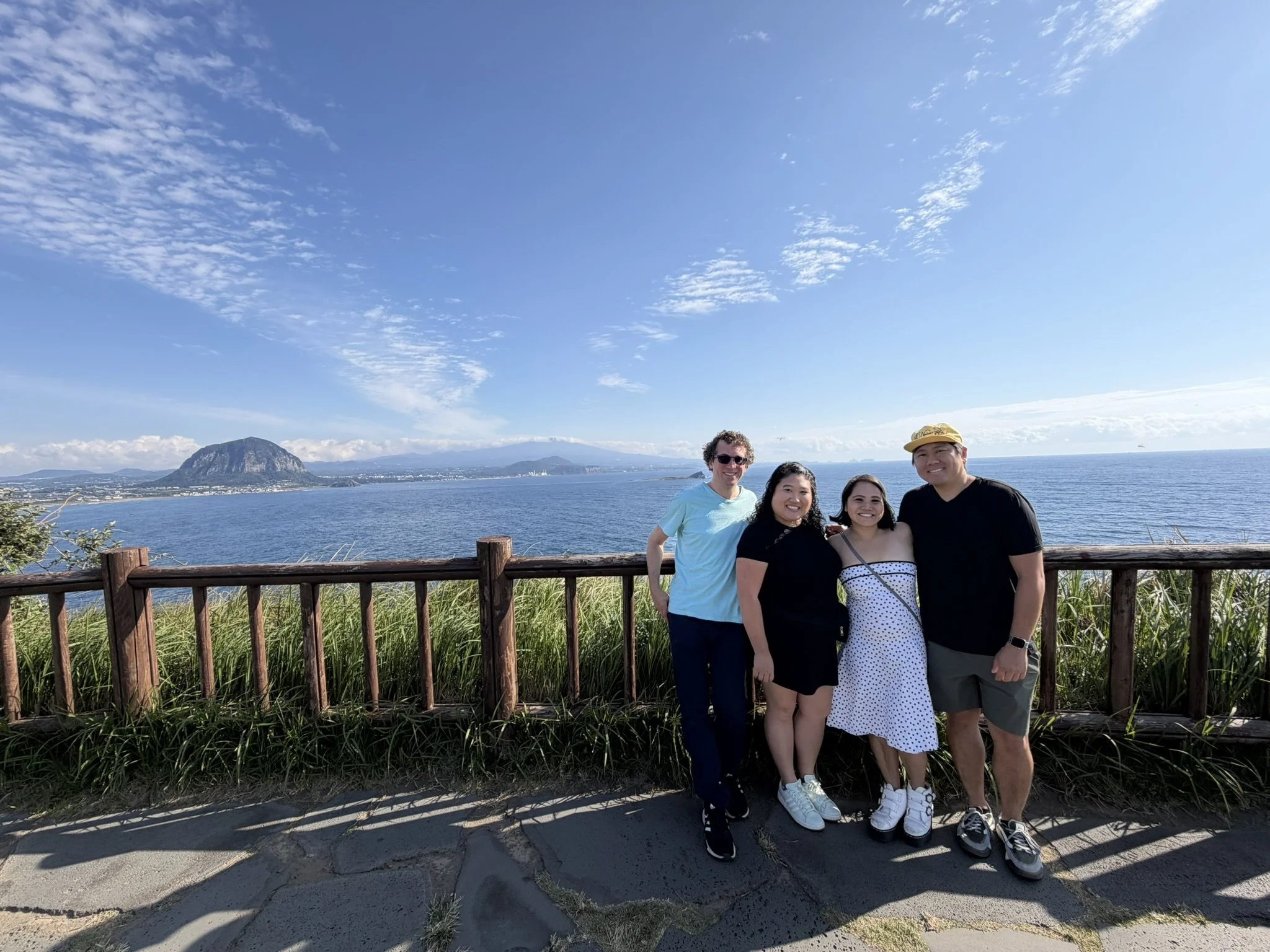
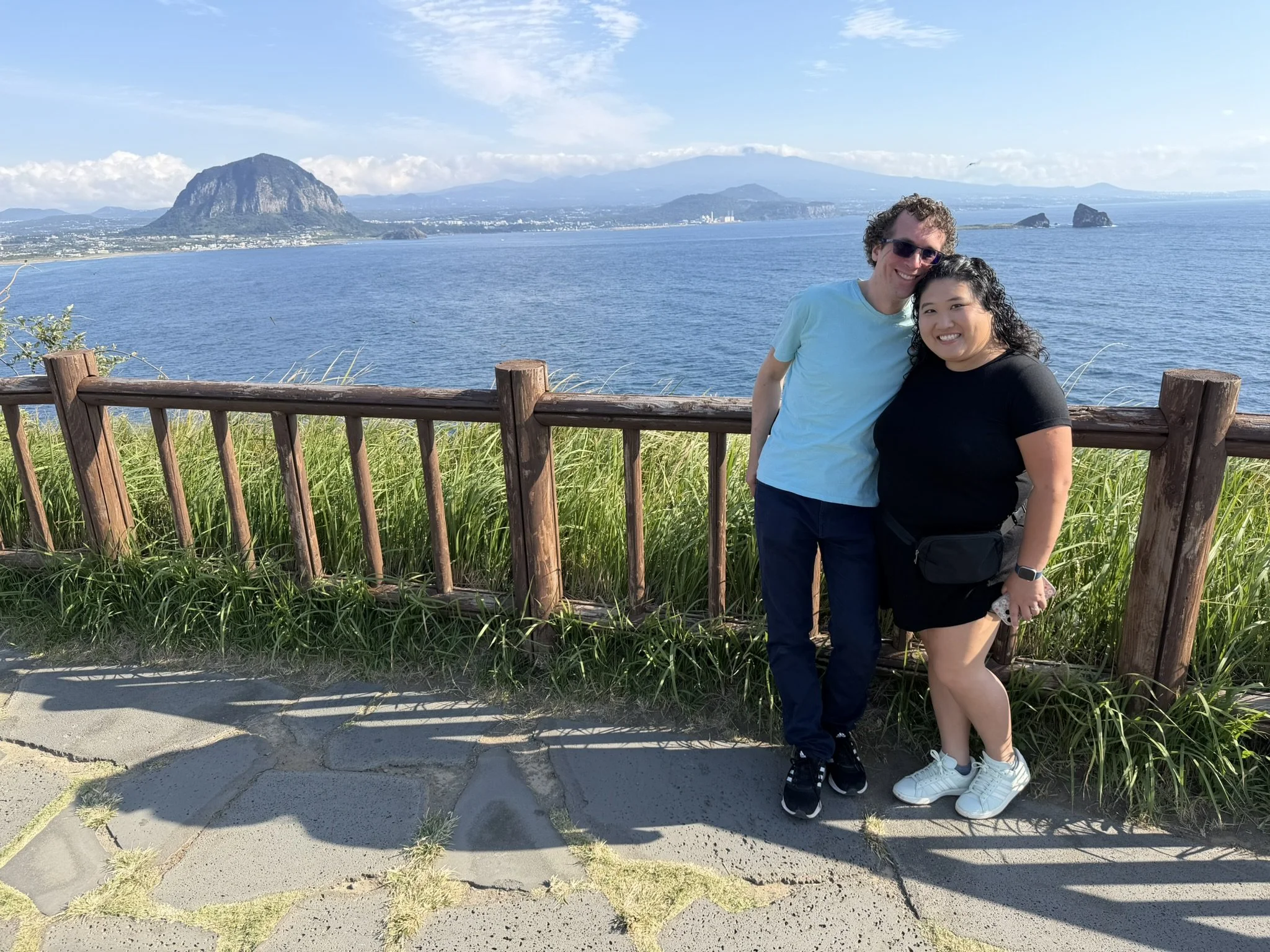
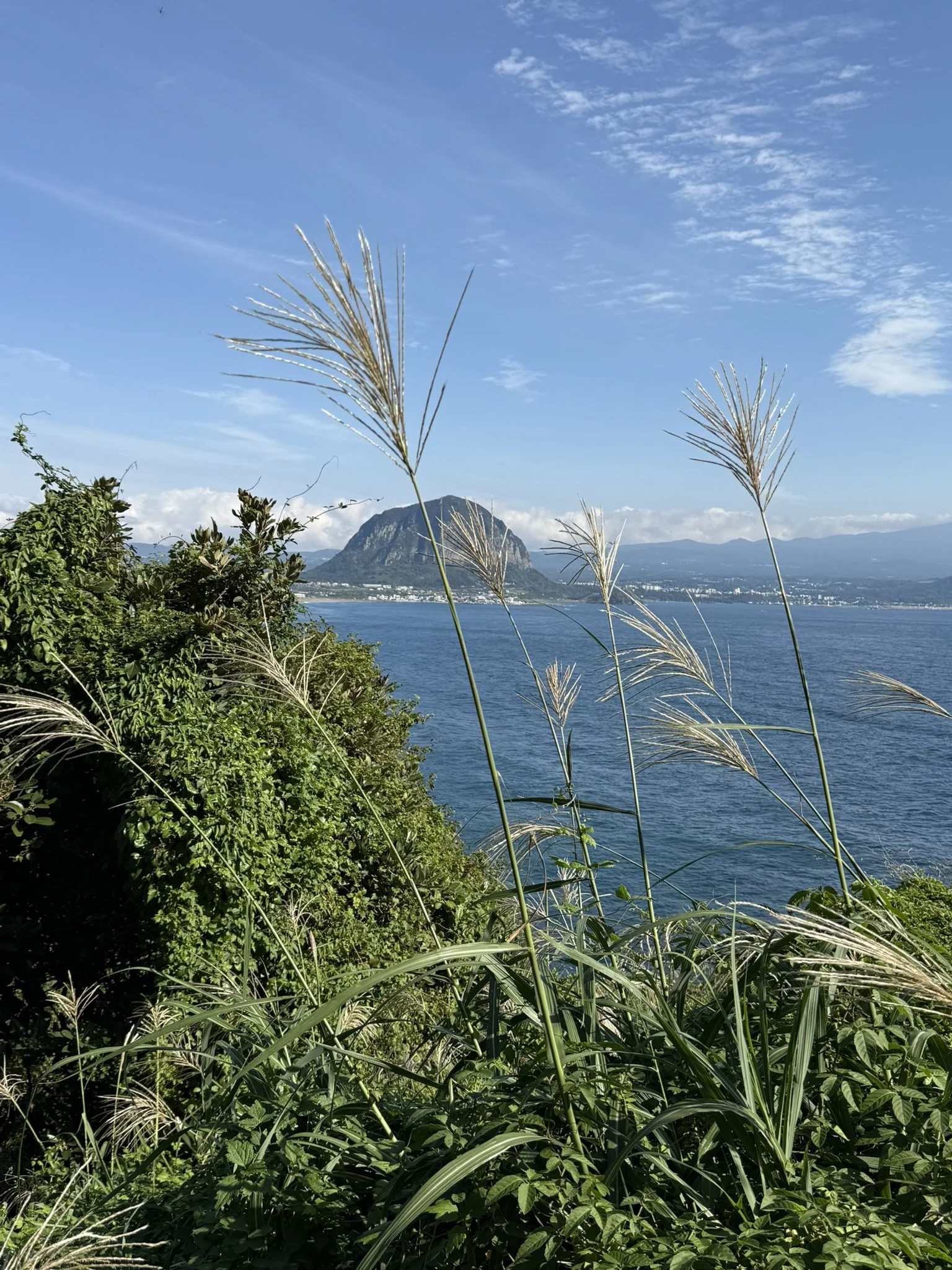
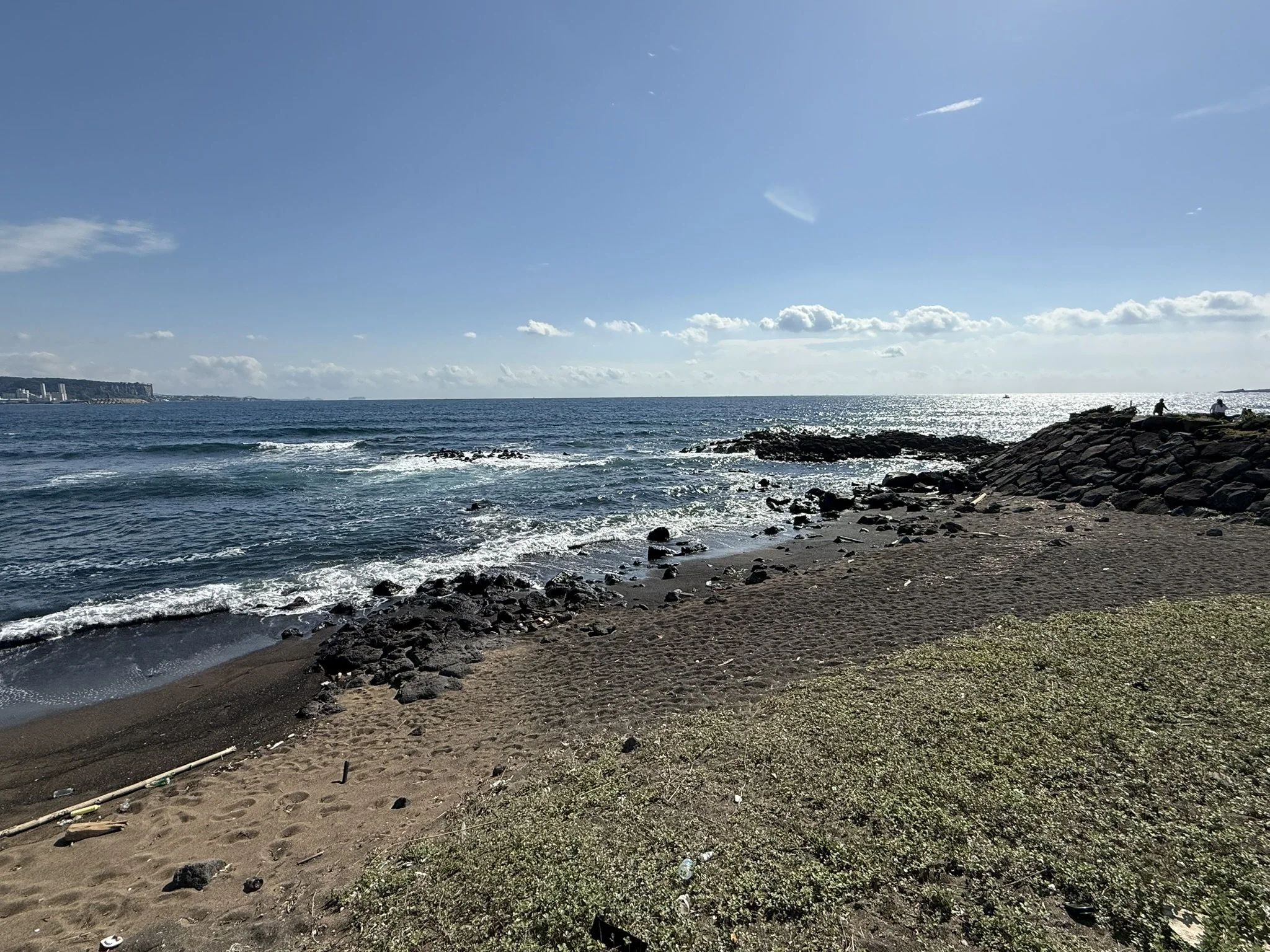
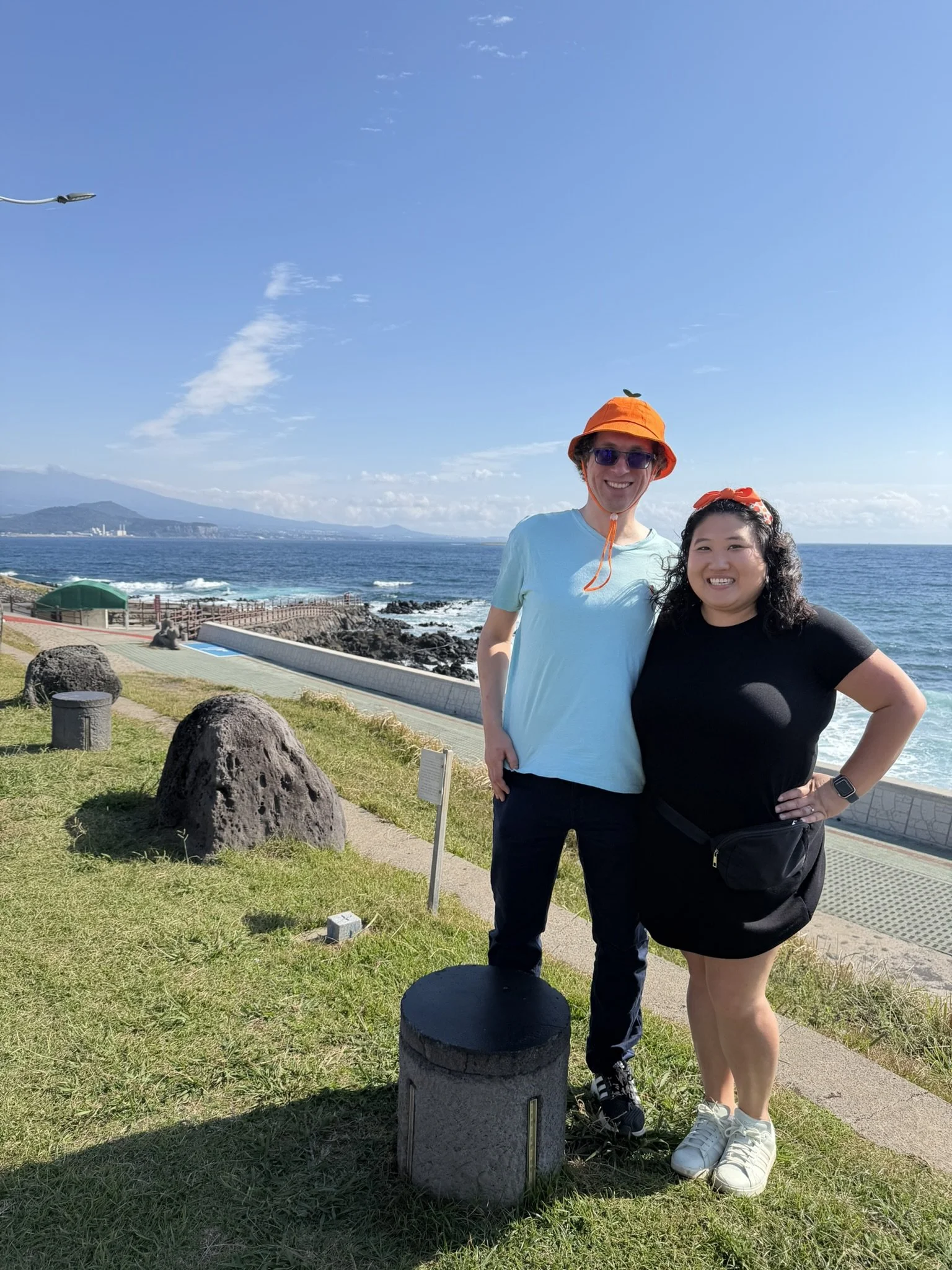
Today we met up with another adoptee who currently lives on Jeju Island. She showed us some of the “secret” locations on the island. Our first stop was Songaksan, a volcano on Jeju Island. We jumped on the Olle Trail but didn’t hike the entire trail, as this trail is a total of 271.5 miles around the island. Looking into the mountain, there are many caves made by the Japanese that they dug out to use as their cover. This trail had some pretty views. Afterwards, we stopped at a souvenir shop. Bryce and I decided to go all out on the Jeju Hallabong decor. We found a hat and a headband!
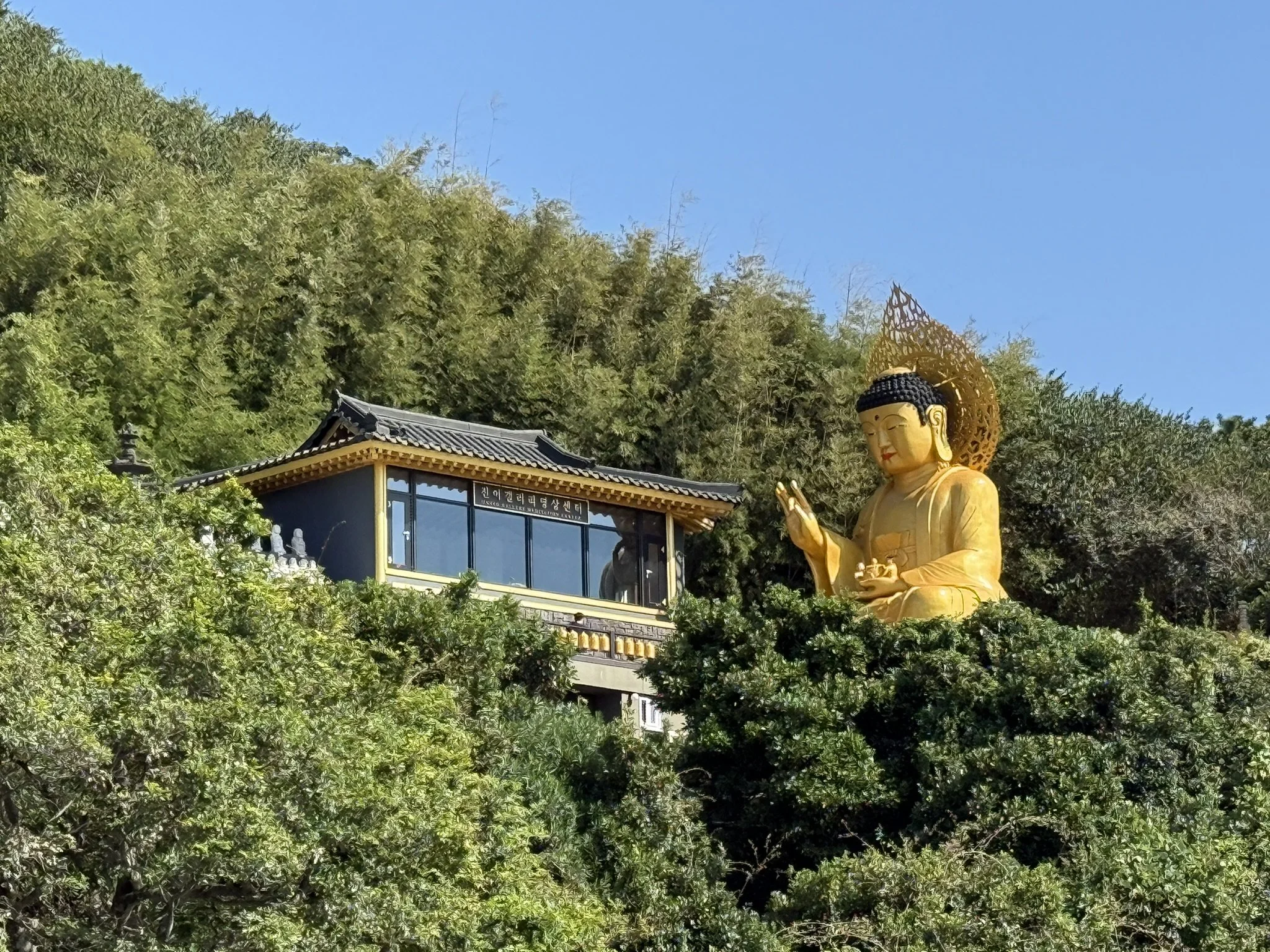
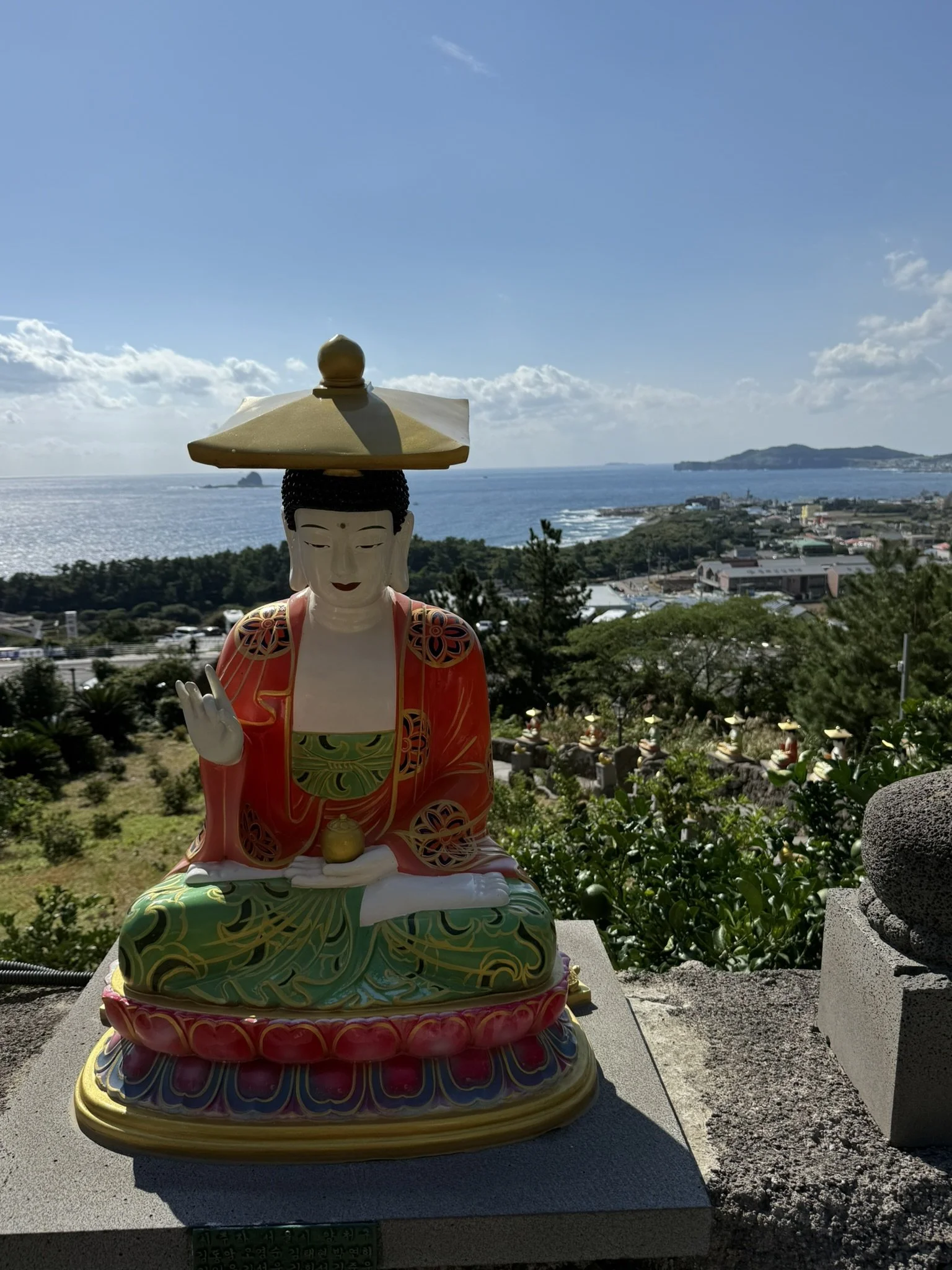
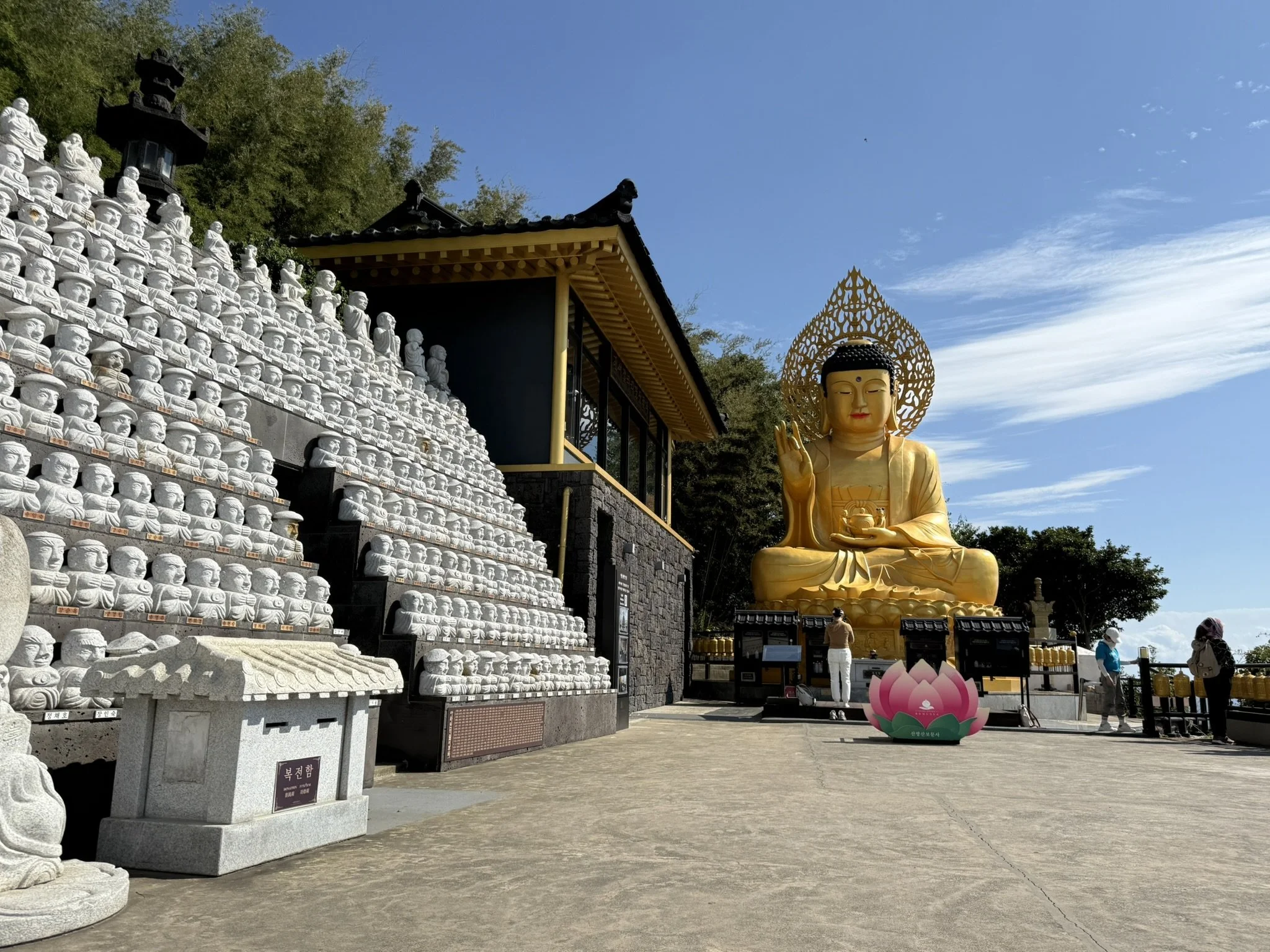
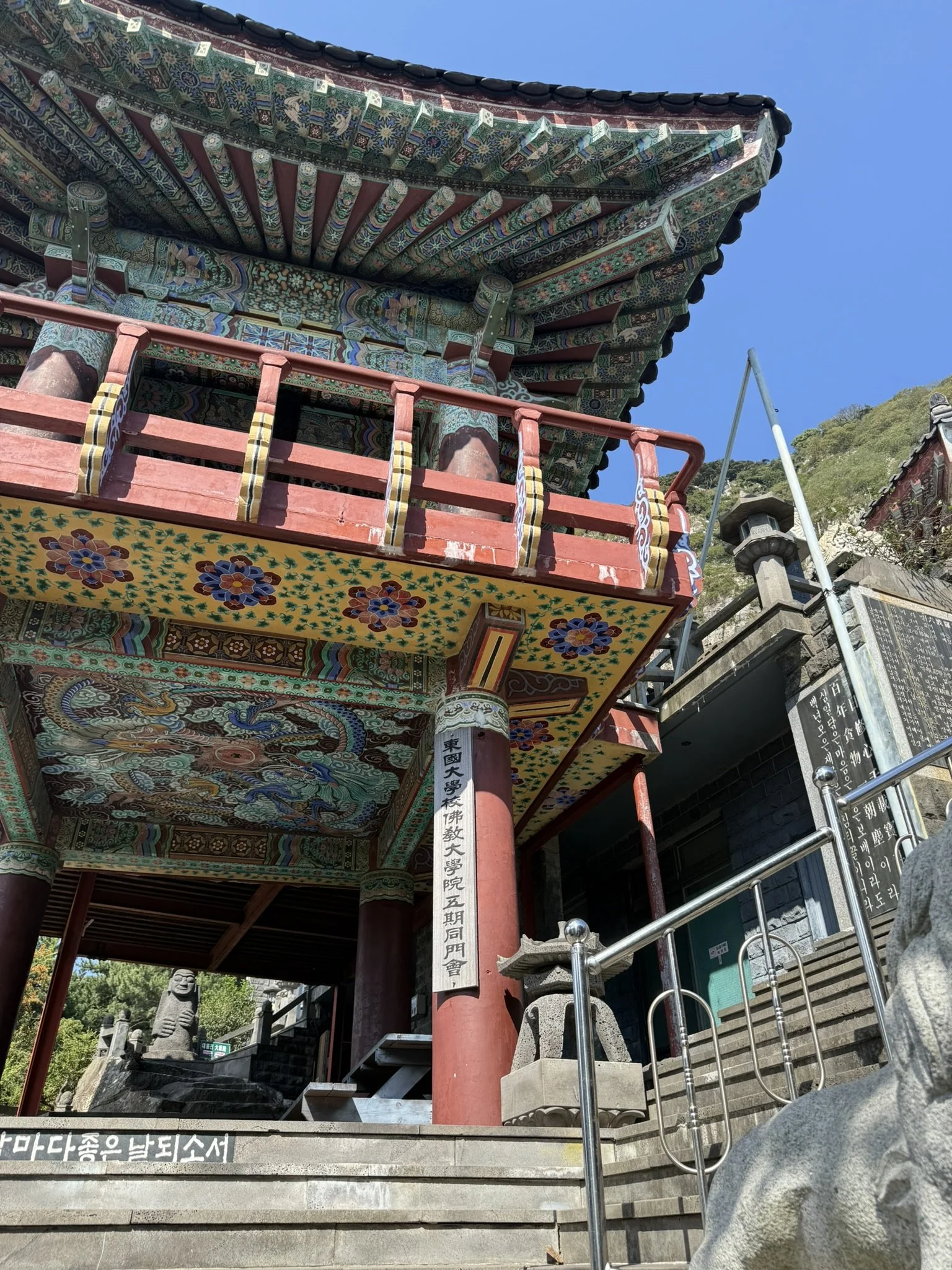
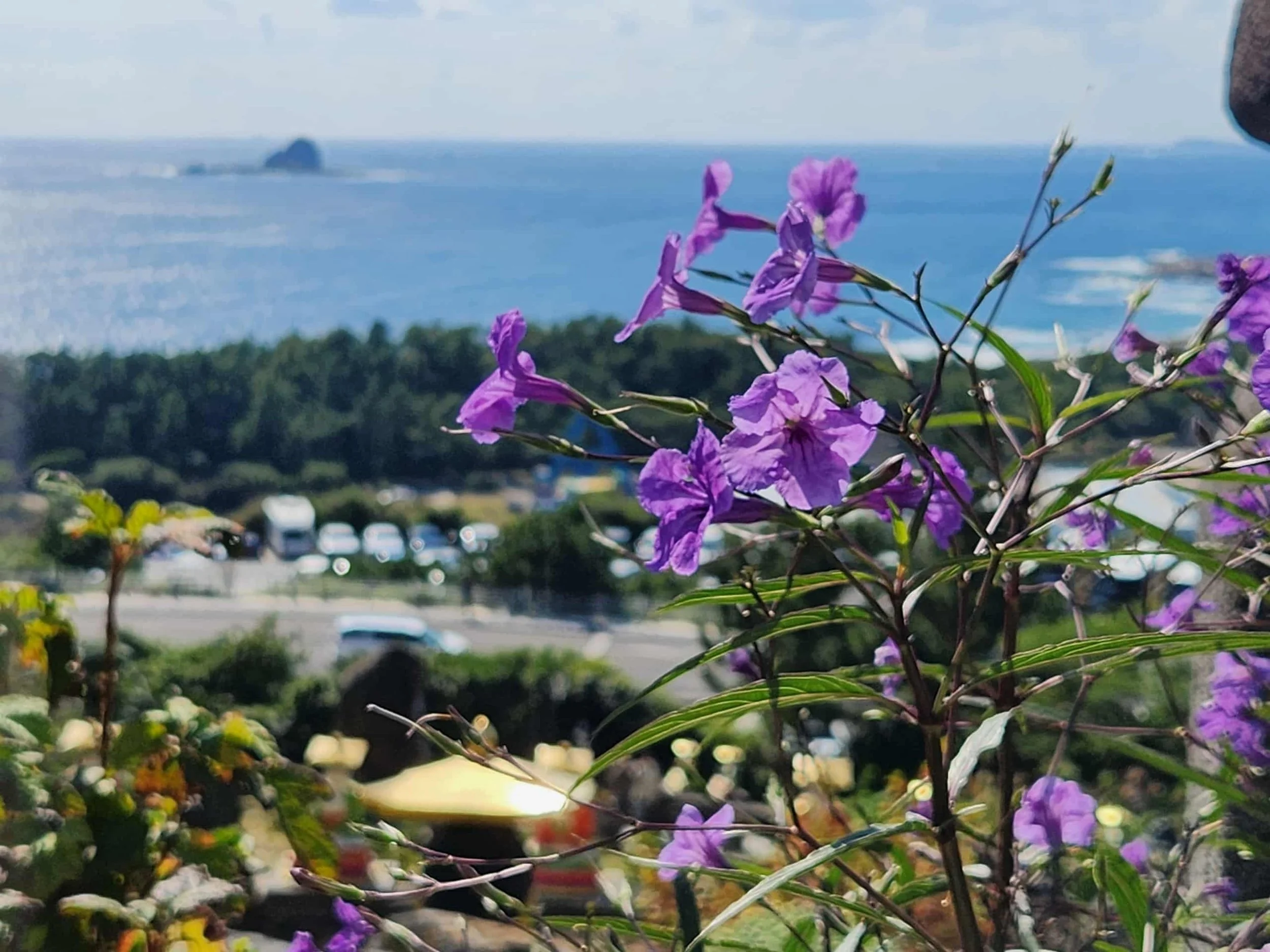
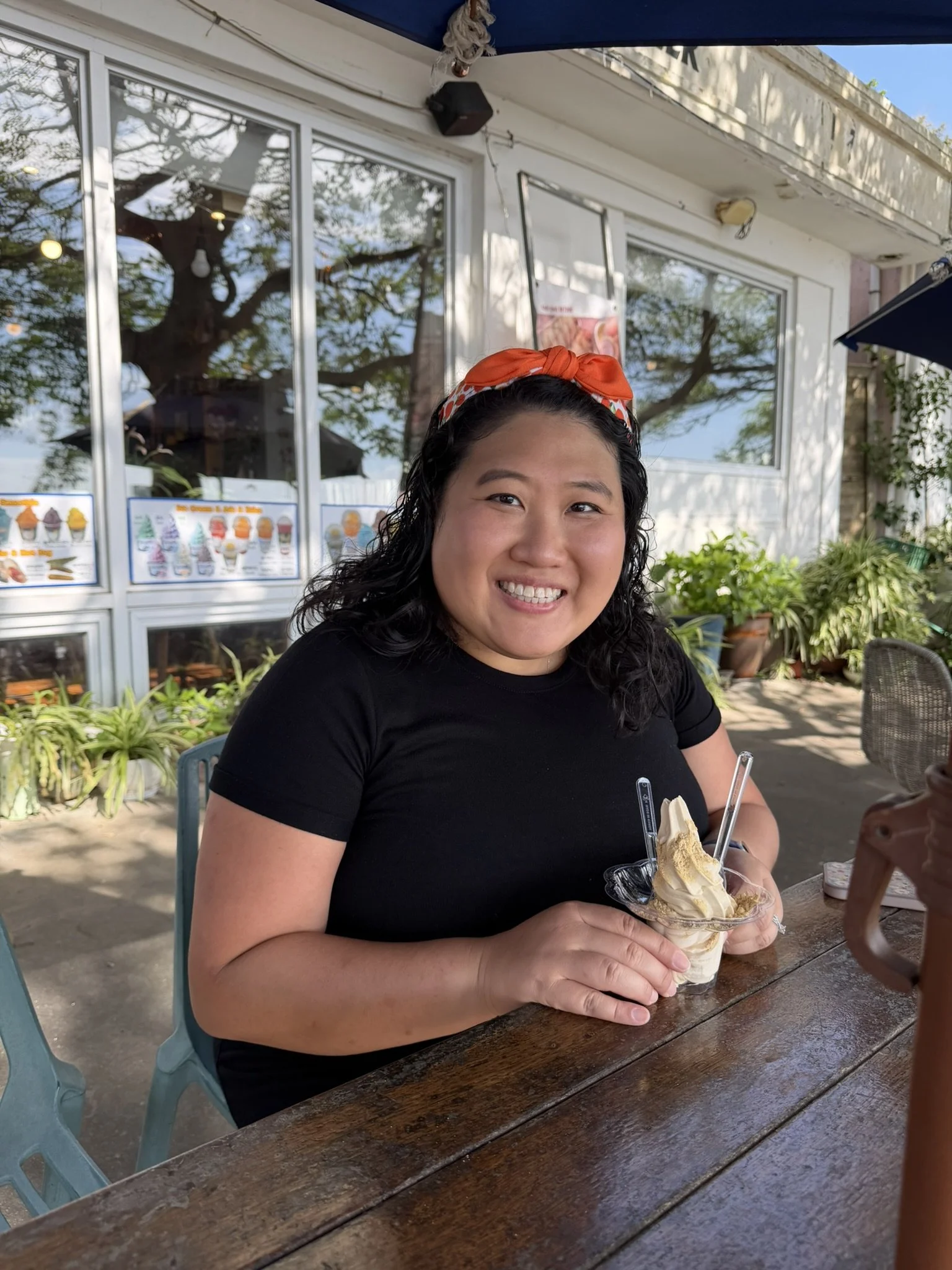
Our next stop was the Sanbangsan Temple. The cave on the cliff was originally the Sanbanggul Cave, but is now called a temple because it possesses a Buddhist statue. The myth states that the mountain was actually the peak of Mt. Halla before it was broken off and thrown onto the southwest corner of Jeju. A hunter shot an arrow at a deer, missed, hit the Halla spirit who became angry and threw the mountain peak off to the coast and killed the hunter. It actually doesn’t have a crater at the top, which is where the legend comes from. Kyle and Danielle made the trek up to the top of the peak but Bryce and I found some peanut ice cream to snack on while we waited. It wasn’t peanut butter, but it was just a creamy peanut flavor. After Kyle and Danielle made it back down, Jenna took us to a local Jeju buffet. It was only $7USD but very local. The farmers off the fields would come in and start eating here. We even shared a bottle of makgeolli (a milky light sparkling Korean rice wine).
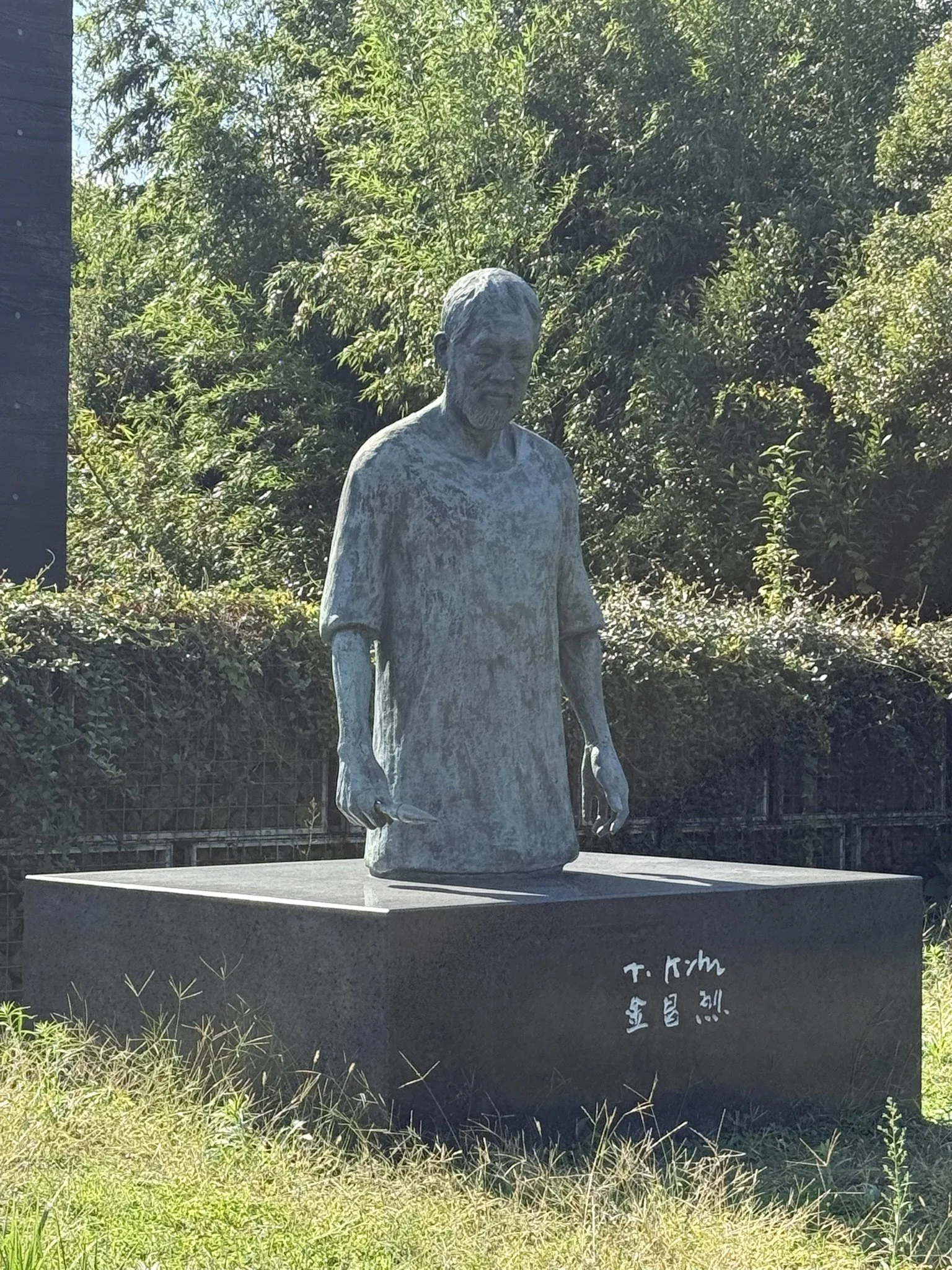
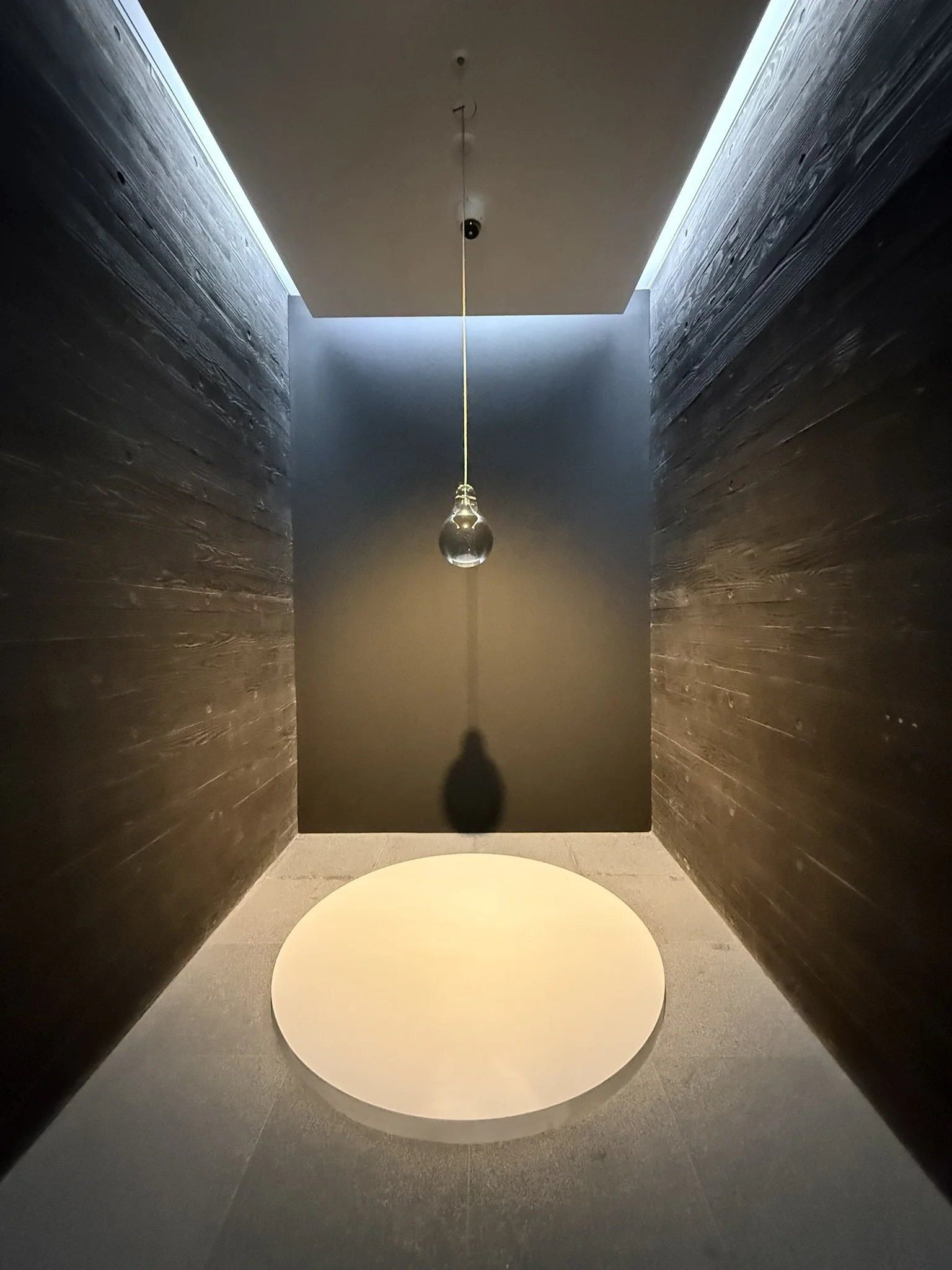
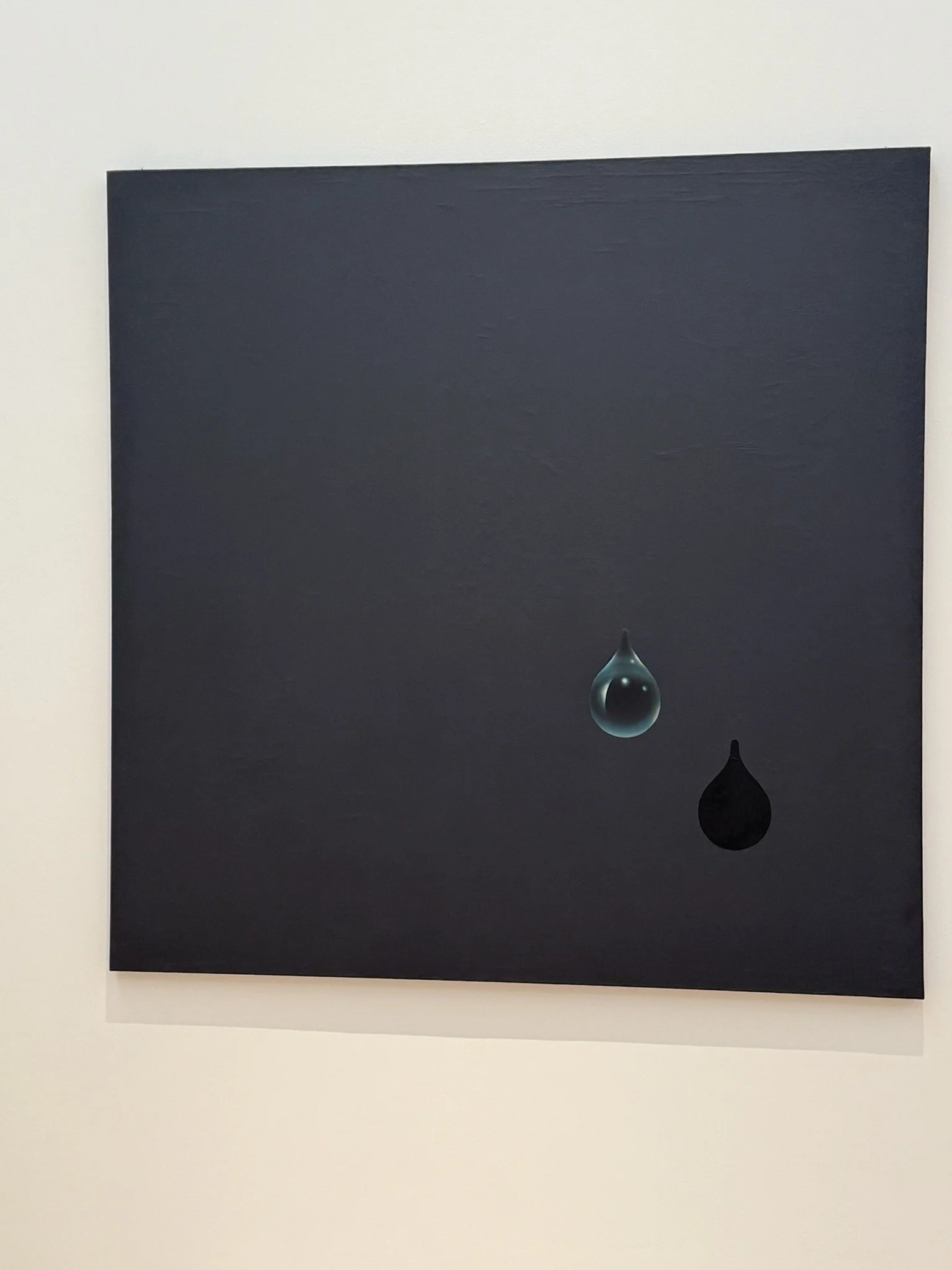
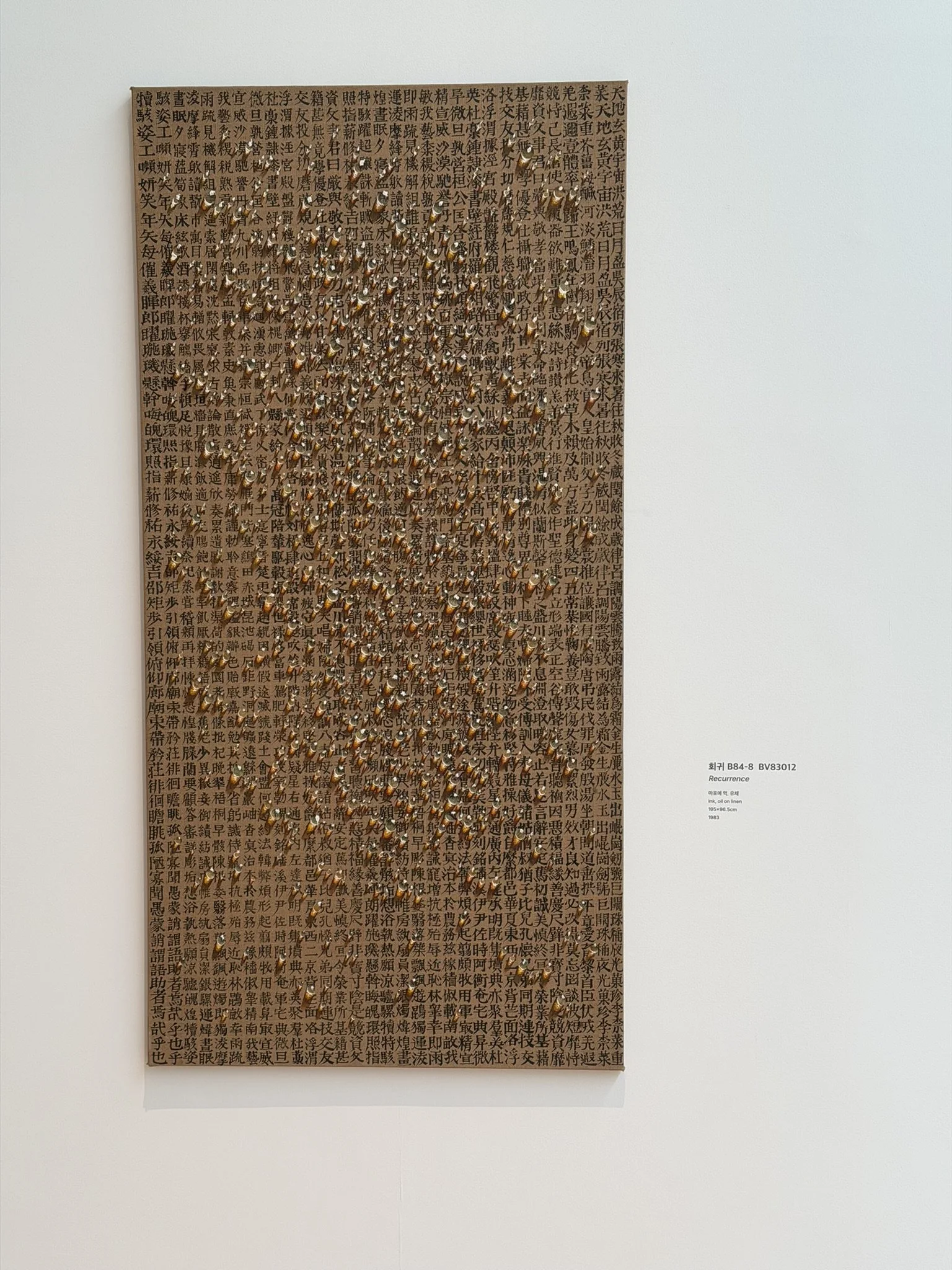
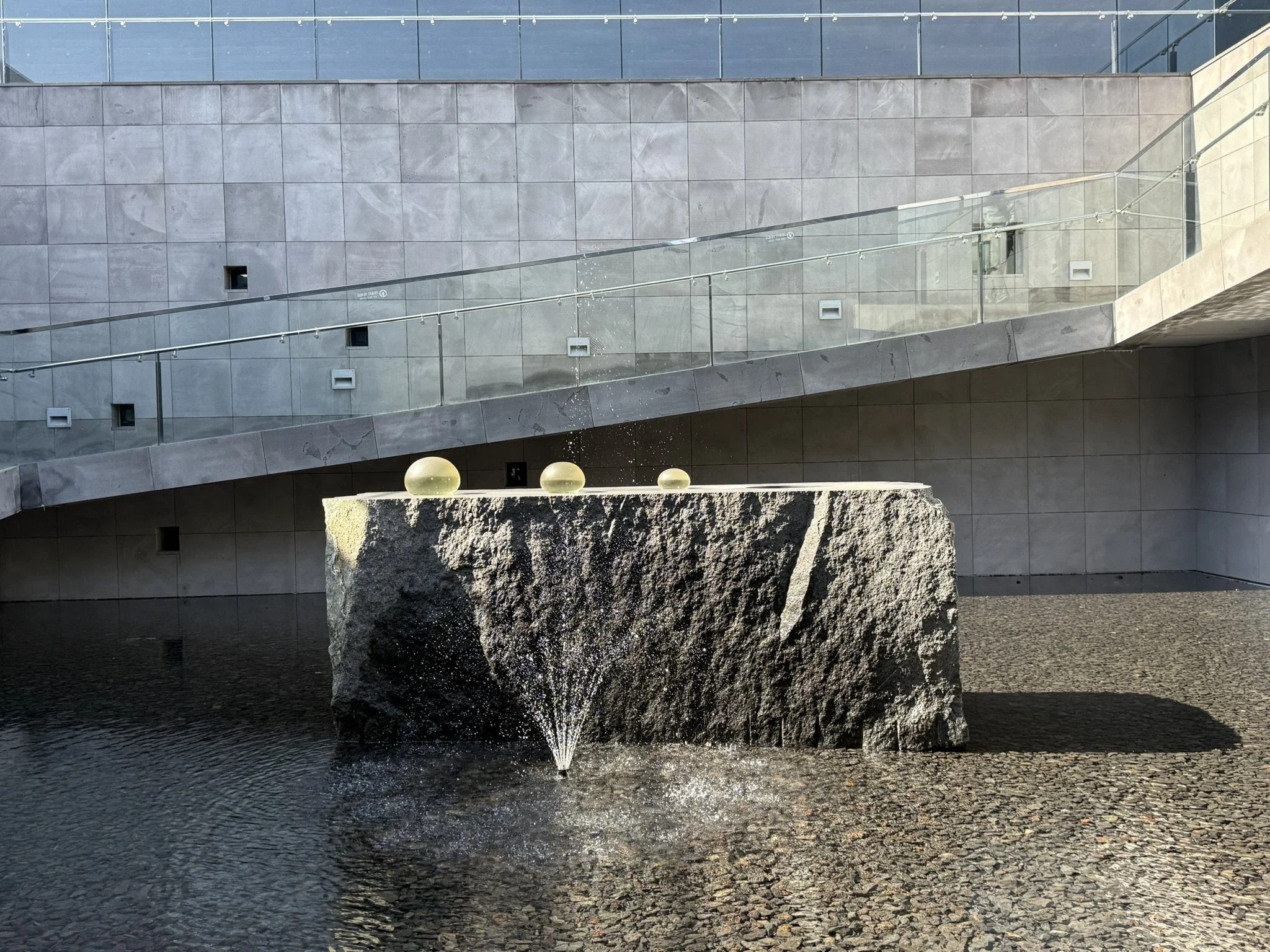
After lunch, we went to the Artists’ Village in Jeoji and went to see the Waterdrop collection by Kim Tschang-Yeul. There are several installations of the Waterdrops and Kim is known as the “waterdrop master.” This museum opened in 2016 with 220 pieces donated by Kim. He moved to Jeju island for refuge during the Korean War. Kim had fled North Korea when he was 15 and lost all contact with his family. When he moved to NYC later in life, he stated that America was worse than the Korean War.
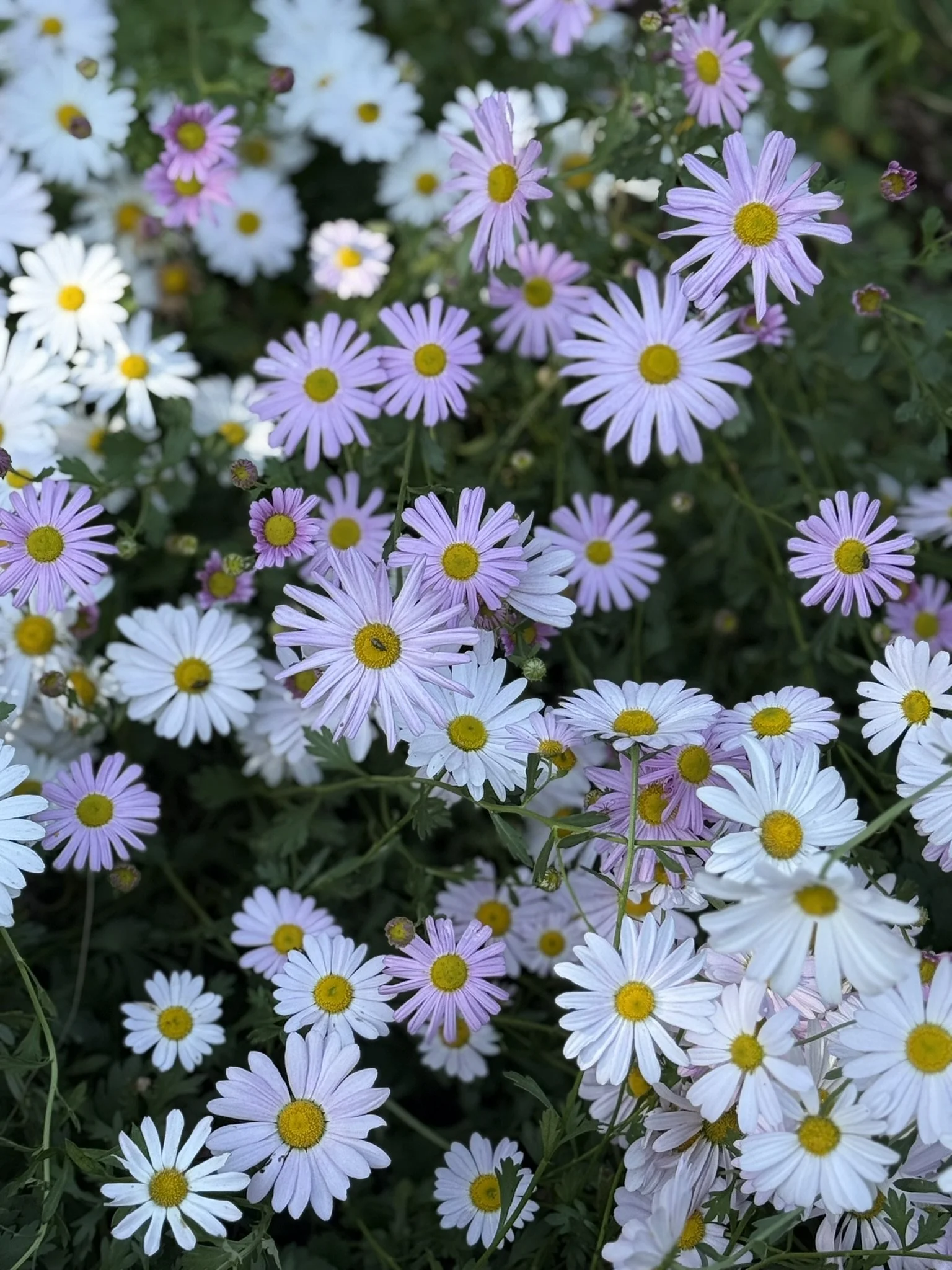
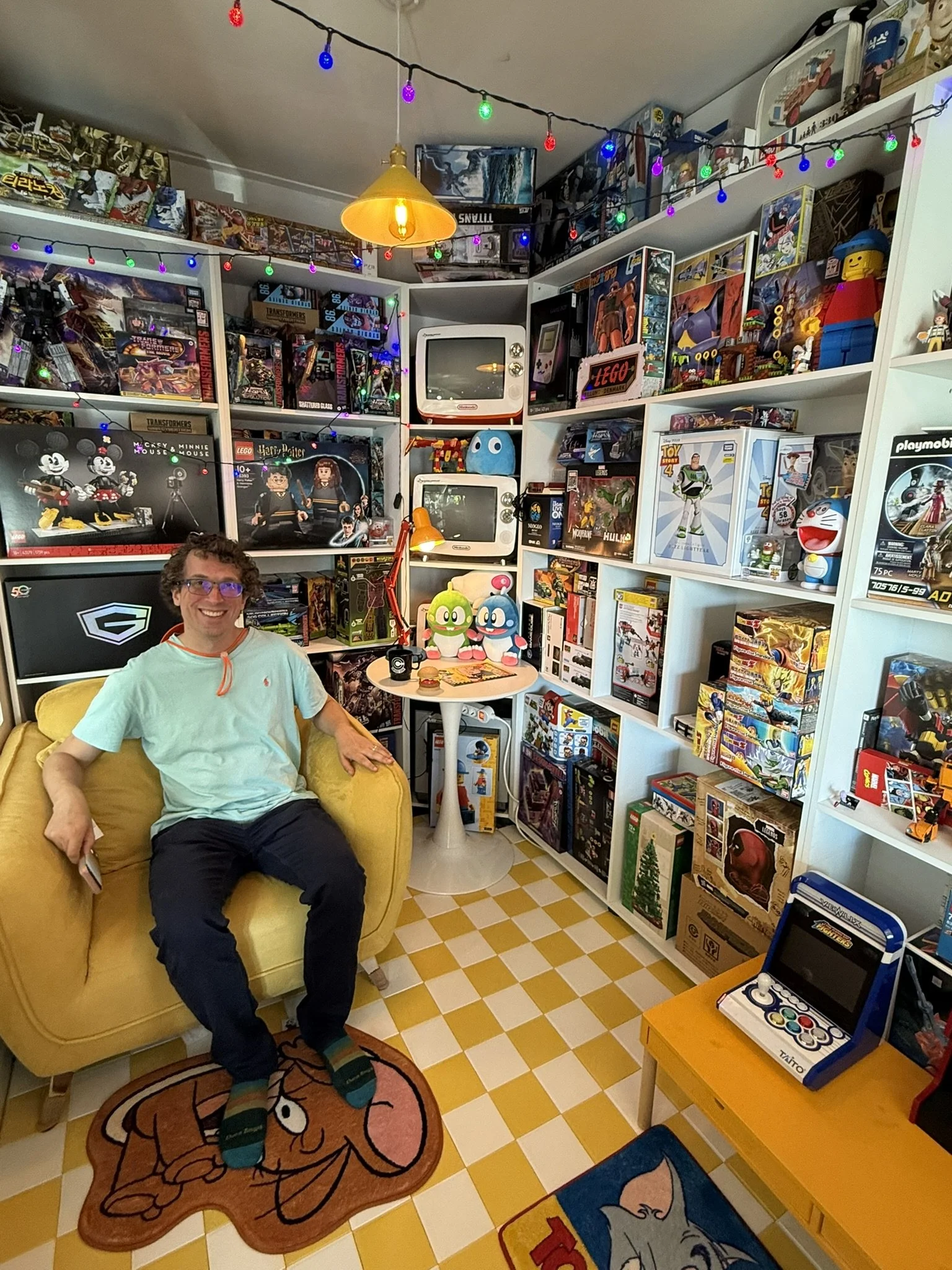
We had a meeting set up with one of Jenna’s friends, but we had about an hour to kill. We found a fun unique cafe. Bryce ordered a hot ginger latte and I ordered an iced choco latte. Turns out an ice choco latte is just cold chocolate milk.
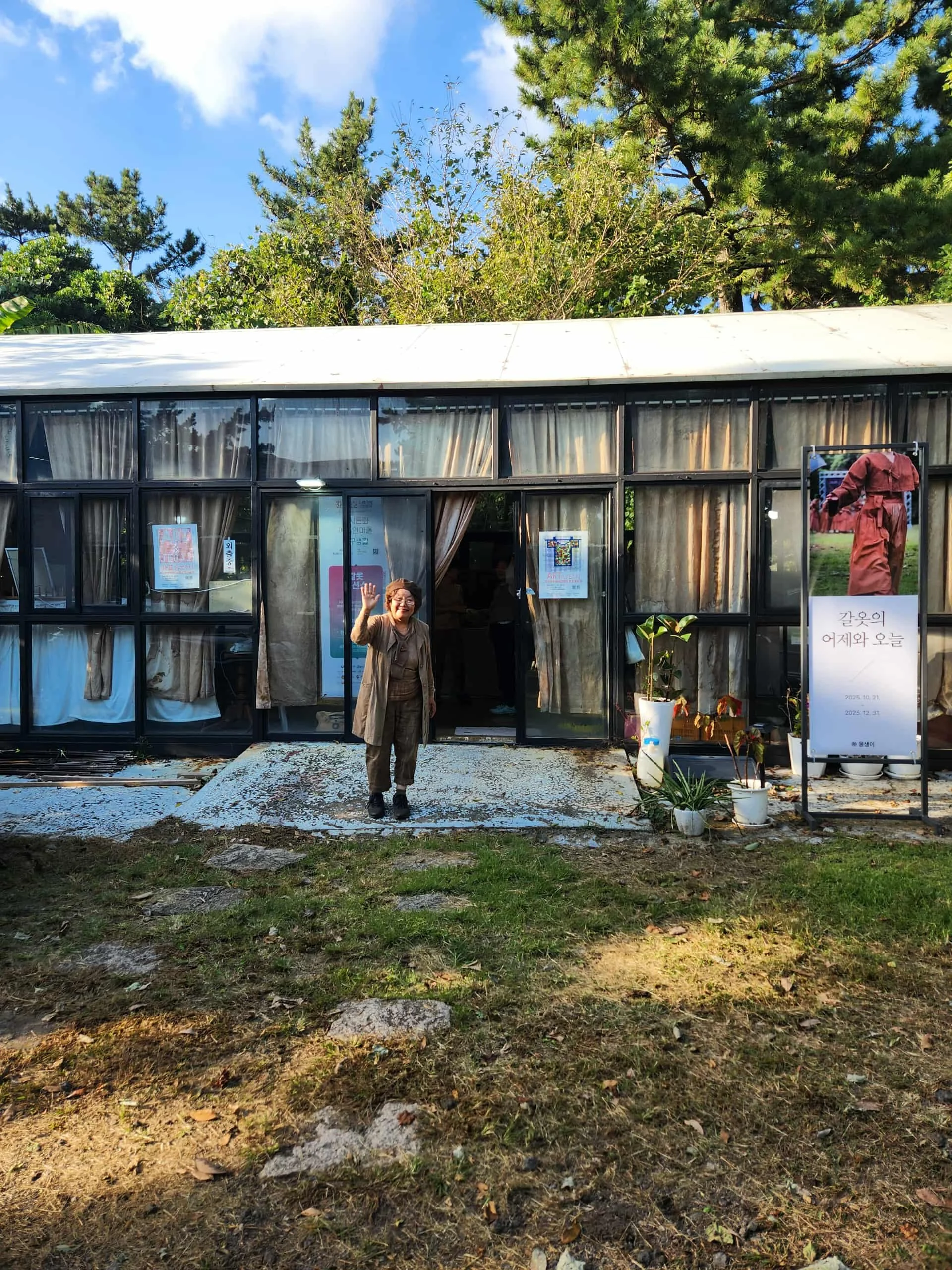
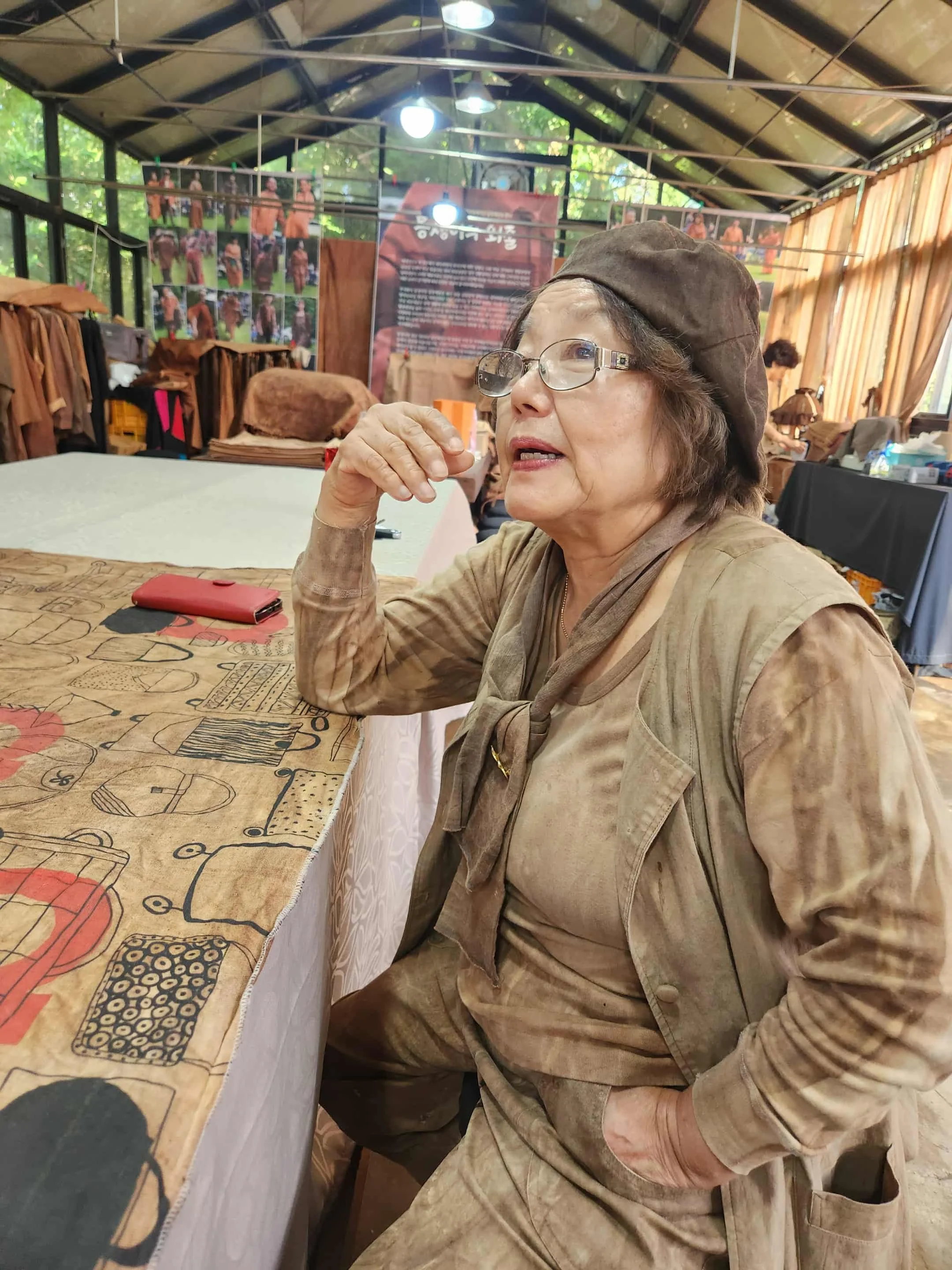
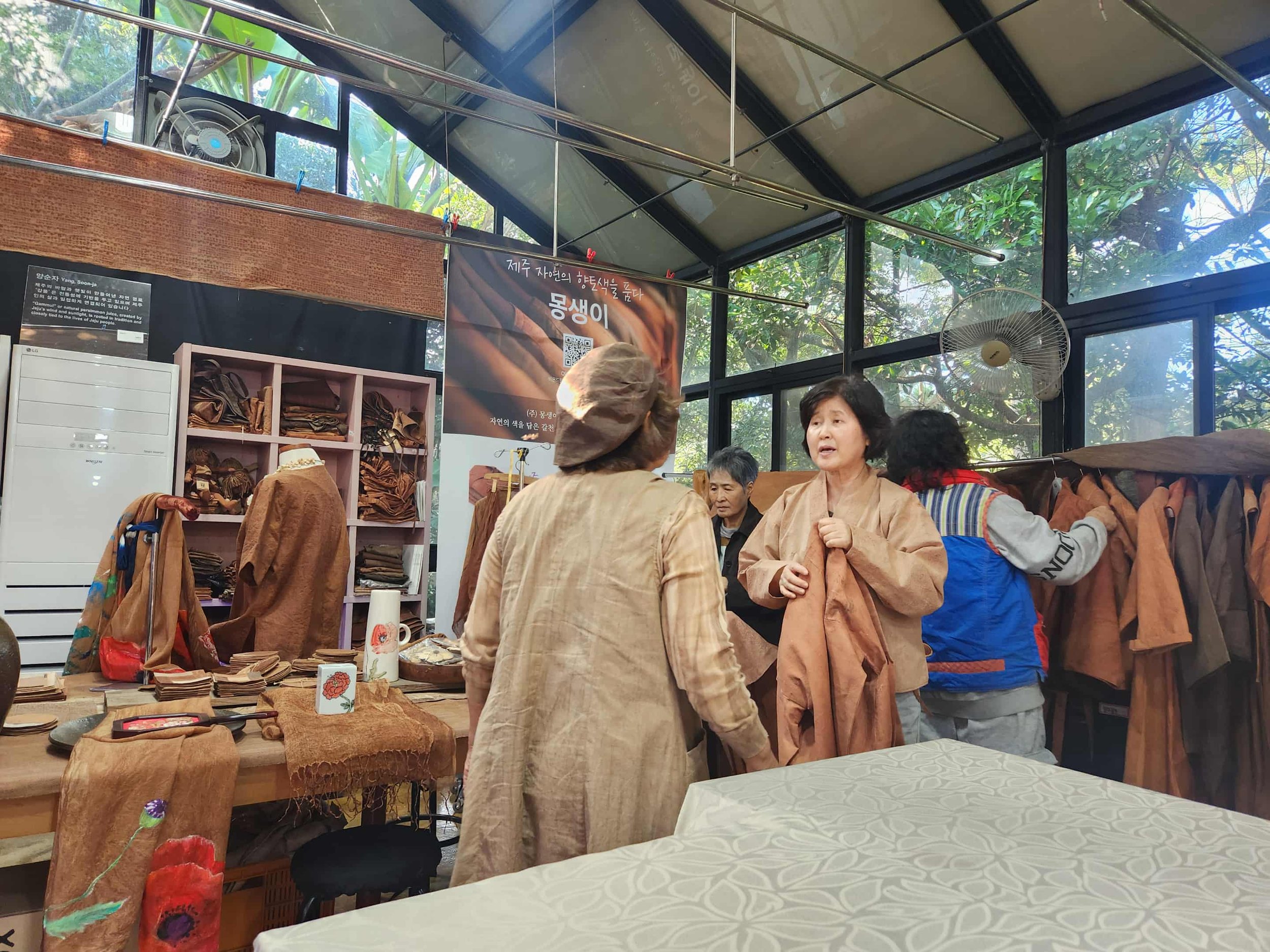
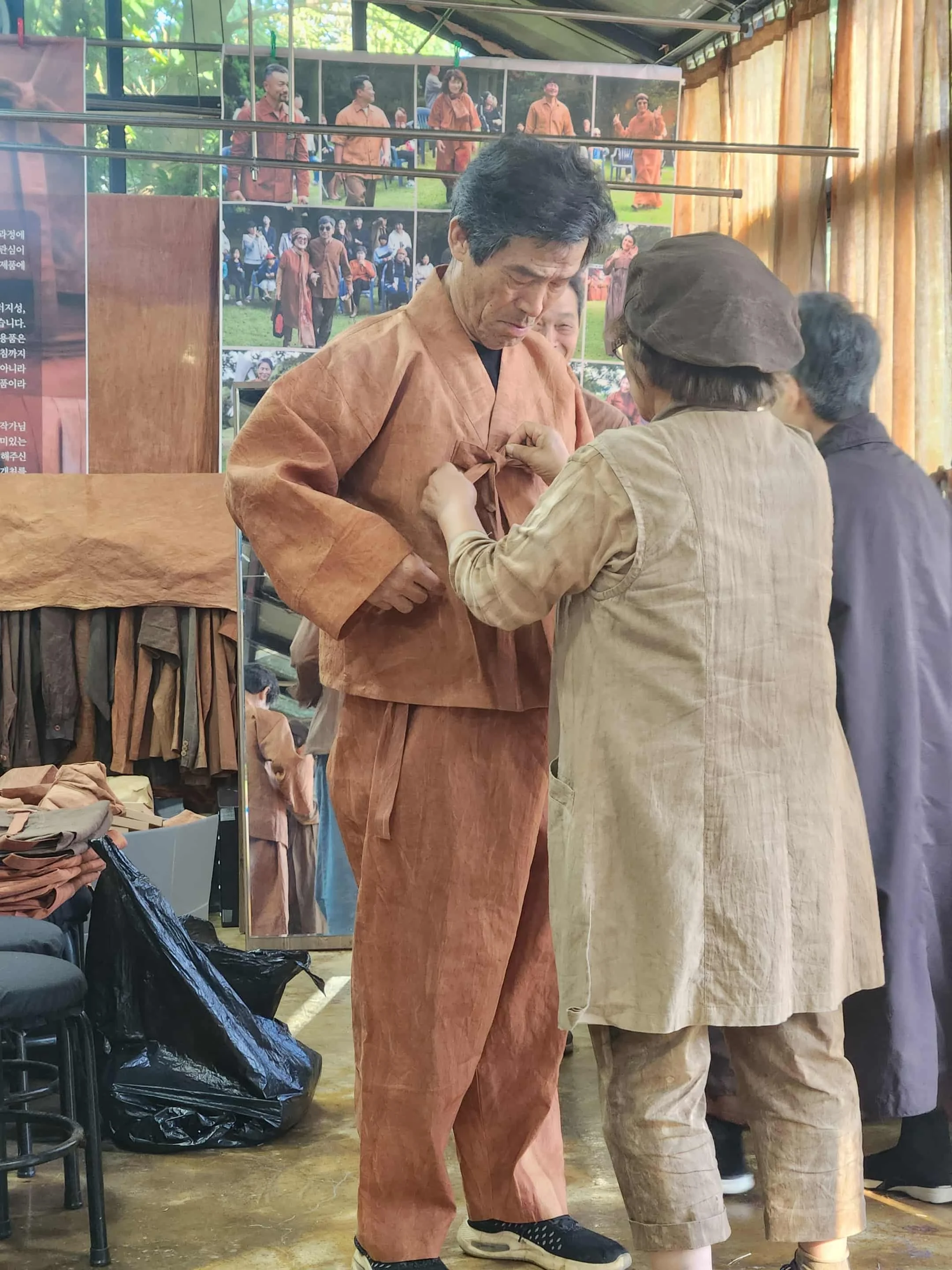
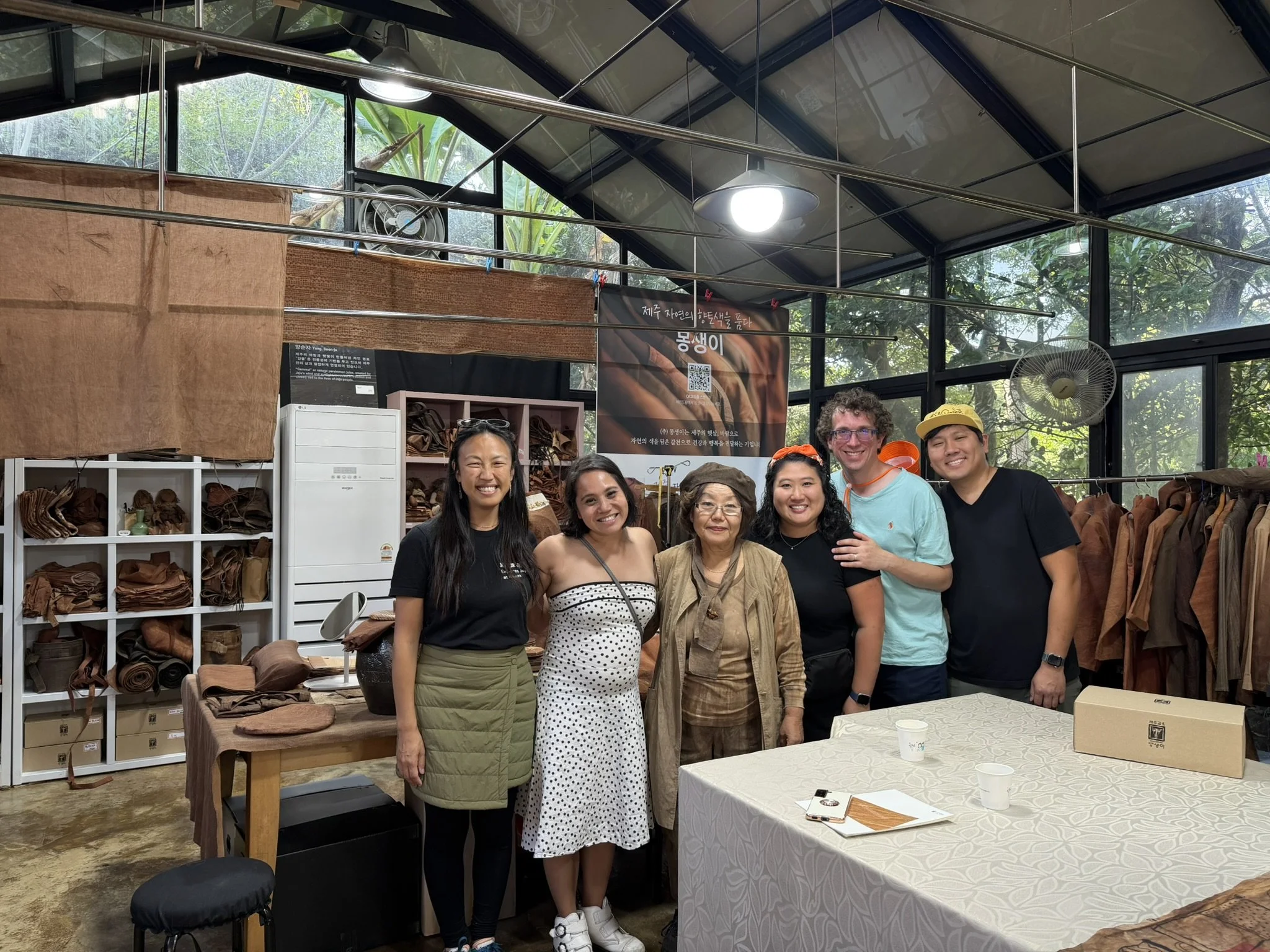
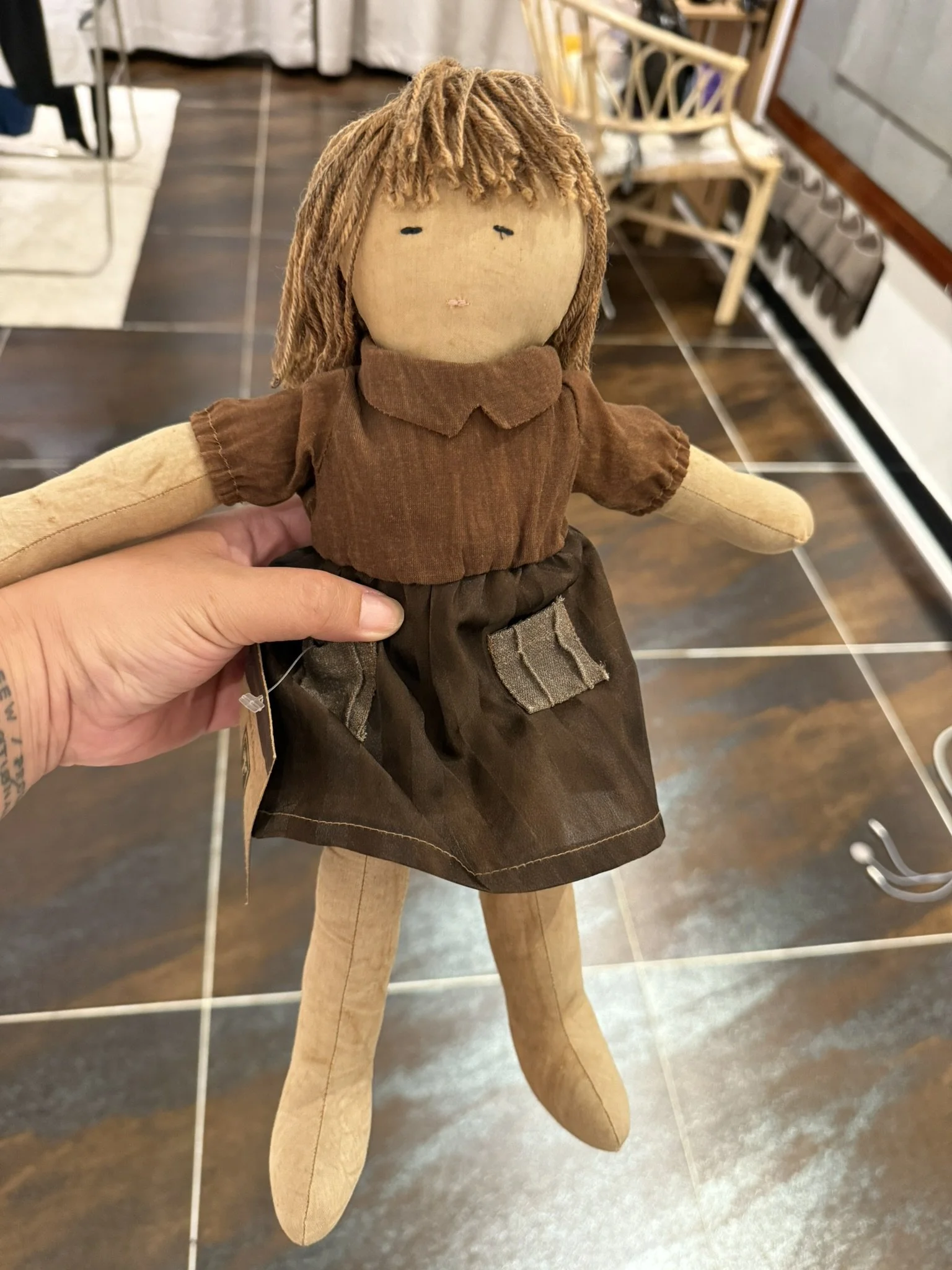
At 3:00pm, we met with Soonja Yang, a clothing shop owner who owns and operates Mongsaengee. Soonja creates traditional Jeju clothes called “garot” that is dyed with persimmon. The people of Jeju realized that rubbing persimmons on clothes helped with odor, UV rays, and allowed people to work in the fields in everyday clothes. Soonja makes her own persimmon juice with a grinder (instead of the traditional mashed way) and adds things like gardenia, mugwort, and scoria powder. She dyes the cloth and dries the fabric in the sun on sunny days. She then repeats rinsing and drying around 10 more times. This dye can be used on cotton, silk, hemp, and denim and could even be used on other fabrics as well. I bought a Korean doll. Everything is dyed. Her skin is the underside of dyed fabric and even her hair was dyed with persimmons.
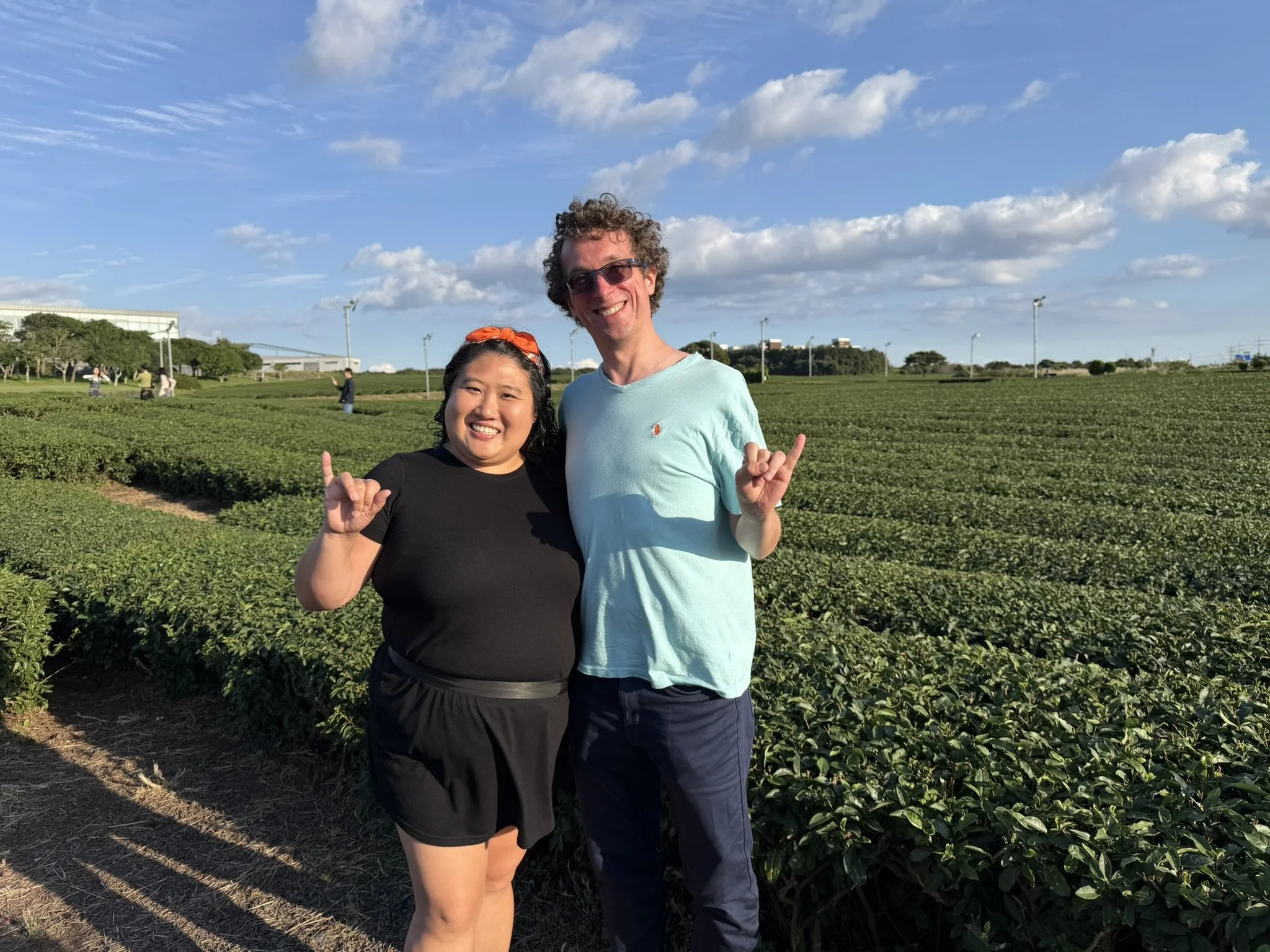
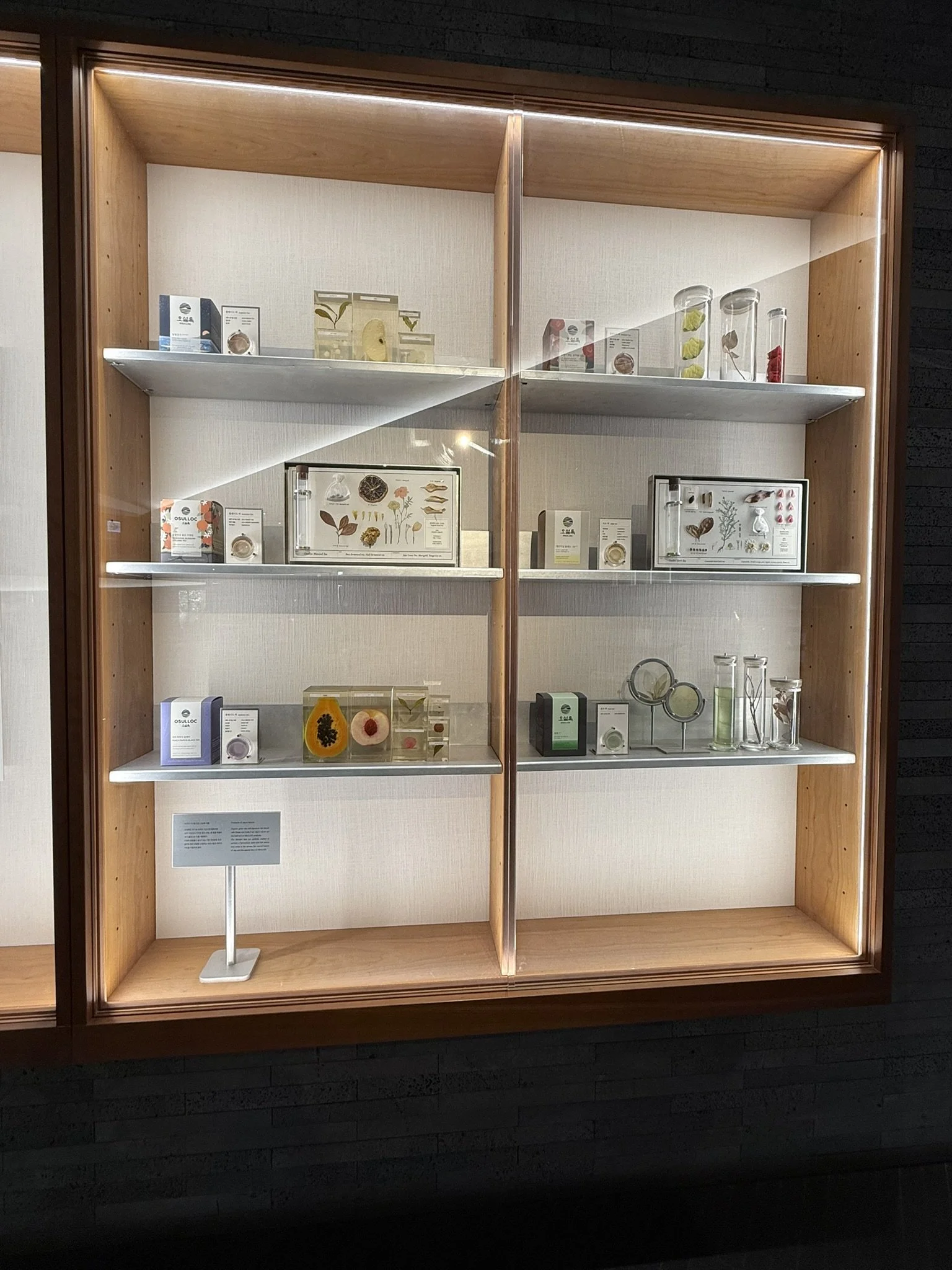
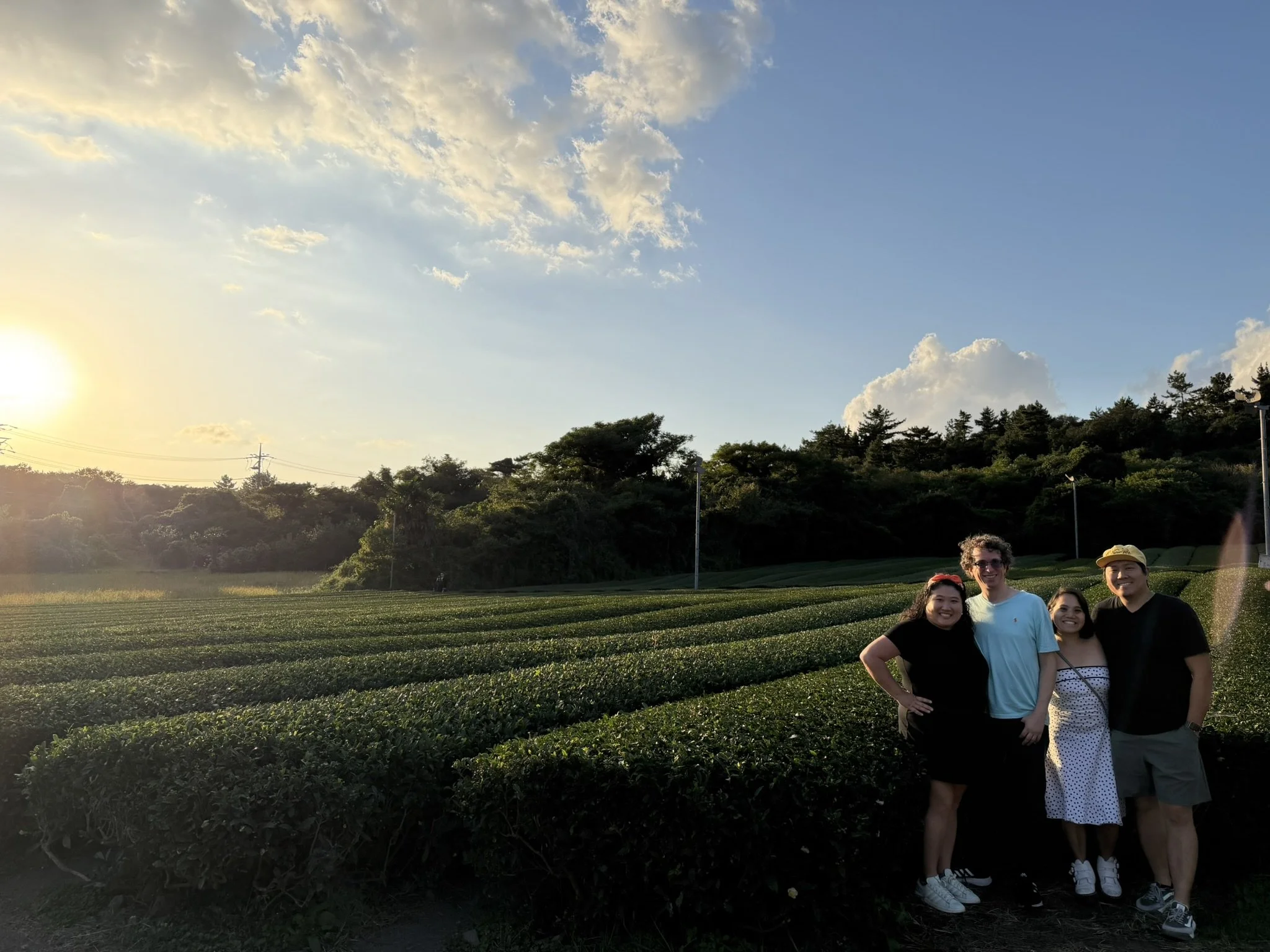
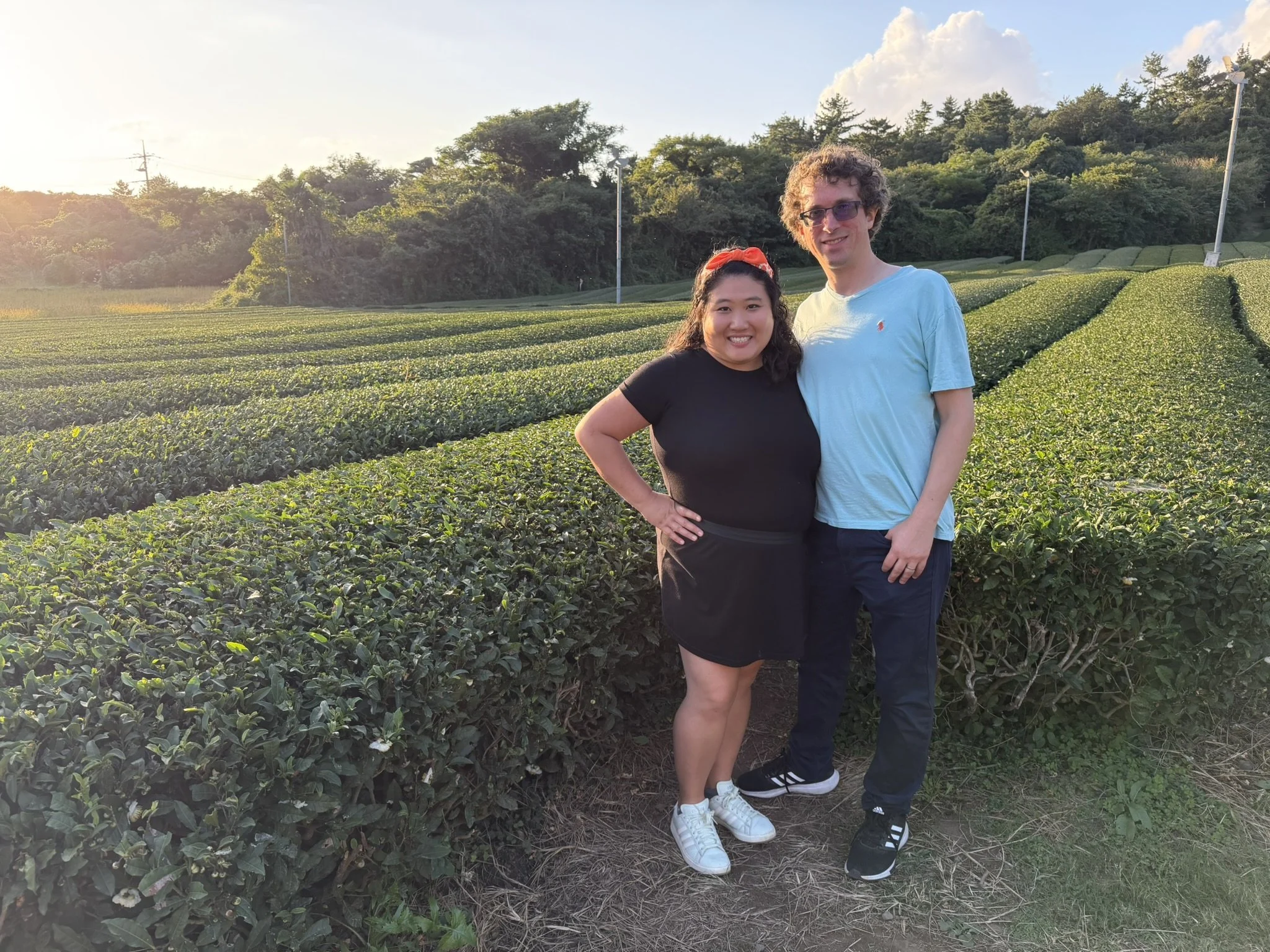
We stopped in at Osulloc Tea. There is a mini museum, but it is mainly a shopping center. There are tea products from drinking tea to skin care products to a bakery and a cafe. Osulloc introduced the illohyang tea in 1999 and won the premium tea prize at the Beijing Tea Expo and won first place at the North American Tea Championship in 2009, 2011, 2012, and 2014. The sejac tea also won gold at the 2009, 2013, 2014 green tea contests in Japan. We were told it would be busy, but it really did seem like they were giving away free bags of money the way that people were arriving and shopping around. We ended up buying some unique teas including a black Jeju tangerine blend, a volcanic rock tea (baked oolong tea with an aroma of roasted nuts) and a Peanut black tea (a black tea with the nutty flavor of jeju Udo peanuts). The tea fields were pretty. Bryce wanted to explore the tea plants, but we couldn’t go too far into the field.
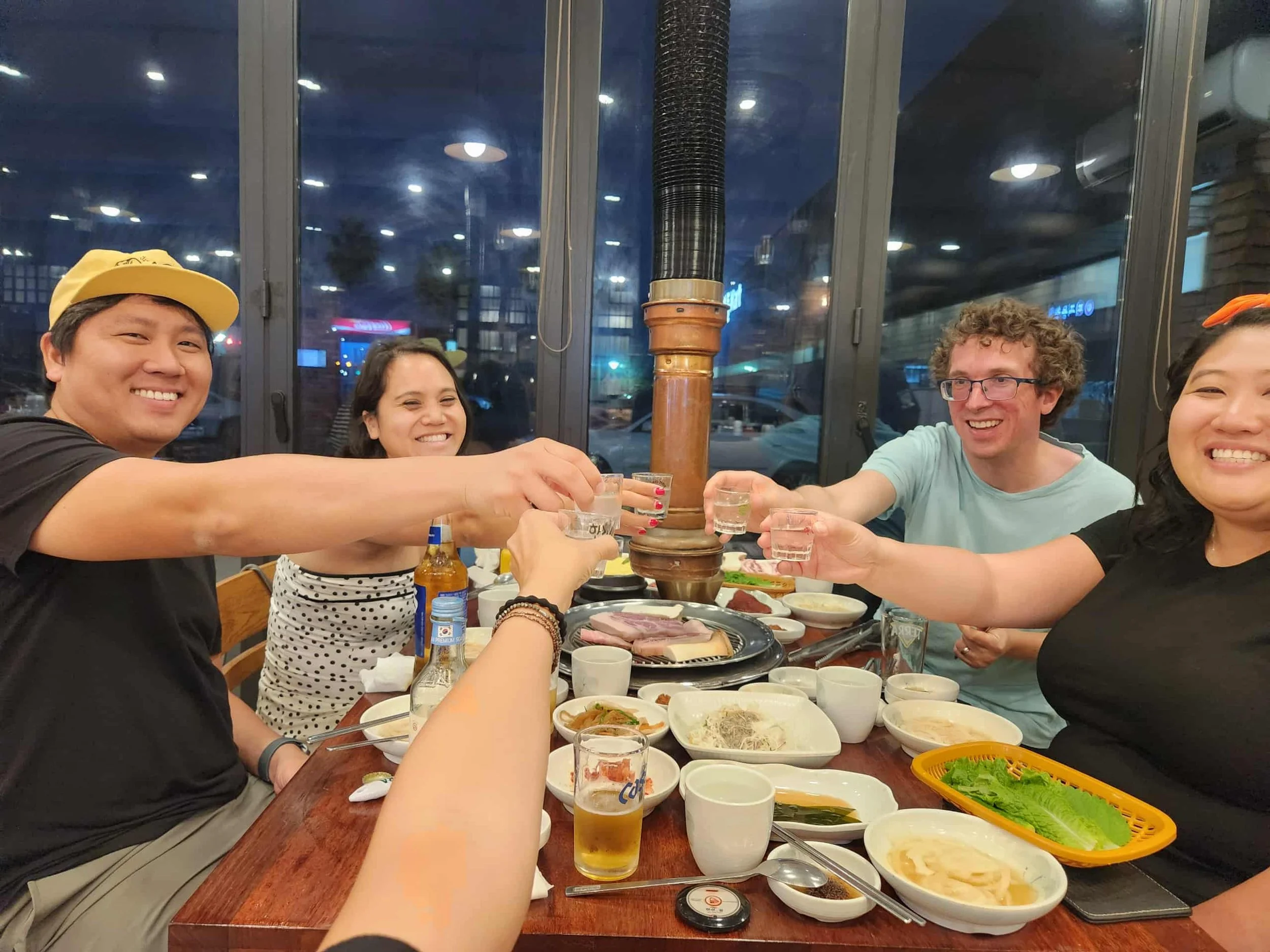
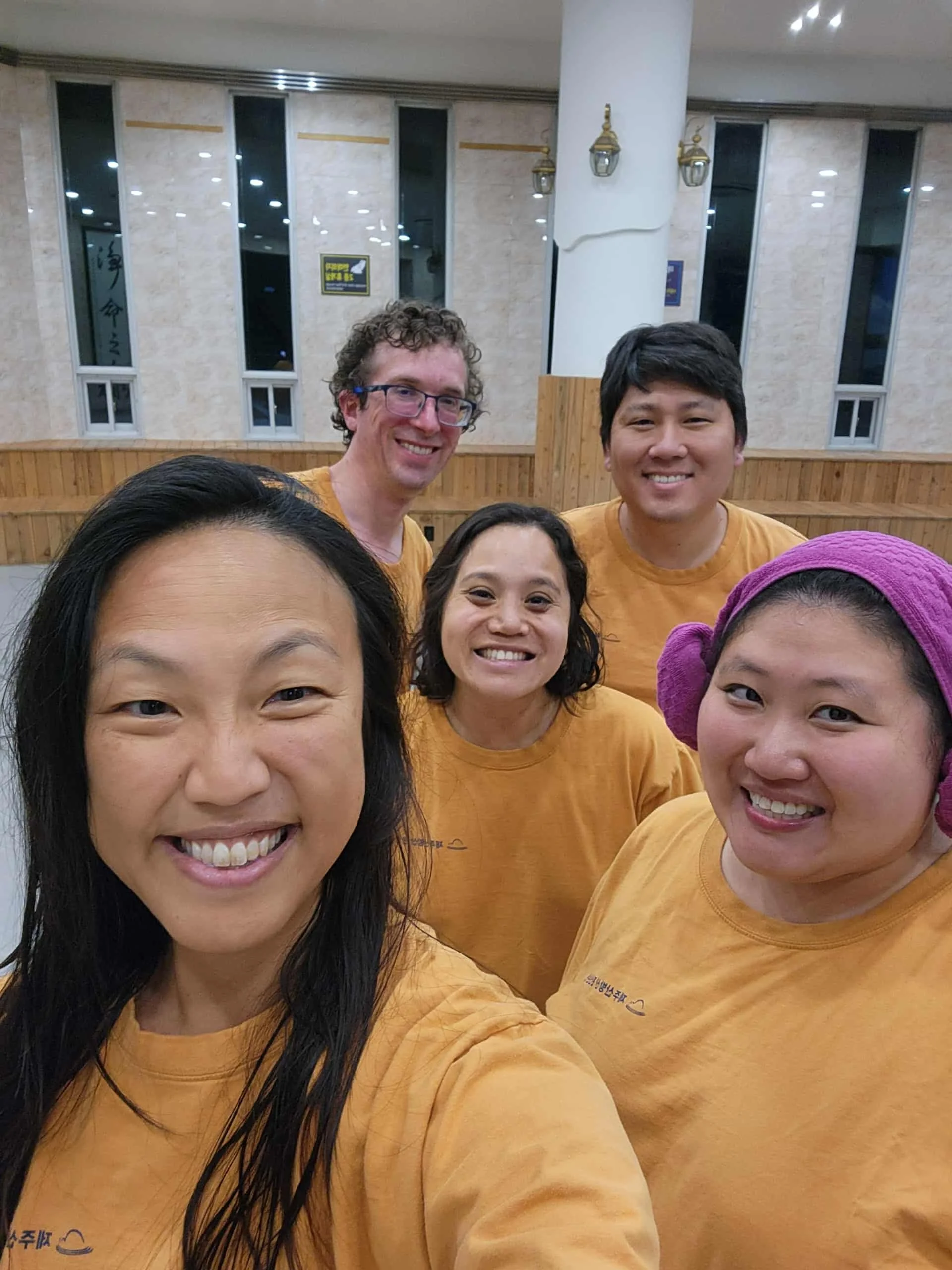
For dinner, Jenna took us to a BBQ that served black belly pork. It was so good. The pork was really good and I learned that I really like pork skin. We all ate a ton of pork, had a side of cold noodles, had lots of banchan, soju and beer. Then we went to a traditional bath house. Bryce spoke to a guy in the baths who stated that he had travelled the world and multiple other countries and believed that the Jeju bathhouse was the best of the best.
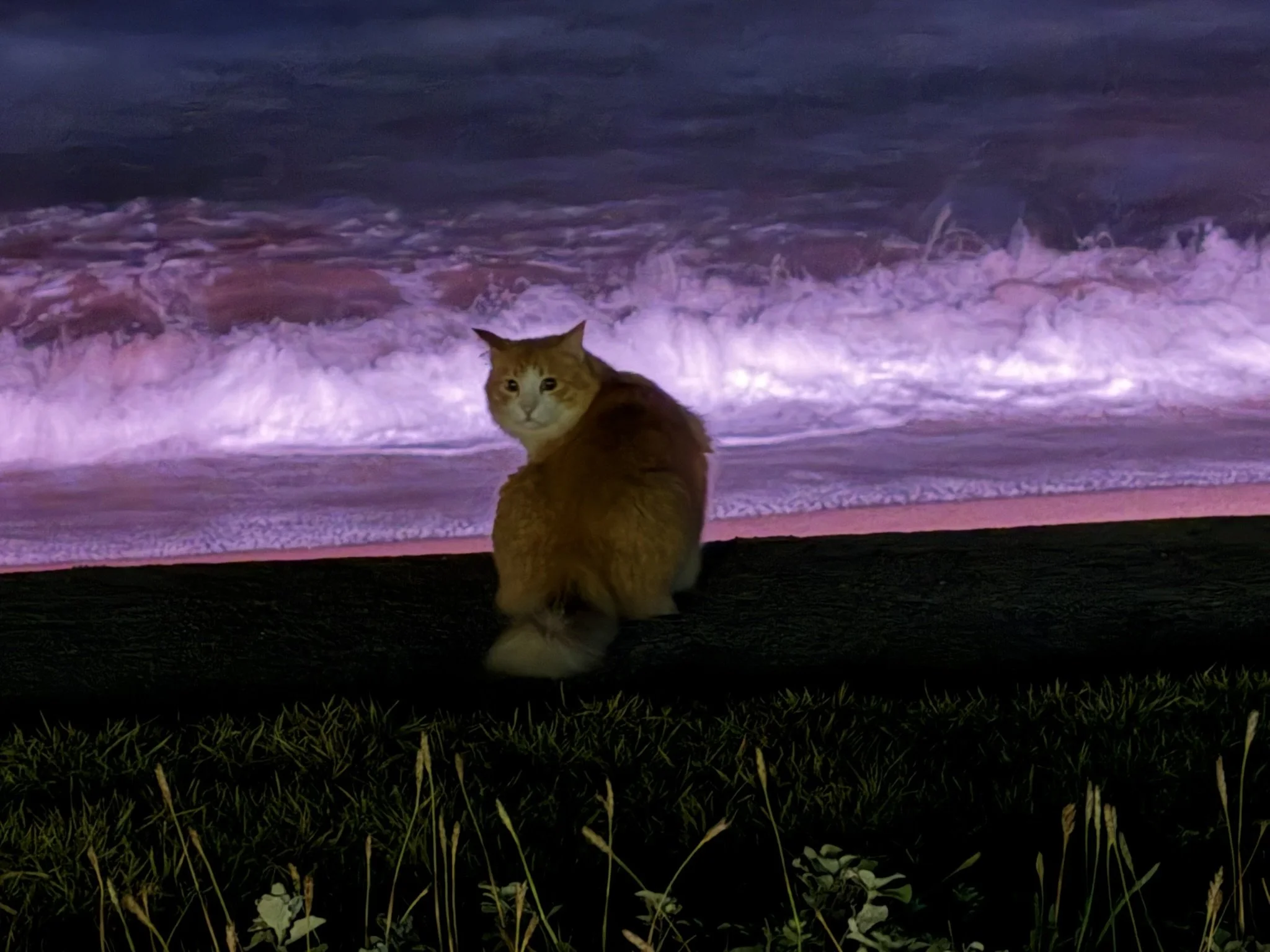
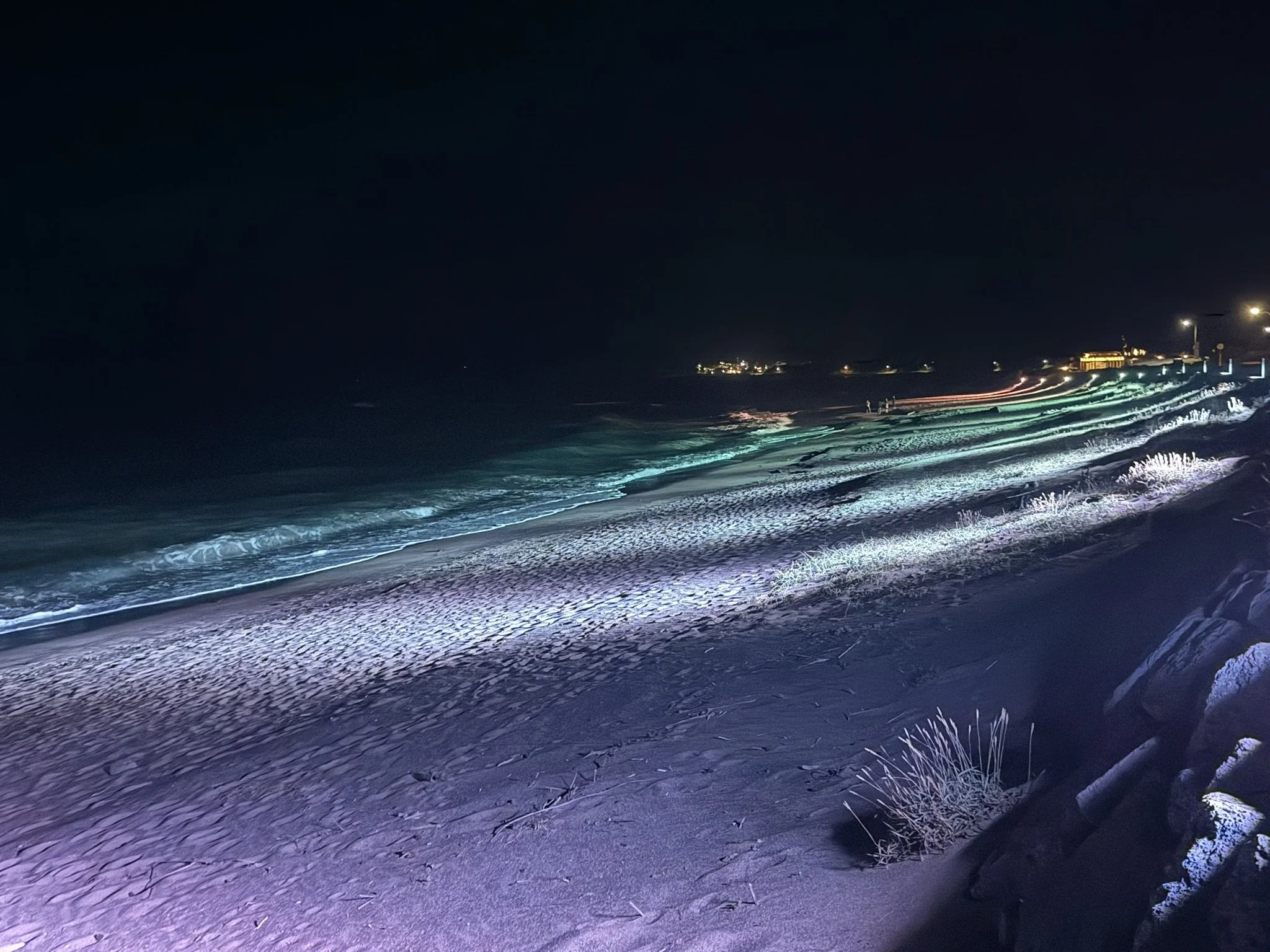
After the bathhouse, we said goodbye to Jenna and then we all sat by the water and watched the waves. Jenna also gave us some tangerine-flavored makgeolli that we shared in the evening, and it was really good. Apparently they only sell that flavor on Jeju though. Since we only packed one carry on bag each, we couldn’t bring any tangerine makgeolli with us home.
Day 9: Thursday October 23, 2025 Last Full Day on Jeju and Korea
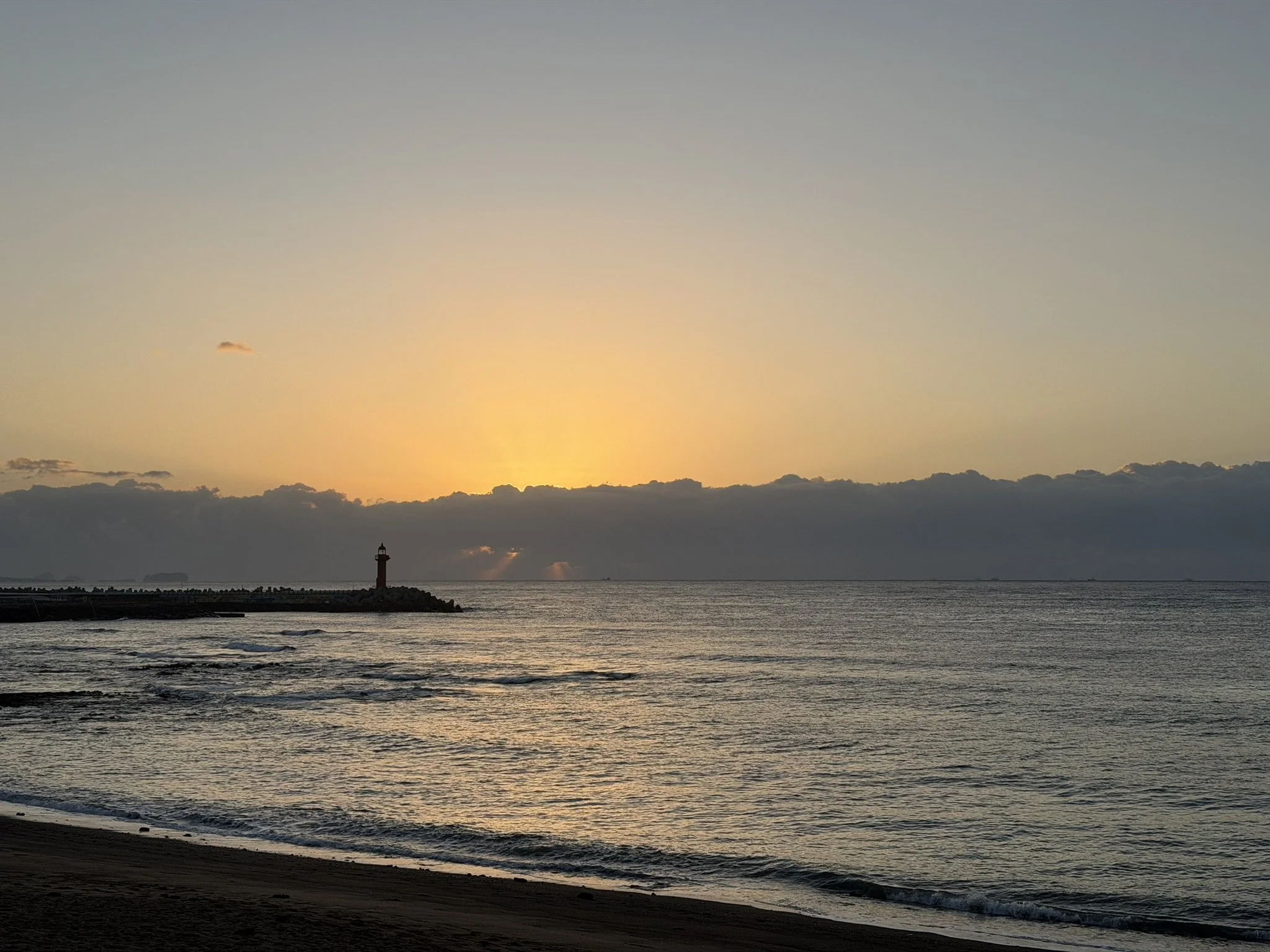
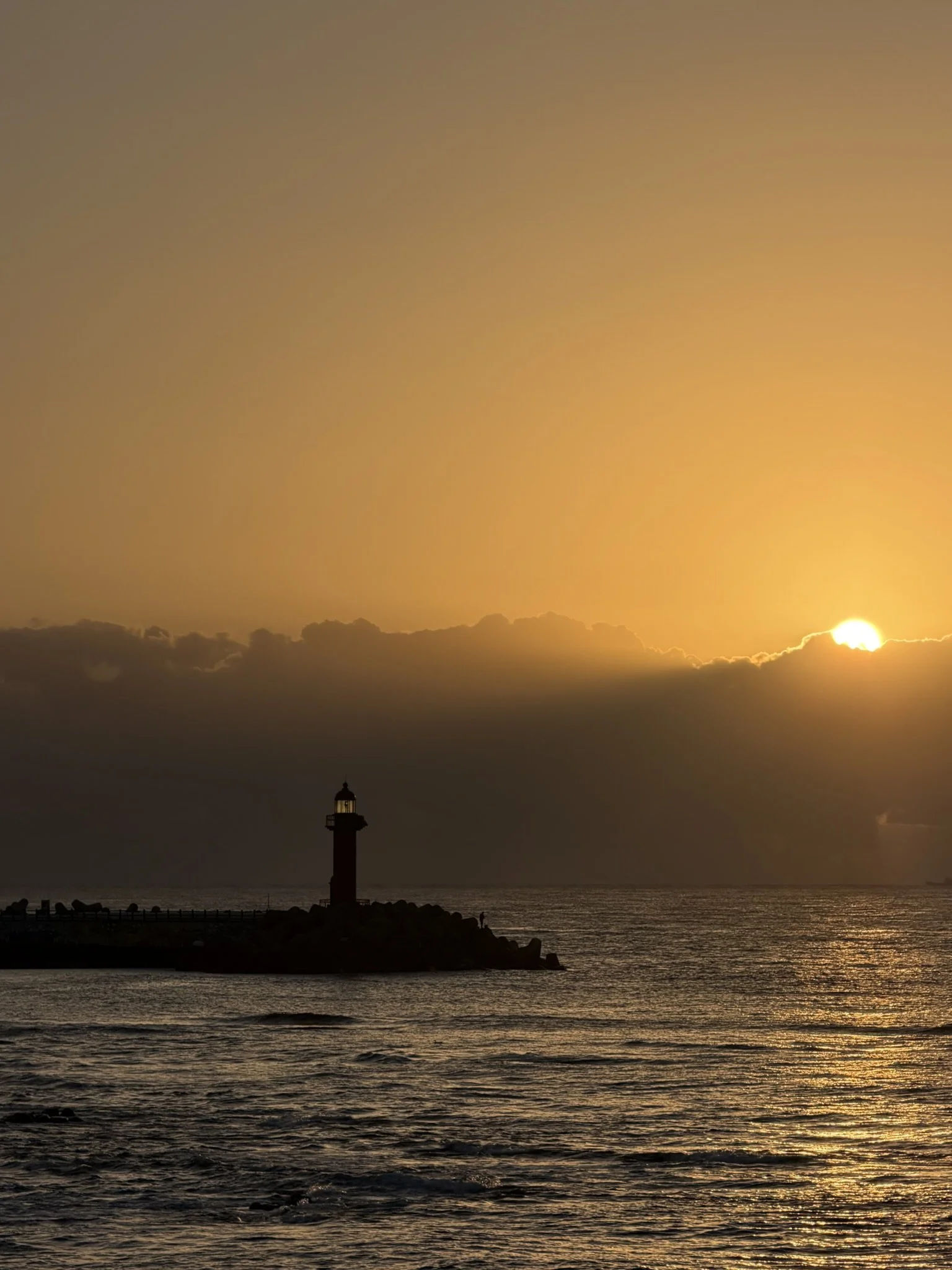
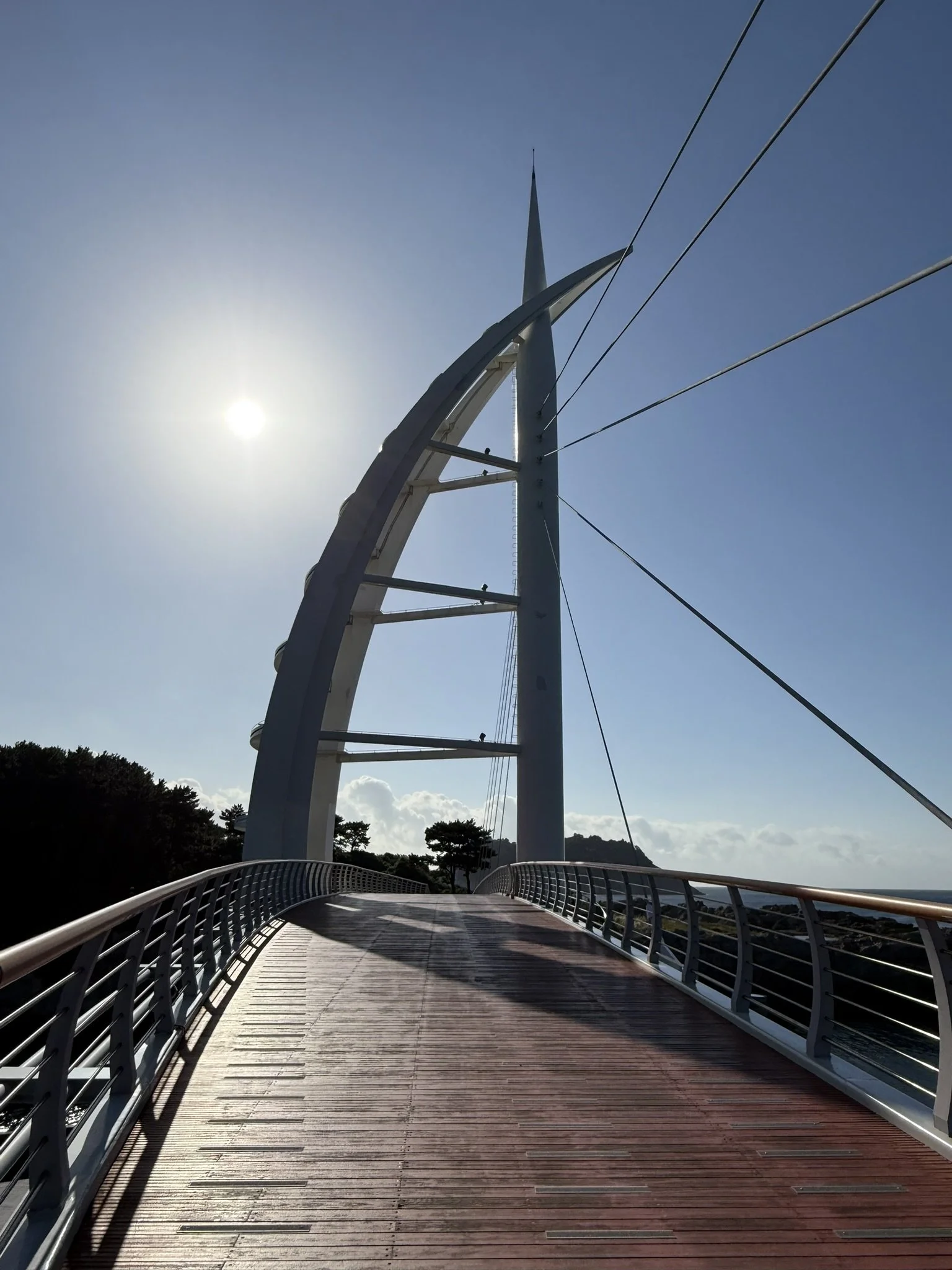
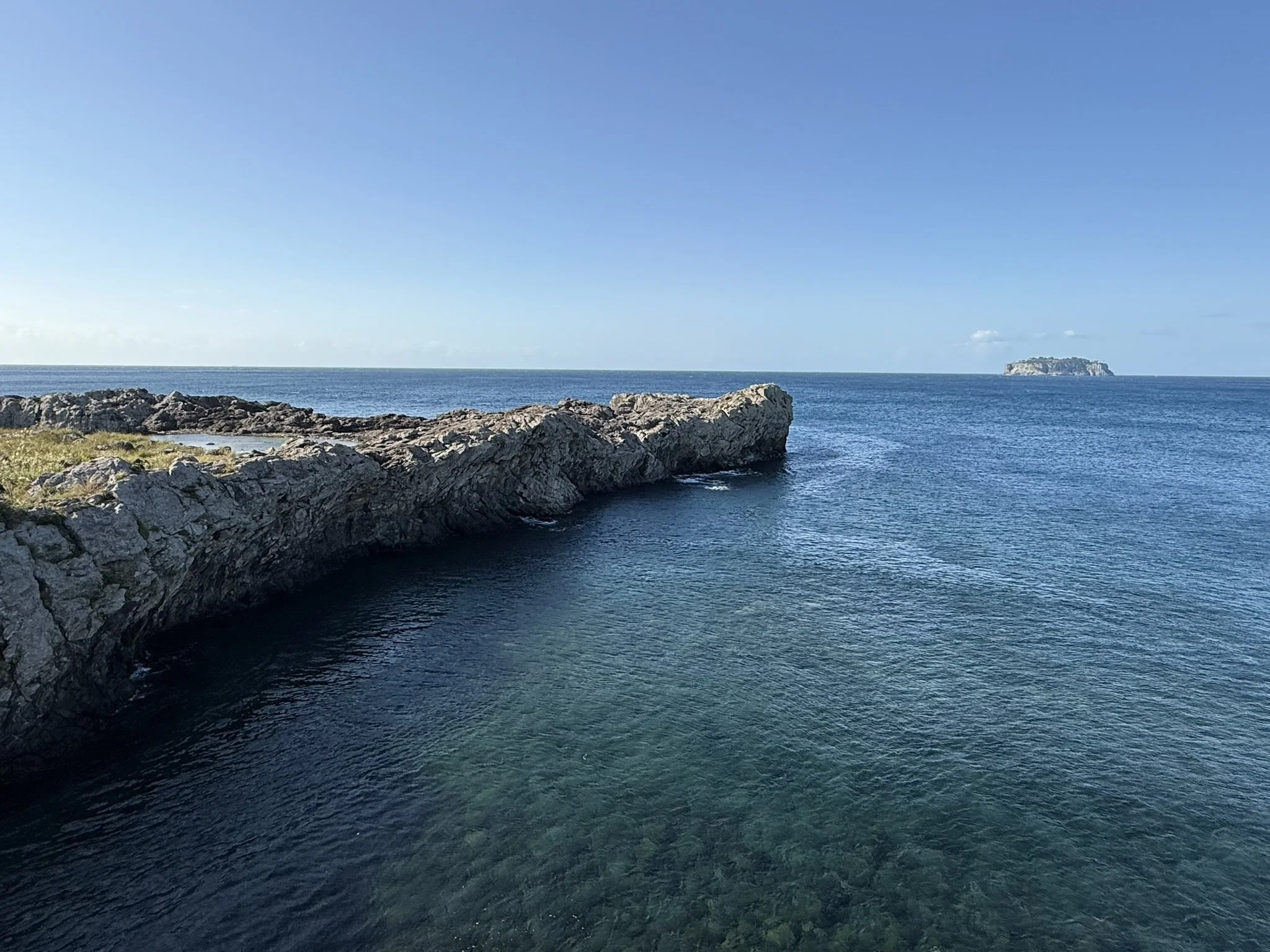
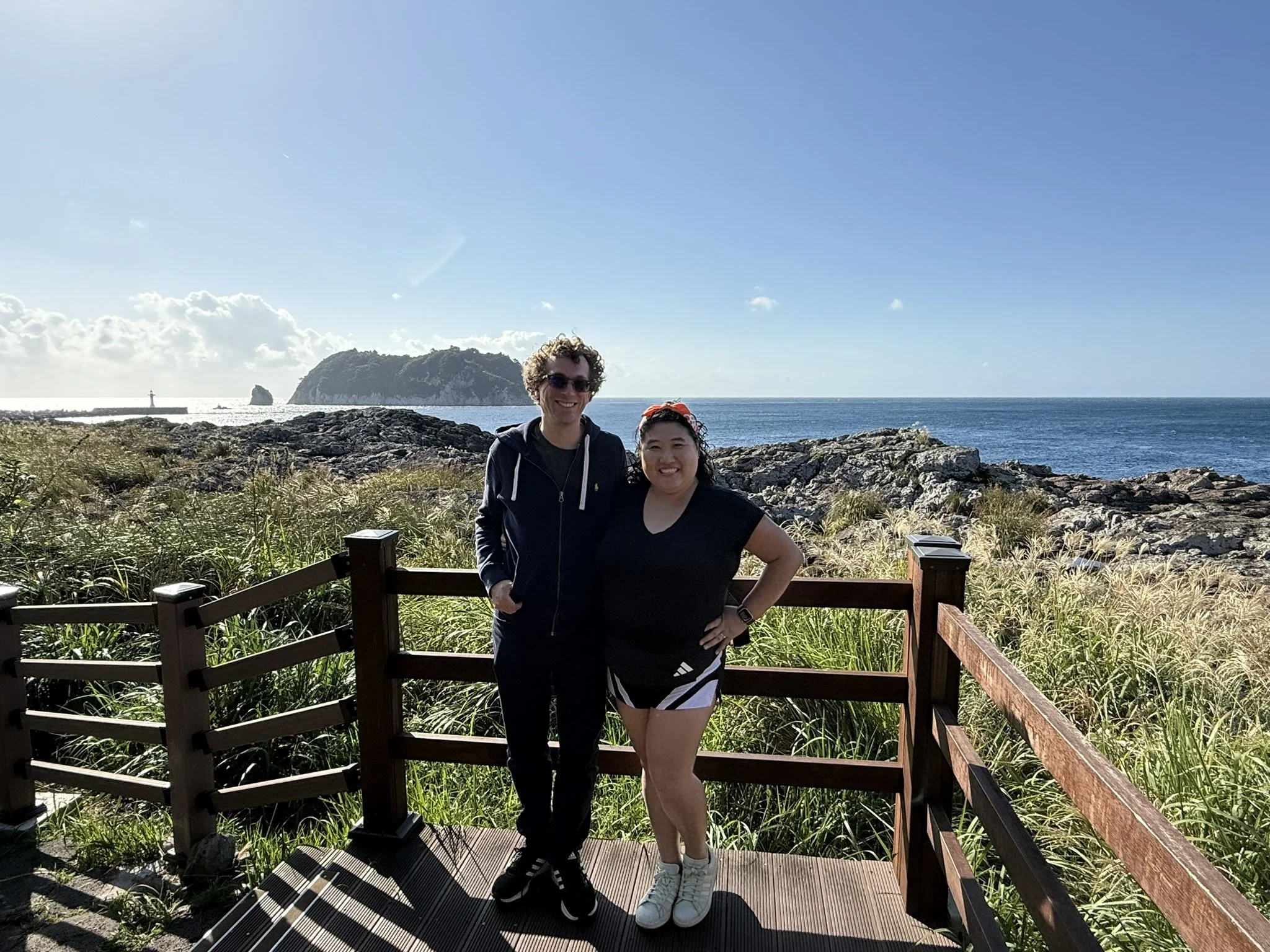
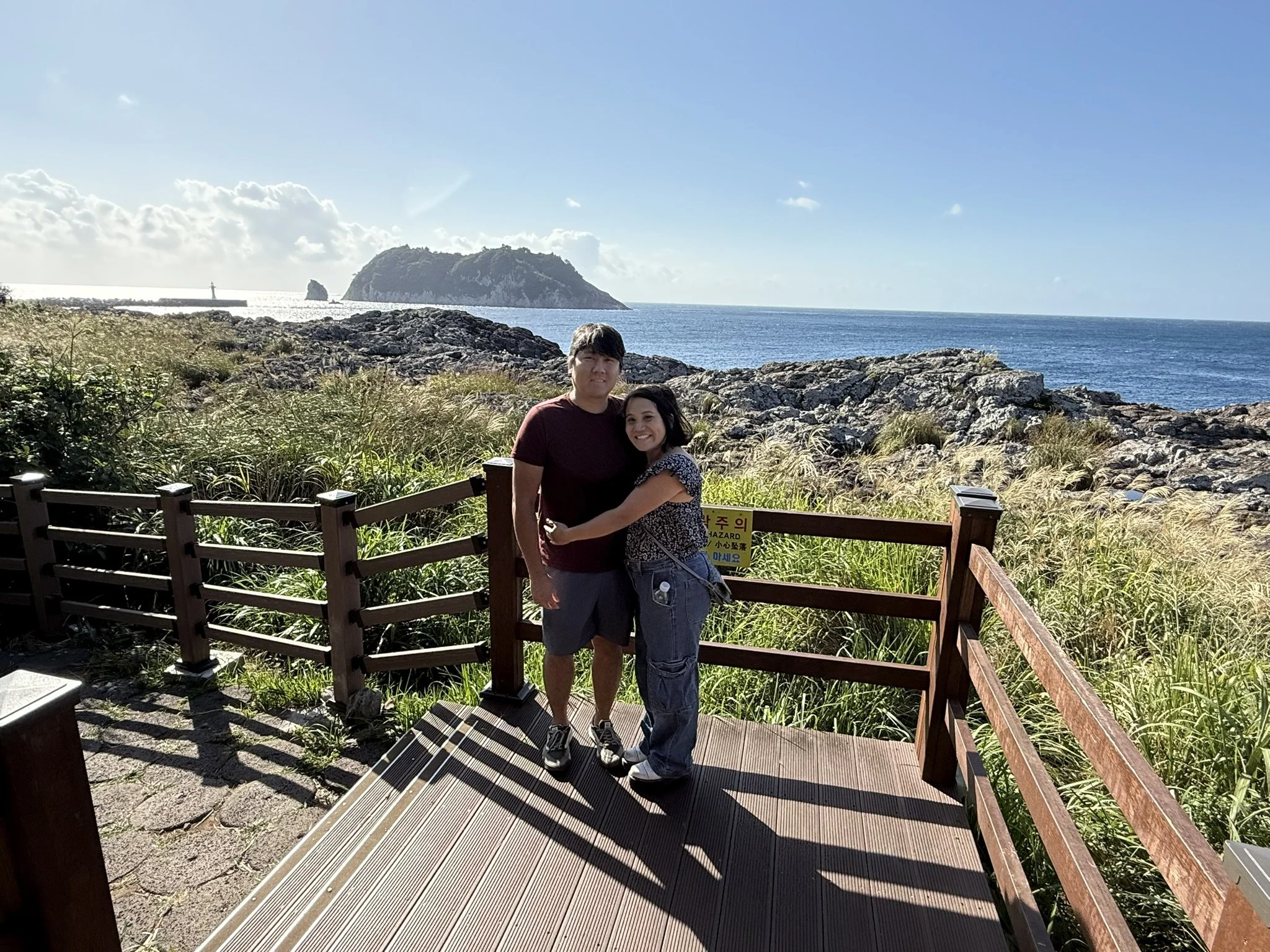
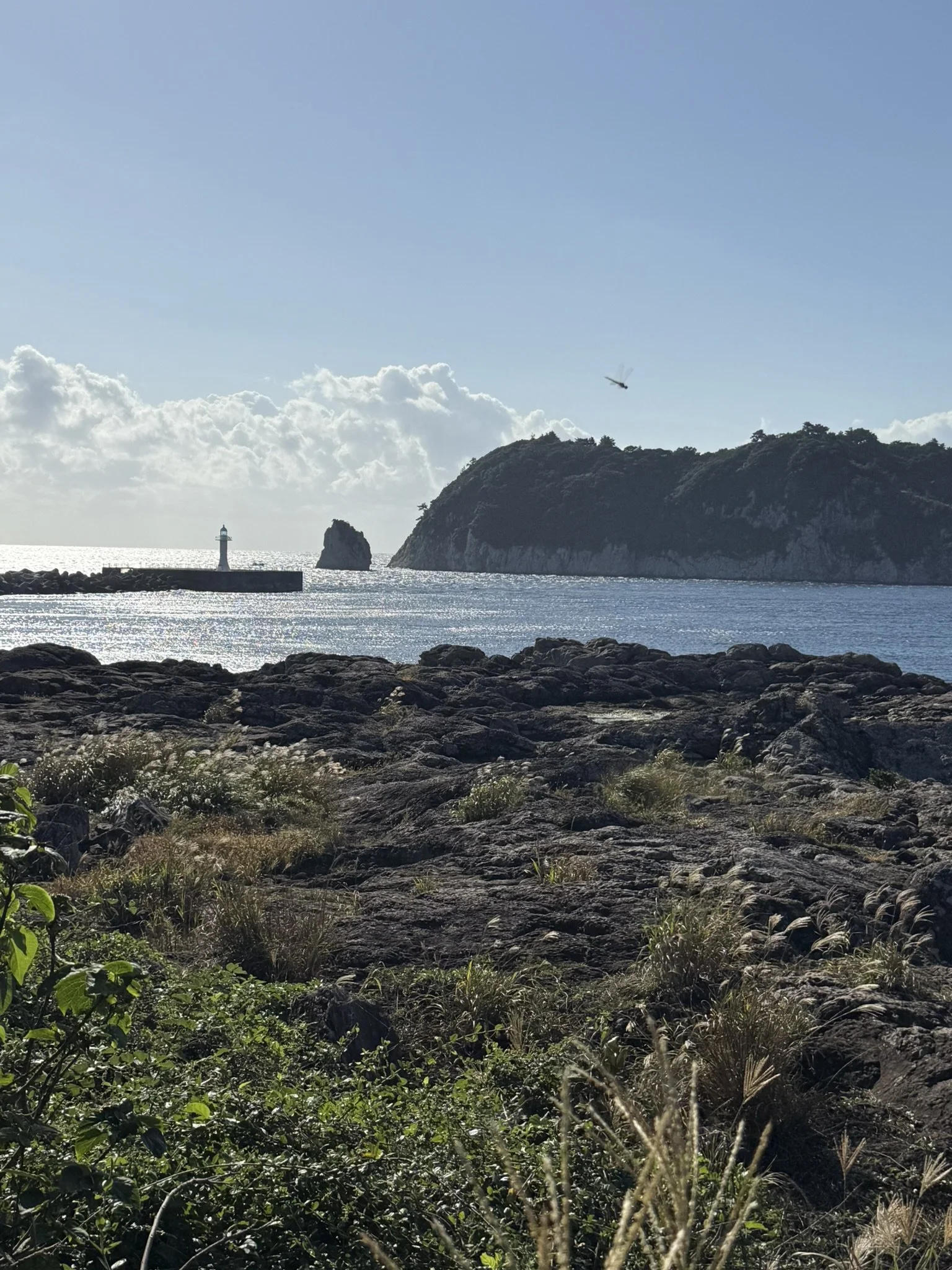
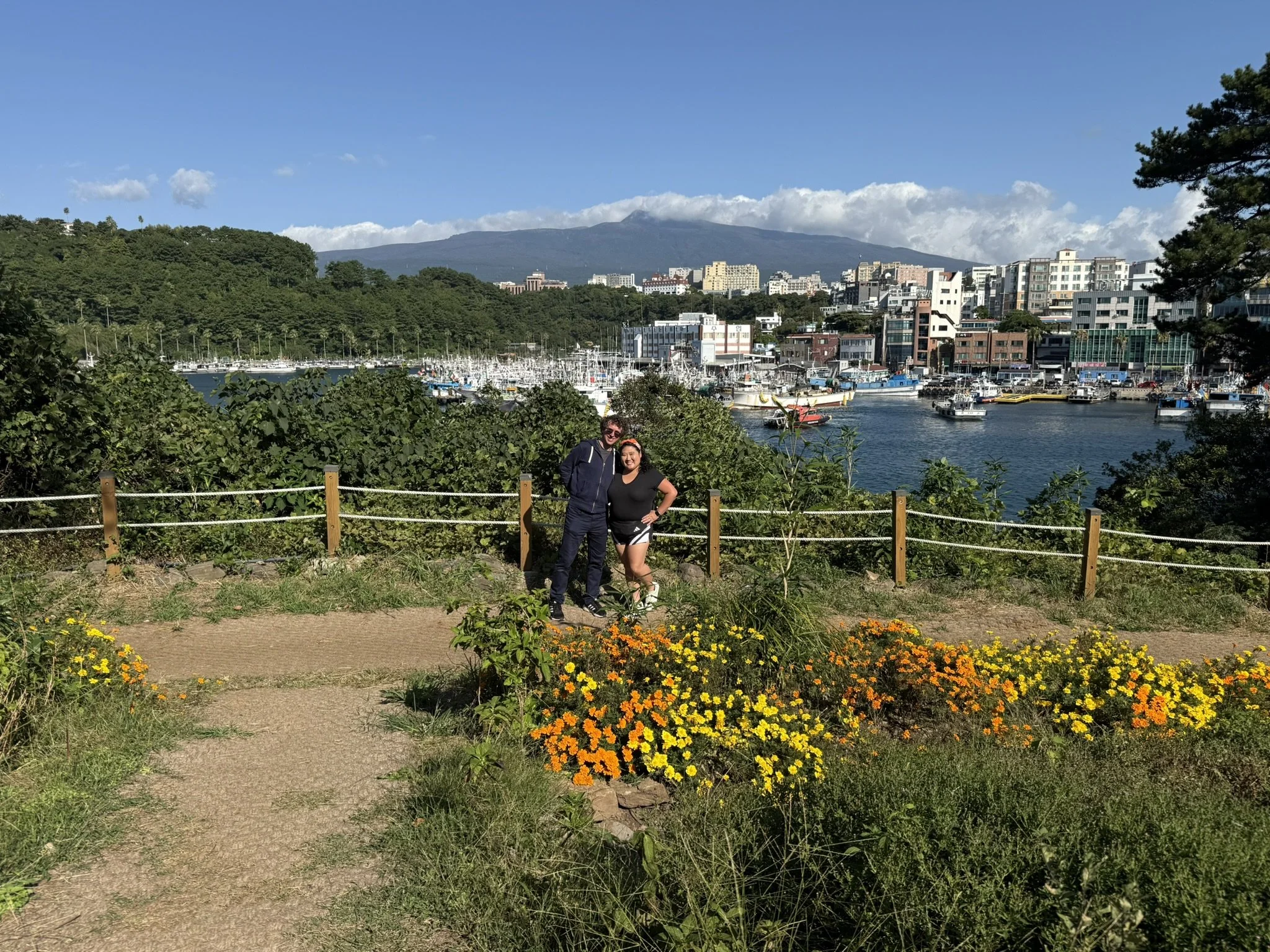
Following some suggestions that Jenna gave us, we first visited the Saeyeongyo Bridge and then walked the 1 mile Saeseom Island Loop. The bridge was inspired by Teu, a traditional Jeju wooden fishing boat. It was really cute and had lots of lights (stars, moons, bunnies, flowers, etc.). I still really enjoyed it even though we walked it during the day. Saeseom means “island of silver grass” and we were able to see tall grasses sway on the sides of the path.

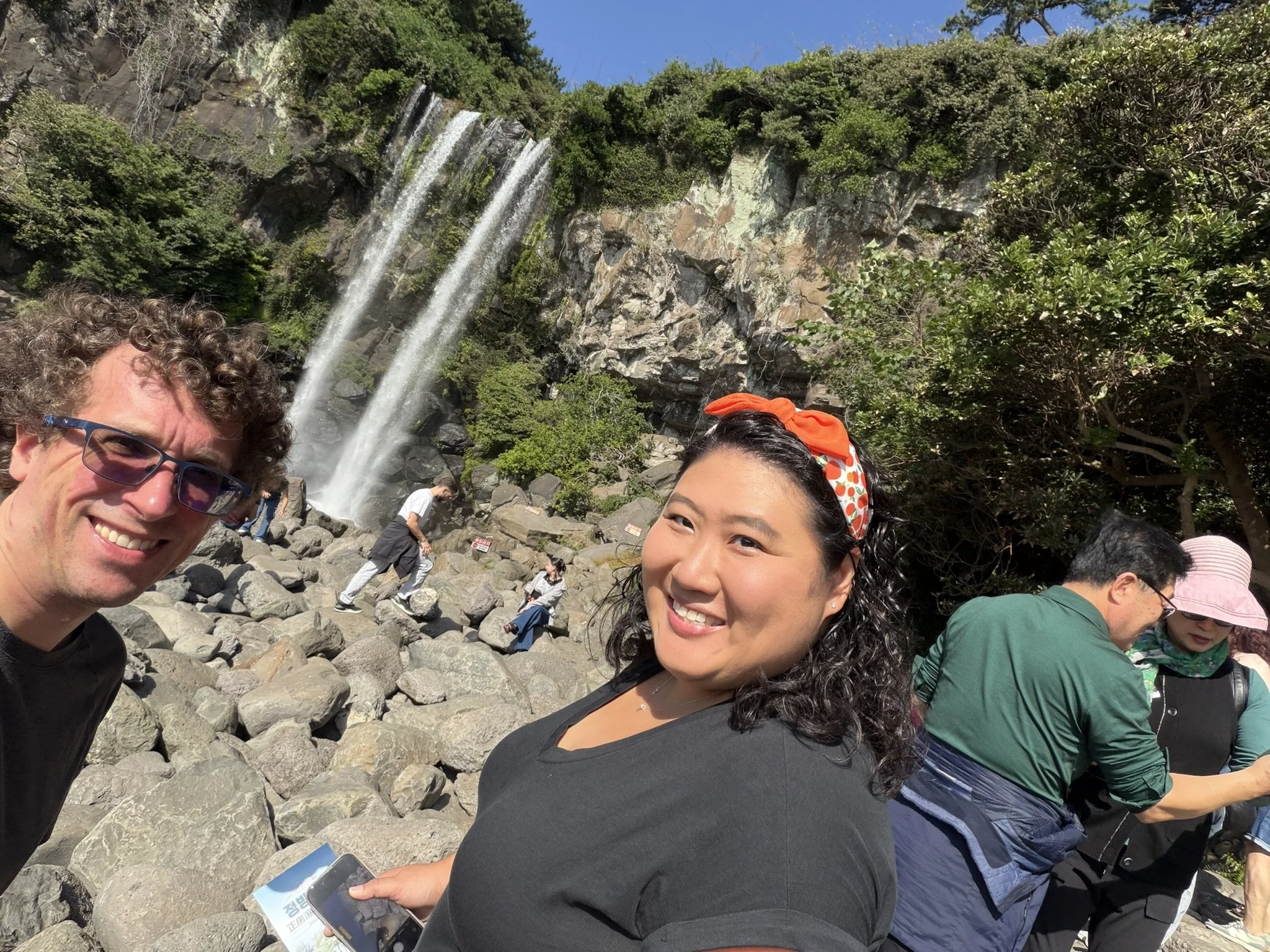
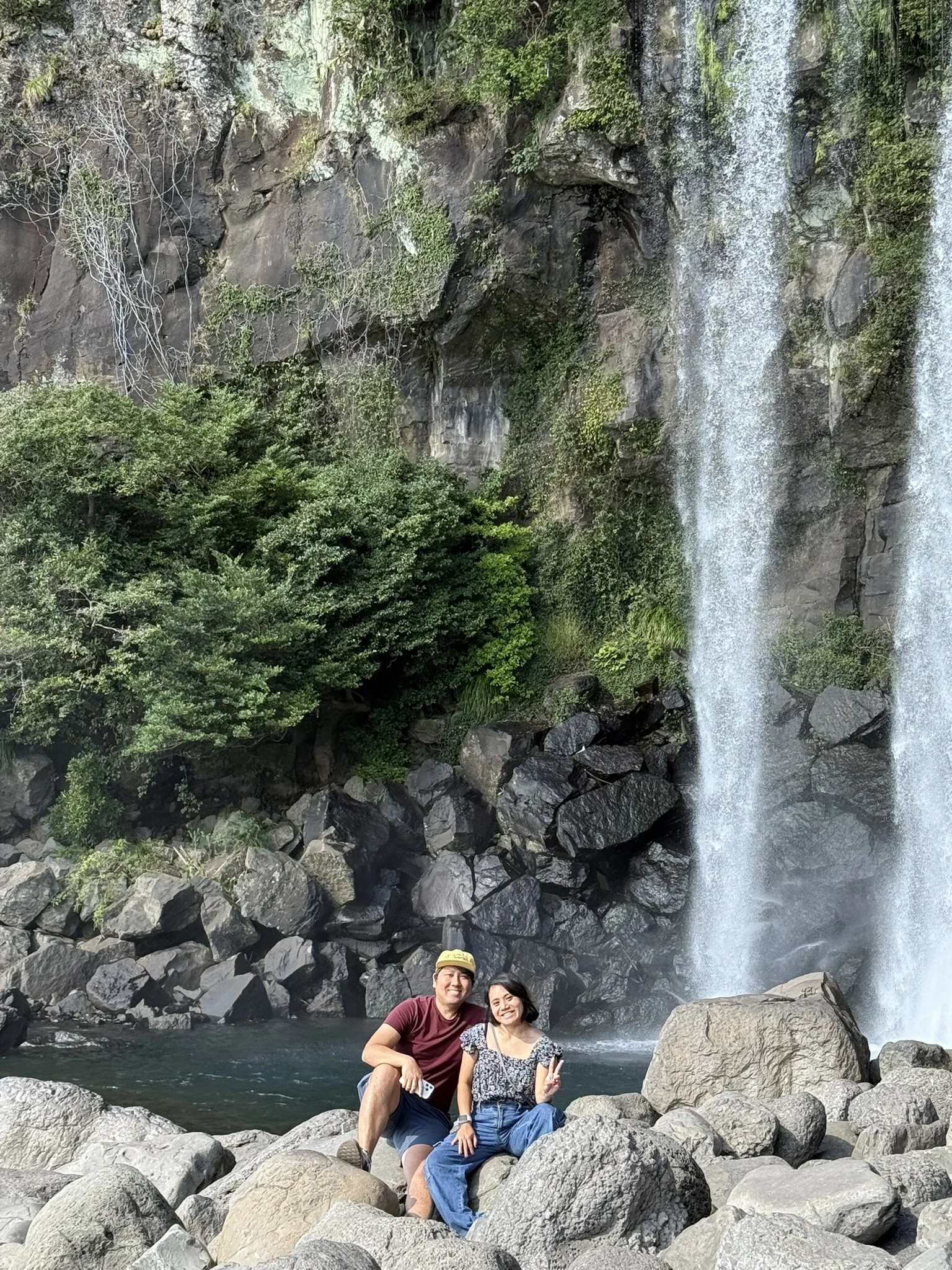
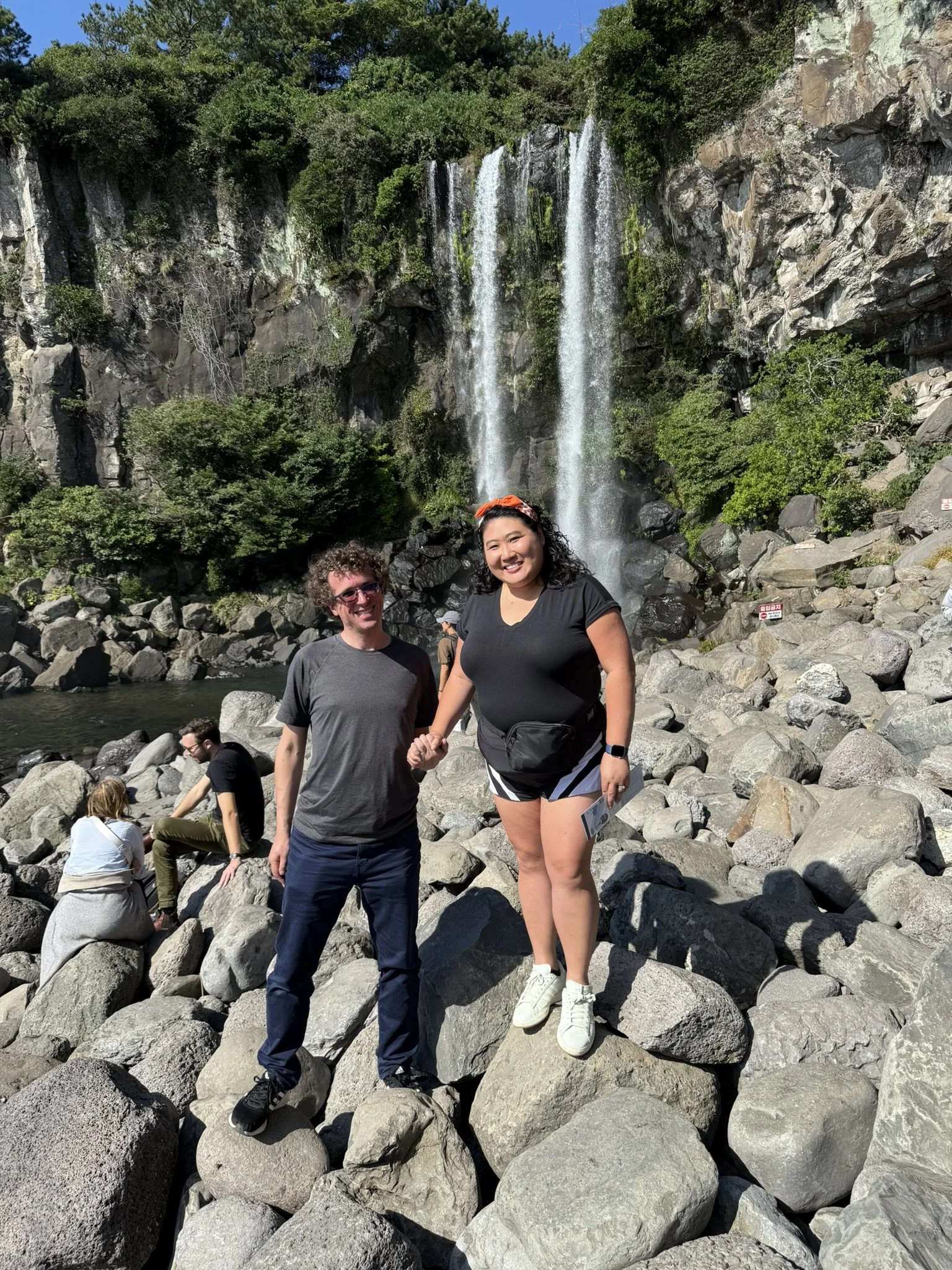
Our second stop was the Jeongbangpokpo Falls. This is a coastal waterfall and the only one in Asia that falls directly into the ocean. It is 75 feet tall and 26 feet wide and was a very easy and quick walk down from the parking lot.
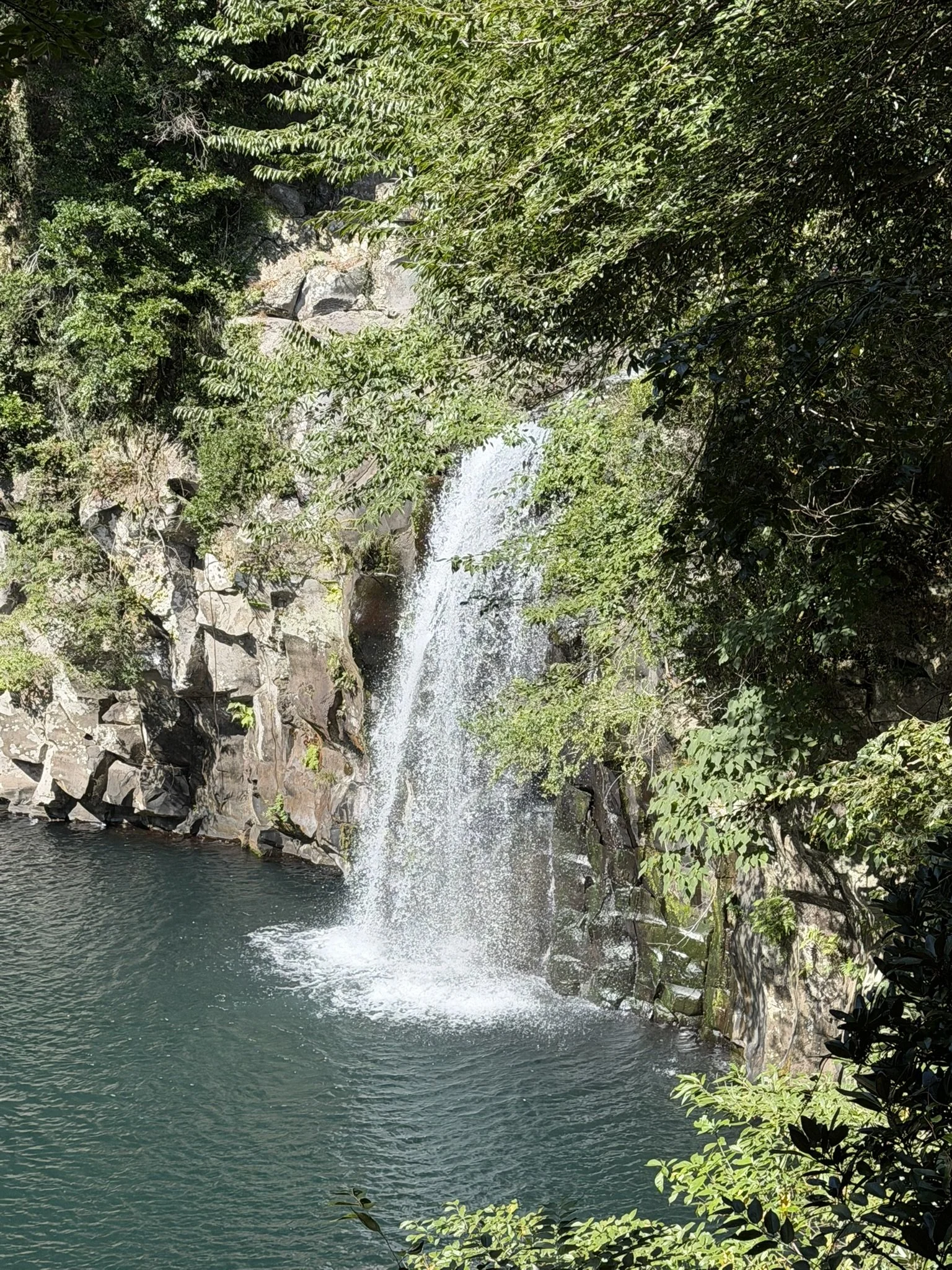
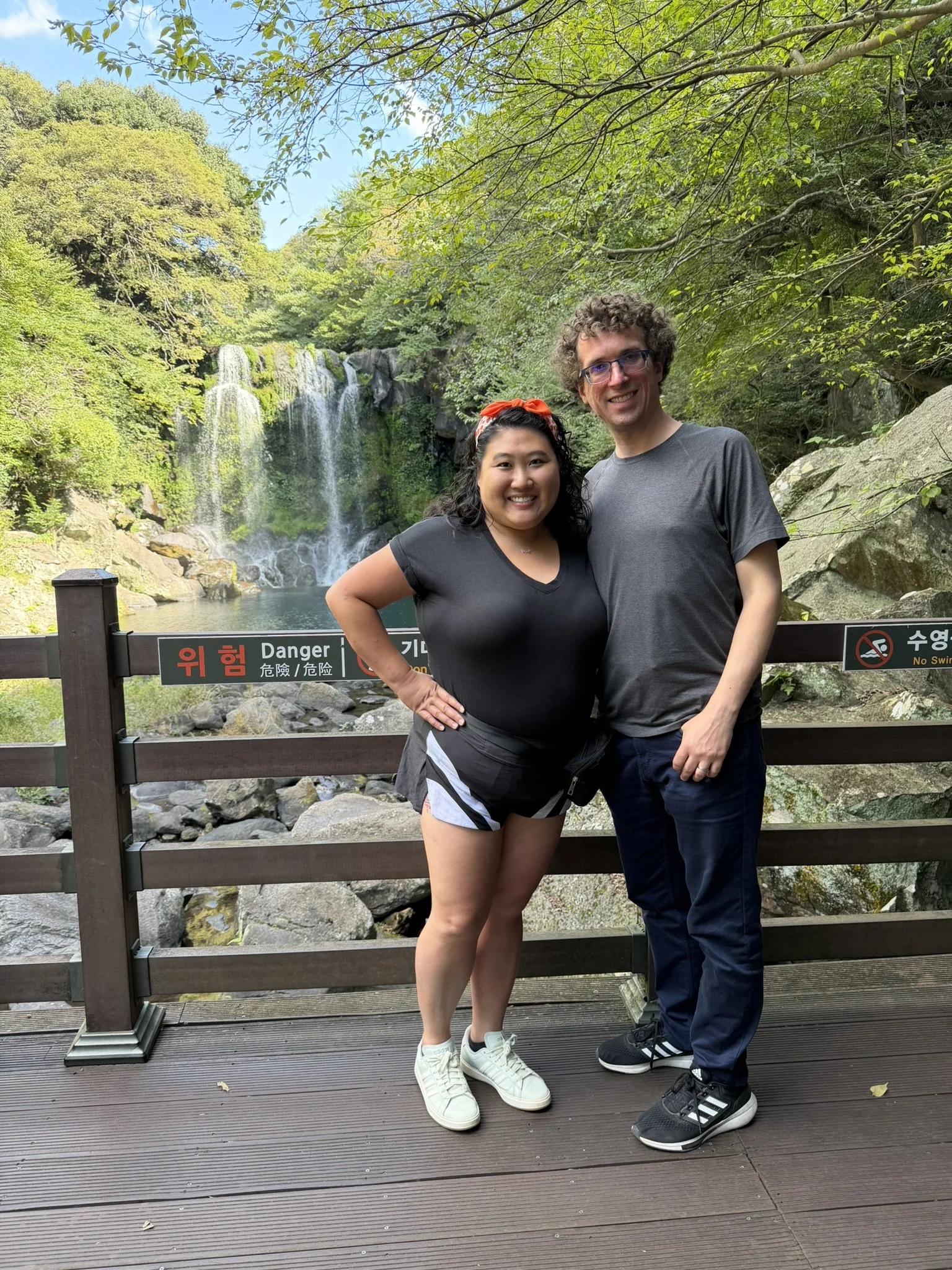
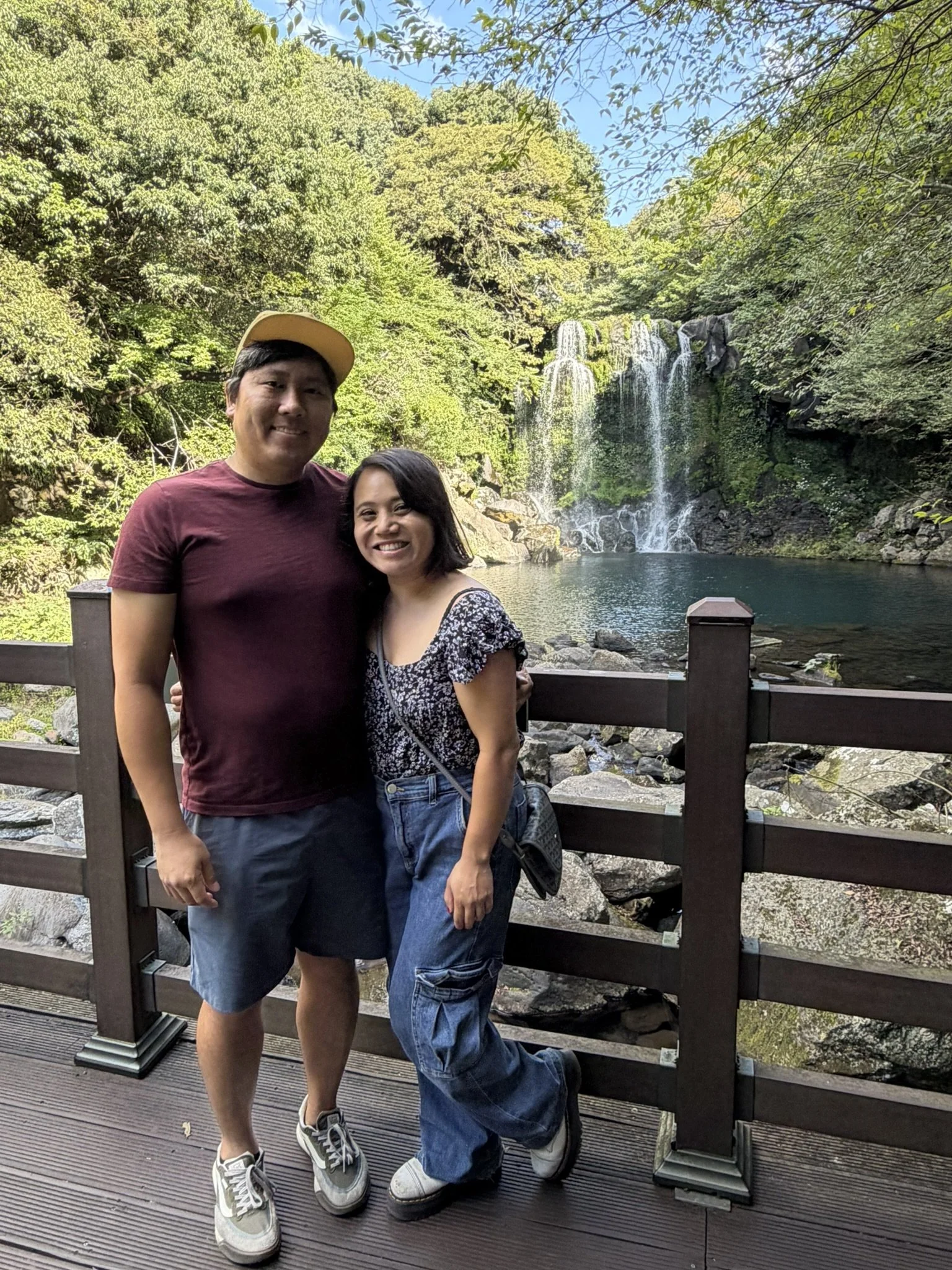
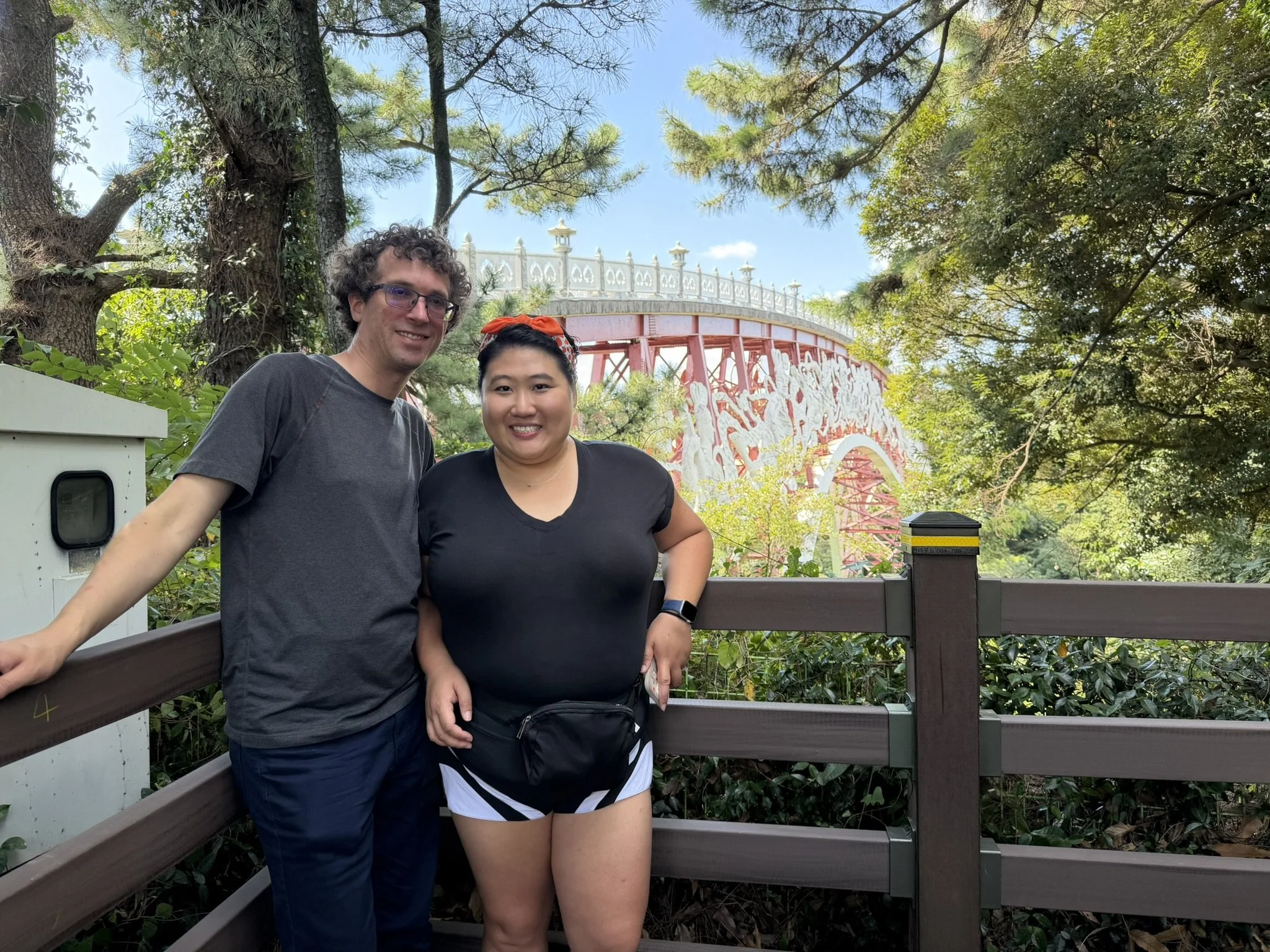
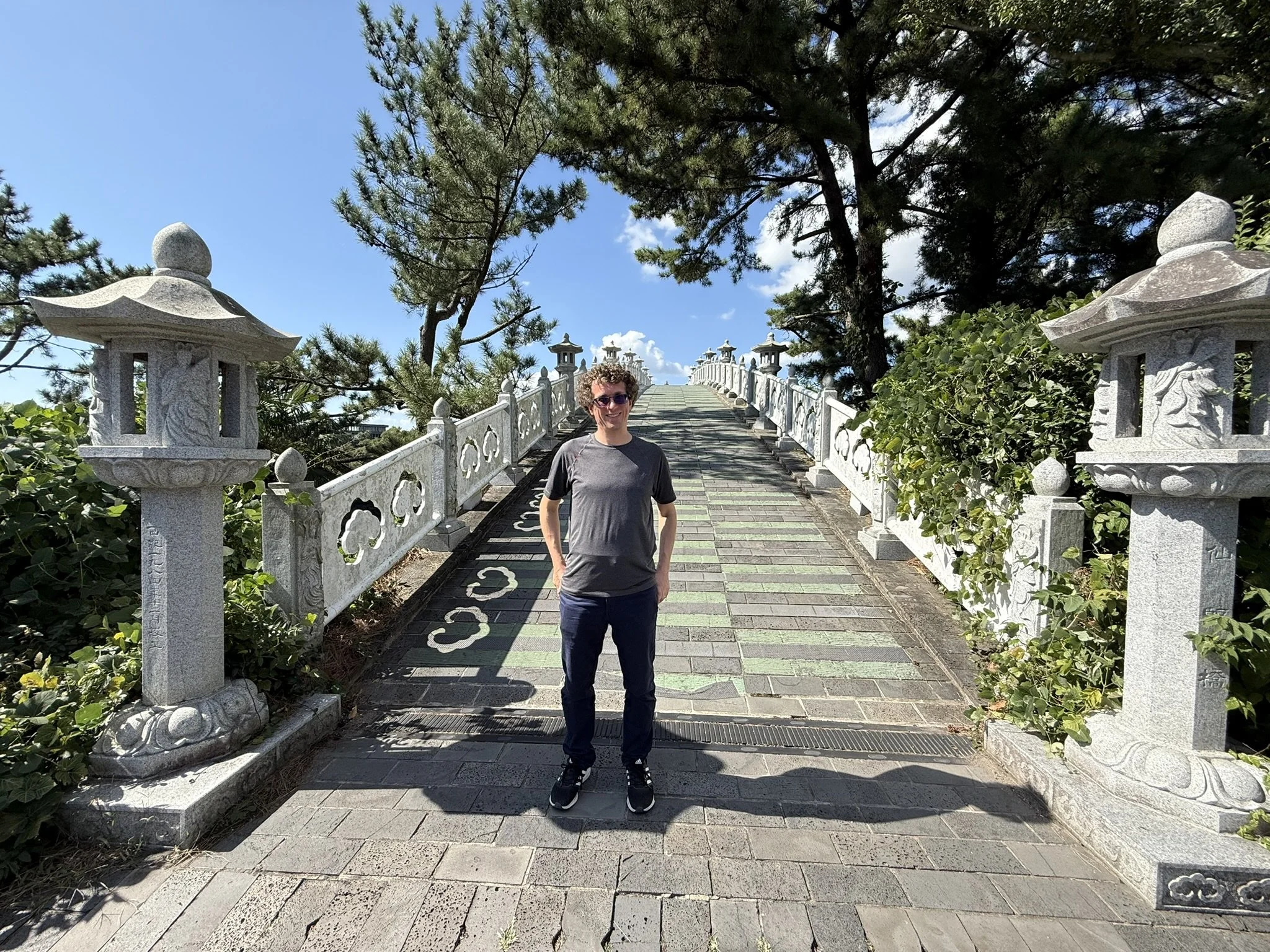
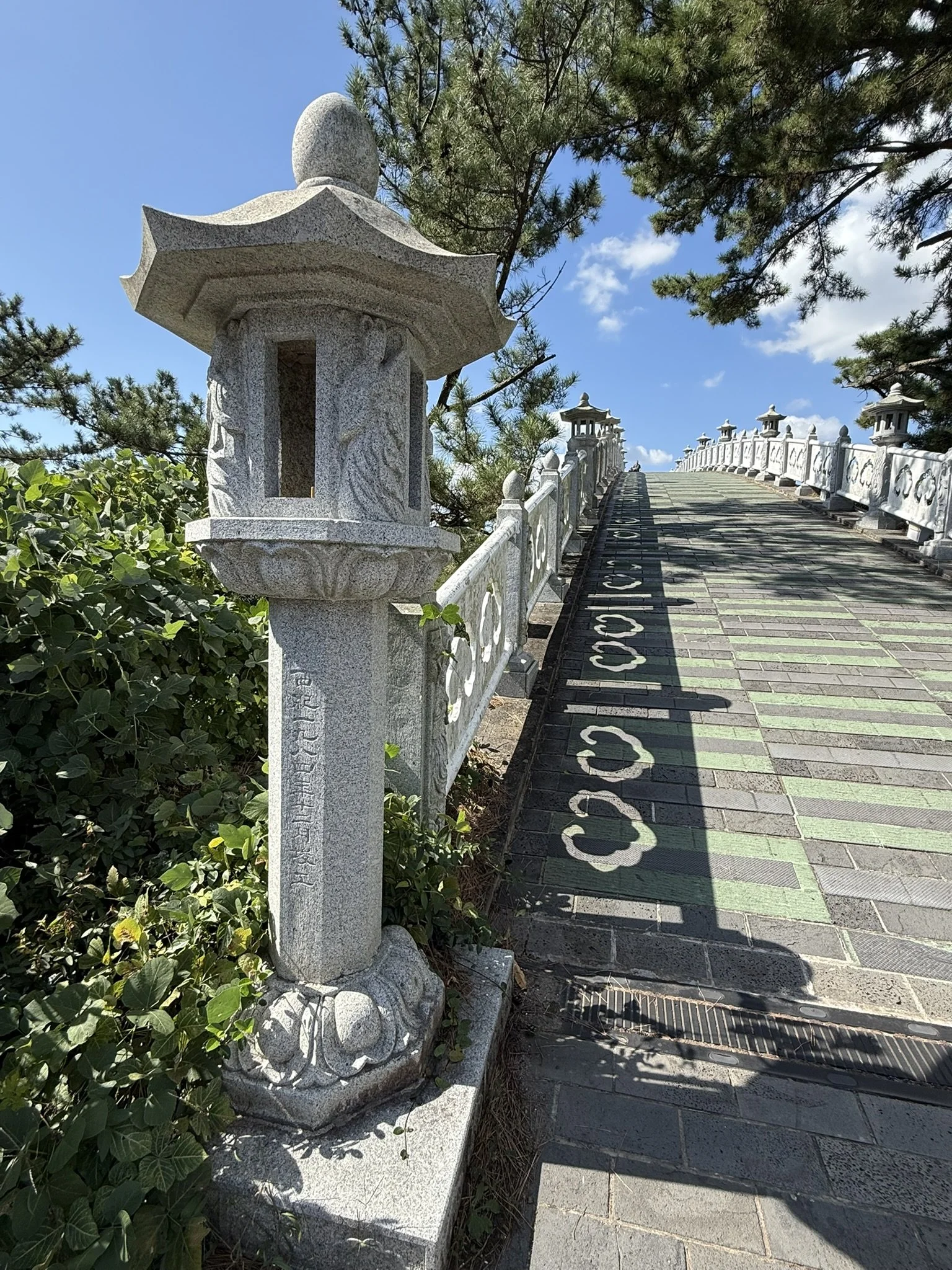
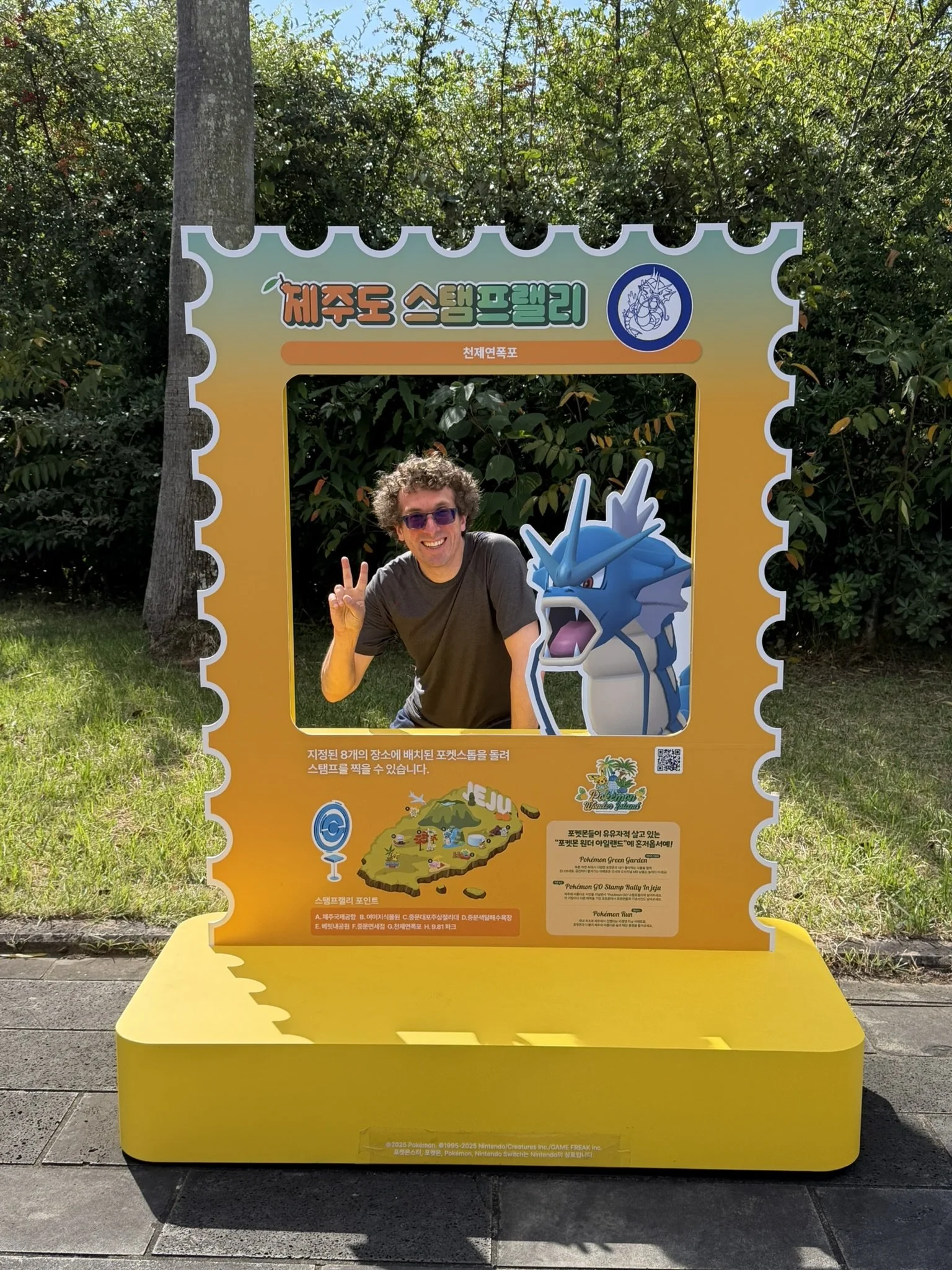
After the Jeongbangpokpo Falls, we went to the Cheonjeyeon Waterfalls known as the Pond of God. The legend is that seven nymphs would descend from the heavens and bathe at the Cheonjeyeon Waterfalls at night. There are three sections, or three waterfalls, to this area. We also passed the 426 foot Seonimgyo Bridge adorned with thirty-four lanterns and 100 railings. I thought the shadowed hearts were really pretty.
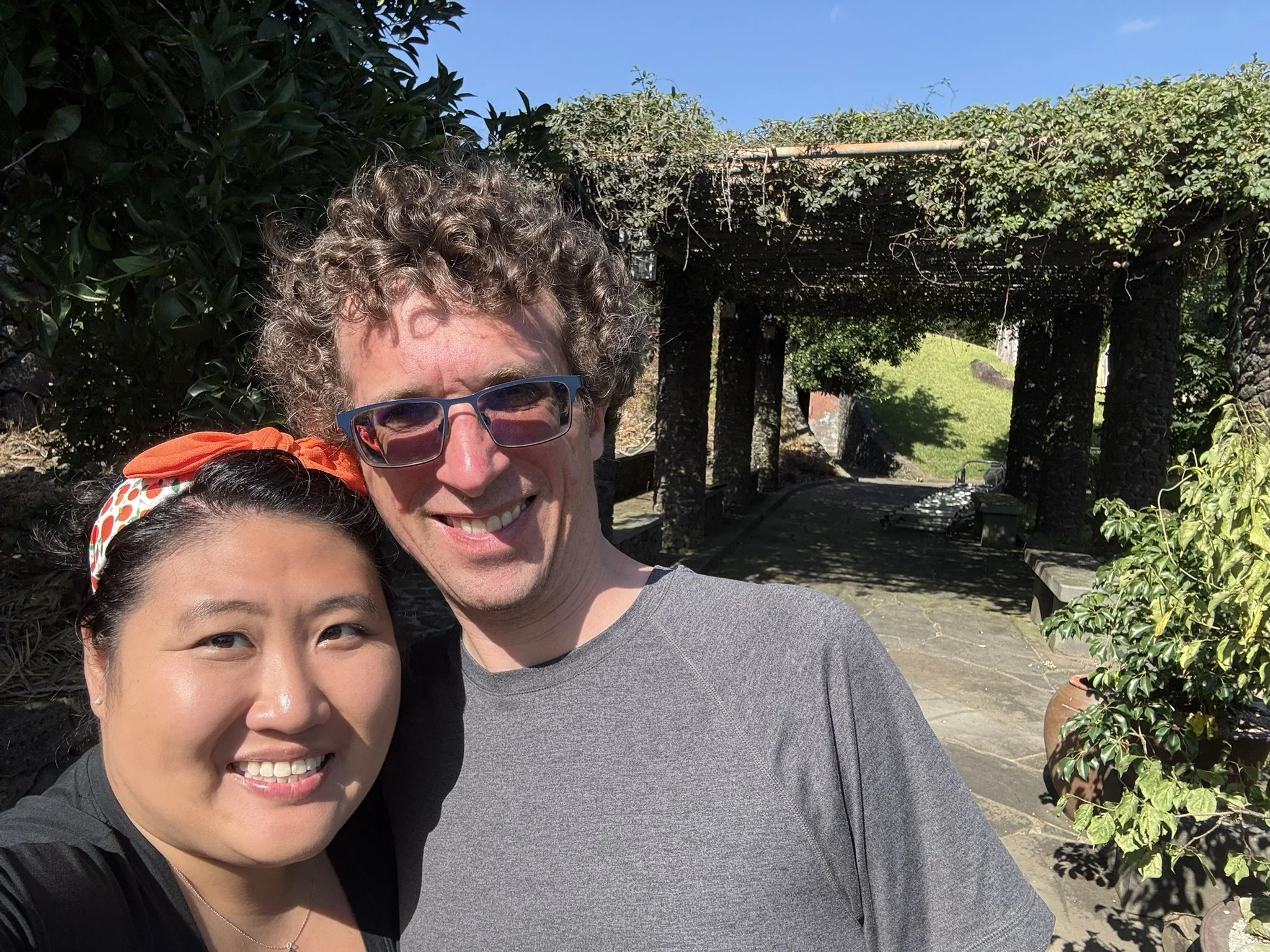
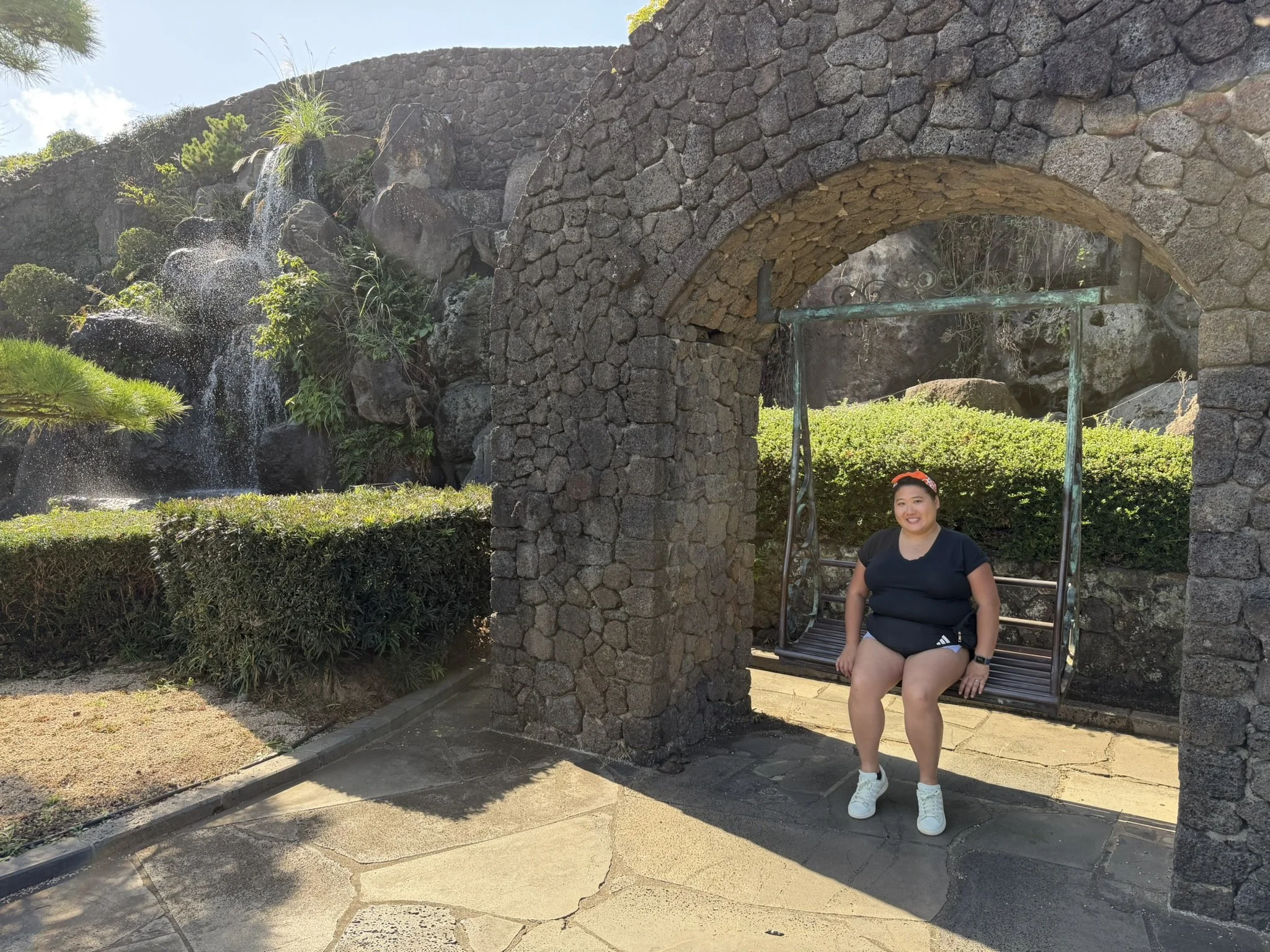

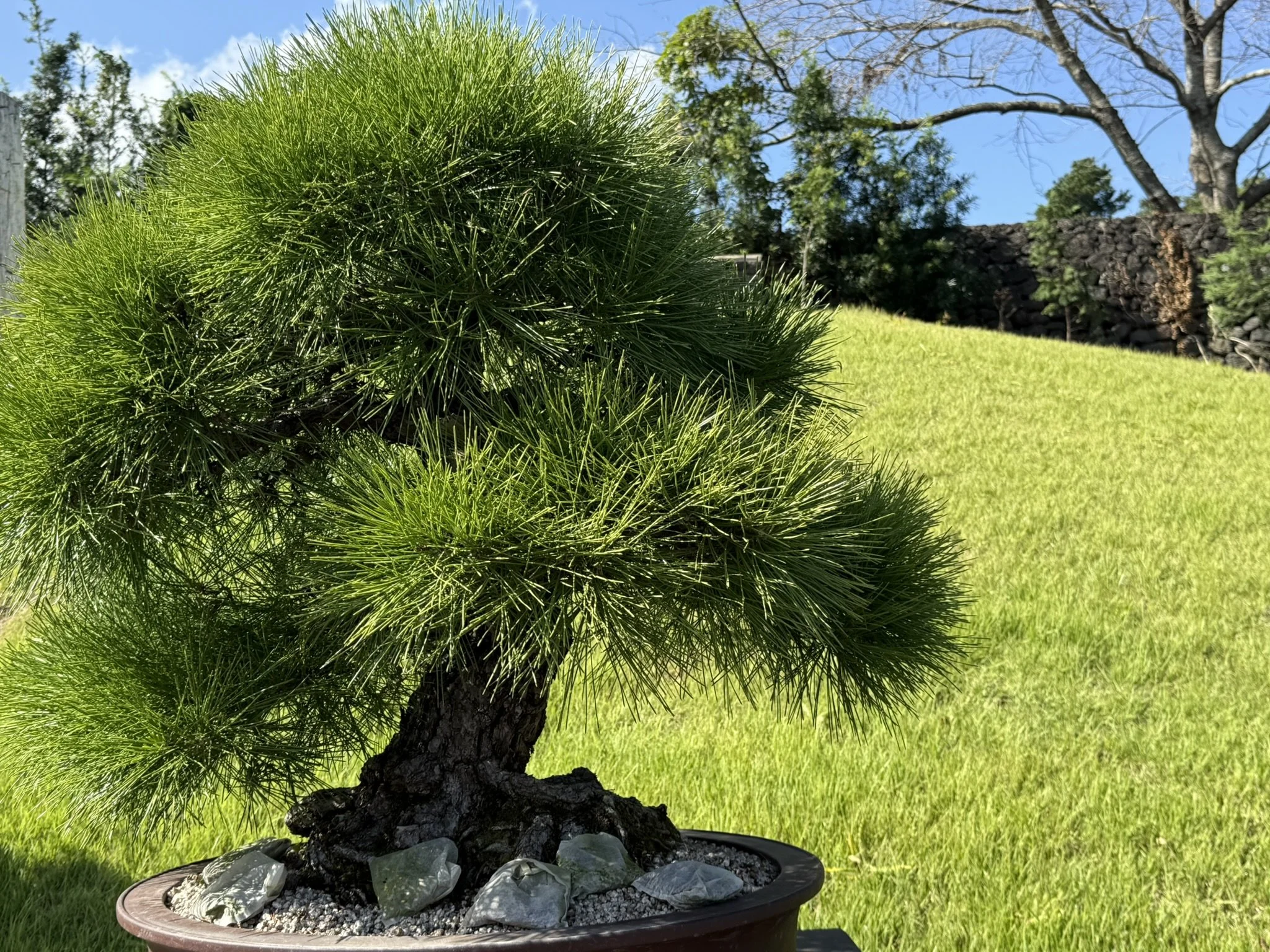
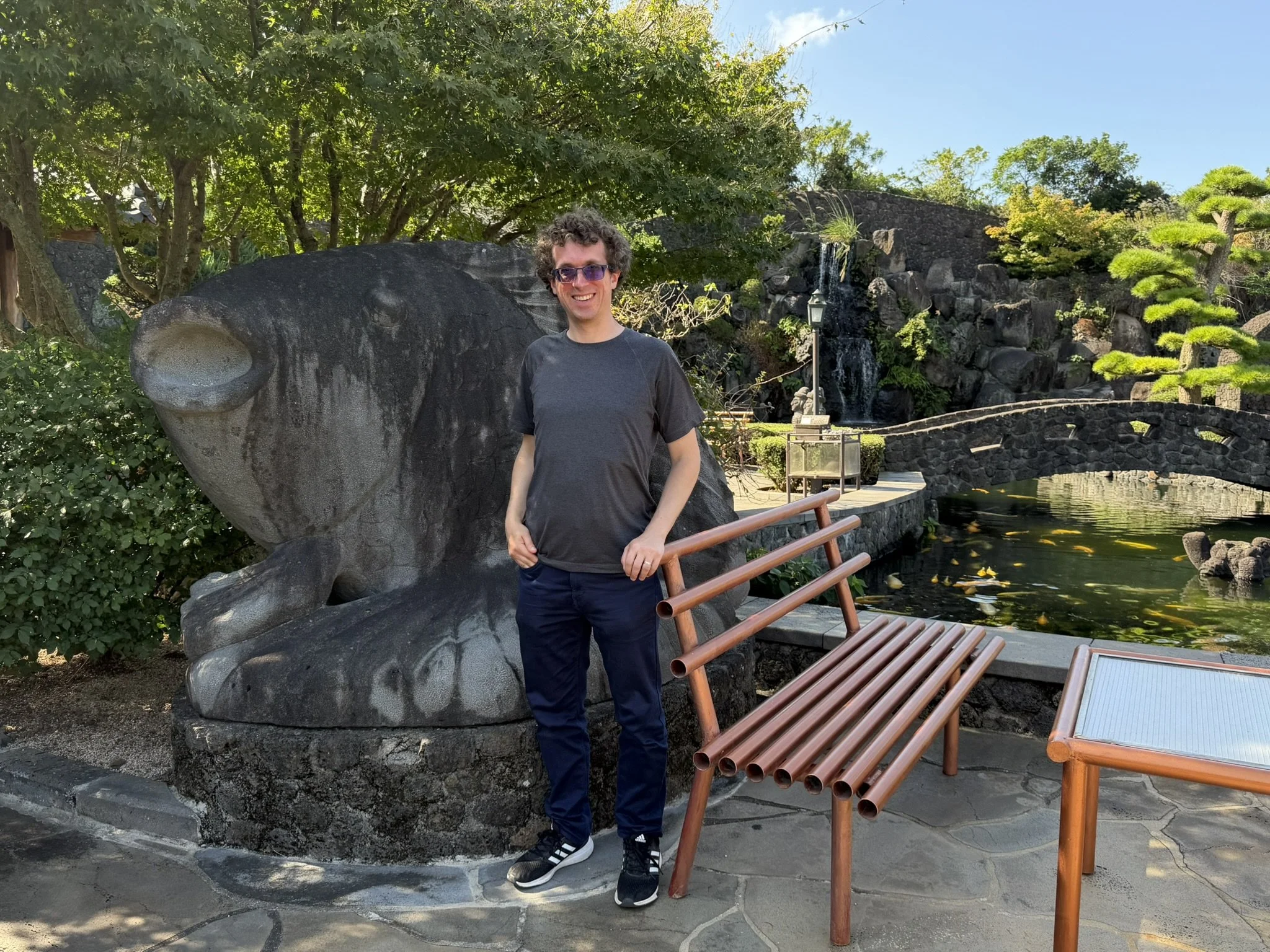
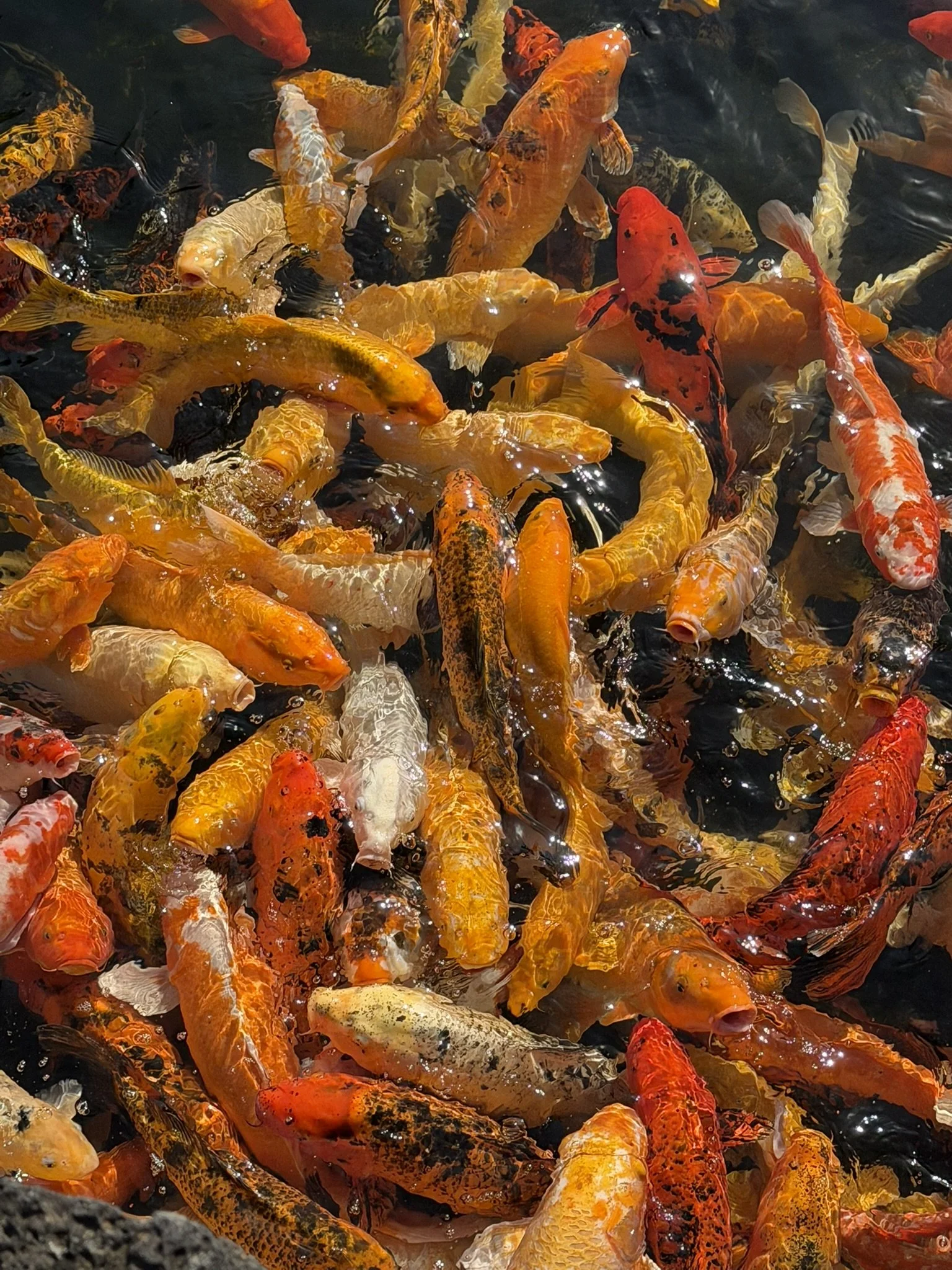
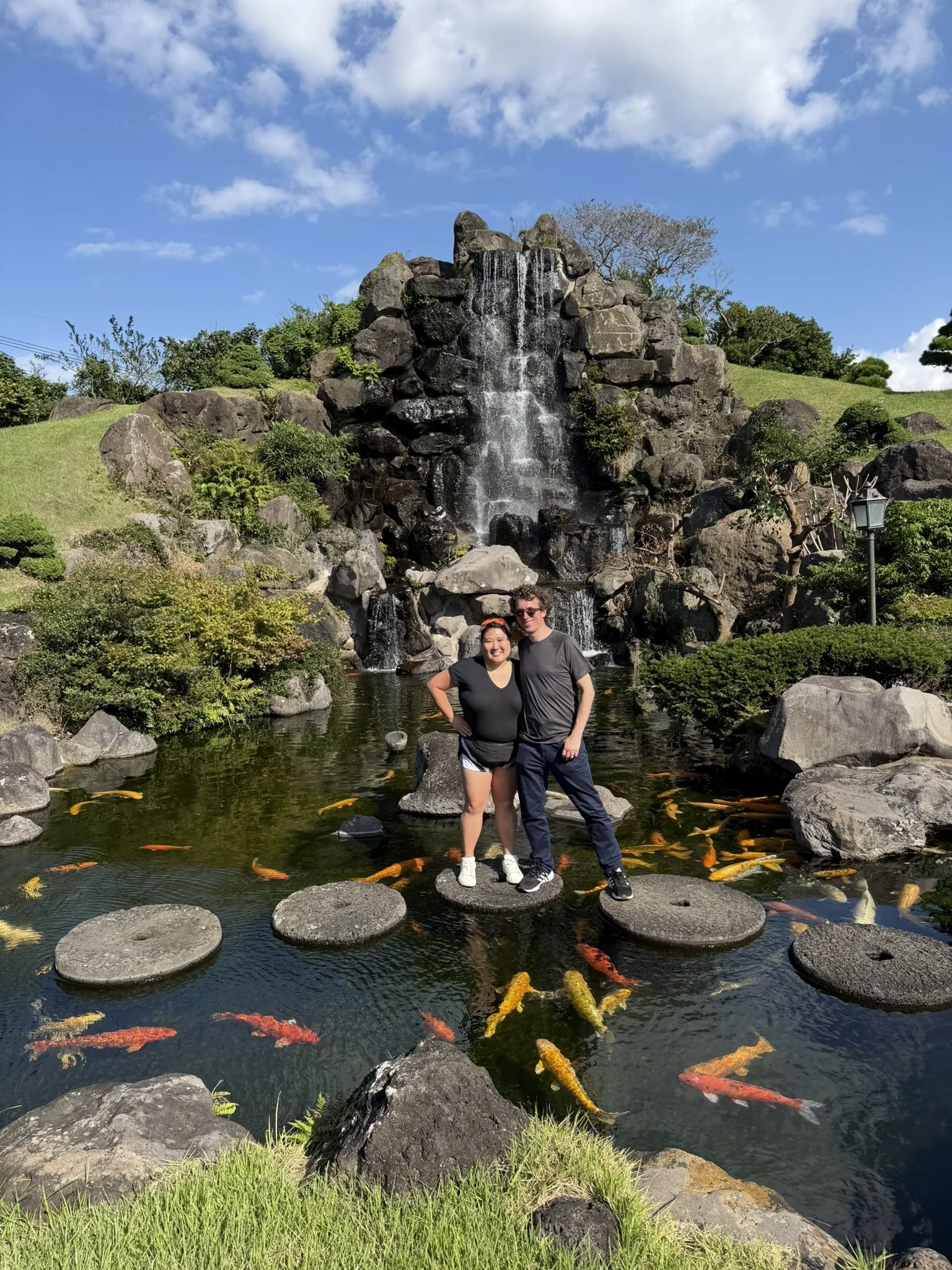
Our last stop on Jeju Island was the Spirited Garden. This is home to hundreds of bonsai plants. The garden was created in 1953 when the founder, Seong Beom-yeong came to Jeju and cultivated the area that was full of volcanic rocks. It’s divided into the welcome garden, rest garden, soul garden, inspiration garden, peace garden, philosophy garden, tangerine garden, secret garden, and water garden. There are stone walls, stone towers, a waterfall and pond with lots of colorful carp. It was a really peaceful way to end our time on Jeju.
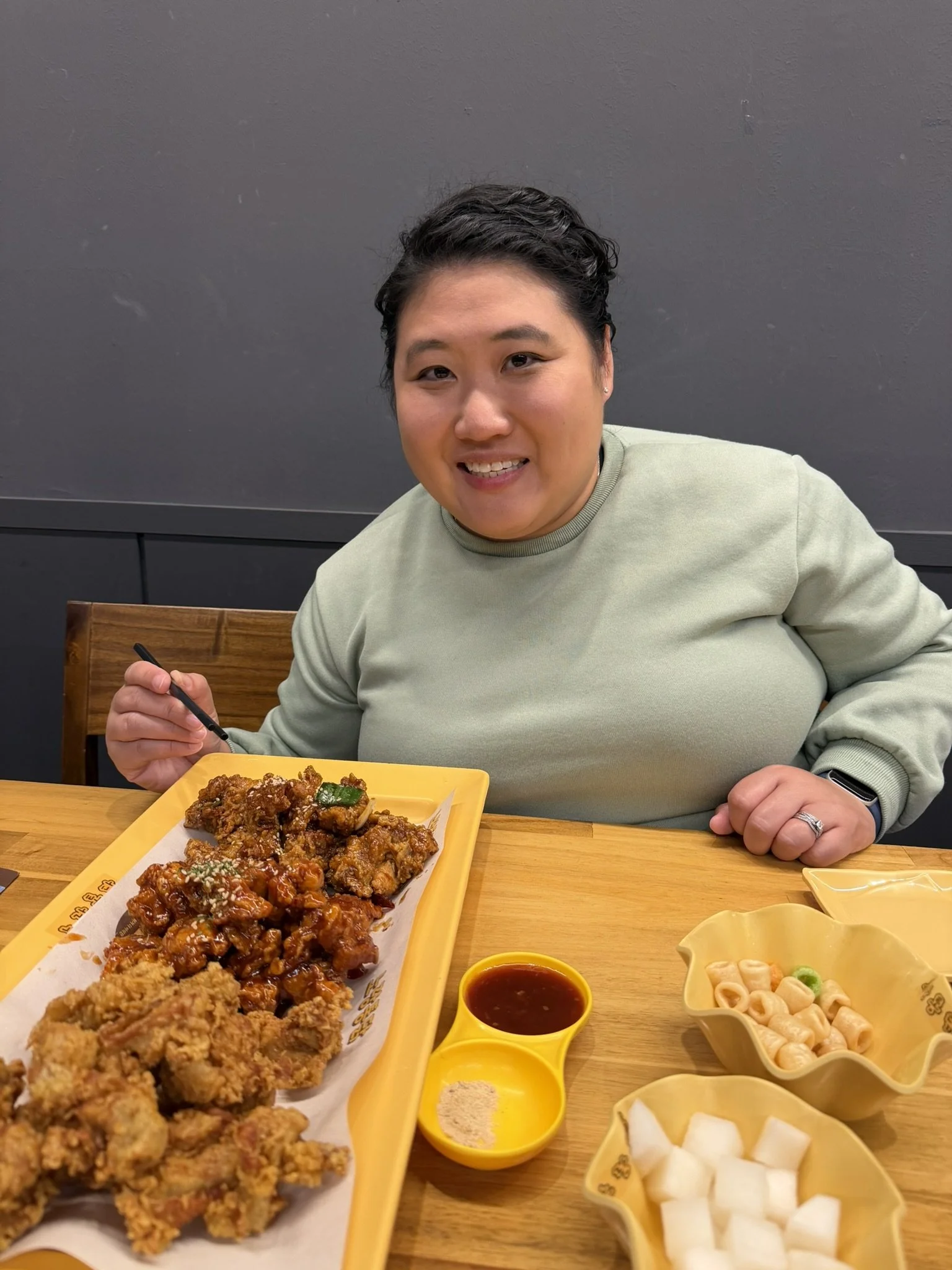
We left Spirited Garden and made it just in time to board our flights at the airport. We both had separate flights (around the same time) to head back to Seoul. Bryce and I split a Lotteria burger at the airport but once we returned to Seoul and got checked into our airport hotel, we went out for fried chicken. It’s so sad that this is our last day in Korea.
Day 10: Friday October 24, 2025 Fly Home
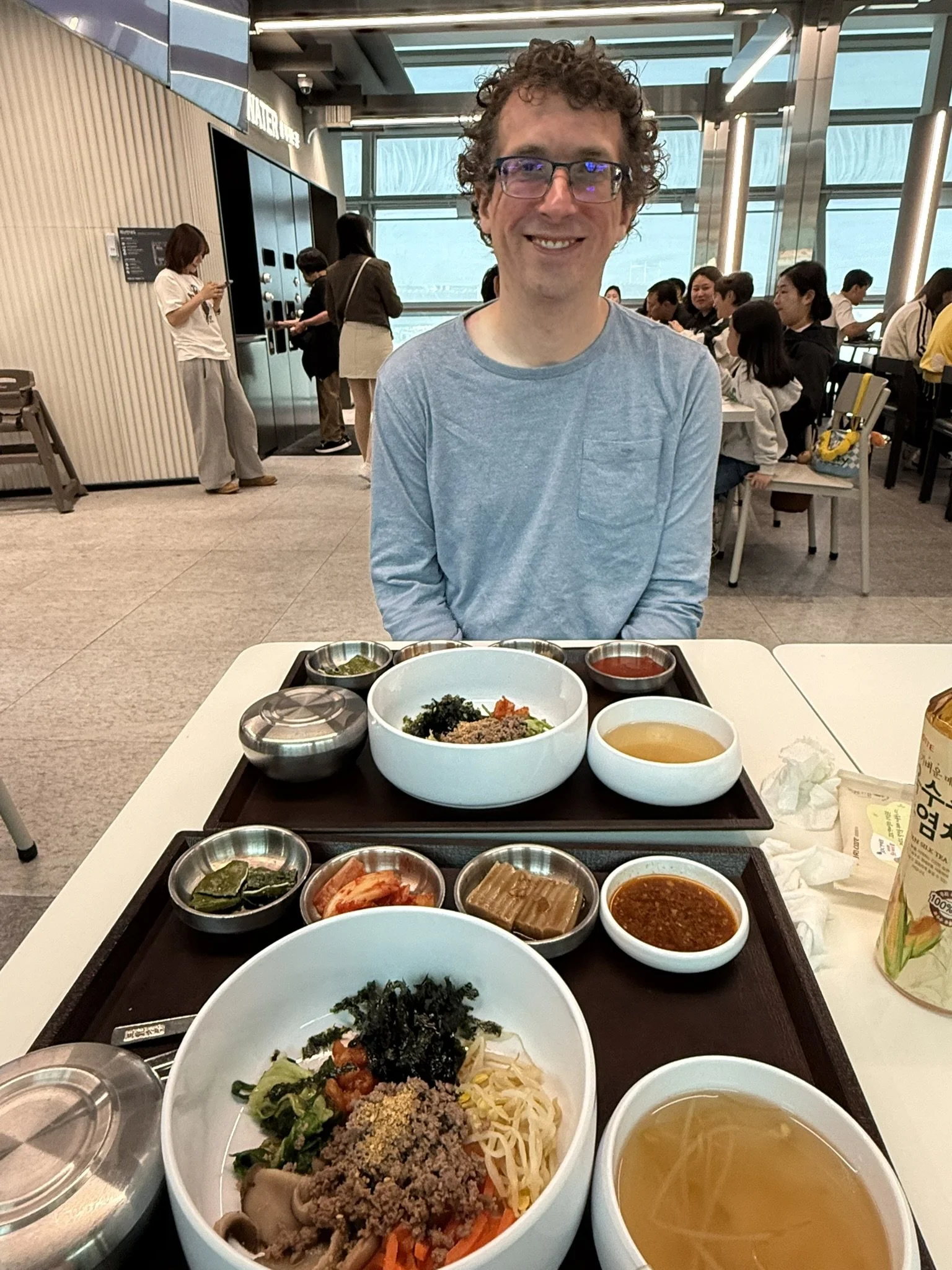
While we were sad to have to go back home, we were able to get one last meal in at the airport. Thank goodness we can eat a regular meal for breakfast!
All good trips have an end, and our time in Korea had come to an end. I did not want to come home and we already want to go back. Although I would like to transport my own bed to Korea next time. The food was amazing and it was so nice to fit in with other Koreans. I feel like there is still so much more to explore and this was just an intro into everything else that there is to see and do and experience.